Summer may be over, but the last couple of weeks of it and first bit of autumn is still a great time to be out looking at things.
A diminutive orchid I always try and find is the Autumn Coralroot. It is considered an Ontario and Canadian rarity, although that may be partially because it is so hard to find even when you know about where it is. It seldom grows more than 15cm (6") tall, and the flowers, if they open up at all, are droopy.


Another late season orchid is the Great Plain's Ladies'-tresses. It is quite restricted in its Ontario range, and is considered Vulnerable in Canada. It is one of the latest blooming of our native orchids. Only one species, much rarer, normally is in flower later than this species. Sometimes there is an obvious spiral to the rows of flowers, but not always. However the inside of the lip almost always shows a slight yellowish tinge, and when the plants are in peak flower, emit a fragrance that some have likened to a sort of vanilla. I sometimes think it is closer to the scent of a type of hot plastic! At any rate, it is quite distinctive, and on occasion it can be so prevalent that I can smell them before I see them.


I was at Rondeau yesterday, not specifically looking for birds, although I did see a smattering of warblers and others, as well as a lot of Blue Jays. They have been migrating in huge numbers this season. One of the hawkwatch observation points southwest of here, has reported tallying around 400,000 flying by so far. The thought is that since the food source farther north is limited, the birds are getting out of the country to where food is more plentiful.
I saw a good variety of butterflies, and most were in quite fresh condition.
 |
Question Mark
|
This Common Buckeye is looking quite fresh. I have seen quite a few of this species in the last few weeks, but most are tattered and worn, since they likely arrived as a result of southerly winds. They are generally considered migrants from the south, but there are a few records of breeding in southwestern Ontario. Perhaps the reason this one is so fresh looking is due to a local breeding event?
 |
Common Buckeye
|
 |
Eastern Comma
|
The Eastern Comma above is in its overwintering form, given the relatively light colour of the hind wing. This next image is also of an Eastern Comma taken a few weeks ago, but it has a darker hind wing, indicating its summer form, which fits its rather faded and worn appearance.
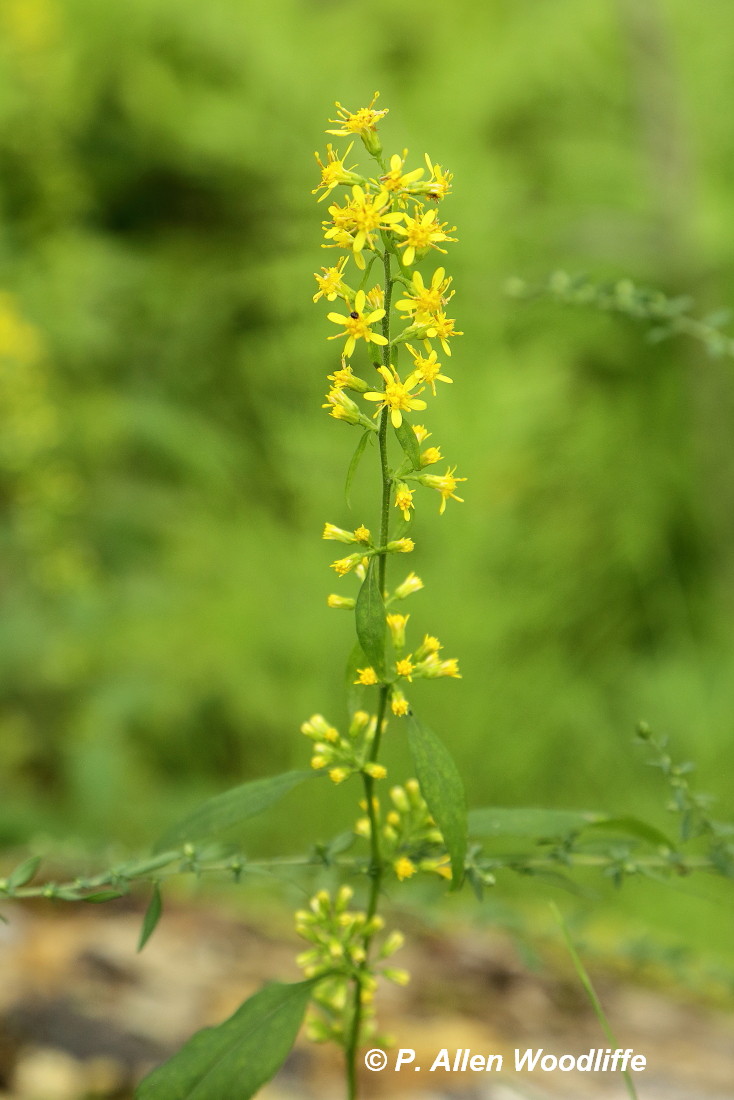
There are still a few non-orchid species in good flowering condition along the trails of Rondeau.
 |
Blue-stemmed Goldenrod
|
 |
Bottle Gentian
|
This next one isn't a flowering plant per se, but a rare fern called Broad Beech Fern.
Do you recognize the seed pods here?
The shape and habitat (sandy open areas) are clues to it being that of the colourful Butterfly Milkweed.
 |
Butterfly Milkweed
|
 |
Spotted Jewelweed
|
 |
Great Lobelia
|
 |
Pale Jewelweed
|
 |
Rattlesnake Root
|
 |
Hairy Goldenrod
|
The dampness of late summer brings on the fruiting bodies of fungi, such as this colourful Russula species.
There are still lots of waterbirds around. I saw several Black-bellied Plover at Erieau a short time ago. It always helps to know for sure when one raises its wing to show the black feathered 'armpits' characteristic of this species.
Sanderlings are quite regularly seen.....
.....as is the all too common Double-crested Cormorant. If they just weren't so abundant and messy at times, one could consider them a nice bird to see!
I've stopped at Keith McLean CA a couple of times to see if I can catch up to the Nelson's Sparrows that have been reported. So far I've been unsuccessful, as have many others. They are furtive at best. Hopefully they stick around for a few more days like they have done in past years. So without seeing the Nelson's Sparrow, I took solace in enjoying a few of the other birds that come and go.
Dunlin numbers are starting to build, and as one of the later shorebird species to migrate through, I expect there will be lots of them over the next few weeks.
Semiplamated Plovers, on the other hand, probably won't be around much longer.....
...and the two or three Great Egrets that have been enjoying the shallow flooded fields here for many of the past few weeks, will likely be harder to find before long.
Pied-billed Grebes are still plentiful, with typically a dozen or more around. This one is checking me out as I photograph him/her.
There are lots of those aerial garbage cleaners passing through, feasting on washed up fish/cormorants/gulls/ducks/whatever.
One of the recent highlights was to catch up to this Whimbrel, along the Rondeau shoreline just south of the Dog Beach Access. Whimbrel are not often seen in the autumn, so to have this juvenile bird hanging around for a week or two is unusual. It is by itself, and is quite tolerant of humans. Presumably because it is a young bird, it has had little or no contact with humans until it arrived here, so as long as viewers do not threaten it, it carries on without any fear, it seems. Although I did have my 100-400mm lens on, at one point as I squatted down to be less intimidating, I had to zoom back to only 125mm in order to get the bird in the frame!