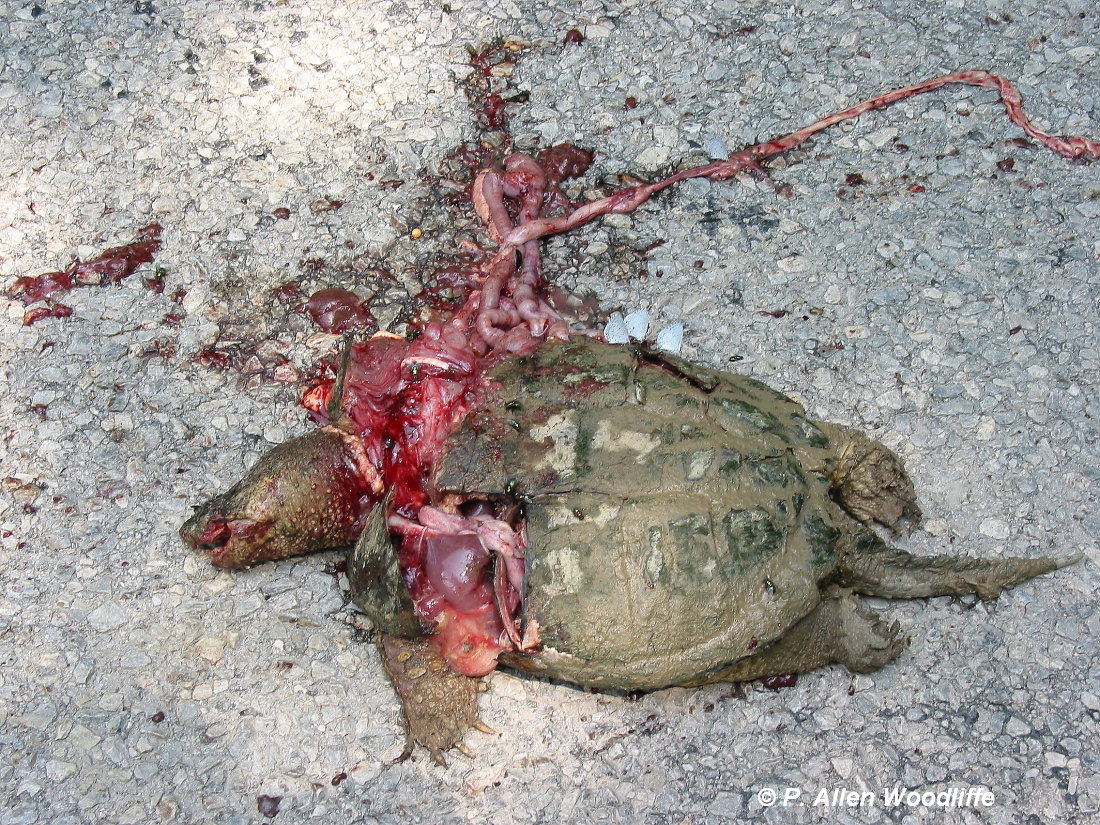
...because there are more dead mammals along the roadsides!
It is unfortunate, but true. I have seen more dead mammals along the road sides during these last few 'warmer' days than I would normally see.
This Raccoon was along a road at Rondeau. Raccoons are sometimes out on warm days even in the depths of winter, so in a way to see one out on a warm early spring day is not surprising. However this one was likely sick. Its swollen feet are said to be indicative of distemper. Cloudy eyes may also be noticed, but I couldn't tell with this one. Distemper is a relatively common affliction in Raccoon populations, especially when numbers are fairly high. At any rate, for some reason this one apparently did not have the ability to climb onto the snow piled along the plowed roads and in its weakened state, may just have died. There were no obvious injuries.

This Virginia Opossum, on the other hand, did show signs of injury. One can see a bit of blood on the snow right in front of its nose. It likely got struck by a vehicle. Opossums used to be extremely rare in Ontario. There are various theories as to how they arrived. But it was always believed that the severe winters were particularly hard on them and was a limiting factor in their survival for those that did show up on the southern Ontario landscape. Their tail, ears and nose is exposed skin and very susceptible to extreme cold. Sometimes these extremities show signs of frost bite. Given the severity of this current winter (locally it was said to be the coldest February on record), as well as the previous winter, I expect many Opossums are having a tough time. Perhaps this individual was in a weakened state as well and not able to avoid the traffic.
I have also seen (and smelled) skunks along the road sides. Probably all of these dead critters will be just what the soon-to-arrive Turkey Vultures will need in order to survive!
While at Rondeau a couple of times this week, I saw Eastern Chipmunks out. They weren't cooperative for photography...when they saw my camera move in their direction, they immediately retreated into a hole in the snow bank! This image below is one from another time.
White-tailed Deer are not numerous, but plentiful enough, and can be seen especially along the eastern side of the park. Their somewhat reduced numbers (compared to last fall) likely enabled them to survive the winter in reasonable health.
There have been reports of Tundra Swans arriving in southern Ontario over the past few days. However they don't seem to be setting down anywhere quite yet.....probably the snow covered fields and ice covered lakes have a lot to do with it!
 |
| Lake Erie off of Rondeau |
 |
| Panoramic view of some southeast beach dunes looking over Lake Erie |
As is often the case, bird feeders are where the action is. Along with the more abundant regulars, I noted these individuals at the Rondeau Visitor Centre.
 |
| Eastern Towhee male, present since mid January |
 |
| Northern Cardinal |
 |
| White-breasted Nuthatch |
Where there is any open water, a few ducks are likely to occur. I hadn't been to the warm water outlet along the Thames River at the west side of Chatham lately, so yesterday I included a short side-trip to see what was there. The number of birds overall had declined considerably from earlier visits, with only about 35 Mallards, and a handful of other species present.
One of the first things that caught my eye was this Merlin, getting a drink of water from a puddle in the parking lot!
 |
| Green-winged Teal |
One of the several dozen Mallards coming and going from the opening.
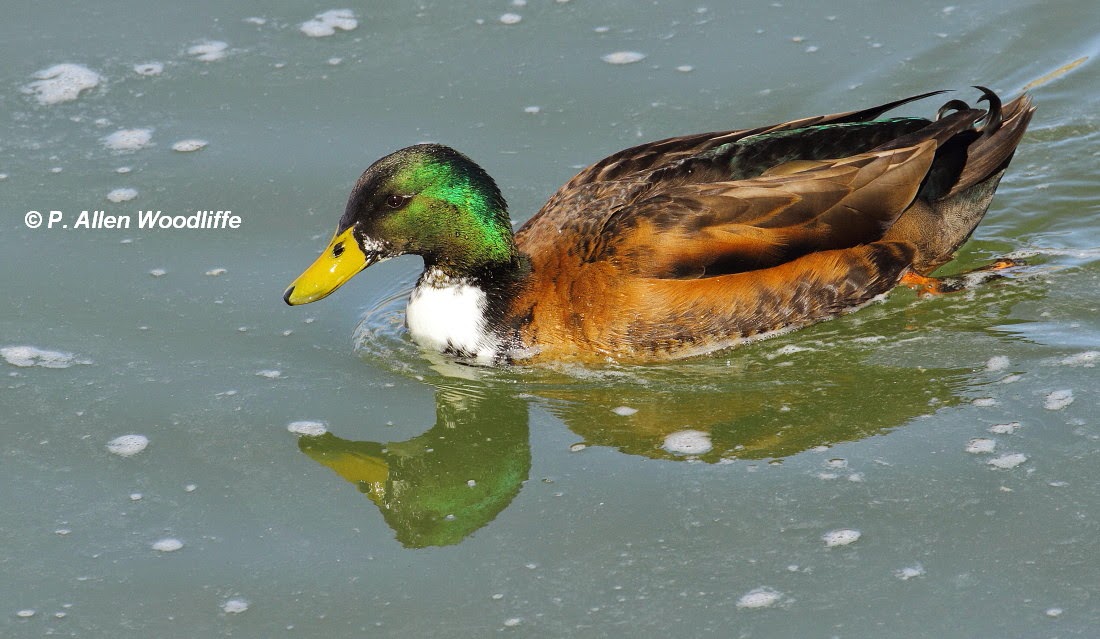 |
| A hybrid between a Mallard and a domestic type of duck |
 |
| Redhead |
 |
| Common Merganser |
One of the things I often wonder about when viewing ducks in such situations is just what kind of water quality is being returned to the river. I know that water treatment plants are designed to remove serious organic material from human waste and such, but what about all the inorganic things? There are likely many hundreds of chemicals, perhaps some of which are quite nasty (e.g. pharmaceutical prescriptions, including antibiotics and hormonal pills, fertilizers, chemical cleansers, etc), that are sent through our municipal plumbing systems and to the water treatment plant. Even though they are watered down, a lot of them aren't removed, and so anything that uses the water to live in or drink from downstream will be ingesting those nasty things. Do we want to really know all of the impacts of such things accumulating in our bodies, or those of the wildlife? It is a scary thought.....but something to consider as we dispose of expired prescriptions, etc.
On the way home, I noticed some White-tailed Deer feeding in the lowland along a riparian area.
And some good news for those who have not appreciated the presence of so many American Crows these past few months. It is now mid-March and as the days lengthen, the crows will be wandering farther and farther from the Chatham roost, and won't feel as compelled to return to it at the end of the day. So Chathamites take heart....there will now be some respite from the crow masses until mid October!