McGeachy Pond is located along the Lake Erie shoreline, just before the village of Erieau. This first image shows this triangular wetland's location. The trail goes along the dyke between the lake and the wetland, although you can walk around the entire periphery if you want to walk along the road sides. If you look at the surrounding farmland, you will note that it is quite black, and is typical of soils produced by wetlands. The dyke was constructed a little over a century ago to protect the low lying farmland and residential areas from flooding during wave action and high water levels of Lake Erie.
There are small parking areas at either end of this Conservation Area, shown by the 'X'.
This site is under the jurisdiction of the Lower Thames Valley Conservation Authority.
There is an observation tower along the trail, looking out over the lake.
It is a great spot to watch for water birds out on the lake, as well as boats, or people using the trail. The east end of the trail continues right into the village of Erieau.
The location is fabulous for watching wildlife...birds and butterflies especially. As of this post date, there have been ~215 species of birds observed here. Waterfowl are fairly abundant, either passing overhead or resting up for the next leg of their migration journey.
 |
| Tundra Swans |
 |
| Northern Pintail |
The shrubby/treed area is good for those species that like such habitat for nesting such as the next two species.
 |
| Gray Catbird |
 |
| Eastern Kingbird |
This next species is a frequent non-breeding resident.
 |
| Great Blue Heron |
The heron is wading through a large patch of Pickerelweed, a common and distinctive aquatic plant of shallow wetlands.
The current water levels are controlled, but before the water control system was installed, the water levels naturally fluctuated. As a result the habitat was more variable. It was during this time in about 1978 that a friend of mine discovered the nest of a King Rail and I had a chance to see it and briefly photograph it. King Rails have never been common in Canada, but the wetlands along Lake Erie and Lake St. Clair were where they were most likely to occur. King Rail has gradually declined even from the low numbers of that era to the point of it being legally Endangered in Canada. Although there are still a few breeding records of it in some of its more popular haunts, I believe this 1978 record is the last time an actual nest was found in Ontario.
Many migrating birds follow the shoreline especially on their southward migration, so it is a good spot to check. In the last couple of years these next two species have put in an appearance.
 |
| Bohemian Waxwing |
 |
| American White Pelican |
A much more regular winter resident is Snowy Owl, often seen in the fields immediately adjacent to the site.
This is a great spot to find butterflies as well. The openness of the vegetation which supports many flowering plants throughout the growing season, as well as being along the shoreline which, like the birds, facilitates migration movement, are two of the factors that make it productive for butterflies. The presence of a large butterfly bush adjacent to the western parking lot doesn't hurt either! As a result it is a regular spot to look for butterflies during the annual Butterfly Count in mid-July, but can be useful to check almost any time of the wildflower growing season.
The first two images show one or more Bronze Coppers. They can sometimes be quite numerous. On one occasion I counted 55 of them!
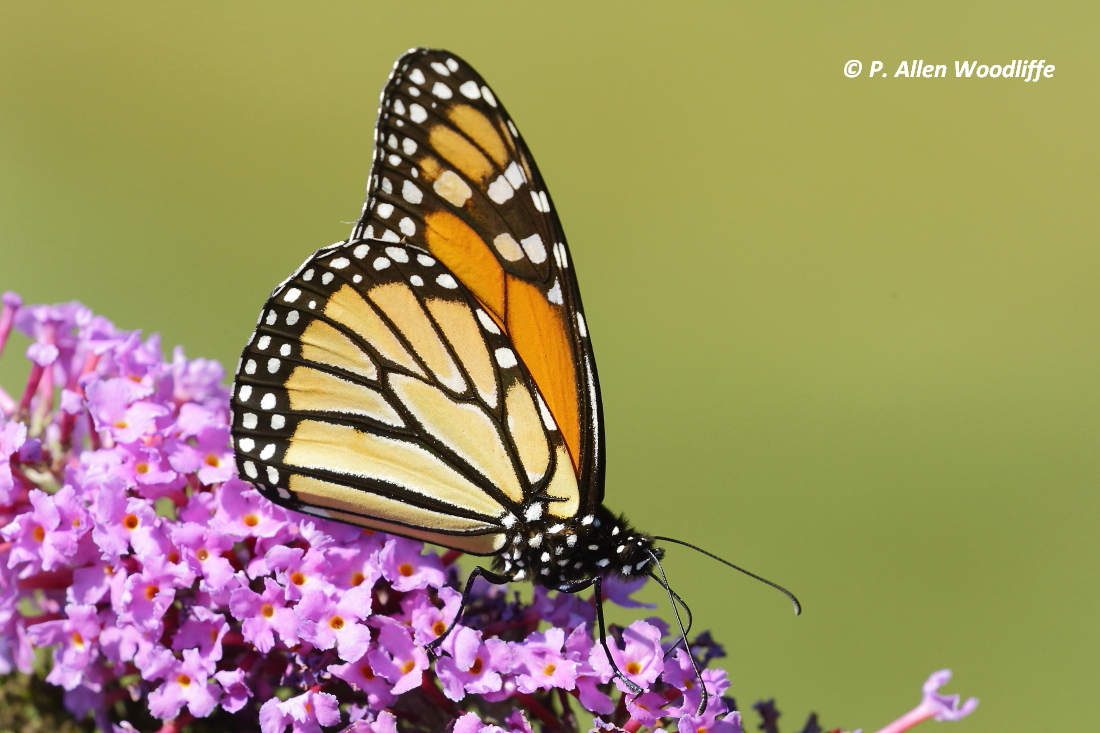
Monarchs are here during much of the season, but are particularly abundant in September as they are migrating through on their way to the wintering grounds in the highlands of Mexico.
The abundance of New England Aster in late summer is popular with many butterflies.
As mentioned, there is a large butterfly bush adjacent to the west end parking area. Butterflies are drawn to it in impressive numbers. On one occasion I saw at least 8 species using it simultaneously. These included:
 |
| Fiery Skipper |
 |
| Gray Hairstreak |
 |
| Monarch |
 |
| Painted Lady |
 |
| American Lady |
 |
| Peck's Skipper |
 |
| Question Mark (under side) |
 |
| Question Mark (upper side) |
In addition to seeing a diversity of wildlife, it is a great spot just to enjoy the lake side setting, listen to the wave action and feel the gentle, cooling breezes off the water in summer. And it has many wonderful photographic opportunities as well, especially at sunrise!