Wednesday, 30 September 2020

Late Season Orchids, Butterflies, and some Waterbirds

 Summer may be over, but the last couple of weeks of it and first bit of autumn is still a great time to be out looking at things.

A diminutive orchid I always try and find is the Autumn Coralroot. It is considered an Ontario and Canadian rarity, although that may be partially because it is so hard to find even when you know about where it is. It seldom grows more than 15cm (6") tall, and the flowers, if they open up at all, are droopy.


Another late season orchid is the Great Plain's Ladies'-tresses. It is quite restricted in its Ontario range, and is considered Vulnerable in Canada. It is one of the latest blooming of our native orchids. Only one species, much rarer, normally is in flower later than this species. Sometimes there is an obvious spiral to the rows of flowers, but not always. However the inside of the lip almost always shows a slight yellowish tinge, and when the plants are in peak flower, emit a fragrance that some have likened to a sort of vanilla. I sometimes think it is closer to the scent of a type of hot plastic! At any rate, it is quite distinctive, and on occasion it can be so prevalent that I can smell them before I see them.


I was at Rondeau yesterday, not specifically looking for birds, although I did see a smattering of warblers and others, as well as a lot of Blue Jays. They have been migrating in huge numbers this season. One of the hawkwatch observation points southwest of here, has reported tallying around 400,000 flying by so far. The thought is that since the food source farther north is limited, the birds are getting out of the country to where food is more plentiful.

I saw a good variety of butterflies, and most were in quite fresh condition.

Question Mark
This Common Buckeye is looking quite fresh. I have seen quite a few of this species in the last few weeks, but most are tattered and worn, since they likely arrived as a result of southerly winds. They are generally considered migrants from the south, but there are a few records of breeding in southwestern Ontario. Perhaps the reason this one is so fresh looking is due to a local breeding event?
Common Buckeye

Eastern Comma

The Eastern Comma above is in its overwintering form, given the relatively light colour of the hind wing. This next image is also of an Eastern Comma taken a few weeks ago, but it has a darker hind wing, indicating its summer form, which fits its rather faded and worn appearance.

There are still a few non-orchid species in good flowering condition along the trails of Rondeau.

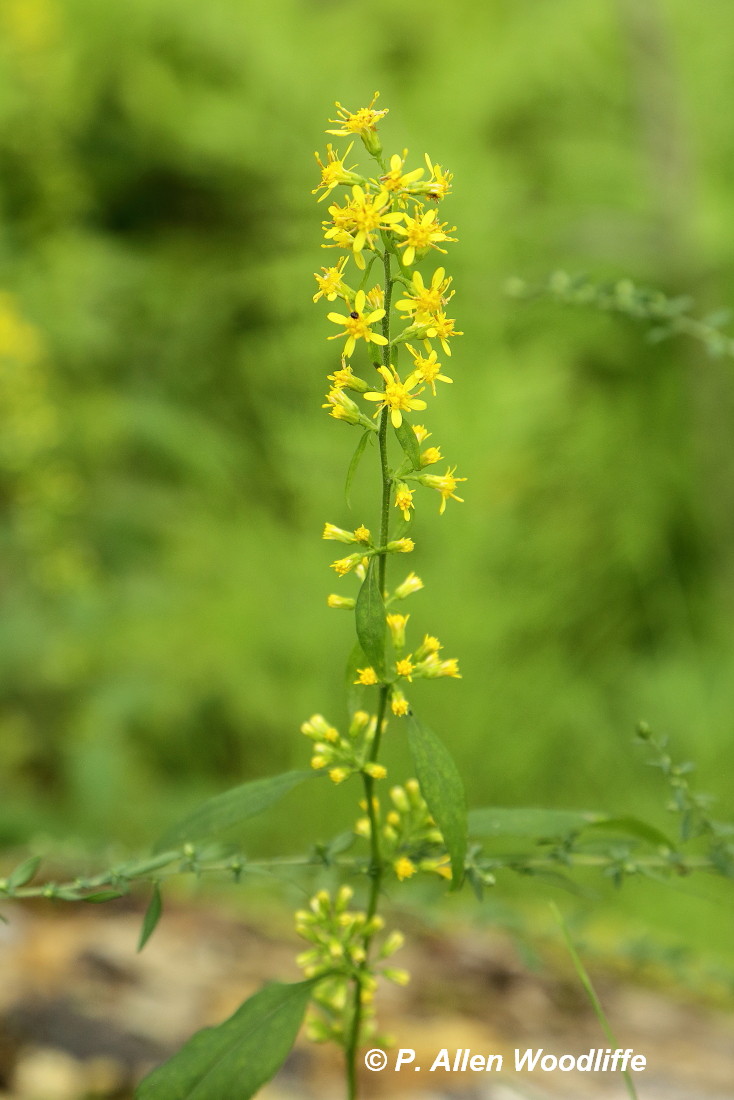
Blue-stemmed Goldenrod

Bottle Gentian

This next one isn't a flowering plant per se, but a rare fern called Broad Beech Fern.
Do you recognize the seed pods here?
The shape and habitat (sandy open areas) are clues to it being that of the colourful Butterfly Milkweed.
Butterfly Milkweed

Spotted Jewelweed

Great Lobelia

Pale Jewelweed

Rattlesnake Root

Hairy Goldenrod

The dampness of late summer brings on the fruiting bodies of fungi, such as this colourful Russula species.

There are still lots of waterbirds around. I saw several Black-bellied Plover at Erieau a short time ago. It always helps to know for sure when one raises its wing to show the black feathered 'armpits' characteristic of this species.


Sanderlings are quite regularly seen.....
.....as is the all too common Double-crested Cormorant. If they just weren't so abundant and messy at times, one could consider them a nice bird to see!

I've stopped at Keith McLean CA a couple of times to see if I can catch up to the Nelson's Sparrows that have been reported. So far I've been unsuccessful, as have many others. They are furtive at best. Hopefully they stick around for a few more days like they have done in past years. So without seeing the Nelson's Sparrow, I took solace in enjoying a few of the other birds that come and go.

Dunlin numbers are starting to build, and as one of the later shorebird species to migrate through, I expect there will be lots of them over the next few weeks.

Semiplamated Plovers, on the other hand, probably won't be around much longer.....
...and the two or three Great Egrets that have been enjoying the shallow flooded fields here for many of the past few weeks, will likely be harder to find before long.
Pied-billed Grebes are still plentiful, with typically a dozen or more around. This one is checking me out as I photograph him/her.
There are lots of those aerial garbage cleaners passing through, feasting on washed up fish/cormorants/gulls/ducks/whatever.
One of the recent highlights was to catch up to this Whimbrel, along the Rondeau shoreline just south of the Dog Beach Access. Whimbrel are not often seen in the autumn, so to have this juvenile bird hanging around for a week or two is unusual. It is by itself, and is quite tolerant of humans. Presumably because it is a young bird, it has had little or no contact with humans until it arrived here, so as long as viewers do not threaten it, it carries on without any fear, it seems. Although I did have my 100-400mm lens on, at one point as I squatted down to be less intimidating, I had to zoom back to only 125mm in order to get the bird in the frame!


Saturday, 19 September 2020

Some recent bird and butterfly highlights in Chatham-Kent

I've got some catching up to do.

It was a couple of weeks ago (was it really that long??) when a Red-necked Phalarope showed up at the Blenheim Sewage Lagoons. It was a distant view, so the photo isn't the greatest, but at least the light was good. Interestingly, while this species is not often seen in Chatham-Kent even on its southward migration, there have been several reports of them along the Lake Erie shoreline at Rondeau in the last few days.


While the Blenheim lagoons haven't had the attention it had when the Purple Gallinule was present for a few days, other spots in CK have picked up the slack.

I was contacted by a friend about a Cattle Egret that showed up at their place. I went out almost immediately in hopes that this uncommon visitor was still around. Some years the species is regularly seen in a number of places in southern Ontario, but not 2020. In fact in checking eBird at the time, this was the first Ontario report on that database for the whole year! Unfortunately, it occurred on private property and well away from any publicly accessible location, so I was unable to post about it anywhere. As far as I am aware, it was only seen by one other birder very briefly at a nearby spot.

I was treated to some great views, and photo ops of this bird. Most of the time it was busily searching the wet grassy areas for something to eat. Normally it eats grasshoppers and other insects stirred up by the presence of livestock in a pasture.

On this occasion, it came across a frog, probably a Green Frog, and promptly grabbed on to it.
It wrestled with it for several minutes, trying to get it in the right position in which to swallow it, which it eventually did as the second photo following shows.

It posed nicely at times. 

 On another occasion, I went to the Mitchell's Bay North Shore Trail. It has been officially closed since last fall, due to some repair work required along the ARDA dyke. As far as I can tell, the repair work has not been completed, so that part of the trail remains closed. However the part of the trail that goes to another part of the wetland area is accessible, and is usually worth a look.

It was getting a bit late in the season for Swamp Rose Mallow to be in flower, but there was one plant still hanging on to a flower. It is a Species At Risk.

Pokeweed was in flower, and will soon have juicy looking dark blue berries. Birds love them, and as delicious as they might look to the human eye, they are not edible, and even considered poisonous.
There were numerous wildflowers along the trail, many of them being tallgrass prairie types. Here is a day-flying moth known as Corn Earworm, feeding on this flower. Some of you probably knew I would get a moth photo somewhere in this post :-).
A Common Buckeye was along the gravel trail.
There was a lot of Missouri Ironweed along the trail, much of it still in flower. This Orange Sulphur butterfly was busily sipping on the nectar....
.....while this Bronze Copper was visiting a Canada Thistle.
In the wetland channels nearby there was at least one Great Egret. Since they nest at Walpole Island which is in sight of this vantage point, egrets are a regular occurrence here.
Caspian Terns are gathering in the lower Great Lakes, and there were several dozen in the area.

I also took time to roam around St. Clair NWA. Birds were not plentiful in view at the time of my visit, but there were other things of interest. Again, there was a variety of prairie wildflowers along the trail, although not all are native to Ontario. Nonetheless, they are attractive to the human eye, and likely to some of the native critters. This Whorled Coreopsis, easily identified by its finely dissected leaves, was in fine shape, scattered along the trail.


Pied-billed Grebes were often seen, sometimes quite close-up.
An Osprey, sometimes known as a Fish Hawk as they dine almost entirely on fish, are passing through the area. I am not aware of any nests of this species in Chatham-Kent, although there is one or two possible suspects along a quiet and inaccessible area along the Lake Erie shoreline.

The sky was bland, making photography a challenge.

I had an interesting observation along the trail. I was watching and following a couple of butterflies: Common Buckeye and Viceroy. The Viceroy was fairly cooperative, but kept on the move.

At one point it took a brief rest on an overhanging flower head of Phragmites. As I approached it to get a better shot, it fluttered down and landed on the gravel path. Or I should say it almost landed.
Just as it set down, I noted it flutter its wings rapidly and try and escape something. It was then that I noticed a Leopard Frog on the path, and it had grabbed onto the Viceroy's wing. The butterfly did escape after a few seconds, and as I approached the frog, I saw a bit of the Viceroy's wing still clenched in the mouth of the frog.

Fast forward to today. Marie and I went out to Rondeau, but first swung by the Morpeth Cliffs where, depending on the wind direction, it can be a good observation point to watch migrating raptors. The best winds are from the northwest to the northeast. But by the time we got there, they were much more to straight on east, so raptors were likely passing through the area a little farther inland. I did see an adult Bald Eagle well inland, but too far for a photo. There were a few Turkey Vultures floating back and forth. The highlight was this immature Bald Eagle which soared right over head, back and forth for a few minutes before eventually disappearing to the west. The bright blue sky made it a whole lot better result than for the Osprey above.

While at Rondeau a little later, I got a couple of messages about a Cinnamon Teal at Keith McLean Conservation Area. So off we headed, arriving just in time to get a few glimpses of it well out on the far pond area, mixed in with both Blue and Green-winged Teal, and often obscured by quite a few Canada Geese. I tried a few photos, but due to the distance and heat haze, was not able to get anything worthwhile. But at least I have the memories.

Much more cooperative was a Great Egret, a regularly occurring species at this place.

We also noticed this Search and Rescue plane flying repeatedly along the shoreline of Lake Erie, sometimes going out and almost out of view. It seemed to be going in a pattern, and undoubtedly was assisting in the search for a missing boater who went out in a small sailboat from Port Glasgow a couple of days ago. The capsized boat has been found, but so far, no sign of the boater, unfortunately, so it undoubtedly will be a sad ending.


Wednesday, 2 September 2020

Another New Moth Species for Canada!

 It was almost exactly a year ago, on September 17, 2019, that I photographed a moth while black lighting at the Moore Wildlife Area, in west central Lambton County. I didn't know what it was at the time, but knew it wasn't something I had seen before. As is usually the case, by the time I down loaded it, processed it and tried to figure out what it was, several days had gone by. I still did not know what it was, so I posted it on BugGuide, hoping that someone more knowledgeable would put a name to it. And someone did. It was believed to be the Liatris Stem Borer (Papaipema beeriana). I posted it on iNaturalist, and the experts there agreed. It was a new species for Canada. Even on iNaturalist, there are only records showing for the states of Wisconsin and Iowa, although with the greater prevalence of the host plant in other states, undoubtedly occurs in greater abundance than those records show.

As you can see, from the human eye perspective, this one isn't especially colourful or attractive, but it is an element of nature just the same. Who knows what important role it plays in nature.

The fact that its larvae specialize in feeding on the endangered Dense Blazing-star (Liatris spicata) only serves to make this moth a little more unusual, and therefore it is not surprising that it has not been found in Canada before.

Dense Blazing-star is limited primarily to the high quality remnant tallgrass prairie regions of Essex and Lambton counties, and while it can be fairly abundant where it occurs, it is very restricted even in these two counties. It is historically known from Chatham-Kent, and although there are records far and wide beyond these areas, they are almost certainly of tallgrass prairie plantings or gardens.

Ojibway Prairie Prov Nature Reserve, Windsor
Dense Blazing-star is most abundant at the Walpole Island First Nation, but black lighting for moths has not been done there very frequently. I did manage to spend a couple of evenings there quite late in the season last year, but not near a site where Dense Blazing-star occurred, and never came across it. That tallgrass prairie plant has been included in various prairie restoration seed mixes, which is not surprising since it is such a pleasing and impressive plant. And it had been planted along with various other tallgrass prairie species a couple of decades ago in the Moore Wildlife Area, so somehow a moth found its way to this prairie patch. As it turns out, this moth has been recorded across the river in Michigan, so it is possible that with the prevailing westerly winds, a moth or two might have come from there, or even from an as yet unknown population at Walpole.

It was just a little over a week ago, on August 25, 2020, that I set up my black lights in the yard at home. Now as much as I like to think my yard is interesting to moths, and I have photographed quite a few different kinds, I always set up my black light in the back yard, where there is access to more vegetation and it is farther away from competing lights. On this night, however, I decided to put up one light in the back yard, and one in the front yard. Going back and forth checking to see what had arrived, I managed to encounter a fairly good diversity of moths, beetles and others. Towards the end of my ~3 hour stint with the black light, I noticed a colourful moth, medium small, come to the white sheet in the front yard. My first inclination was to call it a Raspberry Pyrausta, which I had photographed on occasion in my yard. I almost didn't take this one's photo because of that, but since there wasn't any other moth grabbing my attention, I decided to do it anyway since it was so colourful and cooperative.

Once I got the photos onto the computer and began the processing and labelling procedure, I realized that this one didn't fit the usual Raspberry Pyrausta. I checked the field guide more closely, but did not find it there. I then checked for Pyrausta in the BugGuide database, and there were lots of photos to peruse. And several seemed to match my moth. But when I checked to see the range for that one, it did not show up in Canada. It was known from several states south of the border. I then checked the Moth Photographers Group database, and there were no records from Canada. I checked on iNaturalist, and again, there were no records for Canada. Its range was largely in the states surrounding the Gulf of Mexico, with fewer scattered records north. There were records from as far north as Pennsylvania, Ohio, Illinois and Indiana, but none from New York state, or Michigan. But when I posted it on both BugGuide and iNaturalist, the species was confirmed. It is known as the Coffee-loving Pyrausta (Pyrausta tyralis), and as you can see from the image which follows, is both colourful and fairly distinctive.

Since I am a coffee drinker, and not a beer drinker, I think this one will be my new favourite moth!

One never knows what one will find when the time is spent searching the natural world....it is always an adventure! I think I will keep on black lighting a bit more.......

Addendum: today I got my copy of Ontario Moths: A Checklist, by David Beadle, Michael King and Phill Holder, and which was just published by Hawk Owl Publishing in August of this year. It includes many photos along with the list of 3187 confirmed species of moths for Ontario. My photo of the Dense Blazing-star Borer moth is included, as requested by the authors. As expected, this Coffee-loving Pyrausta is not included, so the moth checklist is already out dated. 

For anyone interested in this Ontario Moths: A Checklist, check it out at www.mattholderfund.com.


Wednesday, 26 August 2020

Wonderful Waterbirds

 It is that time of year when birds are on the move southwards. Fortunately there are some great places in Chatham-Kent which attract these migrants, enabling them to replenish their energy reserves before making the next leg of their journey.

There is no question that the high water levels in the Lake Erie region, and elsewhere, have caused problems for humans living near the water front. But for water birds, it has been great. For example the flooded fields of the Keith McLean Conservation Lands just outside of Rondeau Prov Park, is being well used by many species of water birds.

For birders, shorebirds are of particular interest right now, as the many thousands of shorebirds that nested in the arctic or sub-arctic regions are now making their way south. Many will fly right over and beyond, but there are always a few that touch down locally at least for a little while.

At the area I refer to as Lake McLean at the KMCL, there are sometimes as many as 150 or so individuals of a dozen or more species at any one time. So far in the last 2-3 weeks there have been about 20 species observed, some quite common and others much rarer. The latter ones always garner a bit of extra attention from birders.

The first few shown next are some of the regular ones, but still nice to see.

Greater Yellowlegs

This next one, Lesser Yellowlegs, is almost always more abundant than its larger relative.


The smallest regular shorebird is the Least Sandpiper, below. It is a first year bird.
Quite a bit larger is, in spite of its name, this Short-billed Dowitcher. There have been 1-5 of them at KMCL over the last few weeks, and a single member of its close relative the Long-billed Dowitcher has just been reported in the last few days.
A more slender appearing shorebird, often associating with the dowitchers, is a Stilt Sandpiper.
At least a couple of Stilt Sandpipers have been seen on a regular basis.
A shorebird that always gets the attention of birders is this next one, a Red Knot. This is a juvenile bird, so it doesn't show any reddish coloration that an adult in breeding plumage does. It looks a bit like a chunky dowitcher with a short bill (but not to be confused with a Short-billed Dowitcher :-)
It has been around for several days, and while it moves around quite a bit along the shores of Lake McLean, it can actually appear relatively tame. This next photo is a full frame shot, no cropping whatsoever. At one point I could barely get the full bird in my camera's frame. It is a seriously declining species in North America.
A somewhat more regular migrant, but not often seen on mud flats, is this Buff-breasted Sandpiper. It has a slightly warmer colour tone than many of the grayer shorebirds. It wasn't quite as tolerant as the Red Knot, and all of these images are greatly cropped. Fortunately the light was excellent at the time.


Along the lake shores, one is more likely to see this next shorebird, the Sanderling, as it scurries along the shoreline searching for tidbits of something at the water's edge.
Regular water birds in places like the KMCL include Great Egret.....
....and of course Great Blue Heron. This particular individual was exhibiting some territorial behaviour, as indicated by its upturned bill and fluffed feathers and strutting along in the direction of another one, just to the left of this photo. The one shown here was apparently trying to encourage the other one to leave, which after a few moments, was successful in doing.
The big news of the last day or so was the appearance of a young Purple Gallinule, found by Steve Charbonneau at the Blenheim Sewage Lagoons. It is quite a rarity in Ontario, although it does show up somewhere in southern Ontario from time to time. This is the first record for it in Chatham-Kent as far as I am aware. It is a skulking type, and since it is most likely to occur at the muddy but vegetated edges of wetlands, those areas are often difficult to access and view, so it may be more regularly occurring than records would indicate.

As a young bird, it exhibits the warm brown colours, not the purple that it will look like in its later breeding plumage. This next photo shows the breeding plumage, a bird I photographed on May 6, 1984 at Tremblay Creek Conservation Area in the north east corner of adjacent Essex County.

In addition to the warm brown, which the regularly occurring relative Common Gallinule doesn't show, is the pale bluish shield at the top of its beak.

At one point one could see the Purple Gallinule and a Sora in the same field of view.

With shore and water bird migration in full swing and which will continue for the next few weeks, one can only imagine what else might show up!