Friday, 15 April 2022

More exploration of local woodlands and wetlands

 I will get back to the Birds of Chatham-Kent, then and now, series before long, I hope, but as spring slowly and steadily unfolds nearby, featuring my current travels and discoveries is more relevant.

McKerrall Woods is an interesting woodland only a few kilometres from home. I included it in my Natural Areas of Chatham-Kent series awhile ago, and for more information on it, check out this link. It is not well known, but a nice representative upland/lowland woods a little way off the gravel road, and other than when I led a spring wildflower hike to a few folks several years ago, I have never seen anyone there during my visits that I make several times a year. I enjoy the peace and quiet of natural areas, so especially if I think the more well-known natural areas will be busier, I retreat to areas such as McKerrall Woods.

So on a nice, sunny, warmish day on a weekend a short time ago, I set out for McKerrall Woods. As usual, I had the place to myself, other than the normal woodland creatures. Wood Frogs were chortling, and woodpeckers were drumming or otherwise making them selves known. I got my first ever Pileated Woodpecker for this site. I tracked it down, but was not able to get a good photo, so I have delved into my archives here.

Other than that, I got about 20 of the usual species, and had a pair of Turkey Vultures soaring a little above the tree canopy. I have seen them here before, not surprisngly, and thought I had discovered a nest last year but it turned out not to be. Maybe this year I will be more successful.

I've been to Thamesgrove Conservation Area a few times, but mainly when the weather doesn't look all that great for going very far away. It isn't terribly birdy yet, but there is always something, and occasionally I even get a photo or two, such as of this first of season Hermit Thrush.

Even closer to home is Paxton's Bush, which I get to several times a week. I came across my first Bloodroot flowers of the season.

Brown Creepers continue to be in woodlands on their northerly migration, and even our yard on occasion.
If I get a decent chance for a photo of Downy Woodpecker, or any other regular species, I will try to benefit from its cooperation.
Red-breasted Nuthatches are a little more abundant now, as they get into migration mode.
The local Great Horned Owls have utilized this laundry basket nest again this year. The ear tufts of the adult are visible, and a close look indicates there are two fluff balls present.

I include a trip to Rondeau as often as I can, although lately it has never been more than twice a week. That will change soon, I expect. Lots of walking will invariably bring one across a nice variety of both flora and fauna. 

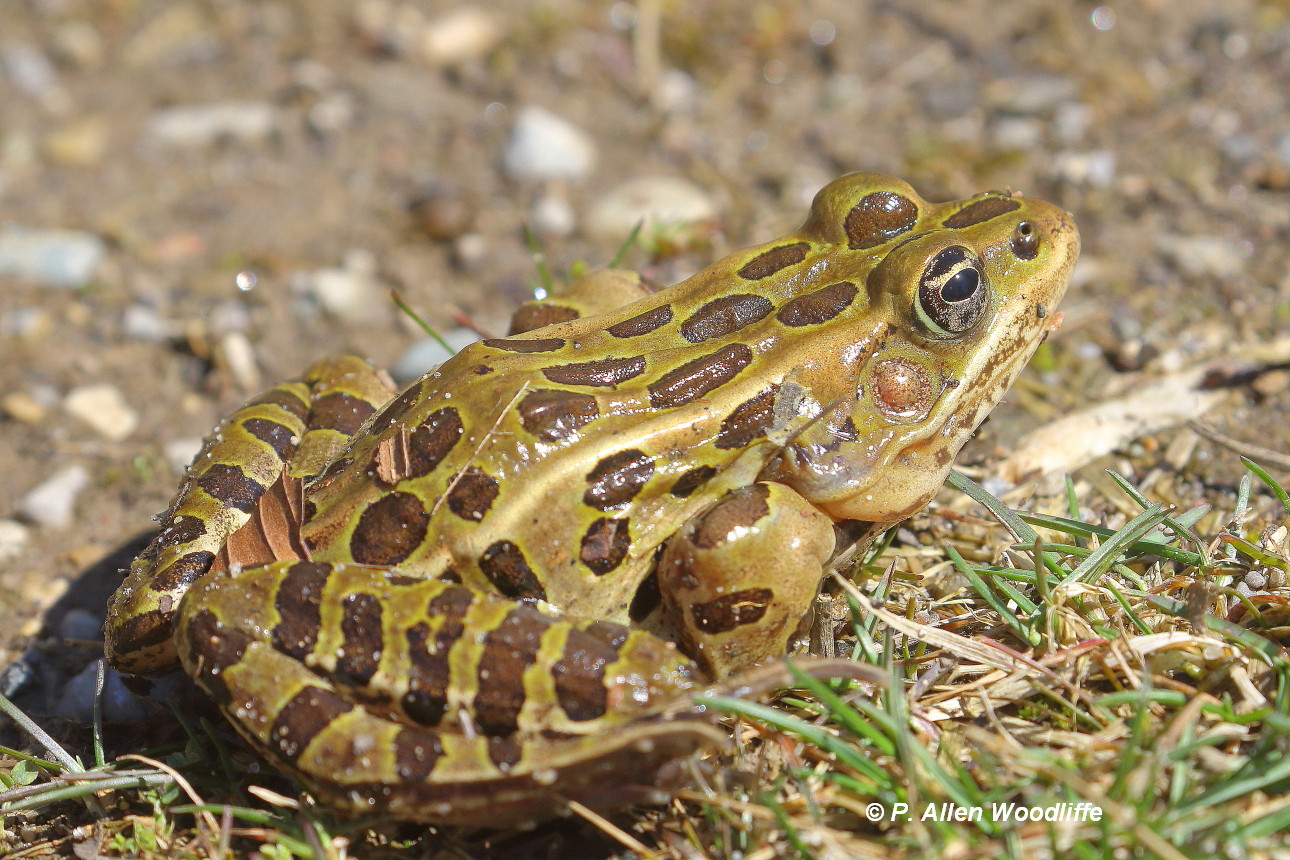
Frogs are plentiful and I have heard Spring Peepers already. Leopard Frogs are calling everywhere, and show up on trails and roads.

On a warmish day, snakes can be seen slowly roaming about, like this Eastern Gartersnake.
I've had a few butterflies, including this Eastern Comma, as well as a couple of Mourning Cloaks that were constantly on the move, so no photos.
Spring wildflowers are appearing, such as this Sharp-lobed Hepatica. Due to the cooler water surrounding the park, winds keep the unfolding of spring a little slower than inland, so it is always nice to see the first native spring wildflowers. There are some non-native species that have already appeared, such as Snowdrops, Siberian Squill and Colt's-foot. They are usually close to cottage lots, so undoubtedly were brought in by the leaseholders.
Sharp-lobed Hepatica
I came across my first migrant warblers of the season at Rondeau, a Yellow-rumped Warbler, looking crisp and clean compared to the more drab overwintering individuals of this species.

I also encountered my first of the year Eastern Bluebird....
.....and an Eastern Towhee that enabled me to get this photo.....
.....as well as one of three Fox Sparrows I noted along the Black Oak Trail.
  One has to be on the lookout for trail 'hazards' as well as the flora and fauna along the trail. Coyote scat is fairly regularly seen, but this one doesn't seem to be coyote since there is no hair or fur in it. I suspect it might be from a member of the weasel family.
This next item is a pupa of some overwintering moth species, as near as I can tell. It was wriggling slightly so maybe it will emerge.

I've checked out some wetlands along Lake St. Clair from time to time as well. Beaver are becoming more plentiful in recent decades, and one sees evidence of their huge houses from time to time.

As I was starting out along the Mitchell's Bay South Nature Trail, I saw my first of the year Barn Swallow, preening on the wire in the vicinity of 4 Tree Swallows.
When I started down the trail, I was interested to see the huge number of Midland Painted Turtles out basking in the sun. In my first time past this group, and close to the beginning of the trail, I counted 77 individuals. As I continued down the trail, I tallied a total of 142 individuals, quite a remarkable number.
On the return, I took a closer look at this first bunch and noted that more turtles had emerged to sun themselves. When I recounted, I found that there were at least 20 more, bringing the overall total to about 162! I was hoping to find a Blanding's Turtle in with them, but all were painted.
Double-crested Cormorants are not uncommon at all...
...nor are Song Sparrows.
Golden-crowned Kinglets were present in small numbers, flitting and feeding amongst the shrubbery.
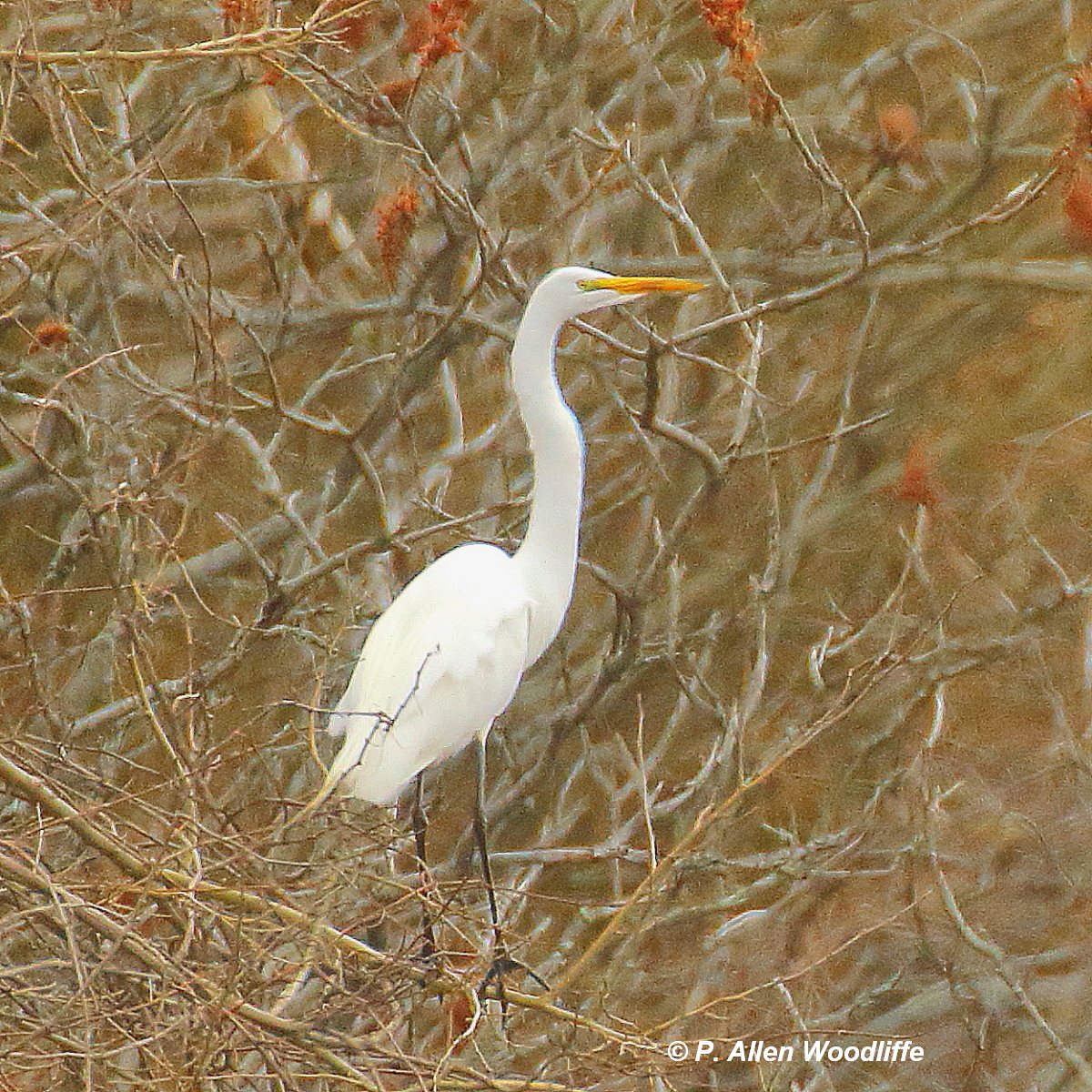
There were several Great Egrets, not surprisingly, but they don't often cooperate for a camera. One has to peer through the taller Phragmites vegetation to have any hope of a relative clear photo.
Bald Eagles, such as this sub-adult, are frequently seen from a distance. The partial back lighting didn't make it any easier to get this photo.

Happy Easter, everyone!


If you would like to subscribe, or unsubscribe, to Nature Nuggets, send an email to: prairietramper@gmail.com


Saturday, 9 April 2022

Egrets, Eagles, shorebirds, etc.

 On occasion there have been some fairly sunny and bright days lately. Even a tad warmish. On those days, it is always a treat to go to places where there are wetlands, especially sheltered ones. On a trip to Rondeau, with all of the sloughs and other wetland habitats, you can hear the chortling of Wood Frogs.

You can't always find them close to the trail or boardwalk. This is a photo when that was possible on one of those exceptional days a couple of years ago.

Other frogs are out as well, including Leopard Frogs. They have a tendency to wander a bit farther from the wetlands, and aren't always successful in their road-crossing efforts.

Birds have been increasing slowly and steadily. Golden-crowned Kinglets are seen in lots of places, but due to their sometimes frenetic activity, aren't always easy to get a photo of.

Brown Creepers are increasing as well, although they never seem to be as plentiful as kinglets.

I had an invitation a few days ago, to visit a private wetland complex north of Mitchell's Bay, and within easy sight of Walpole Island. Just prior to making it all the way to that spot, I decided to check out the Mitchell's Bay North Lakeshore Nature Trail. I hadn't been there for several months, and it showed a considerably different look. The main reason was that the water of Lake St. Clair has dropped from what it was over the last couple of years, leaving lots of exposed shoreline and even mud flats. I found my first shorebirds of the season (other than Killdeer) here. I got photos of Dunlin, shown first...

.....and Lesser Yellowlegs, shown next. I also saw a Greater Yellowlegs, but did not get any photos.

I also saw about 8 Great Egrets overall, but the only place they were right together was in a mostly obscured location along the lake. Here is a trio of them that I caught en route to that lake side location.

There were ducks, and I got these photos. Some Northern Pintail were going somewhere else......

...but this pair of Northern Shoveler was a little more tolerant of me.
There were also several Bald Eagles in view, but too far away for a photo from this vantage point. However at the next stage of my destination for that day, the aforementioned private marsh, I was more fortunate. I saw at least 8-10 Bald Eagles, mostly sub-adults as the adults were likely closer to their home territory. The only one I got a sort of satisfactory photo of was this one, against an overcast grey sky.

It was actually chasing another adult, hence the fierce open-mouth cry it was making. But the photo of the two of them interacting did not turn out.

There were another 8 or so Great Egrets in this vicinity, and I got a few photos. It isn't too surprising to see so many along this part of Lake St. Clair wetlands, as there is a heronry on Walpole.


There were also lots of ducks, as usual, but not all that close at hand other than these.

Blue-winged Teal

This pair of Hooded Mergansers caught me off guard, explaining why the photo isn't in great focus.

A few Northern Flickers were along the edges.

On another occasion, I decided to walk part of the berm trail at St. Clair NWA. It was sunny and breezy, but quite comfortable. I saw a couple of Bald Eagles there, but they were well off along the tree line at the lake shore.

Most of the ducks were well beyond photo range, but a trio of Bufflehead came in right in front of the tower which I was on, and seemed to be more interested in the courtship activity rather than me on the tower.
There were lots of American Coot, at least several dozen scattered here and there....
...and right along the trail was a single American Tree Sparrow.
One of the Wood Duck boxes along the main access road to the NWA often has an Eastern Screech Owl peeking out. It isn't always this visible.

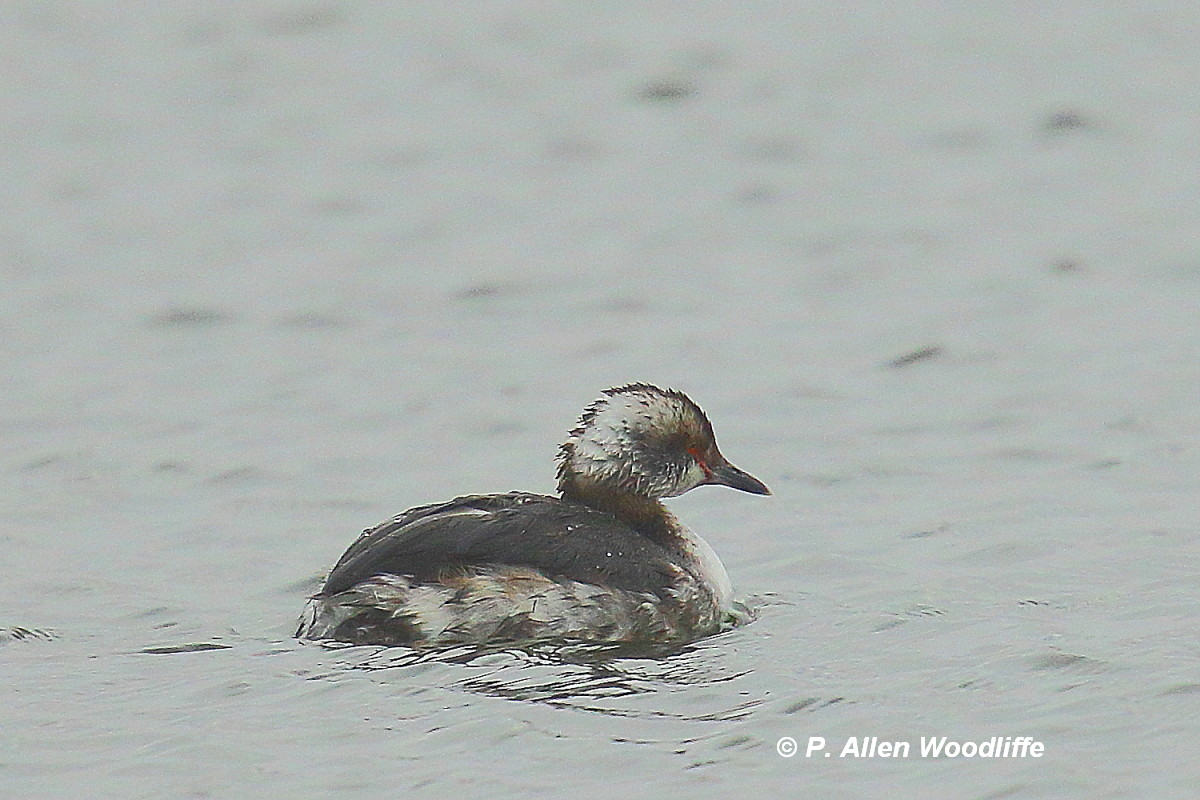
I have zipped out to Erieau a couple of times of late, mainly to see if I could catch up to the Eurasian Wigeon that gets reported from time to time. I have 'scoped the water front a few times, but it always seems to turn up somewhere else. The light hasn't always been good, but that's no reason. Here is a Horned Grebe slowly changing over from winter attire to the breeding look.

 Green-winged Teal seem to be fewer than Blue-winged, at the moment, but there are usually a few around.


This was an overcast day, and I almost drove by this Snowy Owl, perched on this pole having just about finished its dinner. I couldn't really tell what the menu item was, but it had webbed feet.

I went again on Friday, since the Eurasian Wigeon was reported again from Erieau. But again, no luck finding it. The only European bird species I saw was this European Starling, a common species of course, and not all that popular with North American birders. But all things considered, they really are an attractive/colourful species.

Another non-native species is this Mute Swan, a species that is all too frequently found in local wetlands. This was along the Rail Trail, and clearly the nesting season has begun.
....as it has for Canada Geese.
While I was out along this trail, this sub-adult Bald Eagle came floating by, stirring up many of the resting waterfowl.
It made no attempt to pick off anything, but eventually continued out of sight.
After the eagle departed, many of the disturbed ducks returned to the shelter of the marsh, although they were still a bit skittish. This male Northern Shoveler didn't seem to mind me capturing it in all of its breeding finery.


If you would like to subscribe or unsubscribe to Nature Nuggets, email me at prairietramper@gmail.com


Friday, 1 April 2022

Birds of Chatham-Kent, Then and Now, Part III

 Part III of this series starts off with King Rail. 

 However rather than repeat myself, regular readers may remember that I did a complete blog post on this endangered species a couple of months ago. You can read all about it at this link.

Yellow Rail 

I don't have any images of this rare and reclusive species. I have heard them in their breeding habitat up along the sub-arctic lowlands in northern Ontario, but have never seen one.

Then: A rare spring and fall transient. There were a few spring and fall records from the very early 1900s and periodically to 1944. Most were in wetland areas near the mouth of the Thames River and some of the wetlands along Lake St. Clair. Baillie had one at Rondeau on May 11,1939.

Now: an even rarer transient. While this small, elusive species must still pass through southern Ontario on the way to the northerly breeding territories, it is very rarely seen. There have been three relatively records in the southern CK area, one in each of 1996, 2006 and 2020, all in the month of May.

Common Gallinule

Then: considered a common summer resident, breeding in coastal as well as inland marshes.

Now: considerably less common. It can be found regularly in some of the largest wetland habitats along Lake St. Clair, with occasional records at Rondeau. There is not much difference in breeding records between the first and second Ontario Breeding Bird Atlases. However with the more extensive invasion of the non-native Common Reed (Phragmites) in these wetland habitats especially in the last 2-3 decades, it is expected that with less habitat, there are likely fewer records, and the current third OBBA may demonstrate that.

American Coot

Then: an abundant migrant and a regular and plentiful summer resident, breeding in all of the large marshes. There were occasional early winter records

Now: certainly still an abundant migrant, especially in the autumn. For example, occasionally huge numbers may be seen in late autumn and very early winter. Depending on the amount of open water, typically several dozen to several hundred are reported on the Blenheim/Rondeau CBC, with a high of 4002 birds in 1999! Breeding records are fairly low, other than in some of the larger marshes along Lake St. Clair where they can be regularly found in small numbers. Fluctuating water levels and an increased presence of Phragmites has been at least partially the reason for fewer numbers in CK. However there is little to no difference between the first OBBA and the second.

Piping Plover

Then: a rather scarce transient and summer resident. One source in the early '20s indicated the species was numerous between Erieau and Erie Beach, with young seen. There were regular records on the Rondeau beaches as well.

Now: this is an officially endangered species, although the numbers have increased somewhat compared to the dire circumstances of the 1970s and 1980s. They have re-appeared and nested, sometimes successfully, at scattered Ontario locations in the last couple of decades or so. It is seen with a bit more frequency on migration in the southern Chatham-Kent area, although there have been no nesting records since about the late 1940s.

American Woodcock

Then: Formerly a common summer resident, but then becoming rather scarce. As a game bird, it was popular, with up to 60 birds shot by two market hunters in a single day. By the time of Wood's writing, it was increasing in numbers again.

Now: it can be a difficult bird to find, but that is at least partly because it arrives early in the late winter to very early spring and almost immediately begins its nesting cycle. Under good conditions (i.e. calm winds at daybreak or dusk) it can be more easily detected via its courtship display. It is cryptic and rarely even flushes from its nest, relying on its excellent camouflage. There is suitable habitat across CK, and while the first OBBA found it in most of the atlas squares, the second atlas resulted in it being present in all of the atlas squares that had terrestrial habitat.While there is still a hunting season for American Woodcock in Ontario, I do not believe it is very heavily hunted anywhere.

Upland Sandpiper

Then: considered a regular summer resident, never abundant but scattered throughout from April until August. However Wood quoted the Outing writer Ed Sandys as saying in 1897 "he saw thousands of these birds in southwestern Ontario". But certainly by the 1940s, they were restricted to pastures scattered across the county.

Now: I do not have any photos of this species. I don't recall even seeing or hearing one of these in CK during my digital photo era, which is about the past 15 years. The most reliable location in CK for several decades has been in the fairly extensive pasture lands southwest of Charing Cross. I used to see them regularly there if I made the effort. Unfortunately most of those pasture lands and those other scattered pastures in CK have been converted to crop land in the last couple of decades, as crops were more profitable than cattle. There were only about 8 atlas squares reporting it during the first OBBA, and only 3 during the second. Any recent reports of this species are primarily a result of birders hearing one passing through on migration.

Stilt Sandpiper

Then: considered hypothetical. While earlier writers had considered it a bird of the Rondeau region, there were no actual records to substantiate that. The closest known record that Wood was aware of was in Windsor.

Now: it is an uncommon, but regular migrant. It is seen annually most spring and late summer/early fall periods where there is shallow muddy water habitat. Sewage lagoons, not present during the time of Wood's writing, have good habitat, as do flooded field fields.

Hudsonian Godwit

Then: as was the case for Stilt Sandpiper, it was considered hypothetical. It was listed as a bird of the Rondeau region by earlier writers, with no specific records, although McIlwraith stated he had seen it in spring at the St. Clair Flats but again, with no specific dates.

Now: also as was the case for Stilt Sandpiper, it is a fairly regular but uncommon spring and late summer migrant. Sewage lagoons and flooded fields provide suitable feeding habitat for this species on its north and south journeys.

American Avocet

Then: considered an accidental visitant. While early writers of the 1800s considered it slightly more common, at the time of Wood's writing there had been no recent records, and was still considered an accidental visitant.

Now: shorebird habitat has definitely increased since the 1940s, especially with the presence of sewage lagoons. That, and flooded fields during the migration period, have caused an increase in the records in recent decades. It is seen almost annually, with sometimes several records in a year. What makes this mostly a mid-western breeding species a bit more likely here, compared to more northerly breeding migrants, is the fact that extreme southwestern Ontario, and the western portion of CK in particular, has always attracted mid-western species due to the historic prairie habitat.

Wilson's Phalarope

Then: considered an accidental visitant. There was the occasional record in the 1880s, and Sandys listed it as a bird of the Rondeau region but without any date records.

Now: it is a regular migrant and occasional breeding species. As is the case for many shorebird species, the presence of sewage lagoons has affected their presence, as the above photo illustrates. As is the case for American Avocet, this is a mid-western breeding species that is present in southwestern Ontario due to its historic prairie habitat which was present. It is at sewage lagoons where an occasional breeding record has been noted. Here is one I photographed on a nest at the Blenheim Sewage Lagoons back in about 1979, a time when the grassy berms were much less frequently mowed, and there was cattail vegetation allowed to grow in the lagoon ponds themselves.


Birds of Chatham-Kent, Then and Now....to be continued.


If you want to subscribe, or unsubscribe, to Nature Nuggets, send an email to: prairietramper@gmail.com