Showing posts with label American Wigeon. Show all posts

Saturday, 18 March 2023

The weather ups and downs of late winter; associated wildlife

 The season is having a hard time making up its mind! It is technically, still winter, and will be for another few days, but usually by this time hints of spring are a little more noticeable.

Some species of waterfowl that were noticeable by their absence over the winter, have arrived, presumably enticed by some early spring-like weather a couple of weeks ago.Things like Northern Shoveler.....

...and American Wigeon, are pretty regular now.

Now that the ice is gone from the local water bodies, there are thousands of diving ducks scattered across the open water. Redhead, scaup species, and Canvasback, shown next, are the most abundant.

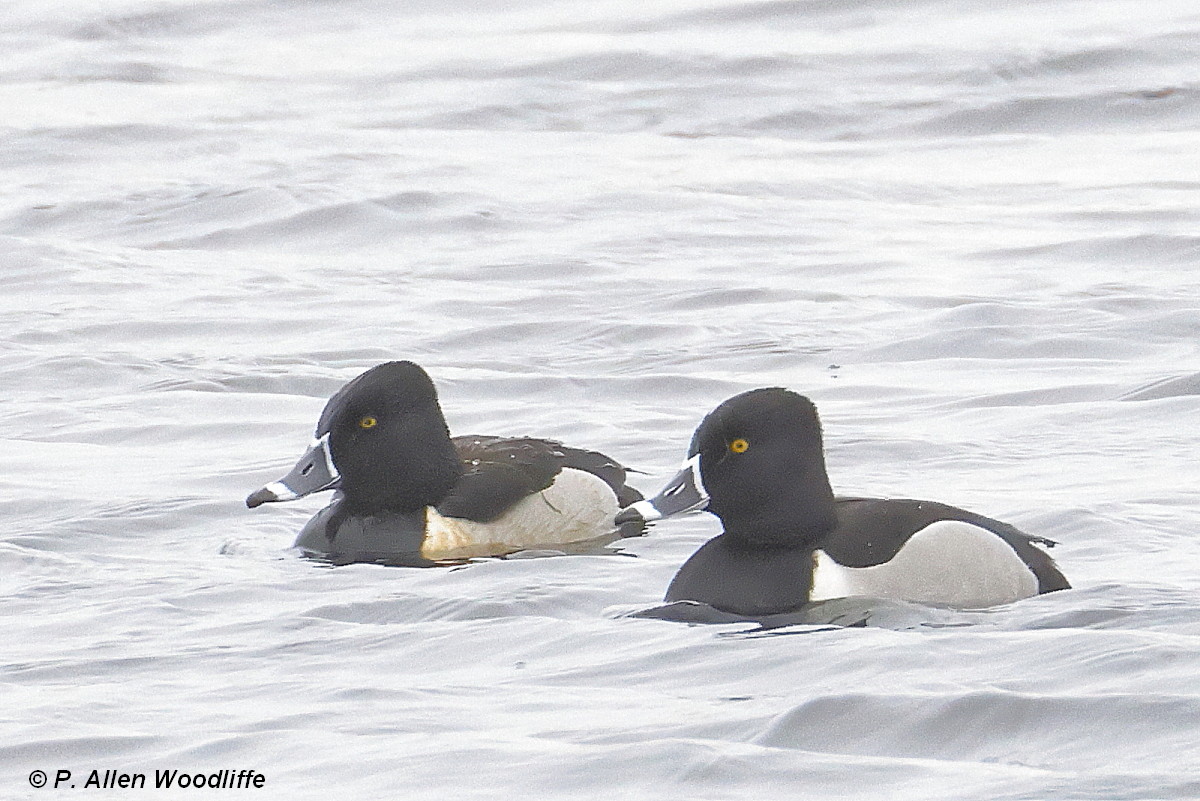
Ring-necked Ducks are well represented but in much smaller numbers, sometimes even on ponds.

With the bit of a warm spell in the last couple of weeks, even shorebirds are beginning to appear. Killdeer are, of course, one of the first to show in spring. In the right mudflat types of habitat, it is not uncommon to see up to a dozen or more over the course of an outing.

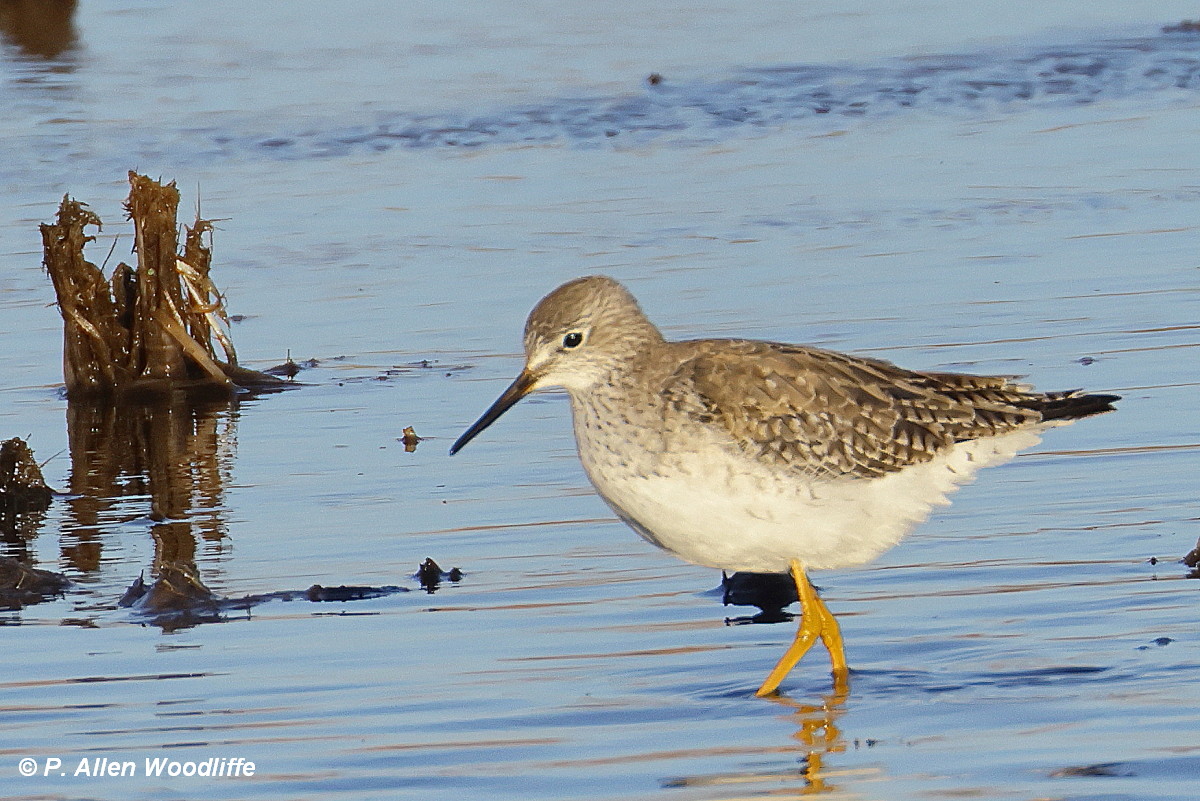
Definitely early is this Lesser Yellowlegs, seen periodically in the Erieau/McGeachy Pond area.

If conditions are right, one or more Wilson's Snipe may be present all winter, but with last autumn's dryness leaving some of their regular haunts quite uninhabitable, the species was completely absent as far as we know, since last December. But this one has appeared in the last few days at the Keith McLean Conservation Lands. It can be quite cryptic and, from a distance, it blends in so well that at first I missed it. When I checked more closely a few minutes later, scanning with my binoculars, I picked it out, and was able to get a photo that, heavily cropped, allows it to stand out nicely.

On one of the same days, I saw this Wooly Bear caterpillar crossing my path. It is something that almost everyone has encountered at this caterpillar stage, anytime from late autumn to early spring.

Less frequently encountered is what it looks like as an adult, a beautiful Isabella Tiger Moth, which readily comes to black lights.

On another warmish day, a Leopard Frog had emerged. Unfortunately, it was still cool enough to be unable to escape the impact of a wheel.

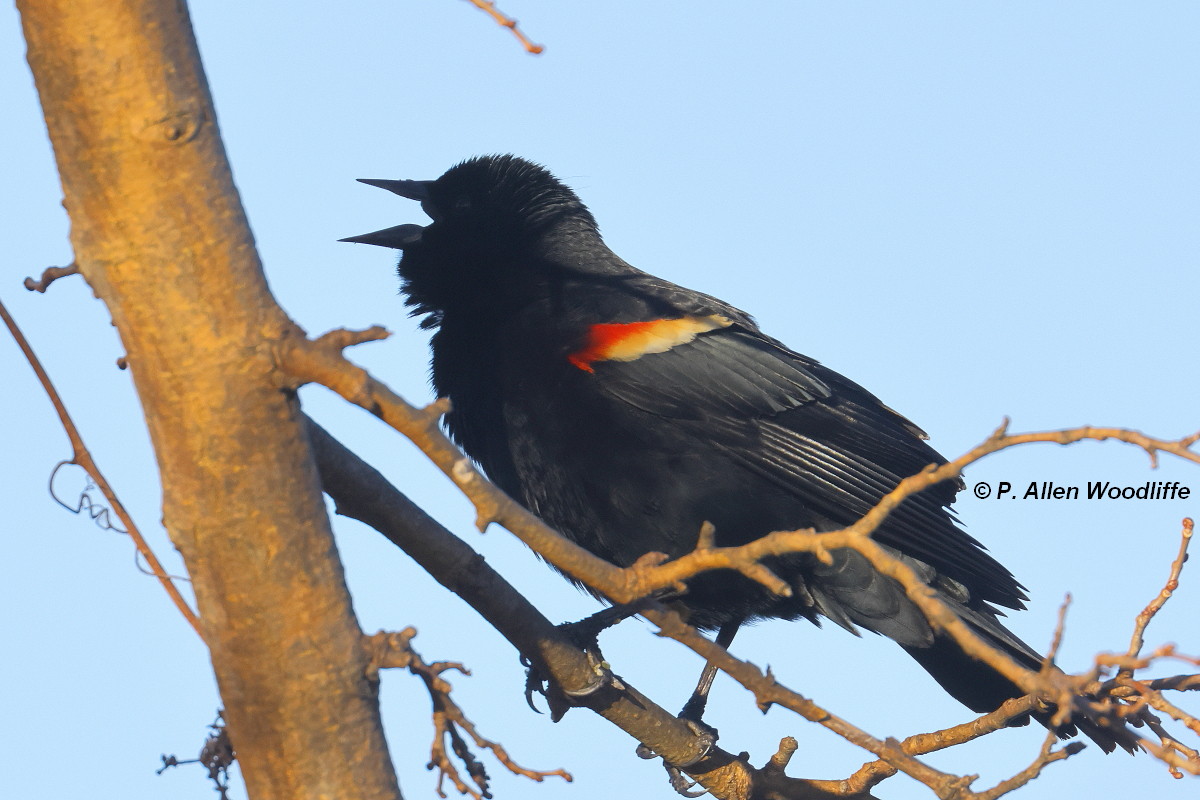
Blackbird types are showing up in large numbers, most notably Red-wings, which are staking out territories in the wetlands of the area. The females will be arriving in larger numbers very soon.

Far less abundant are Rusty Blackbirds at the moment, although their numbers will hopefully increase over the next few weeks. They will continue on to northern habitats of the Boreal Forest area for their attempts at successful nesting.

Horned Larks were almost non-existent over the month of January, but by February they were showing up in good numbers, scattered throughout the agricultural landscape. Some will migrate up to the sub-arctic lowlands, and nest in the tundra there. But many will stick around the fields of southern Ontario and if they are lucky, get a family raised and fledged before the agricultural activity gets in full swing.

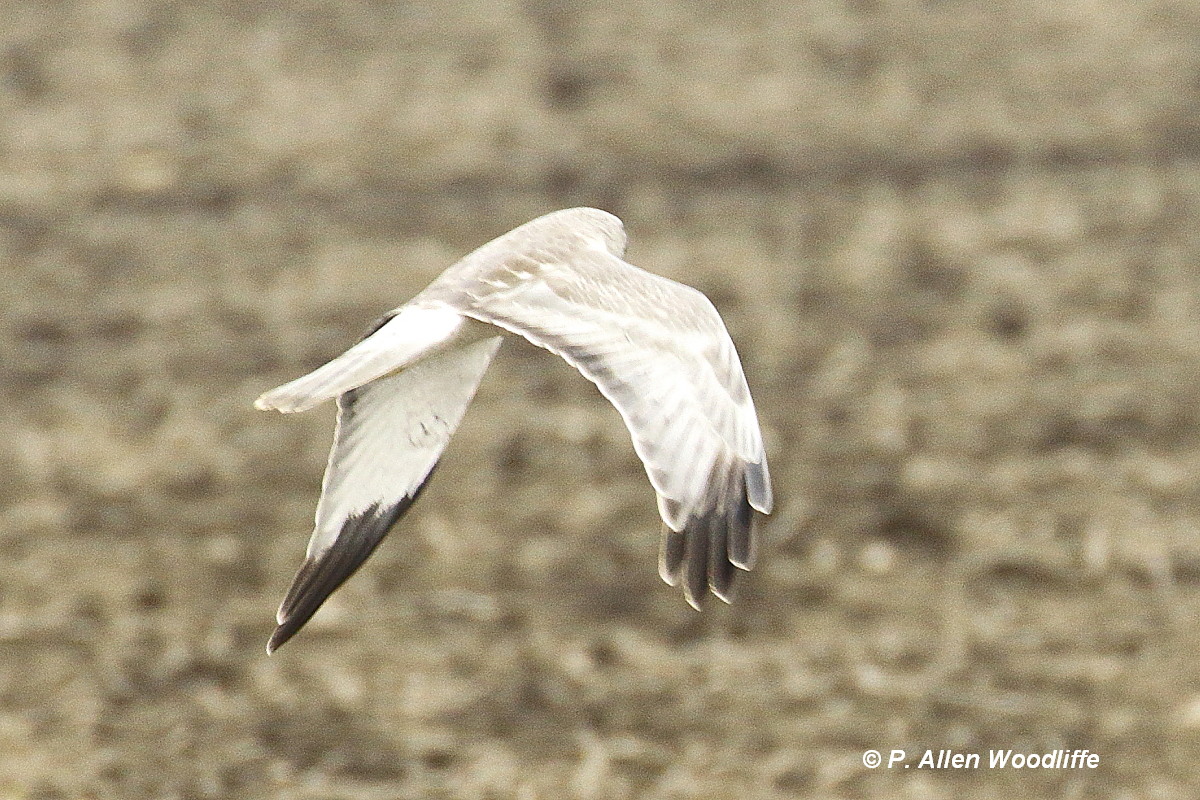
Northern Harriers are more plentiful on the landscape. Photo opportunities are not easy to come by, but this one, a male sometimes known as a "Gray Ghost" was somewhat cooperative in that it allowed me to follow it from along the road as it swooped over the fields, and I managed to keep it in reasonable focus in spite of its erratic flight.


Snowy Owls have been noticeable by their absence this season. Last year they were quite abundant, with a record 23 individuals seen on the local Christmas Bird Count. This year it is quite a different story, as I have seen less than 10 individuals all winter. So I was pleasantly surprised to see this individual along a grassy drain, although well out in a field. A careful approach enabled me to get this greatly cropped photo. But I will take it!

It eventually must have thought I was getting too close (but probably at least 150 metres away) and decided to head out farther into the field.

It is unusual to have seen at least three species of shorebirds quite recently yet still seeing a Snowy Owl, but late winter can certainly be highly variable, as this present season is indicating. What will the next few weeks bring???


If you would like to subscribe, or unsubscribe, to Nature Nuggets, send an email to: prairietramper@gmail.com





Monday, 19 December 2022

Another memorable Christmas Bird Count

 The latest Blenheim/Rondeau Christmas Bird Count is now history. It was yesterday, December 18. It has been going since 1939, making it one of the longest running counts in Canada.

The weather in some ways was not too bad. That is unless one was expecting to be out in an unsheltered part of the count circle, as I always am. The south beach of Rondeau Provincial Park is one of my favourite places in Rondeau. It can be a very pleasant outing, especially in warmer seasons. On a Christmas Bird Count, it can really test one's resolve! Such was the case yesterday.

After noting the Eastern Screech Owl that regularly roosts in a cavity of an American Beech tree, I met up with Kevin, Morgan and Finn at the beginning of the west South Point Trail. From there we drove to the end of the trail, at the lake edge. At this point, as shown in the following photo, we got our trusty spotting scopes set up and spent an hour or so scanning for waterfowl or anything that was in sight. 


 Last year I had record numbers of things like Red-throated Loons, and many other species. On this day, however, we didn't see a single loon on the move. There were a few things like two species of scoters as well as numerous scaup, mergansers and such, as well as a sub-adult Bald Eagle.

Since the prospect for loons was not high, we decided to get ready for the next stage of our day. It was walking the south beach all the way to the Erieau channel and back. Except for the first 2-300 metres of this ~8 km trek, we were fully exposed heading face first into the brutal winds, which ranged from about 32-50 km/hour according to local weather stations. Being as exposed as we were along the lakeshore, it might have even been higher. The temperature was just slightly below freezing, and the wind chill was in the -18 to -20C range. Nonetheless, we struck out and went all the way to Erieau and back. After all, there were birds to be seen!

Looking through the 'scopes that we took along, and even looking through binoculars was a challenge to keep steady enough in the wind to get the kind of views we needed for viewing birds at a distance. But there were a few stands of Phragmites that helped give a bit of shelter to make it easier. Even though Phragmites is a highly undesirable invasive species, under these conditions we were glad a bit of it was there.

We had a very good variety of waterfowl, with 19 species observed overall. Even though Mallards and American Black Ducks are typically the most abundant species at this time of year, there were more American Wigeon and Bufflehead than either of those two species, although getting photos of them was not easy. After all, it is the tail end of waterfowl hunting season, and they are used to hunters approaching stealthily or luring them in to get a shot. The birds in the following photo were taking shelter at the edge of Rondeau Bay, but left quickly when they detected our movement through the grasses.

Mute Swans are not used to being shot at, so the few that we saw seemed to care less about our presence.

Ruddy Ducks were numerous as well, numbering about 75 in our territory, but not nearly as abundant as the several thousand reported along the more sheltered east side of the park. This one was injured in some way, as it preferred to rest on the shoreline, and when it decided to get farther away from us, it flopped over and had a difficult time righting itself before swimming away. It always returned to the shoreline as soon as it could. I suspect it will become a source of food for a foraging hawk or eagle before long.

We did see a single Common Loon, but not flying out over the lake. It was swimming in the relatively sheltered water of Rondeau Bay.

With the relative above freezing temperatures of recent weeks, there was a lot of exposed, unfrozen shoreline, with lots of mudflats and seaweed matter along the edges. That meant there was a high probability of finding shorebirds. A few days ago there were both Purple Sandpiper and Wilson's Snipe seen along the south beach, and we were hopeful in seeing one or both of these species. As it turned out, we didn't see either, but overall had something even better!

We saw 10 Killdeer, which were not unexpected. They were skittish, and did not allow for great photos, so we didn't bother. Killdeer are seen regularly on this count. But the other three species were not expected: one each of Spotted Sandpiper, Dunlin and Western Sandpiper! The Spotty was too skittish to get a photo of. Spotted Sandpiper is rather rare for the season, and has only been observed on two previous counts. Fortunately the other two species were quite cooperative.

On the way out, I saw the Dunlin and called over to the others in the group. We noted it could fly fairly well, at least for short distances, and it never seemed to go far. It had a bad leg, and no doubt the ice that encased its foot added to the weight as well as interfered with any streamlining necessary for efficient longer flight. It hopped on one leg and seemed to be able to forage, but I suspect it will not last long under the current weather conditions.

The ice on the foot is a little more evident in this next photo.

As mentioned, we got to the Erieau channel, about 4 km from our starting point. Here are a couple of shots from Erieau, looking east towards the Rondeau forest and our return destination. There is a bit of wooded area right at the channel, and this first photo shows that end of the sandspit looking east with Rondeau Bay on the left. With the lower lake levels for a change, it made getting out to the channel much easier, and is the first time I have been able to get to the channel in at least 3-4 years.

This next photo was taken just at the eastern edge of the wooded area, and shows how open and exposed the majority of the south beach is. The dark line in the distance is the Rondeau forest, about 4 km away.

It was part way along on our way back when a flock of wigeon took flight, and one of our group noticed a small shorebird in flight as well. Fortunately it returned to the edge of the bay, and we were able to relocate it. It didn't take too long to determine it had all the characteristics of a Western Sandpiper! It had only been recorded on this count on one occasion, back in 2001, when I had two at the very south end of the Marsh Trail. But this one wasn't a total surprise, as one had been seen over a several day period back in early December, although it was along the Erieau Marsh Trail. It is likely, although not for certain, that this bird and the one seen at Erieau are one and the same.

We got quite a few photos from a distance, just for the record. The chunky look with no 'neck', the dark bill with a slight droop at the tip, and the bit of dark streaking on the crown all fit the characteristics of Western Sandpiper. But the bird was quite tolerant of us, or at least was more interested in foraging along the shoreline than it felt any threat from us.


Just to show how relatively tolerant of us this bird was, this next photo shows Kevin hunkered down a short distance from the water's edge. Initially the bird was at least 10 metres or more away, but it decided Kevin was not a threat.....
.....and passed by less than 2 metres from him! Way too close to focus the camera on, but at this point, Kevin had an almost face to face look at this bird, which happened to be a lifer for him.

 Kevin, Morgan and Finn had to depart after we got back to our starting point, and our group ended up with 37 species. I kept on for several hours in different parts of the park and I ended up with 57 species for the day. The final number of species had not been determined for the overall count when I checked in with Keith, the compiler, but last evening the number stood at 108 species as reported by about 23 birders spread out over the count circle. There were a couple of more lists to come in, so that number might change. Nevertheless, it is likely to be the highest number for any bird count in Ontario this year, even though it is a far cry from our record of 124 species of last year. We have averaged about 108 species over the last two decades.

 There were a few highlights from other birders on the count in their respective territories, including two or more Golden Eagles (none of the next 4 photos were taken on this count)....

....several thousand American Coot...
...a few Fox Sparrows...
....and at least one Black-crowned Night-Heron. This species is rather unusual having only been seen 9 times over the 80+ years of this count. But it can stay well into the winter, depending on the water conditions. This next photo was taken along a larger creek just north of Erieau back on January 21, 2012.


If you would like to subscribe, or unsubscribe, to Nature Nuggets, send an email to: prairietramper@gmail.com


Monday, 7 November 2016

You win some, you lose some.....

So the other day, I got a text from Steve Charbonneau indicating that the brightly coloured Eurasian Wigeon was really close to shore off of an access point at Erieau, and great for photo ops. Trouble is, I didn't have my cell phone on at the time, and so I didn't see the message for about an hour and a half. I eventually acknowledged his message. He had also texted Garry Sadler, who was on top of his game and got the message and headed right out. Garry saw the bird, and got some fabulous shots (read on).

By the time I arrived, it was almost deja vu all over again (to quote Yogi Berra). There wasn't a duck in sight, at least not like it had been a short time earlier. There were ducks well out in 'scope range, but nothing close, and definitely no Eurasian Wigeon in sight. So I moved on a bit elsewhere to where there were a few ducks and satisfied my photographic urges with subjects like American Wigeon, Ruddy Duck and even Double-crested Cormorant.
American Wigeon female
Ruddy Duck female

Ruddy Duck male in dispute with another male


I even saw the McArthurs out for a late season boat ride, presumably looking for things to add to Ric's blog.


The reason it was deja vu, is because the day before another, but less brightly coloured male Eurasian Wigeon had been seen along the park side of Rondeau Bay close to shore near the yacht club. I was busily scanning the thousands of waterfowl there in mid-morning. And as I was scanning, I heard a major whoosh of wings from the head of the bay, and the thousands of birds I hadn't yet scoped, came tearing by. I had only looked through about 10% of the birds, when this mass exodus occurred and the ducks all headed out towards the middle of the bay towards Shrewsbury.

Birding is often about being at the right place and at the right time. Fortunately I had seen a Eurasian Wigeon in the spring, so I didn't need it for my year list, but to miss a couple of opportunities to get some decent shots of this colourful bird was frustrating.

There are, fortunately, many other things to enjoy. And on the weekend I was back at Rondeau again. This time there were only a few ducks along the park side, and it didn't take long to determine that the Eurasian Wigeon was not in sight.

I went down the Marsh Trail. Birds were not plentiful, but all this warm weather has resulted in a fair number of butterflies continuing to do what they do. I saw at least 8 Eastern Commas and a Fiery Skipper, plus the usual Cabbage Whites, Orange Suphurs and Clouded Sulphurs.
Eastern Comma
Fiery Skipper...I just got one shot before it left
Pollinators were glad of the warmth, and also of the small number of flowers that were hanging on. Sowthistles (Sonchus spp) were the most abundant flower, and many had one or more pollinators crowding the inflorescence.

Pollinator gathering


An unexpected bonus for my hiking around Rondeau this day was to come across a never before documented location of the endangered Red Mulberry. It was in fine shape, a mature tree that was about 20 cm in diameter and likely 15-18 metres tall. The leaves are distinctive and quite visible at this time of year.
Rondeau has one of the best populations of this species in Canada. It only occurs in a handful of locations, and while a couple of them (Lighthouse Point Provincial Nature Reserve and Point Pelee National Park) have decent numbers of them, many are affected by the hybridization with the non-native and quite aggressive White Mulberry and are anything but good examples of pure Reds.


Today I went back to Erieau. A Red-necked Grebe had been reported there yesterday afternoon, and I hadn't seen one of those for awhile. I scanned the lake from the pier, and although I saw numerous Horned Grebes, I could not find any evidence of a Red-neck.


I did see another butterfly on my return to the car: this time it was a Common Buckeye, and it was looking quite fresh.

Steve Charbonneau came along just as I was getting ready to leave, and after a bit of a chat, we decided to look at the waterfowl on the bay again. Steve got there first while I checked out the empty fish tug harbour, hoping that the lack of boats and sheltered water would have attracted something of interest. And then a text from Steve arrived, indicating that the Eurasian Wigeon was indeed in view, albeit a fair way out. Needless to say I didn't spend any more time than necessary getting there. And there it was, a bit too far for a photo of any type, so I moved to the vantage point behind the fire hall. I got a better view, and a record photo.

Barely a record photo, as you can see.....it is the second bird on the left. It is a far cry from the fabulous photo that Garry got a few days earlier. To enjoy that one check out this link. 

Congratulations, Garry! Maybe next time I will be at the right place at the right time, or at least have my cell phone on to get the message in time.......


The Blenheim Sewage Lagoons are always a treat to stop by. It isn't very crowded, as you might guess.....the only folks who go there are birders!

A Cattle Egret persists.....up to four have been seen at a time in recent weeks, but in the last few days, only one is sticking around.


A Greater Yellowlegs was there, looking quite lonesome. It was the only shorebird that I encountered, and the first time all year that I haven't come across at least a Killdeer.

Hooded Mergansers are around, mixed in with hundreds of other waterfowl (mostly Ruddy Ducks).


And some butterflies are as well. Aside from the usual Cabbage Whites, Orange Sulphurs and Clouded Sulphurs (although their numbers are diminishing), I came across Eastern Comma, Common Buckeye and Common Checkered Skipper.
Common Buckeye
Common Checkered Skipper

One final photo and thought: take a look at this photo and what does it remind you of? The late day sun rays bouncing across the gentle waves of the lake?

Would you believe that all of those lines are spider webs? This is a scene that Marie brought to my attention shortly after I returned home late in the afternoon this past weekend. It is the grassy park behind our place, and the number of spider webs captured by the late day sun is absolutely amazing! The world of nature is so abundant with photo ops, even in places where you wouldn't think to look. And thanks, Marie, for bringing this to my attention!