Showing posts with label White Vervain. Show all posts

Sunday, 24 August 2025

Plants and bugs of Rondeau, and another threat to some shrubs

 I've been giving my camera equipment, as well as myself, a good workout lately, but being careful not to get too caught up in the heat and humidity. Rondeau gets a lot of my attention, as most readers will know. And this is a wonderful time to find late summer flowering plants, as well as a multitude of different insects that come to visit. Here are some of the highlights, starting with plants. American Ginseng is an endangered plant, and I have been keeping an eye on a few individuals as they progress through the season. This first photo shows a plant with developing seeds. A short time after they turn red, they will fall off.

One that is coming into peak form right now is American Hog-peanut, next, a member of the legume family.
A Carolinian species that likes rich woods is next. It is known by several common names, the main one with which I always thought was appropriate is Richweed (Collinsonia canadensis).

There are quite a few along the Rondeau Road area, in various stages of development.
A colourful, but not native plant is Creeping Bellflower. It is not widespread.

One that I thought was quite late to be in flower, but was in fine condition, is Flowering Spurge. It often is found in open areas, such as prairie or savanna, but this one was along a heavily shaded road edge.
Great Blue Lobelia, next, is fairly widespread and distinctive.


Indian Tobacco

Lopseed

A plant that I am always on the hunt for, although knowing its unpredictability in flowering makes it a challenge even at the best of times, is this little orchid, the Nodding Pogonia. It is an endangered species, with the only known location in Canada being at Rondeau. It is often very difficult to see, as this next photo shows. I photographed this with a 100 mm macro lens at a distance of about 6 inches! It can easily be missed, or worse, stepped on, so its location is not advertised, and even I seldom go out unless I think the weather has triggered its flowering, when it is more noticeable.
It looks a little bit showier when it finally opens, for a day.

Pale-leaved Woodland Sunflower
Another endangered species is next. It is Rough Blazing-star, and generally considered to be a prairie or savanna species. It occurs in a couple of savanna type habitats at the park.

Related to the Creeping Bellflower, shown earlier, is this native one, known as Tall Bellflower.

And a tall flowering plant but with tiny flowers is next: White Vervain.

Wood Nettle
And finally, Woodland Sunflower. It differs from the Pale-leaved Woodland Sunflower, shown previously, in that the base of the leaves are tightly clasping the stem.

And there are various insects to see in a variety of places.

Ailanthus Webworm Moth (not native)

Fall Webworm Moth caterpillar
Next is a member of the Leafcutter Bee group. Specific species is yet to be determined.


Lemon Cuckoo Bumble Bee

Northern Paper Wasp
Next is a Perennial Mason Wasp, an endangered species.

Pitted Mason Wasp

Pure Green Sweat Bee

Spurred Ceratina
On one occasion when I was out exploring I came across this chunky looking caterpillar. It is a Tulip-tree Silk Moth, the first time I had ever seen this caterpillar.
It was partially wrapped up in this dead American Beech leaf when I first discovered it.
 For anyone who has been out roaming the park in recent weeks, you might have noticed a lot of Spicebush shrubs looking very unhealthy. Some just show signs of a problem with a few of the outer leaves....

...while others are completely dead, or at least appearing so.

 The cause is somewhat inconclusive at this point, but there are several things that may be happening. The most likely one is something called Laurel Wilt. Regardless, it is quite widespread at Rondeau, especially towards the north end. Hopefully the cause can be determined, but it is unknown what a solution might be, if any exists. I plan to discuss some of the major forest changes at Rondeau in more detail in a future post.

 Also a reminder is that both my books, Life On A Sandspit, and Natural Treasures of Chatham-Kent, are available at the following locations:

-Friends of Rondeau Bookstore (inside the Rondeau Visitor Centre) 

-Bayview Market, just outside the Rondeau gates

-Mindful Market and Eco Hub, main street, Blenheim

-Mitton's Jewelers, main street, Ridgetown 

-Book Brothers, King St E, Chatham 


If you would like to subscribe, or unsubscribe, to Nature Nuggets, send an email to: prairietramper@gmail.com 


Wednesday, 19 August 2015

Hot, humid and sultry, but there are still lots of reasons to get out!

During these hot, humid, dog days of summer, I have been picky about the times I am out in the field. Apparently the term 'dog days of summer' refers to the hot sultry period from early July to about August 11, and includes the period when the dog star is in conjunction with the sun (I'm Sirius :-).  I've never really enjoyed the hot humid weather, and ever since I've had to contend with Lyme Disease, it has been more of a challenge. But with so many things to see, I definitely get out when I can!

Not that long ago, I ventured out for some pre-sunrise photography, at one of my regular locations: the main harbour of Erieau, looking across Rondeau Bay to the provincial park. As I got out, I realized how sultry the weather was.....it was actually foggy on my way to Erieau, and with 100% humidity and no breeze it was not comfortable at all, even at about 5:15 a.m. I had forgotten to bring my knife to cut the humidity and haze. And the mosquitoes were already up and at it.

 I usually find the 30 or so minutes before the sun rises to have the best colours, and by using a tripod, a neutral density filter, cable release, mirror-lock-up and a low ISO rating, I can get some appealing slow shutter speed shots where the colours blend in nicely. This first one was an 8 second exposure.

Just as the sun was breaking the horizon and I was packing up, I noticed a canoe heading out, so I nabbed a photo of that as well. Obviously it took a much faster shutter speed to capture them. This next one was at 1/125 second.
I headed over to Rondeau Provincial Park shortly afterwards. The woodland atmosphere was dark and foreboding, as the sky was mostly overcast, and the fog had remained in the still air to give an ethereal look and feel. Even the birds were quiet, but couple of months ago it would have been alive with song at that hour.


Spider webs were everywhere, and obvious by the way the drops of moisture clung to the silken threads, appearing as a string of pearls.

I headed out the South Point Trail, hoping for a little breeze and some kind of action as the sun broke through the haze, the wind shook the spider webs free of dew drops and the wildlife came alive.

Some of the mid-summer wildflowers were in fine shape.

Tall Bellflower

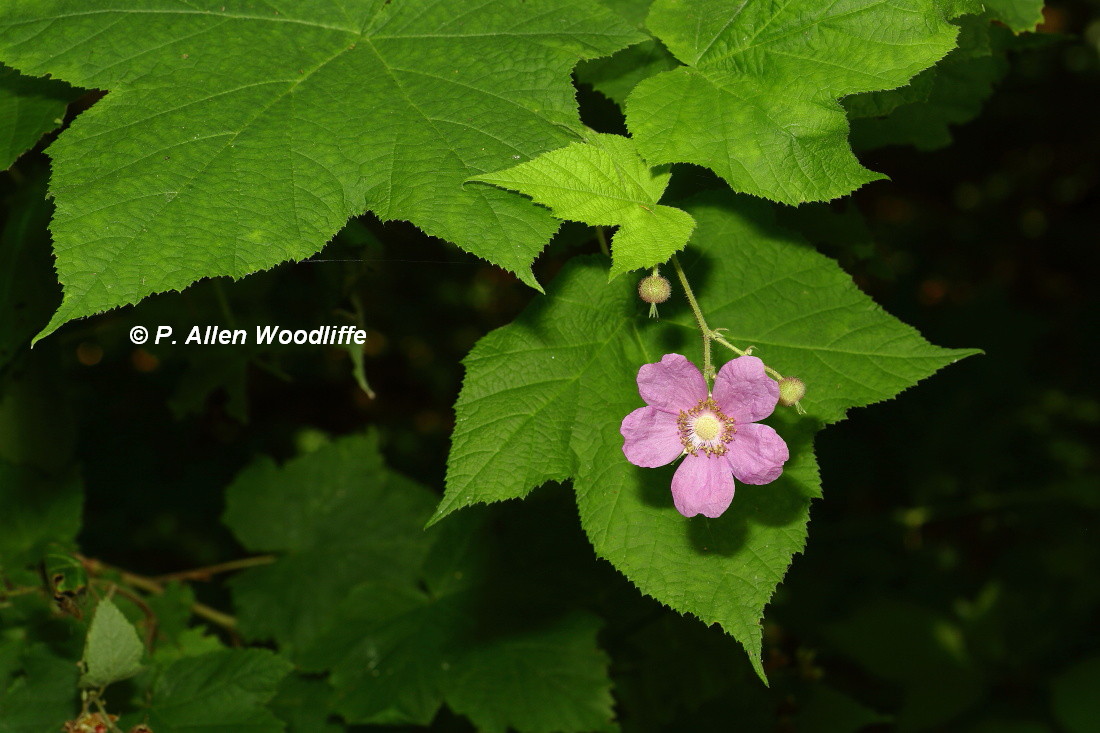
Purple Flowering Raspberry
 When I got to the 'point', it was clear that erosion was ongoing. There used to be a bench a short distance beyond and to the right of this Danger sign. This is the third bench in as many years, in three different locations, that has had to be rescued by park staff, which demonstrates the extent of the erosion. It isn't just occurring at one place. The erosion is partly due to the higher water levels this year, but also due to the presence of the large pier at Erieau which interrupts the normal water currents carrying sand.

The trail and road used to be here not that long ago!
There were a few butterflies.....I didn't see anything really unexpected, but the next two were nice and at least briefly cooperative for the camera.
Appalachian Brown

One of 5 Giant Swallowtails sipping nectar from Wild Bergamot
I explored other sections of the park, and got some photos of this Small Green Wood Orchid. It grows in wet areas on rotting logs, especially in some of the sloughs.


On another trail, I came across lots of White Vervain (Verbena urticifolia). Most people wouldn't give it a second glance let alone a first one, yet the tiny flowers, only a few millimetres across and appearing on long slender branches are simple but attractive.

I came across this tiny Orchard Spider feasting on its most recent meal.

And this is the time of year for one of Canada's rarest orchids to appear...the Nodding Pogonia (Triphora trianthophora), which as far as anyone knows, only occurs at Rondeau. I wrote a fairly extensive post about it previously, entitled: A highly endangered native orchid.

During one of my planned visits, I took park staff out to see it (it is so small and occurs in an out of the way place; none of the current park staff had ever seen it in real life before this day).

It is a bit of a hike to get to the location, crossing some of the deepest, darkest and swampiest woodland such as is shown in the image below, all the while fending off hordes of bloodthirsty mosquitoes. Other than the occasional park staff who I take to this favoured spot, I have never seen anyone else even close to it, and I love it!


And we saw plants with single flowers, doubles and the even rarer triple (from which it gets the 'Tri' part of its Latin name). I always hope to find ones that are strongly magenta in colour, but it seems that this year, for some reason, they are mostly white with just a slight tinge of magenta at best.