Showing posts with label Prairie Milkweed. Show all posts

Saturday, 4 June 2016

National Prairie Day

The first Saturday in June has been declared National Prairie Day. At least that is the case in the USA, but Canada has not yet designated it as such. But since tallgrass prairie is extremely rare in Ontario, and is in fact one of the most endangered ecosystems in North America, I am promoting National Prairie Day on this side of the border as well.

Tallgrass Prairie (TGP) harbours a huge number of rare, threatened and endangered species, as well as a multitude of species that have not even been evaluated yet, but are equally as rare. In fact you can hardly venture onto a TGP without stepping on them!

TGP was widely scattered across parts of southern Ontario, but has been greatly reduced. It is believed that less than 1% of the TGP present at the time of settlement still remains. Some of the best remnants are at places like Walpole Island First Nation......

 ....and Ojibway Prairie Provincial Nature Reserve in Windsor......
 ...and as far east as the Alderville First Nation in the Rice Lake area.

There is a host of colourful, and rare plants, including Colicroot (Aletris farinosa)
 Colicroot can be quite abundant in places. Sadly this prairie site below with dozens of Colicroot was destroyed in the process of building the new Herb Gray Parkway in Windsor. Some of the individual plants were transplanted to a more secure location. While it saves individual plants, the overall TGP habitat is nonetheless destroyed. But that is the topic for one or two other blog posts.
 Milkweeds are a significant part of a TGP habitat, including Prairie Milkweed (Asclepias sullivantii)
Prairie Milkweed
 ....and Purple Milkweed (Asclepias purpurascens), both of which are rare.
Purple Milkweed
 Butterfly Weed (Asclepias tuberosa) is not as rare, and a delight to come across in any setting.
Butterfly Weed

Some of the rarest plants include species like Eastern Prairie Fringed Orchid (Platanthera leucophaea)
 and Pink Milkwort (Polygala incarnata)

 and Slender Bush Clover (Lespedeza virginica)
 and Small White Lady's-slipper (Cypripedium candidum)

The previous four species are all legally Endangered. This next species, Yellow Fringed Orchid (Platanthera ciliaris) is extirpated, since it has not been seen in Ontario in many decades. I had to go to Ohio to photograph this one.

There are various groups of fauna typical of TGP that are also on the rare, threatened or endangered list, including Eastern Fox Snake.
 and Henslow's Sparrow. This image below is one of the first times I attempted to digiscope a bird.
The heart of the TGP region is in the midwestern USA. Some of the best remaining prairie landscapes are in Missouri. Some are national natural landmarks, such as Golden Prairie.

Golden Prairie

Some are state parks, such as Prairie State Park where the bison do indeed still roam.

Scissor-tailed Flycatchers are fairly common.

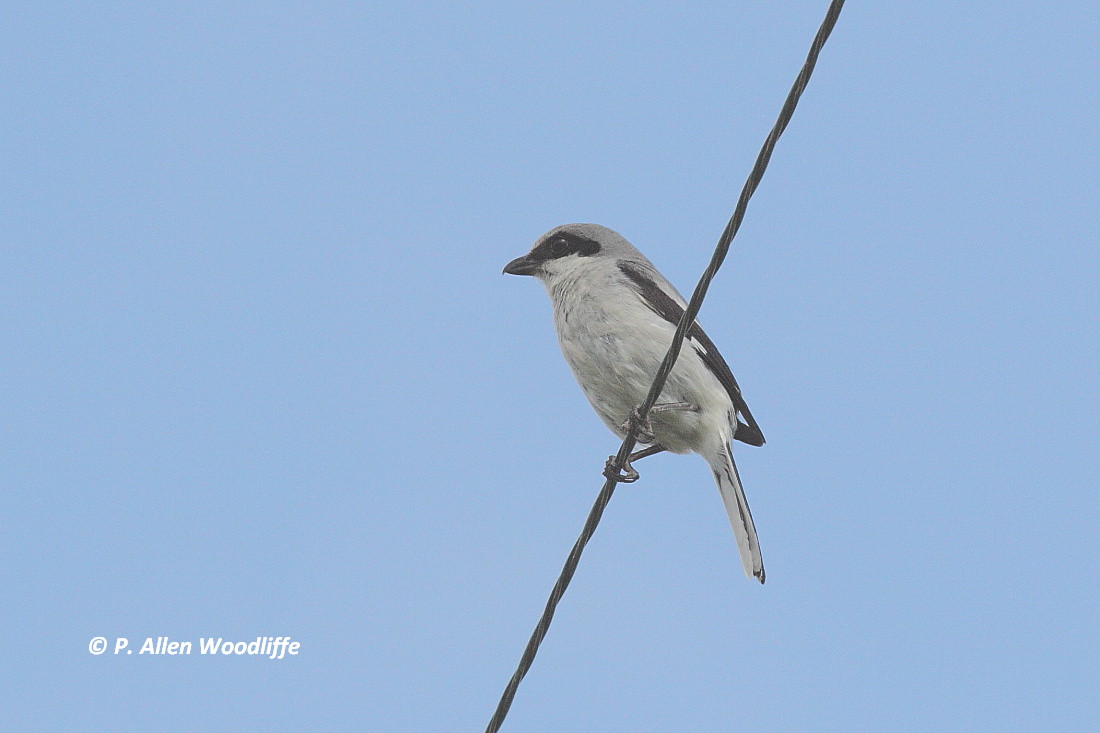
 Loggerhead Shrikes are periodically seen.
Loggerhead Shrike
 Dickcissels are abundant.
Dickcissel
 Many have interesting and appropriate names, such as Sky Prairie, Paintbrush Prairie or Gayfeather Prairie.
Sky Prairie
 Others have retained a name that represents a native connection, such as Wa-Kon-Tah Prairie or Kickapoo Prairie.
Wa-Kon-Tah Prairie

Tallgrass Prairies are amazing landscapes and warrant a high priority for protection. Get out and explore a prairie soon!


Tuesday, 14 July 2015

Honey Locust to Stinkhorn.....native plant highlights

A couple of posts ago, I gave a summary of some of the interesting species of fauna I came across while conducting a flora and fauna survey of a decommissioned railroad in Chatham-Kent. This post will focus on some of the highlights of the native flora. A future post may describe some of the many non-native species of plants.

Such railroad corridors are largely unexplored, since they frequently have 'No Trespassing' signs at the typical access points. When the railroads are in operation, if you are not paying attention trains can sneak up on you in a hurry! (Don't ask...... :-).

Typical scene along one section of this rail corridor
 Obviously there isn't much, if any, pristine natural area habitat along these corridors, but it is surprising how much native flora and fauna use what habitat there sometimes is. For example when doing a survey on a corridor in 2012, I discovered a provincially rare plant that had never before been seen in Chatham-Kent and a butterfly that had very limited records in C-K.

In such wide open sections as shown in the image above, there is always the hope that some prairie vegetation may be found, maybe even a patch of prairie. Such was the case in 2012.

Most obvious prairie vegetation becomes more visible from mid-summer to late summer. I'm hoping that my future visits to this corridor in the next few weeks will enable me to find more prairie species along here. Historically areas not far from this corridor had some of the largest extent and best quality tallgrass prairie in Ontario!

Some of the prairie associates that I have found so far, include:

Canada Anemone
 Canada Anemone (Anemone canadensis) is certainly not limited to prairies, as it is frequently found along the sunny edges of woodlands. Prairie is where this plant really does well.
Prairie Milkweed
 Prairie Milkweed (Asclepias sullivantii) is rare in Ontario, limited mainly to the extreme southwest. It is just coming into peak flowering condition now, slightly later than the similar looking Common Milkweed. Butterflies and other pollinators love it!
Yarrow
 Yarrow (Achillea millefolium) is often found in disturbed old field, but is definitely a prairie associate, and numerous pollinators can be found using it.
Climbing Prairie Rose
Climbing Prairie Rose (Rosa setigera) is rare in Ontario, being officially designated as "Special Concern', and is largely limited to Essex, Chatham-Kent and Lambton, although small populations do occur beyond those areas.

Some sections of this corridor are adjacent to bits of woodland, and there the diversity of flora changes.


Some species occurring there are likely remnants of the forest habitat that was there prior to the railroad being constructed.
Honey-Locust
Honey-Locust (Gleditsia triacanthos) is unofficially rare in Ontario, being most common in the extreme southwest.
Wild Yam
Wild Yam (Dioscorea villosa) is a climbing vine which is uncommon in Ontario. It doesn't have showy flowers......they don't get much showier than those tiny little balls on the slender branches shown here, but their leaves are distinctively heart-shaped.
Michigan Lily
Michigan Lily (Lilium michiganense) is a tall, brightly coloured flowering plant. It is widespread in southern Ontario but never seems to be abundant. It often occurs in woodland openings, and its bright orange flowers are pleasing to the eye.

Along the sides of the corridor are wet areas, prime habitat for plants such as this Southern Blue Flag (Iris virginica).
Southern Blue Flag
Another 'plant' that I came across, although not everyone would initially identify it as being a plant, is this unusual fungus:
Dog Stinkhorn
Dog Stinkhorn (Mutinus ravenelii) is, as its name suggests, a stinky fungus. I usually encounter them in the late summer or early fall, but for some reason, this one was evident in late June. One can usually smell them before seeing them, depending on which way the wind is blowing. It is this feature than enables them to spread their spores. Flies are attracted to the odour thinking it is a rotting bit of flesh and are looking for a place to lay their eggs, which fly larvae (maggots) will hatch out from and consume the rotting material. The flies crawl over the gelatinous tip of the fungus from where the odour emanates, searching for a place to lay their eggs, and this is where the spores are located. The spores then stick to the flies feet and are transferred to the next place the fly is inspecting. Just another one of the many wonders of nature!


Wednesday, 16 July 2014

Milkweeds (and Monarchs) have a new lease on life!

Probably many of you reading this are aware of recent changes to the Noxious Weed list of Ontario. Up until this spring milkweeds, which includes the entire genus of Asclepias, were on this list and ultimately at risk. Landowners were obligated to remove them from their property, and if they didn't, the weed inspector could authorize someone else to do it for you and send you the bill!

In reality, there was only one species of milkweed that was really any problem, and that species was Common Milkweed (Asclepias syriaca). It could get quite aggressive especially on the farming landscape, as it thrives on disturbed sites. But the list of Noxious Weeds was compiled years before there were chemical controls and other methods of tilling that helped keep it from being too problematic in the agricultural setting.

Asclepias syriaca

The Monarch butterfly is highly dependent on milkweeds, especially Common Milkweed, as the adults lay eggs on the milkweed's leaves and the caterpillars consume the leaves. The milky sap that the caterpillars ingest as they eat the leaves is what makes eating the caterpillars so distasteful to predators. The very distinctive colours of the caterpillar serve as ample warning to caterpillar-eating birds to beware.....they are not a tasty meal!


In recent years, as the Monarch butterfly declined and became legally listed provincially and nationally as a Species At Risk (SAR), there was a conflict with retaining milkweeds on the Noxious Weed list and requiring landowners to destroy the critical plant of a SAR. So it was a major, yet long overdue, event earlier in 2014 when milkweeds were removed from that list.

With that as background, let me introduce you to eight of the other nine milkweeds of Ontario (The 10th species, Four-leaved Milkweed [Asclepias quadrifolia], is extremely rare and in Ontario is currently found only in one or two places in the east. I have yet to see it).

Swamp Milkweed (Asclepias incarnata) is a tall species that is commonly found in wet areas, as its name suggests. Wetlands, roadside ditches and the like are great places to see this one. Its reddish purple flowers and relatively long narrow leaves, as well as the habitat, are useful characteristics.

Asclepias incarnata

Poke Milkweed (Asclepias exaltata) is an uncommon species most often found along woodland edges. It has wide leaves, and pinkish white downward hanging clusters of flowers.
Asclepias exaltata

Butterfly Milkweed (Asclepias tuberosa) is probably the most distinctive milkweed of all! It is found in grassy woodland openings, in prairies and on grassy sandy beaches.

Asclepias tuberosa

Green Milkweed (Asclepias viridiflora) is not a plant that many people would recognize as a milkweed. In fact most people would walk by it and not give it much thought at all. This next photo is of a fairly robust plant along a sandy trail through the southeast beach of Rondeau, with closer views following.


Asclepias viridiflora


Whorled Milkweed (Asclepias verticillata) is generally not common anywhere in Ontario, but where it does occur, can be fairly abundant. The leaves are quite narrow which together with its white flowers, separate it from all other Ontario milkweeds.

Asclepias verticillata

All of the preceding species occur or formerly occurred at Rondeau. Whorled Milkweed has not been seen for at least two decades.

Prairie or Sullivant's Milkweed (Asclepias sullivantii) is restricted in Ontario to the extreme southwest. It grows in some of the better quality tallgrass prairies, and also may be found along some highway road allowances where the vegetation may have some structural characteristics of a prairie. It looks a lot like Common Milkweed, but the underside of the leaves are not hairy, the leaves are more upright and the main leaf veins are more purplish.

Asclepias sullivantii

Purple Milkweed (Asclepias purpurascens) has vivid, deep purple flowers. It is a plant of some of the best quality tallgrass prairie and savanna in southwestern Ontario.

Asclepias purpurascens


One of the rarest milkweeds in Ontario is Tall Green Milkweed (Asclepias hirtella). To date in Ontario it has only been found in the tallgrass prairies of the Ojibway Prairie area in Windsor, and probably totals less than two dozen plants. It is a relatively common species in the mid-western tallgrass prairies, however. The next photo is one I took on a wonderful Missouri prairie in 2007, whereas the second one was taken on film in the 1990s from a small population in the Ojibway area.

Asclepias hirtella


So get out and enjoy some of our native milkweeds....the butterflies sure do!


Here is a bit of additional info: currently there are two stamps for sale via Canadian Postal outlets.....one of a Monarch adult for 22 cents, and a Monarch larva for 2 cents