Showing posts with label Purple Flowering Raspberry. Show all posts

Tuesday, 30 June 2026

Black-necked Stilts, Pelicans, Phalaropes, June flowers and...Orchids!

 I really had planned on getting more posts out in June, but it has been busy! Lots of the normal things to deal with, and I have been getting back into black lighting in a much bigger way than the past 2-3 years. It involves a lot of preparation time, actual black lighting for hours at a time, and then 'recovery time' as well as processing hundreds of photos. I will be including a black lighting post or two over the next month, which happens to be Moth Month. I am also preparing on a post regarding the saga of Prickly Pear Cactus at Rondeau, which is more complicated than it might seem. And of course taking time to get my head around, and produce the occasional post in my Life Is A Journey blog.

With that being said, this post might be a little longer than average, as there is so much to catch up on. Most of my efforts have been concentrated in the southern part of Chatham-Kent, but also includes a couple of forays to search for orchids elsewhere in C-K and beyond. 

Bird migration has slowed down, but there have been some interesting things to see. I mentioned Dickcissels having arrived in CK in my previous post, and they continue to be present there, as well as at other places. For example some friends who have a combination woodlot and planted prairie a bit north of Blenheim have had at least two pairs of Dickcissels present, and I spent at least a couple of hours quite recently watching and photographing them. They weren't often very close, but I managed to get some fair photos, with the first one showing a nicely coloured male in full song. What is handy about this species is that it will sing fairly frequently throughout most of the day.

The female, shown next, isn't up and nicely visible nearly as often as the male, as she is likely tending the nest. Her markings are more subdued.

Much more common than Dickcissels are Savannah Sparrows, and they occupy very similar habitat. I saw at least a dozen of them in the vicinity.

At the Blenheim Sewage Lagoons, there has been a pair of Black-necked Stilts busily feeding in one of the cells. The male is on the left, and has the black back....

...while the female has more of a brownish/black back.
Also at these lagoons, there was quite an 'invasion' of Wilson's Phalaropes earlier in June, at least 5 mated pairs, which I featured in my previous blog. After most of them left, there was a single male still present for several days. For this species, after the female has laid her eggs, she will typically leave the area in search of another mate, and the male will carry on with the incubation of the eggs in a grassy nest, and raising the young. I had hoped that this might happen since a male was present for several days after the female disappeared, but as far as I am aware, nothing like that happened. 

Male Wilson's Phalarope
Perhaps the mowing around the cells, or perhaps the greatly fluctuating water in the sprinkler cells was not conducive.  At any rate, my last two visits to these lagoons did not have any phalaropes present. I am aware of only one occasion when nesting of this species actually occurred here, as they are mainly a much more western species. But back in about 1980, there was a nest and I managed to get a photo of the male sitting on it.

Another unusual wetland bird species showed up at the Keith McLean Conservation Lands for 2-3 days. It was an American White Pelican.

It must have felt a little out of place, as even before I got very close, I could sense that it was getting restless. In just a few moments it got up and flew out to Rondeau Bay but I managed to get a few heavily cropped photos.
Much more common bird species are this one: Field Sparrow, a pair of which perched reasonably close by, enabling me to get this photo of the pair. They were busy flitting about a fairly large area, which must have been their breeding territory, but at least one periodically came back to this perch.

While the spring wildflower varieties have tapered off somewhat, there are still a few of the usual, mostly colourful ones present, and some are in fair abundance. This first one is False Indigo Bush, a bit of a provincial rarity, but unofficially introduced to Rondeau by someone.

A naturally occurring rarity is next: Green Milkweed. It doesn't seem to be as abundant these last few years, so I was pleased to see this one.
Much more common are:
Bladder Campion

Canada Anemone

Fringed Loosestrife

Ground Ivy
Pale-spike Lobelia
Hairy Beard's-tongue
Poke Milkweed
These next three often get the attention of even the casual walker:
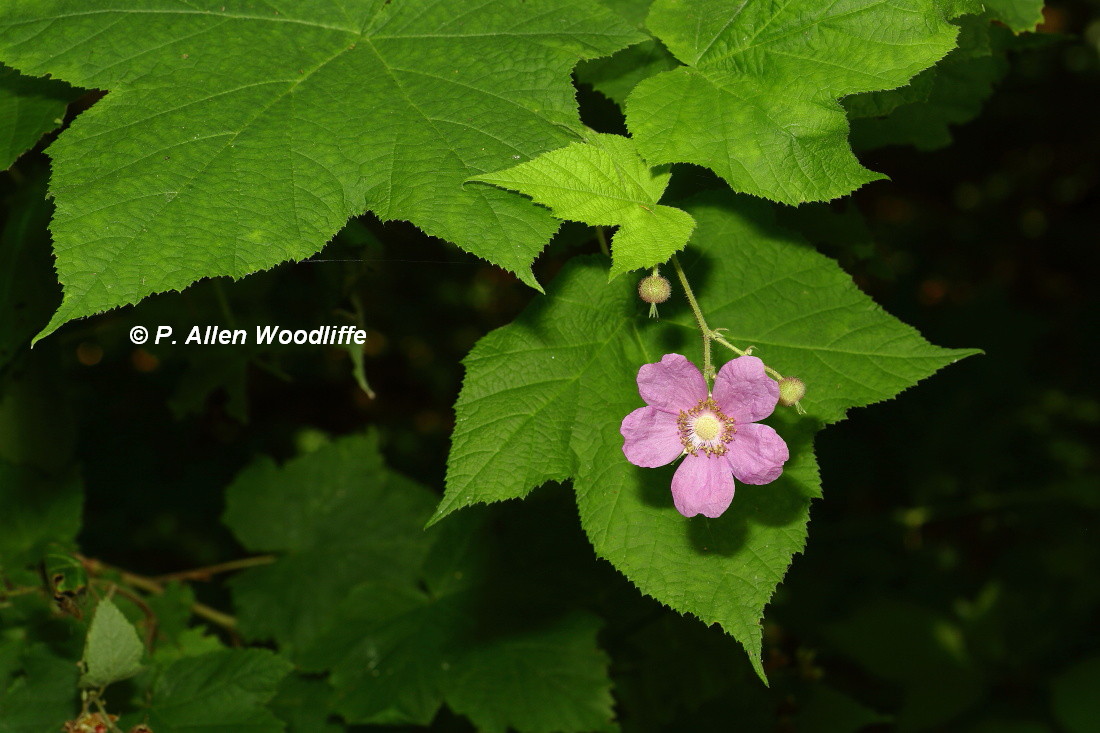
Purple Flowering Raspberry
Wood Lily

Butterfly Milkweed
 One may encounter other elements of wildlife as one travels around. First off is a type of dragonfly, likely a White-faced Meadowhawk due to the season and the relative commonness of this species although the actual face cannot be seen to know for sure.

Lots of these little guys around, and on occasion they will even sit long enough for the camera.
Much less common is this next one: a Blanding's Turtle, which is a provincial rarity. It was crossing the main road in the Rondeau forest, seemingly out of its normal wetland habitat.

Finally, a bit on some successful orchid hunting. Earlier in June I ventured into northern Lambton Co, hunting for some specific orchids. I had hoped to find a Ram's-head Orchid, with the known location being the most southerly location in Ontario for it. But it was not found. However a Pink Lady's-slipper is always a treat to see, and usually are farther north in Ontario than where I venture most of the time.


Next is Hooker's Orchid, a much less colourful orchid, and I have seen it at Rondeau but not for many years. It may still occur, but I don't spend as much time off the trails as I used to, due to the risk of Lyme Disease.

At Clear Creek Forest Prov Park in eastern CK, I caught up to these two orchids. First is Large Twayblade, a provincial rarity.


More widespread but less showy is this Fen Orchid.


 That does it for this post. Hopefully the next one will show up sooner!


If you would like to subscribe to Nature Nuggets, send an email to me: prairietramper@gmail.com 


Wednesday, 19 August 2015

Hot, humid and sultry, but there are still lots of reasons to get out!

During these hot, humid, dog days of summer, I have been picky about the times I am out in the field. Apparently the term 'dog days of summer' refers to the hot sultry period from early July to about August 11, and includes the period when the dog star is in conjunction with the sun (I'm Sirius :-).  I've never really enjoyed the hot humid weather, and ever since I've had to contend with Lyme Disease, it has been more of a challenge. But with so many things to see, I definitely get out when I can!

Not that long ago, I ventured out for some pre-sunrise photography, at one of my regular locations: the main harbour of Erieau, looking across Rondeau Bay to the provincial park. As I got out, I realized how sultry the weather was.....it was actually foggy on my way to Erieau, and with 100% humidity and no breeze it was not comfortable at all, even at about 5:15 a.m. I had forgotten to bring my knife to cut the humidity and haze. And the mosquitoes were already up and at it.

 I usually find the 30 or so minutes before the sun rises to have the best colours, and by using a tripod, a neutral density filter, cable release, mirror-lock-up and a low ISO rating, I can get some appealing slow shutter speed shots where the colours blend in nicely. This first one was an 8 second exposure.

Just as the sun was breaking the horizon and I was packing up, I noticed a canoe heading out, so I nabbed a photo of that as well. Obviously it took a much faster shutter speed to capture them. This next one was at 1/125 second.
I headed over to Rondeau Provincial Park shortly afterwards. The woodland atmosphere was dark and foreboding, as the sky was mostly overcast, and the fog had remained in the still air to give an ethereal look and feel. Even the birds were quiet, but couple of months ago it would have been alive with song at that hour.


Spider webs were everywhere, and obvious by the way the drops of moisture clung to the silken threads, appearing as a string of pearls.

I headed out the South Point Trail, hoping for a little breeze and some kind of action as the sun broke through the haze, the wind shook the spider webs free of dew drops and the wildlife came alive.

Some of the mid-summer wildflowers were in fine shape.

Tall Bellflower

Purple Flowering Raspberry
 When I got to the 'point', it was clear that erosion was ongoing. There used to be a bench a short distance beyond and to the right of this Danger sign. This is the third bench in as many years, in three different locations, that has had to be rescued by park staff, which demonstrates the extent of the erosion. It isn't just occurring at one place. The erosion is partly due to the higher water levels this year, but also due to the presence of the large pier at Erieau which interrupts the normal water currents carrying sand.

The trail and road used to be here not that long ago!
There were a few butterflies.....I didn't see anything really unexpected, but the next two were nice and at least briefly cooperative for the camera.
Appalachian Brown

One of 5 Giant Swallowtails sipping nectar from Wild Bergamot
I explored other sections of the park, and got some photos of this Small Green Wood Orchid. It grows in wet areas on rotting logs, especially in some of the sloughs.


On another trail, I came across lots of White Vervain (Verbena urticifolia). Most people wouldn't give it a second glance let alone a first one, yet the tiny flowers, only a few millimetres across and appearing on long slender branches are simple but attractive.

I came across this tiny Orchard Spider feasting on its most recent meal.

And this is the time of year for one of Canada's rarest orchids to appear...the Nodding Pogonia (Triphora trianthophora), which as far as anyone knows, only occurs at Rondeau. I wrote a fairly extensive post about it previously, entitled: A highly endangered native orchid.

During one of my planned visits, I took park staff out to see it (it is so small and occurs in an out of the way place; none of the current park staff had ever seen it in real life before this day).

It is a bit of a hike to get to the location, crossing some of the deepest, darkest and swampiest woodland such as is shown in the image below, all the while fending off hordes of bloodthirsty mosquitoes. Other than the occasional park staff who I take to this favoured spot, I have never seen anyone else even close to it, and I love it!


And we saw plants with single flowers, doubles and the even rarer triple (from which it gets the 'Tri' part of its Latin name). I always hope to find ones that are strongly magenta in colour, but it seems that this year, for some reason, they are mostly white with just a slight tinge of magenta at best.