Showing posts with label Northern Waterthrush. Show all posts

Tuesday, 9 May 2023

Back to birds, mostly

First of all, a Life on a Sandspit update: it is currently available from the Friends of Rondeau bookstore at the Visitor Centre. The selling price is $27. Part of that, of course, goes to support the Friends. I am working on having the books also available at other local outlets in southern Chatham-Kent. There may be an option to make them available by mail, so stay tuned.

So many cooperative birds to photograph! I likely will have another wildflower post in the near future, as they continue to appear on the landscape, but this is prime birding season, so it is back to birds for this one.

I've spent a bit of time at St. Clair NWA, as it is fairly close to home. One of the highlights of my most recent visit was seeing about 7 Palm Warblers right along the trail. They aren't always the easiest bird to photograph so I was pleased with this opportunity. Most of the time they were on the ground, but on occasion they would get up and grab on to a plant stem.


Chipping Sparrows were here and there.
A few goslings were out exploring their wetland with their parents.
There is often an American Coot or two seen....
....and always a few Red-winged Blackbirds which pose for a short time.

I have heard Soras there from time to time, but they seldom show themselves. I'm hoping that Virginia and King Rails might be heard on a future visit, and also see or at least hear American and Least Bitterns. They are undoubtedly there now, but aren't easy to see.

A little farther up the edge of Lake St. Clair, there are good spots to see terns. This pair of Forster's Terns were getting right into the mating season.


There were lots of Painted Turtles, as usual, but I only shot this Northern Map Turtle, a species at risk.

I stopped at the Blenheim lagoons briefly on one occasion, in between showers. Lots of Ruddy Ducks were there although most were well out from the edge......

....and due to the cold weather, there were hundreds of swallows, mostly of the Tree Swallow type, but a few Barn Swallows, one of which is shown next. They are always a challenge to photograph as they swoop erratically in their chase for an insect to devour.

A short visit to the Erieau Rail Trail turned up a few warblers and others things. I did not get to see the Yellow-throated Warbler that showed up for a day, but I did see some dowitchers. The only one I got a photo of was a Short-billed. The other one that was a little farther away might have been a Long-billed. Both have been reported over the last few days.


Tree Swallows are always around, and occasionally take a rest on a branch.

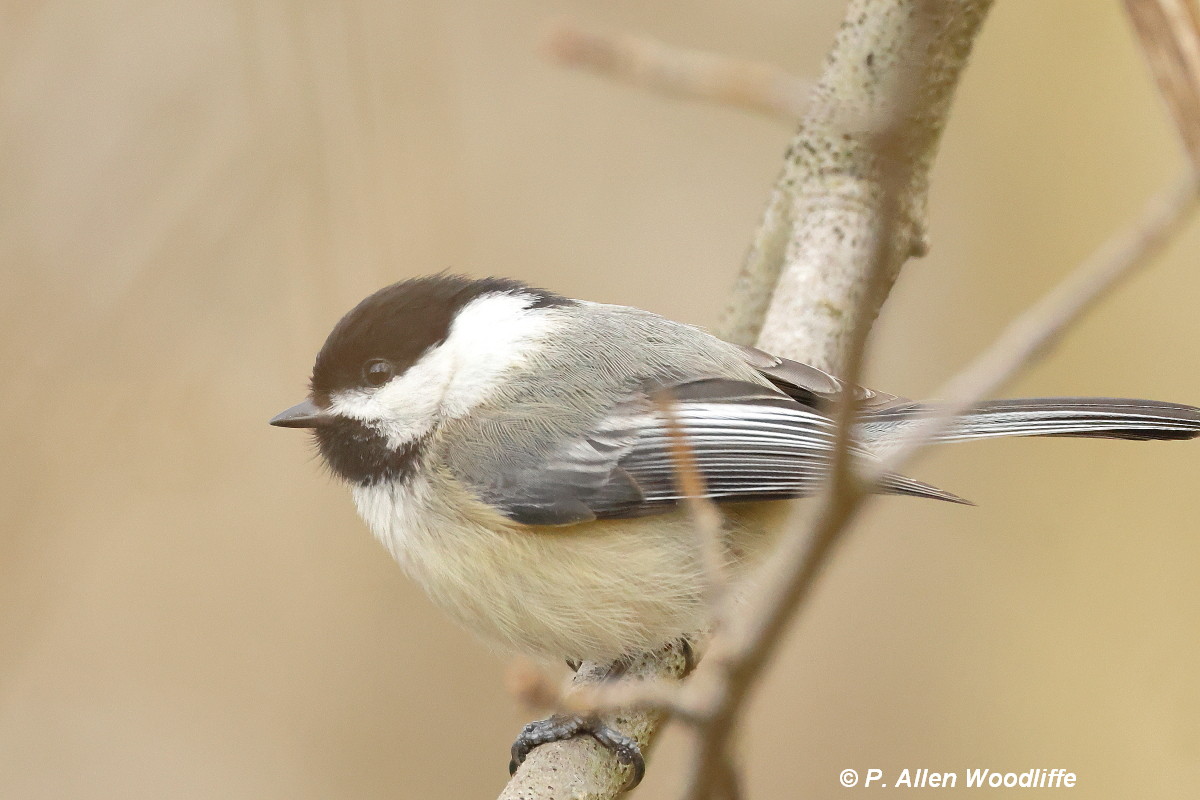
Rondeau is where I have spent a little more of my birding time. There is always something to see, even if sometimes there is lots of distance between birds, and even more distance between birds to photograph. Black-capped Chickadees were quite abundant not that long ago, but most seem to have moved on....
....and most Dark-Eyed Juncos have also moved on. I was surprised to see three along Tulip Tree Trail recently.
Downy Woodpeckers are less vocal via tapping than a week or two ago, so they must be into nesting mode.
While an occasional Brown Thrasher had been seen not that long ago, it seems to be more abundant lately.

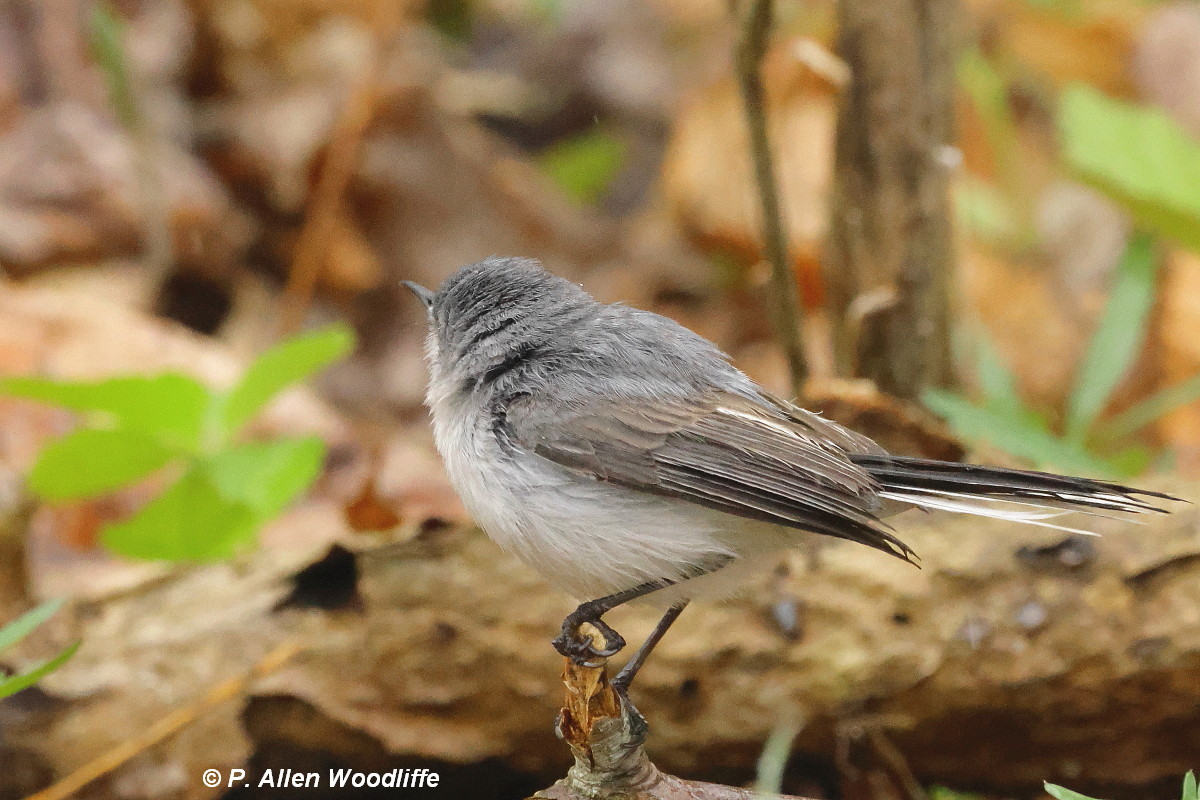
I managed a shot or two of a Blue-gray Gnatcatcher as it flitted continuously and erratically at ground level searching for bugs in the rain.
Eastern Phoebes are scattered around on established territories.
Eastern Towhees are more often heard than seen, but this one cooperated for a few minutes in a tree by the trail.
House Wrens are fairly common, singing loudly and frequently.


Killdeer are in nesting mode, and sometimes faking it.
Northern Flickers are common, but are skittish when a birder is around. I guess they feel safer high up in a tree.
A Northern Waterthrush entertained a few birders near the Log Pond on one occasion.

The feeders at the Visitor Centre always attract birds and birders....and sometimes even in broad daylight this normally nocturnal critter just couldn't resist.

Along the trail, there are still some Hermit Thrush, although they are dwindling in number....

...a few Rose-breasted Grosbeaks are always enjoyable to see....a real crowd pleaser!

A recent highlight was to see this Red-headed Woodpecker at a distance, but at eye level.

 Another highlight was while I was exploring a little used trail. I noted a Pileated Woodpecker fly in nearby. It seemed a bit more silent than usual and I watched it fly to a dead tree that was full of holes. It gradually moved up and poked its head into one that looked fresh, and then backed out. Almost immediately the male dove out, and headed straight towards me before veering off! I don't think it was intentional.

The female then headed back to the hole and got in.
I plan to keep an eye on this nesting pair, as the several pair that call Rondeau home are not often nesting in somewhat of an accessible location. Fingers crossed!

This Solitary Sandpiper was busily hunting for food in the vicinity of the Log Pond.

White-breasted Nuthatches are always fun to see as they meander up a tree trunk.
As I was walking down Harrison Trail, I heard an unfamiliar chirp. I eventually tracked it down to this Wood Thrush. Every year one has to re-familiarize oneself with bird calls, songs, etc.
Yellow Warblers will soon be by far the most numerous warbler encountered at Rondeau and area.They are always fun to see.
Not that long ago a Black Vulture was seen at a couple of places just outside of Rondeau. I wasn't there that day, but I have seen that species on several occasions over the years. But I have paid a bit closer attention to vultures I have seen, including this pair of Turkey Vultures perched on this tree trunk just outside the park, which lent themselves nicely for a photo op.


If you would like to subscribe, or unsubscribe, to Nature Nuggets, send an email to: prairietramper@gmail.com


Thursday, 14 May 2020

Roaming locally, and safely!

Spring continues to unfold, somewhat slower than many would like, but I'm not in a rush to get into full-blown summer. Some years seem to have a long, cool spring, and then it is like someone turned a switch and the heat and humidity are in full force, leaving us to wonder if spring took a vacation. It will be nice to have things a bit closer to normal over the next few days however, as long as the leaves don't unfurl too quickly to obscure the various warblers, vireos, etc. passing through.

The partially leucistic American Robin continues in the vicinity of Paxton's Bush. I might try and canvass the neighbours to see if and where this bird is nesting. It would be interesting to see what any young birds will end up looking like.
I haven't chased any of the rarities that have been surreptitiously reported over the last few weeks. Scissor-tailed Flycatcher, Pacific Loon, Black-necked Stilt and such would be nice to see again, but I have had fabulous views of them elsewhere in Ontario, and sometimes even in Chatham-Kent, so didn't go looking.

I did make a few brief ventures away from home these last few days for various reasons, however. One spot to check out was the Moore Wildlife Area in central Lambton. I wanted to investigate just where I could set up my black light equipment, in good proximity to the Sydenham River as well as being surrounded by forest, to maximize the potential for a good variety of night-time insects. It turns out that a moth I photographed there last year was the first record for Ontario. Who knows what else is out there? While I was examining the prospects, a male Rose-breasted Grosbeak serenaded me from the upper branches of a tree. He had his beak full of things, so it wasn't a full bore song.


There wasn't a lot of bird action there, but I did pick out a couple of spots for my black light adventures, as the weather permits.

A brief stop at Clear Creek Forest on a cool, windy day, kept the birds quiet and under cover. Even this Great Egret, the first I think I have ever seen at this site, was taking shelter amongst some shrubbery along the far side of the upper pond.
While I was in eastern Chatham-Kent, I checked out a very large White Oak that someone had told me about. It is near the municipal campground at the south end of Clear Creek Forest Provincial Nature Reserve, and officially on the boy scout property. You can get a glimpse of it from the road. I took my diameter tape with me, and it turned out to be about 180 cm (70") in diameter. That is a large tree!
I stopped at Peer's Wetland one time as I was passing by. There was a ton of swallows of all types, attempting to snatch up a few insects to carry them through the cool weather. The pair of Mute Swans have successfully hatched their brood.
 While watching the swans for a few moments, I noticed that the male swan was constantly patrolling the water, making sure to keep any and all others away from the little ones. He would first go after one Canada Goose, then another, then another, and so on. While Mute Swans are large, impressive waterfowl, they are also not native, no thanks to humans of European descent who, decades ago, thought they would be an addition to the fauna of North America. And since they are naturally so very aggressive towards the native wildlife, it makes it challenging for the native inhabitants to carry on normally. There is a lesson here....

At any rate, while I was exploring the McGeachy Pond Trail on another day, I noticed that the Mute Swans there are down to one remaining youngster. Presumably the others have served as food for some of the naturally occurring turtle population, most of which are considered officially At Risk. It may sound rather callous, however I can not help but root for the turtles and hope that their numbers will be at least partially sustained by this non-native food source. Go turtles!
I was at the McGeachy Pond Trail due in part to look for a Grasshopper Sparrow, which had been seen earlier in the day at the far end of the trail. I had heard about it while I was over in the Bate's subdivision just outside of Rondeau, and since the birding was fairly quiet at the time, decided to take my chances in going over to Erieau. Arriving at the location about an hour and a half after the sparrow had first been reported, it was not to be found. There was no one else looking at the time, and there had been a variety of walkers, some with dogs, and cyclists passing along the path that the sparrow had been seen. There were lots of sparrows, including White-crowned, White-throated, Swamp, Song and Lincoln's, but no sign of the target species. I looked for at least half an hour and just as I was leaving, another birder came along, so together we looked for a little longer, but came up empty. But that is birding.

I did manage to get a distant view of about 15 Black-bellied Plover out in the field across the road.
On the way back to the parking lot, I came across a couple of Northern Waterthrush....
...and several Gray Catbirds feeding on a shrub of European Guelder Rose, sometimes confused with the native Highbush Cranberry. The berries of the European Guelder Rose are much more tart, so they stay on the branches until late winter or even early spring, when they are still available and birds are hungry enough to go after them.

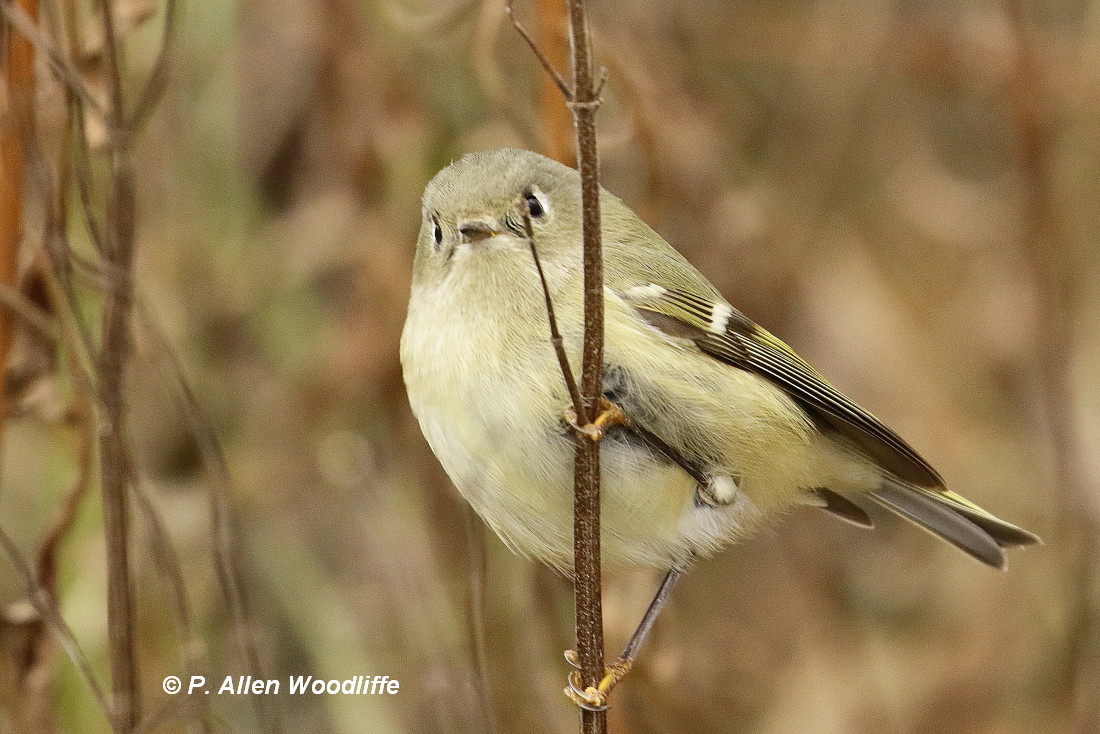
Ruby-crowned Kinglets are everywhere.
There is a lot of Garlic Mustard showing up in many places.
 Manitoba Maple has just about finished flowering.
While I was so close to Erieau itself, I decided to check out the water front. Some less common gulls are always a possibility, as a Laughing Gull had been seen a few days ago, and I had a Lesser Black-backed Gull quite recently. The brisk easterly winds on this day caused many birds, other than cormorants, to find another spot to be. But just as I was starting to drive away from the channel, I caught a glimpse of a black bird with vivid white wing patches, just as it dove into some shrubbery. I quickly pulled off the road and started looking. Was it a Yellow-headed Blackbird, or a Lark Bunting, or a Myna? The first of these three was the most likely, and still an unusual bird for the location. After a few moments, I got a glimpse of the bird amongst the shrubs and on the ground. It was a Yellow-headed Blackbird, my first for the year. It was acting very un-blackbird like. Normally this species will be out on a lawn searching for grubs or something. This was acting more like a thrush or a thrasher, two of the latter which happened to be in the shrubs as well, and difficult to see.
I got a few record shots and put the word out to a few local birders. Steve came by a few minutes later and we got a few more partial looks, but no better photo ops. Garry arrived a bit later, and for some reason this bird escaped without being seen again. As before, that's birding.

Rondeau opens tomorrow! It will be nice to see it after the almost two month hiatus since it closed!