Showing posts with label Cabbage Butterfly. Show all posts

Sunday, 24 July 2016

Backyard Wildlife

With the recent hot and humid weather, I found it difficult to spend much time outside. So it was great to have a variety of plants in the back yard to attract wildlife. I can get out for brief periods, and head back to the A/C when necessary.

The drier than normal conditions have not been conducive for a lot of butterfly activity, as anyone who has participated in recent butterfly counts will be aware. Marie noted in her facebook entry of 5 years ago on this date, that we had 7 species in our yard that day. This year I've only seen about a dozen species all season! But there has been some interesting action on the butterfly front.

One day I noted a male, and then a female, Black Swallowtail. The male was busily feeding on milkweed, while the female was searching for a place to lay eggs on the dill. At one point, I saw her lay an egg and was able to pick it out from the edge of a dill leaf. Out came the camera with 100 mm macro lens as well as all the extension tubes. This first image is of an egg, and it is barely one mm in diameter. I didn't notice until later, that there was an even tinier aphid type critter on another dill leaf, just a bit lower and to the left of the egg.

I watched it for a few days, and then one day it disappeared. Thinking that something had come along and picked it off, I figured I wouldn't see any larva, but then I read where upon hatching, it then consumes what is left of the egg. A few days later, I saw a tiny larva on the dill. At this point, it is quite dark, except for a light-coloured saddle across its middle, and is between 5-10 mm in length.
 The 'saddle' gradually disappears as it goes through several instars, or stages.
 It has a voracious appetite.
Once it gets looking like this, with the saddle all gone, it disappears from the dill plant and looks for a suitably obscure place to form a chrysalis or pupa. The pupa is hard to find if it is left in the wild.
During the early part of the season, after a couple of weeks more or less, it will emerge as an adult. Pupae that are formed in the late part of the season will overwinter as such, and emerge in the spring.

Monarchs, too, have been in the yard.
The egg is laid on the underside of a young milkweed leaf. It is slightly oblong, is about the same diameter as that of a Black Swallowtail and has slight grooves from top to bottom.
After a few days, a caterpillar hatches out, and feeds voraciously on milkweed leaves. In my experience, they seem to prefer Common Milkweed over most of the other milkweed species. I have over 100 milkweed plants in the yard, hoping to attract lots of Monarchs. However the numbers have been down this year throughout their range, due to an unfortunate severe weather event just as they were leaving their Mexican wintering ground, where an estimated half of the population died off. The two caterpillars in this next image left the milkweed plant the next day, presumably to find a suitable place to form their chrysalis.

Other butterflies have been through the yard, including Red-spotted Purples.

Silver-spotted Skippers
 Question Marks
 Red Admirals
 and the ubiquitous Cabbage Whites, plus others. There isn't a day that goes by without at least one or two Cabbage Whites around.
 And at least some of them lay eggs, hatch larvae and get to the pupal stage, as shown next.
 This next image shows one just emerging from the pupa.

With so many plants in the yard, there is lots of other invertebrate action, often around one of the milkweed plants. This next image shows the Great Golden Digger Wasp (Sphex ichneumoneus), a fairly large wasp often found on milkweeds.
An even larger and more formidable looking one is the Great Black Wasp (Sphex pensylvanicus), shown next. Its body can be up to 35 mm long, and looks menacing. However in its frantic flight, it is expending energy either looking for nectar or looking for katydids. These wasps specialize in capturing katydids and other members of the Orthopteran (grasshopper) group. After capturing one, they sting them to paralyze them and then deposit them at the end of a tunnel under ground where the adult wasp lays an egg. The paralyzed katydid will live for a few days until the wasp larva emerges from the egg to feed on the katydid.

Apparently they very seldom sting people, unless they are handled, and so it is purely a defensive action if they do sting. In fact with so many plants providing sources of nectar, the yard is sometimes quite a-buzz with bees and bee-like critters. I always move slowly, so as to not threaten them. I often can use a macro lens and flash for them, and they don't seem to be bothered a bit.
 Milkweed beetles abound.
 One other attractive, although not desirable critter if you have squash or similar vegetables, is the Squash Vine Borer.

Mayflies did not seem to be as abundant as some years, although some were around.

A few dragonflies passed through, such as this female Blue Dasher, either for a rest or on the search for other flying insects that would do for a meal.


Wildlife action isn't limited to invertebrates. House Wrens like the abundance of insects in our yard. This family group was busy in our yard for weeks while feeding themselves and eventually their young. I suspect some of the small caterpillar larvae disappeared from the plants I was watching them on and went down the hatch of the youngsters in the wren box.

What's in your back yard?


Friday, 4 September 2015

Terrestrial Exotics, Aggressive Exotics, and Really, Really Nasty Exotics

This summer I have spent a fair bit of time hiking along a decommissioned railroad corridor. One previous post had described some of the flora while another one described some of the fauna. However as is typical with a lot of 'natural' areas in southwestern Ontario and elsewhere, there is a fair bit of non-native flora and fauna present. Some are colourful, some not so colourful, some are fairly benign while others are highly invasive. I'll leave the nastiest one of all that I have encountered, to the last of this post.

This post deals primarily with some of the lesser known, but problematic non-native species in a terrestrial environment. Others, especially some that are more well known and problematic in wetland environments will be discussed in a future post.

One of the less problematic terrestrial ones is Moth Mullein (Verbascum blattaria). It is not common anywhere that I have seen it here in southwestern Ontario, and is rather attractive.
Moth Mullein


Closely related to this is one that is probably more familiar to most readers: Common Mullein (Verbascum thapsus). It is definitely more problematic in woodland edges and disturbed sites.
Common Mullein
Many of the non-native species are very problematic in all sorts of areas where they can gain a foot-hold. They are early colonizing species, meaning they favour disturbed areas....and there is no shortage of disturbed areas in this part of the world!

Multiflora Rose (Rosa multiflora) is common place, even in prime natural areas such as Rondeau Provincial Park where it has come to dominate certain areas.

Multiflora Rose

Globe Thistle (Echinops sphaerocephalus) starts off looking a bit like a more common thistle, but soon appears with its characteristic globe shaped flower head. It is abundant along the rail corridor.

Globe Thistle
 A bit earlier in the season, one can find a lot of Dame's Rocket (Hesperis matrionalis) which occurs in both vivid pink and white. Its flowering period is long.....some may still be flowering into September.

Dame's Rocket
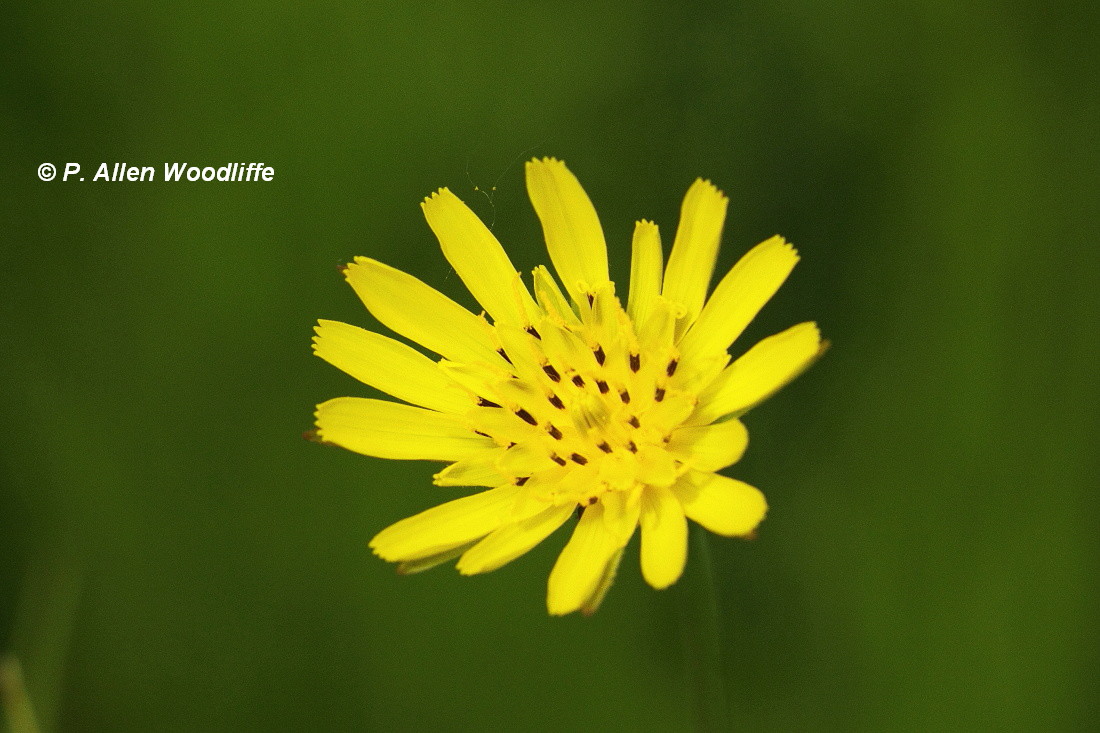
You've probably all seen those plants having a giant Dandelion-like seed head. It is the seed head of one of either Goat's Beard (Tragopogon dubius) or Common Goat's Beard (Tragopogon pratensis). They are common along roadsides, the inland part of sandy beaches, and certainly along railroads


 Goat's Beard
Common Goat's Beard
Some species that are not overly problematic in natural areas, but fairly common regardless are:

Everlasting Pea (Lathyrus latifolius)

Butter-and-eggs (Linaria vulgaris)

Rough-fruited Cinquefoil (Potentilla recta)

Teasel (Dipsacum sylvestris)

This next image shows the exotic Cabbage White butterfly (Pieris rapae) on the exotic Catnip (Nepeta cataria), while the image that follows shows a male and a female Cabbage White on Viper's Bugloss (Echinocystis lobata), also exotic.

 While it is nice to see butterflies flitting about, this European invader is one of the most widespread of butterflies, and it is a pest.....just ask any vegetable gardener or farmer, especially those producing cabbage, cauliflower, brussel sprouts, kale, broccoli, radish, turnip and other members of the Cruciferae family.

Then we get into some nastier, aggressive species. For example, White Mulberry (Morus alba). It is common along hedgerows, roadsides, urban and rural lots, railroad corridors, river valleys even some high quality natural woodlands. The dilemma is that the fruit is tasty to birds, racoons even humans. If you want to find birds in mid summer, find a few White Mulberry trees with abundant fruit as shown in the next image. There you will also find various fruit-eating birds, including American Robins, Gray Catbirds, Brown Thrashers, Cedar Waxwings and the like. However after the birds gorge themselves on these tasty berries, they leave and being members of the group of birds known as Passerines (perching birds), they perch on wires, fences, tree branches. And as the saying goes, what goes in must come out.....so when their digestive processes have completed the job, the seeds are pooped out wherever they happen to be sitting, sometimes several kilometres from where they originated. After a few decades, White Mulberry is all over the landscape.

White Mulberry
The unfortunate added dilemma is that there is a native mulberry in Ontario, the Red Mulberry (Morus rubra). It is limited in Canada largely to Fish Point Provincial Nature Reserve on Pelee Island, Point Pelee National Park, Rondeau Provincial Park and in the Hamilton area around the Royal Botanical Garden. There are a few other locations, but those are the main ones. Red Mulberry is now a legally endangered species, partly because of loss of the forested habitat which it prefers, but even more so because it hybridizes with the much more prolific White Mulberry. Even where Red Mulberry is relatively common, most specimens have some White Mulberry genes in them.

Another problematic plant species is White Sweet-Clover (Melilotus alba). It is a biennial, meaning that it takes two years to get to the seed-producing stage. Disturbed areas and even good quality natural areas such as tallgrass prairies, can have this species in abundance.
White Sweet-Clover

It can be difficult to find in an area one year as the first year's vegetative growth is under way. The following year it is super evident. It is a prolific seed producer, and the seed can last for years in the seed bank, so it is very hard to control. It also has a cousin, known as Yellow Sweet-Clover (Melilotus officinalis).
Abundant White Sweet-Clover

Another abundant but perennial species is Spotted Knapweed (Centaurea maculosa).
Spotted Knapweed

Spotted Knapweed in abundance
With these last two species, there is somewhat of an upside to them, fortunately. Pollinators love them! I have walked by some large expanses of both the White Sweet-Clover and Spotted Knapweed and been blown away by the number of bees, flies and butterflies that are present. In spite of the abundance of these plants, it almost seemed as if there weren't enough to go around....bees were almost lining up to find a spot on a flower head.

This brings me to what I consider one of the worst of the worst in terrestrial areas: Dog-strangling Vine, also known as Pale Swallow-wort (Vincetoxicum rossicum).

It is a perennial, a fast-growing vine and a prolific seed producer. It has seeds somewhat similar to milkweed, which are transported by air, so it can spread quickly. It also spreads very easily if even a small piece of a stem is transported to a potential site elsewhere.

Vincetoxicum rossicum
 Note its growth habit in the next image. As a vine, it climbs over existing vegetation, smothering it, to the point that it can be by far the most dominant vegetation at a site. Some places in urban areas are completely dominated by this beast.
It is not as abundant in Chatham-Kent as places farther east....yet. But I first noticed it in eastern C-K when I was doing some inventory work along this same railroad corridor in 2012. This year, I found it much more common between Chatham and Tilbury. It has probably been there for awhile, judging by its abundance, but it is only going to get more abundant. Effective controls for this species are not generally available. Even herbicides are only marginally effective.


There are many more exotic species present throughout southern Ontario and elsewhere. In fact on average even in a good quality natural area, the non-native plant species make up about 20-25% of the total list, but are often much greater in overall abundance. In highly disturbed sites such as railroad corridors, they can make up an even greater per cent of the plant list. They are here in abundance because of the great levels of alteration of the original landscape, courtesy of you and I and our predecessors. But that will be the topic of a future post.


Tuesday, 7 July 2015

Life and death in the backyard

Some days, one doesn't have to go far at all to see wildlife in action. The scale of the wildlife may be a bit different, but it is every bit as dramatic.

Milkweeds are in prime condition these days. I've never liked the name 'Common Milkweed' especially since, at least in Ontario, it has been considered a noxious weed for so many decades. Landowners were, up until a couple of years ago, required by law to eliminate it. Common Milkweed (Asclepias syriaca) is actually rather attractive and aromatic; its role in the insect and invertebrate world is quite amazing.
Numerous pollinating insects zero in on the colourful and fragrant flowers. But therein lies a huge risk for some of the critters. Note the intricate detail of the close-up of milkweed flowers in the next photo.

Some of these tiny flowering parts are a bit flexible, depending on how much pressure is put on them, and that can spell serious trouble to the insects applying that pressure. In the next image is a reasonable sized bee. It looks okay at first glance, but it is very dead.

As it has crawled over the flowers trying to collect nectar, one of its feet slipped between some of the flowering parts, and it is stuck. A bigger insect might have had the strength to free its foot. A smaller insect would not have gotten caught. But just as in the story of Goldilocks and the Three Bears, this third one was just right....or as far as the bee is concerned, just wrong. It was trapped and is now very dead. On rare occasions I have seen a leg remaining in the grip of these milkweed flowering parts, so somewhere there is a pollinator missing one of its six legs.

In previous years, the milkweeds are not as large and robust as they are this year, thanks to the much greater rainfall which has resulted in greater growth. As a result, when the plants and flowers are smaller, an insect the size of this bee would have escaped easily, and only smaller insects would have been caught.

On a recent occasion, I was taking a photo of a dead bee and it wasn't until I got the image on the computer that I noticed two creamy white legs somehow involved with the bee.


The white legs were from a Goldenrod Crab Spider which had caught this bee and was  presumably sucking the juices out of its victim.

After awhile, I went back outside to the scene of this incident and noted the now empty carcass was sitting on a milkweed leaf.

 And there not too far away, was the crab spider, with legs outstretched ready for another victim. In the case of a crab spider, the front four legs are larger and stronger than the back four, enabling it to capture and subdue its victim.
Crab spiders are able to change their colours from yellow to white to pink and various combinations in between. This enables it to lie in wait very inconspicuously. The change doesn't occur instantly, but normally takes several hours.

Other spiders are sometimes seen. In this next image is a Zebra Jumping Spider. There are several dozen different jumping spiders, all quite small, and some of them are quite elaborately coloured.
 And they can be found feasting on their prey, as in the case of this next image showing a jumping spider sucking the juices out of a fly.
In any natural environment, one can see death, but one can also see the promise of new life.

Cabbage White butterflies are common.
 Eventually one may find a caterpillar of this butterfly.
Black Swallowtail butterflies periodically show up.
 They search out dill, parsley and other members of the same family to lay their eggs on, as the caterpillars require them for nourishment.

This next image shows a very young caterpillar at about the first instar stage:
 At about the third instar stage:
 And just before it is ready to form a pupa.
Another butterfly that is quite often around our yard: the Question Mark.

Other insects include, unfortunately, Japanese Beetles.....colourful to be sure, but not desirable!
Lots of 'this' going on, but three's a crowd!
A few days ago we had some of these Mayflies, sometimes called Fishflies, hanging around.
Years ago they were reported along the Lake Erie shoreline to be so abundant that they would pile up on the roads deep enough to clog up the radiators of vehicles driving by to the point that the vehicles would overheat and be forced to stop! Large numbers of these insects are, in some respects, a good thing from a water quality standpoint. The greater the abundance of these insects, the better the water quality.

I started this post with a purplish-pink wildflower, and I will end it with a similarly coloured one that is in our yard: Climbing Prairie Rose (Rosa setigera), which is quite rare in Ontario and officially ranked as Special Concern. True to its name, it likes climbing when given a chance. One of the plants in our yard has climbed up at least 5-6 metres in an open branched tree.
Climbing Prairie Rose