Showing posts with label Rock Pigeon. Show all posts

Wednesday, 18 February 2026

More birds, less winter??

 It has been nice to see the intensive wintry conditions subside, at least a bit. So I have managed to get out to a few local places to see what is around. 

 A recent visit to St. Clair NWA wasn't terribly productive, but the combination of a nice walk and a few birds made it worthwhile. American Tree Sparrows are often around, scrounging on the now exposed grassy trail and retreating to the adjacent cattails when a hiker disturbs them.

A few Canada Geese are going to and fro, but not stopping in the still frozen NWA.
Views of the frozen NWA, taken from the observation tower, follow. It won't be many weeks until there is lots of open water, and hopefully lots of water birds!

Rock Pigeons are here and there, and on a really cold day they seldom fly, but as the weather warms up a bit they become less tolerant of a stopped vehicle with something pointed out at them. These three were part of a group that was a little more tolerant. 

I decided to make another trip up along the St. Clair River. There is still lots of ice floating around, making it difficult to get close enough to many of the waterfowl. I was hoping to catch up to a couple of Trumpeter Swans that are here and there, and although I did see them, I didn't get any photos of them. This next photo is of two I saw a few years ago.

A few other, much more common species of waterfowl, were more available for my photographic attempts. This first one features a male Ring-necked Duck in the foreground, and a male Redhead in the background.
 

male Common Merganser

male Canvasback
On another outing, I headed a bit east, into southeastern Lambton County, where it seems that eagles tend to over winter. I have seen and photographed Golden Eagles here in the past. However on this occasion I only saw one Bald Eagle, but didn't get an acceptable photo. I did manage a few other things, such as a fair number of Horned Larks in scattered locations, so I spent a bit of time capturing a few photos of them as they hung out in the fields adjacent to the road. They blend in quite well when in the corn stubble.


Horned Larks are fun to watch, and photograph. It is the the Bird of the Year for the American Birding Association.
A Red-tailed Hawk hung out on a tree quite a way from the road, but enabled me to get this heavily cropped photo.
Closer to home, I spent a bit of time hiking some of the less snowy/slushy roads and trails at Rondeau. I got a good hike or two in, but didn't photograph many birds. This male Pileated Woodpecker was the most successful of my efforts, and didn't seem to mind my camera pointed at him for several minutes.


I came across this workings of this Poplar Vagabond Aphid. I hadn't paid much attention to them in the past but they are more abundant than I thought. It looks quite a bit different in the mid-summer, and will try and get photos of it later this year.

Even closer to home, I checked out the water treatment plant outlet just downstream from Chatham. The open area is not large, but there are a few dozen ducks making use of it. Amongst the mostly Mallards, were a couple of others, such as this female Common Goldeneye, shown first...

...and this female Common Merganser. A Green-winged Teal was also there but I didn't get any photos of it.

 And even closer to home, were some American Crows, not surprisingly, and I took this through the kitchen window. Doesn't get any closer than that!


If you would like to subscribe to Nature Nuggets, send an email to me at: prairietramper@gmail.com 

Friday, 16 February 2024

Some mid-winter exploring

 But has it really been winter? Probably more to come, but hopefully not in April and May! 

My blog posts are a bit out of sync. I am a few days behind the usual timing, but life sometimes gets in the way! Nonetheless I did get out periodically up until a few days ago. 

One of the highlights was to get a few shots of this overwintering Red-headed Woodpecker.

Red-headed Woodpeckers are far less common than they used to be, even during the breeding season. Having one over-winter is extremely unusual. I hadn't seen this one since late December, but about a week ago, there it was, in virtually the same location. Fortunately it has been a mild winter, as the patch of wooded area is quite small and very exposed.
My first attempts to photograph this individual did not result in much more than record shots. But I persisted, and even though these are highly cropped, it ventured out into more exposed areas of the trees it was moving around on, so got these much more satisfactory photos.

It was actually a short distance after leaving Rondeau that I re-encountered this individual. I had been at the park on several occasions, mainly to take advantage of the relatively mild, snow-free conditions for a good long walk. I didn't encounter many birds, but that wasn't my goal. Large wooded areas in mid-winter are typically very quiet when it comes to bird activity, much less photo opportunities for them. I did, however, come across the occasional Pileated Woodpecker, always nice to see....

....the somewhat unpredictable Eastern Screech Owl was sitting up nicely in its favourite American Beech.....
...there are lots of Dark-eyed Juncos scattered here and there.....
...and I am usually on the lookout for a new species of lichen to photograph. This one is likely the Mealy Rim Lichen.

On the return home, I managed to get a cooperative Rock Pigeon sitting on a wire in good light. I find this species to be typically flighty, not wanting to sit for long when a vehicle approaches.

With lots of open water still available, Great Blue Herons are in various locations. This one was in a ditch right along the road, allowing me to get these photos from my vehicle window, even at close range.

This next one was up along Bear Creek, across the channel.

While walking along the trail at St. Clair NWA, there wasn't much to photograph, but there always seem to be a few Canada Geese around. 


I did manage to get this highly cropped photo of a Northern Harrier cruising by at a great distance. It was taken and cropped to the equivalent of about 80X, and hard to maintain spot on focus, so isn't the best, to be sure.

I spent a bit of time at Erieau where, in spite of all of the open water of the lake and bay, some birds hung close by the marina slips and immediate area. Several American Coot were close by....

....as always there are gulls around, such as this Herring Gull.
There are several hundred to several thousand ducks around, most of which are well beyond good photo range. There were a dozen or more Redhead in the slip, including this nice male...
...and this female, apparently going through some unusual plumage change.

I usually go into southeastern Lambton Co once or twice a winter, as it is a good spot to see overwintering eagles. I have had moderate success in seeing and photographing Golden Eagles there, but not yet this year. This is one from a couple of years ago.

The only eagles I saw were these two Bald Eagles, perched in a tree well out in the open and a long way from the road.

If you would like to subscribe, or unsubscribe, to Nature Nuggets, send an email to: prairietramper@gmail.com


Friday, 16 April 2021

Spring slows, but there are still things to see

 There is no question that the current cooling of the weather has slowed the unfolding of spring, and that is the way it should be. Things, especially plants, were way ahead of themselves, and would risk a severe set back if they continued to develop and got hit with a significant frost in the next few weeks. It happens, as we have had snow even in the second week of May in recent years.

Nonetheless, there are still things to see and enjoy with a little bit of effort. I was at Rondeau earlier in the week, hoping to see the Black Vulture that treated birders on the last weekend. I spent a lot of time checking every vulture I could find, from the north end of the park to the south end. I saw black vultures, but not 'the' Black Vulture.

I also stopped at Mel's place, where the White-winged Dove that has graced the park with its presence over the last several years, is most apt to show up any day now. I didn't see any sign of the target species, but noted this next one on an adjacent lot. Rock Pigeons are not often seen in the park, as they are more often hanging around rural areas, especially farm yards.
Given the bright sunny day, there were a couple of Carolina Wrens advertising their territory.
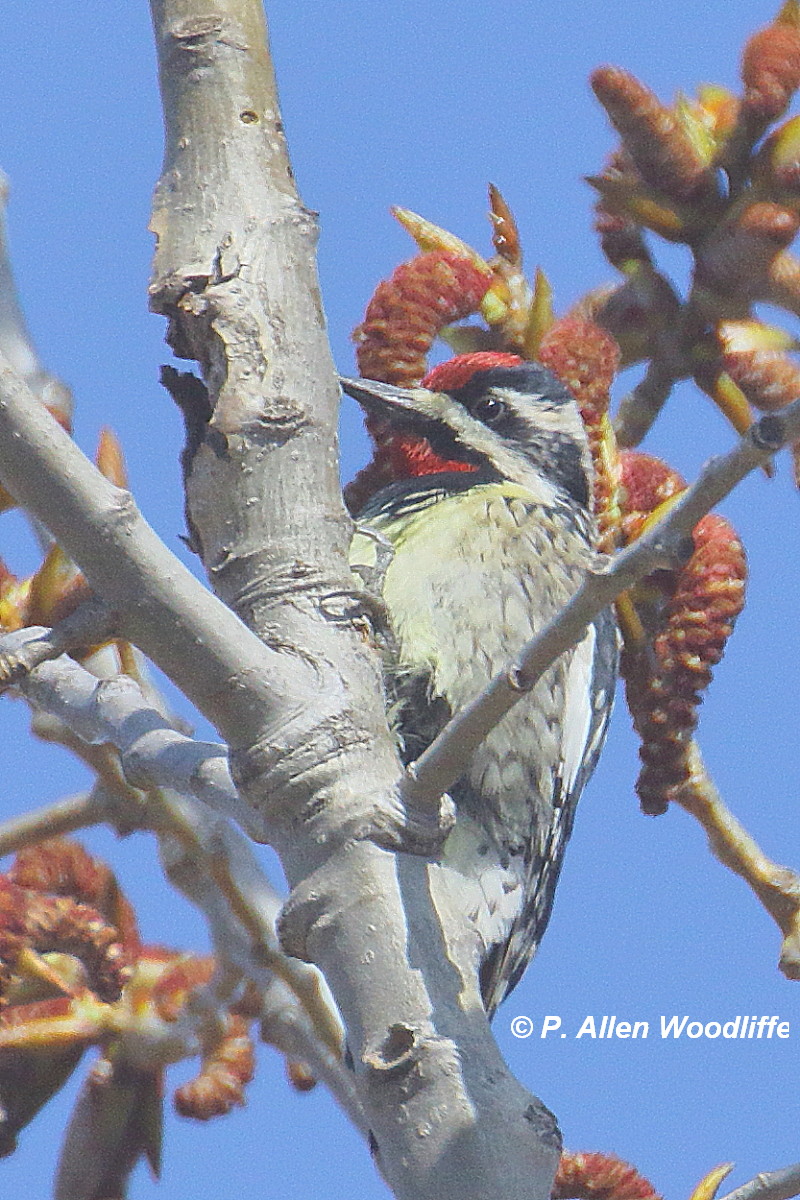
Yellow-bellied Sapsuckers are scattered far and wide in the park, but not always conducive for a good photograph.
Along one of the trails, this Northern Ribbon Snake was slithering by. It is a Species At Risk, and prefers swampy forest habitat, of which there is plenty at Rondeau. I am more likely to see them swimming on the water of a slough rather than through the leaves.
It looks a lot like an Eastern Garter Snake, but has more vivid black and yellow stripes, as well as a rusty brown stripe along the edge of the belly scales. Also it has a white dot right in front of the eye.
Wildflowers continue, such as Bloodroot.....
....and Spicebush, a shrub that is dominant especially in the damper areas of the park. In other words, it is almost everywhere!

This is a great time of year to explore Sinclair's Bush, about half way between Rondeau and Blenheim. Spring wildflowers are fairly diverse and abundant, but certainly are not at their peak quite yet. 

Early Blue Cohosh is one of the earliest, and is out nicely right now.

Yellow Trout Lily is abundant. Their mottled leaves are everywhere, although only a small percentage of plants actually put up a flower.
The petals open up, and curl back, on bright sunny days, but on cloudy days, will almost close right up.
A much less conspicuous wild flower is Wild Ginger. Usually you just see the green leaves poking up through the dead leaves of last year......
....but if you pull away some of those dead leaves, you will see this flower that rests on the ground. It doesn't need to be seen by the flying pollinators that most plants attract, as this species is pollinated by beetles and ants, that spend most of their time at ground level.
Always a pleasant sight to see is Dutchman's Breeches.

Closer to home is the Thamesgrove Conservation area, along the Thames River at the east side of Chatham. The birds were not unusual, but I kept an eye open for flowering plants. I found Common Hackberry, a Carolinian tree species that is abundant along the river.

Several patches of Lesser Celandine, a type of buttercup that is a garden escape but still quite attractive, were here and there.

One of the highlights is to see the White Trout Lily in flower, a close relative to the Yellow one featured above. The white version is relatively uncommon in Chatham-Kent.

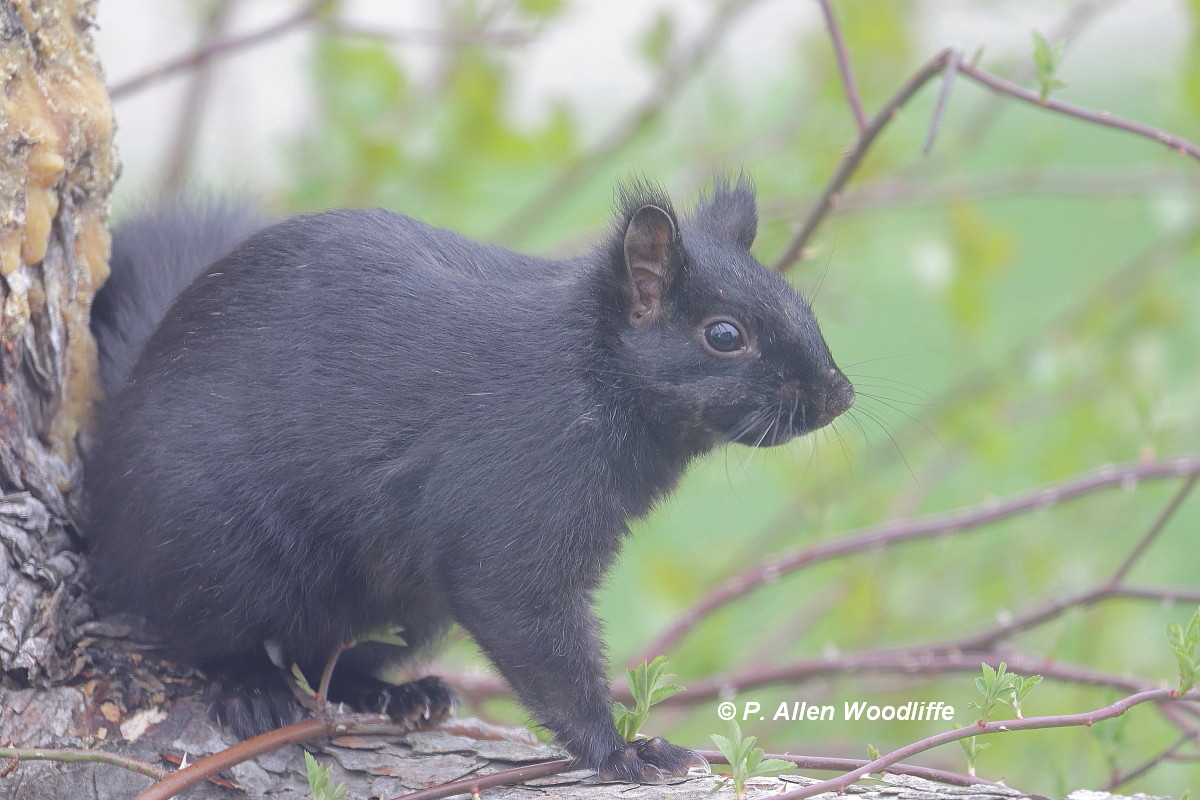
In other news, I got a new camera body to add to my equipment. It is the Canon EOS R6, a mirrorless full frame camera, which will also crop to 1.6X. With an adapter, I can use all of my existing lenses. It is a bit different than the two cameras I have had for several years, a Canon 5D3 and 7D2, and will require a bit of experimenting and adjustment to get comfortable with the new layout, features, etc. But so far it has been a relatively smooth adjustment. I haven't ventured into the more challenging photo situations that I do regularly with my other bodies, but have played around with it at home. Here are a few shots I've taken right from the kitchen window.


I'm looking forward to putting it through some more rigorous photography to see what it is really capable of. One of the things I am looking forward to trying out is low level photography. This camera has a tilt screen, so instead of lying on the ground, I can remain somewhat upright and tilt the screen to see the subject and get the right composition. As I become less and less able to kneel at a low level and get back up quickly and easily (a condition that many seniors eventually have to deal with :-), it will make low level photography less problematic, I hope.