Showing posts with label Double-crested Cormorant. Show all posts

Thursday, 25 January 2024

Firstly, the Limpkin that had been seen by multiple birders over the past few weeks, is no longer there. Just before the cold spell where it was seen sitting in the snow, and the mystery snails it was feeding on were no longer very accessible due to ice, it was captured and taken to a wildlife rehab centre. I don't know the details, only that it is gone, hence I have taken down its header photo and replaced it with something more in keeping with the times.

Just prior to the recent cold and snowy period, I tried to get out to see what was around in the former Dover Twp, just in case a Snowy Owl was visible. Maybe one saw me, but the reverse was not the case. I did manage to photograph a field or two of Tundra Swans, enjoying the mild weather.


They seemed to anxious to move on, however, as there were various groups taking flight and heading southeast. Undoubtedly they wanted to get out of the reach of the impending storm.

Since there was still open areas at Erieau, I managed to catch up to a few things, including:

American Coot

Double-crested Cormorant

Redhead
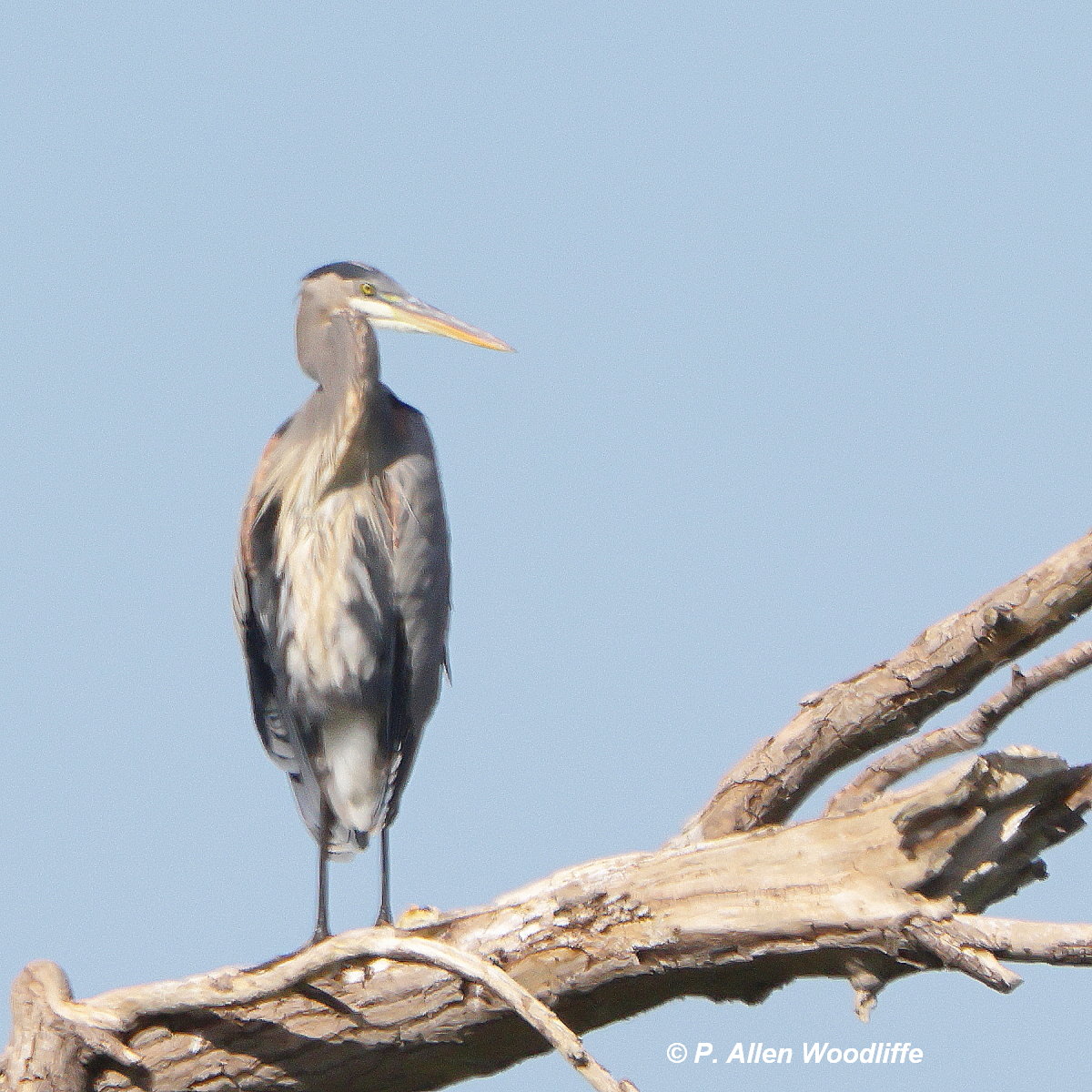
Along my travels on this day, I swung by the Stefina Line pasture, where Wilson's Snipe are known to be. I think the day before there were 4 seen, but I only saw this Great Blue Heron trying to stay hidden behind this berry bush....


...two of the snipe, at a considerable distance...
...and a Rusty Blackbird, also at a distance and in poor lighting, hence just a poor record shot.

Dark-eyed Juncos seem to be more plentiful in various locales.

And then the snow arrived, and along with it, even a few sunny days. It was great to see a few birds such as Snow Bunting, Horned Lark and Lapland Longspur, all feeding on some partially exposed corn cobs in fields adjacent to the road way. The Snow Buntings were quite flighty, so no shots of them, just these other two species.

Horned Lark


Lapland Longspur


It is hard to know what to expect next with the seasonal ups and downs, and currently in our January thaw.


If you would like to subscribe, or unsubscribe, to Nature Nuggets, email me at: prairietramper@gmail.com


Monday, 8 January 2024

Some early January birding

 First of all, the American Birding Association has just declared what its 2024 Bird of the Year will be. It is the Golden-winged Warbler, a beautiful and uncommon species at least here in Ontario.

Here in the southwest of Ontario, you may see one on occasion furtively rummaging around some shrubby areas, but seldom see more than one on spring migration, and not typically as out in the open as this one, which I photographed at Rondeau a few years ago.

More seasonal, at least given the mild, snow-free conditions that we have been experiencing these first few weeks of winter, are a few birds that have not been forced to migrate to areas farther south. Indeed as most Christmas Bird Counts would indicate, there have been some lingering birds. Blue-gray Gnatcatcher, at Rondeau (but which I haven't been able to catch up to) has been seen periodically even after the count, as has this Red-headed Woodpecker.

Sandhill Cranes are still present in greater than usual numbers, such as this partial group of 36 I saw up near Bear Creek Unit of SCNWA a few days ago. Clearly the lack of snow has made it easier for them to remain.

The St. Clair NWA Christmas Bird Count, which I compile and was held as usual, on New Year's Day, resulted in a rather surprising 88 species, and included record numbers of these Sandhill Cranes. We had 25 species of waterfowl, including Trumpeter Swan for only the second time. Waterfowl are one of the more abundant groups of birds that make or break this count. With all of the water remaining open, there were birds everywhere. Unfortunately there were excellent wetland areas that we did not have access to, which undoubtedly caused some species to go unseen and thus uncounted. We did have new high counts for things like Golden Eagle, presumably two different birds, and an amazing 193 American Robins! A Great Egret was seen, for only the second time on this count. A new high for Greater White-fronted Goose, 6 birds, was also recorded, three of which are shown in this next photo. Two birds are quite obvious, but if you look closely, you can see the orangey legs of another bird hidden behind the much larger Canada Goose on the left.


So in spite of the dull, dreary weather with brisk NW winds to contend with, the count was quite successful. We have had 90-93 species on other occasions but our past 10 year average is about 81.

I've been here and there since then, and have seen several Great Blue Herons, such as this one along the Thames River at the Jeanette's Creek boat launch (it was upstream and across the river, so not easy to get a very good photo of).

 In the northern part of the former Dover Twp, I had these Canvasback at Mitchell's Bay. While doing a waterfowl survey a few days after the bird count, I had an amazing number of Canvasback, about 4000, in a raft out on Lake St. Clair.

This Merlin allowed me a couple of photos before deciding to leave....

.....as did this Rough-legged Hawk.

The dull skies were anything but good for this type of photography, as you can tell.

Erieau was the place to be for a good diversity of water birds. Certainly the highlight has been this female Harlequin Duck, which first showed up on New Year's Day and has been seen daily, although not always very close.


There were a few Greater Scaup, shown next.....
...as well as Lesser Scaup, told by it slight crest towards the back of the head as well as a thinner dark blue patch at the tip of the bill.
Red-breasted Mergansers are present by the hundreds, although not always very close.
A couple of Double-crested Cormorants are still present, a bit unusual for the time of year, but not surprising due to the weather and open water.
Gulls are around, also not surprisingly, such as this young Great Black-backed Gull....
...and this smaller Herring Gull, an almost full adult shown next....
....and a full adult shown here.

The smaller yet, Ring-billed Gull adult with its obvious ring bill and yellow legs, are not as plentiful, but there are still a few around.

Many of these gulls will be noticeable by their absence over the next few weeks, if winter actually arrives, before returning later in the winter.


If you would like to subscribe, or unsubscribe, to Nature Nuggets, send an email to: prairietramper@gmail.com


Friday, 15 September 2023

A western visitor and more local denizens

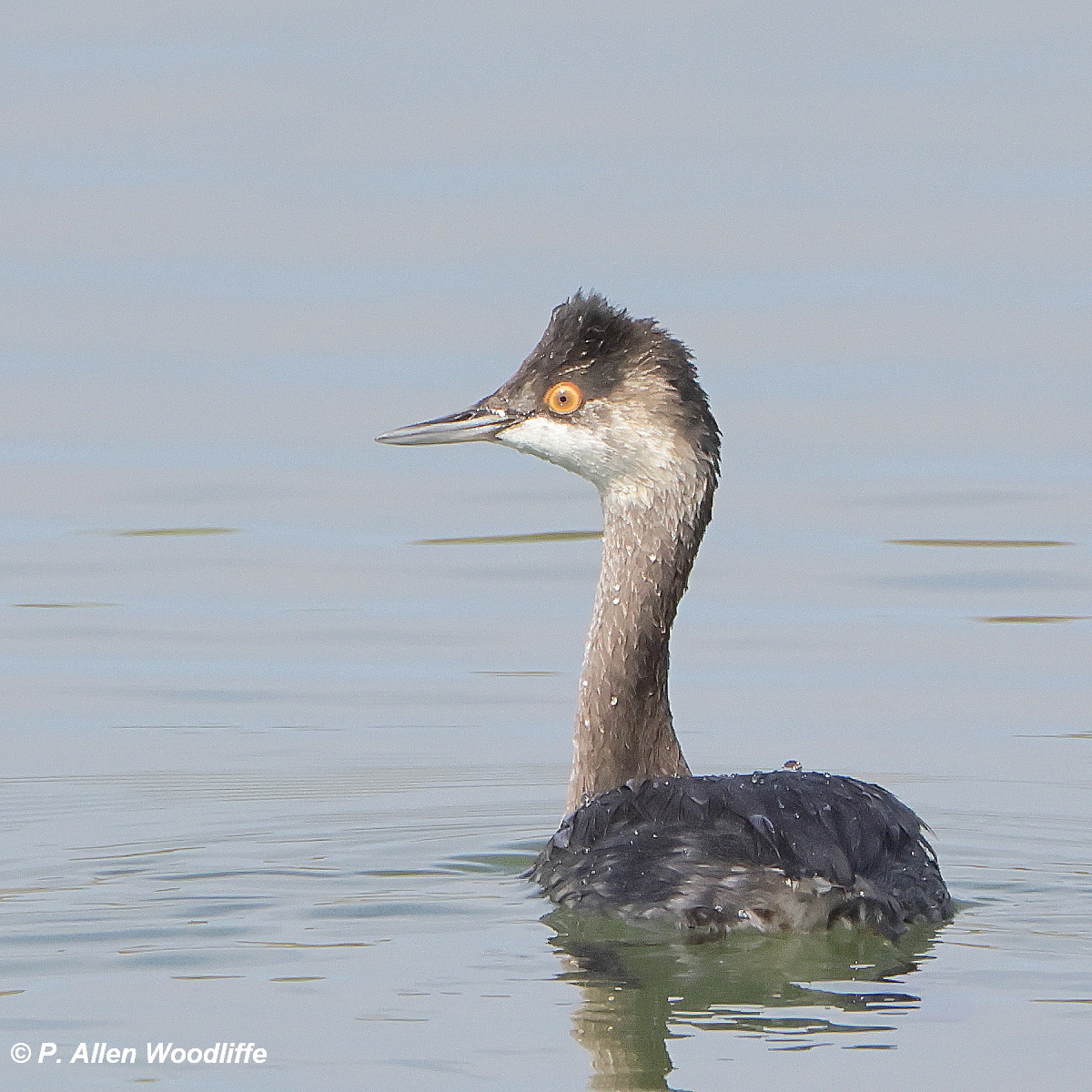
 The highlight of birds in the past few days was the presence of an Eared Grebe. Although this species does show up in various places in Ontario in most years, it is largely a species that breeds in the western half of the continent and roams a bit farther afield on fall migration. It is not reported in Chatham-Kent every year. This individual was at the Keith McLean Conservation Area, in one of the ponds which were established a year or so ago. I watched it for awhile, and it would pop up at one end of the pond, then disappear and show up at the other end. On occasion it would be across the pond from me. It never came very close, so there are all heavily cropped images.


A bit of time at nearby Rondeau turned up a few interesting things, as usual. I went part way out the newly refurbished Marsh Trail. It was nice to get back out there after it being in such significantly deteriorating condition over the last couple of years. Kudos to the Rondeau Waterfowlers group for getting this done.

I didn't photograph a lot on this visit, but did see a Merlin perched on a dead limb a long way up......

....and this Song Sparrow that perched for a short time, showing that it was missing its tail.
Along some of the uncut grassy areas in various parts of the park, mostly on the east side, there are some of these orchids showing up. They are just getting underway, as the latter half of September is when they are in their prime. It is the Great Plains Ladies' Tresses (Spiranthes magnicamporum), a rare orchid in Ontario, but fairly regular and sometimes common at Rondeau. There are other members of the Spiranthes genus to be found, but most of them occur a bit earlier in the season in similar grassy areas, and not all at Rondeau.

I spent a bit of time on one promising day at the Morpeth Cliffs, a well-known local spot to watch the hawk migration in the fall, especially when the winds are primarily from a northern direction. I managed to see at least a couple of hundred raptors on the move in the hour and a half I was there, but they were mostly way up high, and difficult to even see without binoculars let alone identify them. I did see various species, such as Bald Eagle, Broad-winged Hawk, American Kestrel, Sharp-shinned Hawk, Cooper's Hawk, Northern Harrier and of course, Turkey Vulture. There could have been others. My photos were hardly worth taking, as the birds were so high and the camera had difficulty locking focus on. Here are a couple of my more successful ones, greatly cropped, such as they are:


I went over to the Erieau Marsh Trail, but only photographed these next two subjects. This hatchling snapping turtle was crossing the path. A cyclist had just come through moments before, and fortunately did not run over the little critter. He wasn't moving, so maybe he was still in shock. I picked him up and put him on the far side of the path, in the direction he was going.

A Double-crested Cormorant gave me a photo op.

The shorebirds continue at the Blenheim Sewage Lagoons, although I haven't spent much time there as the species mix remains fairly constant. In my limited time there, I got these shorebirds:

Greater Yellowlegs

Lesser Yellowlegs

Greater in the back, and Lesser facing the camera

Stilt Sandpiper
A Northern Harrier cruised by a couple of times, and I managed to get some decent photos showing the facial features as well as the white rump. This would appear to be a female, or possibly a youngster.

Checking out the Mitchell's Bay North Lakeshore Trail often provides some nice photo ops, especially for heron types, and occasionally for others. A recent venture to that trail resulted in the following:

Great Blue Heron

Several Great Egrets were around in various locations, some of which provided some good photo settings for me.


There were two Green Herons, which always seem to be skulky, and did not pose in good light.

Double-crested Cormorants were quite abundant, but mostly well out on the Lake. This one liked the quiet water of an inner channel......
...at least until it thought I was getting too close.

Checking out St. Clair NWA can be worthwhile almost any time, but getting photos that I am happy with don't always happen. Here are a couple from my most recent visits. Two Sandhill Cranes landed a little way away, but in some fairly thick cover, while another half a dozen flew in and landed elsewhere.

An Olive-sided Flycatcher was perched at the top of a dead branch, and against the bland sky, was not the kind of photo I was hoping for. Maybe next time.


If you would like to subscribe, or unsubscribe, to Nature Nuggets, send an email to: prairietramper@gmail.com