Showing posts with label exotic species. Show all posts

Tuesday, 7 March 2017

Ancient hieroglyphics, or???

If you are out and happen to see these patterns on a barkless tree trunk, you might wonder just what has created this.


It isn't some form of ancient writing, of course, but the markings of a non-native and highly invasive insect known as the Emerald Ash Borer (EAB).

The EAB is a metallic green beetle that is native to Asia. The consensus is that it arrived in North America via wood packing material, which isn't surprising in many ways due to the huge volume of things that North America purchases from Asian countries. It was first detected in Michigan in the late 1990s, and shortly afterwards, expanded into southern Ontario, being first detected there at Windsor.

The EAB specializes in feasting on ash (Fraxinus spp) trees. In its homeland, it is not considered a major problem since the ash species there apparently have built-in resistance. However North American ash trees do not have that resistance, and so are quite vulnerable. The adult EAB feeds on the leaves and are not all that destructive, but the larvae burrow under the bark, feeding on the woody material immediately under the bark. This is where the critical transfer of sap and nutrients to feed the tree takes place, and the larvae's burrowing and feeding action cuts off the flow. In fairly short order the upper part of the tree dies. The roots may still be alive and there may be some subsequent sucker growth of the tree, but it will likely never grow to a mature specimen.

The EAB has quickly spread in less than two decades to many provinces and states around the Great Lakes and points farther east. The travel of adults to colonize new areas is facilitated by wind, so the prevailing westerly and southwesterly winds cause eastward spread more quickly than westward spread.

Ash trees are a major component of eastern deciduous forests. Or at least they used to be. There are several species of ash occurring in southern Ontario: White Ash, Red Ash (and its varietal form, Green Ash), Black Ash, Blue Ash and the only 'non-colourful' one, Pumpkin Ash. All species are susceptible to the EAB, although it has been surmised that Blue Ash is somewhat more resistant.

Due to the aggressive nature of the EAB most forests in southern Ontario, and especially southwestern Ontario, have been devastated, and dead ash trees are now dominant. But given the brittle nature of standing dead ash trees, many are now snapping off and if they don't get hung up in an adjacent tree, come crashing to the ground. Every moderate to severe wind storm brings more and more down.

The main reason for the preceding discussion is that over the past few weeks I have had quite a few comments and questions directed my way regarding the apparent unsightly mess along the roads and trails of Rondeau Provincial Park. The mess is actually the result of the attention being given to the thousands of dead ash trees.

So many falling trees are a hazard, to people, to vehicles and to the structures in the forest. This next image shows a couple of trees that came down and not only blocked the trail, but also did some major damage to the information sign along the trail.
 This next image shows a repaired boardwalk structure along the Tuliptree Trail, which was heavily damaged when a dead ash tree fell on it.

There is currently a major effort to take down the myriad dead ash trees along the roads and trails, in a controlled manor rather than waiting for the next few wind storms. As a result, the road sides and trails look a bit unsightly, to be sure.


This next image shows one of my favourite views along the Tuliptree Trail, taken in April, 2014.
Now it looks like this next photo, so the nice clean appearance of the above photo will take a few years to get back to.

For anyone planning to visit Rondeau in the next few weeks, scenes like this will be commonplace, but please bear in mind that it is a temporary appearance. The dead ash trees will decompose fairly quickly in the next few years. The freshly cut stumps will gradually weather and blend into the background, and with the growing season beginning in May, the greenery will cover up the messy look to some extent.

Major changes to the forest are a periodic occurrence. In some forest ecosystems, fire occurs periodically, killing trees and shrubs that are not resistant to fire. In other forest ecosystems, major wind storms or ice storms cause significant changes. At Rondeau, I can remember several such events:
-a huge ice storm in March of 1976, where many trees or major limbs came crashing down and virtually every tree in the park was affected;
-major winter blizzards with high winds occurred in late January of 1977 and 1978, causing major damage;
-more recently was the major downdraft of July 1998 that caused considerable damage to many trees (and structures).

Admittedly the outbreak of the EAB is not as natural an event as a storm, but the results are much the same. And just as the forest recovered to varying degrees following those other major events, I expect that the forest will recover after the ash trees cease to become a dominant species. But it will never be quite the same.


Friday, 4 September 2015

Terrestrial Exotics, Aggressive Exotics, and Really, Really Nasty Exotics

This summer I have spent a fair bit of time hiking along a decommissioned railroad corridor. One previous post had described some of the flora while another one described some of the fauna. However as is typical with a lot of 'natural' areas in southwestern Ontario and elsewhere, there is a fair bit of non-native flora and fauna present. Some are colourful, some not so colourful, some are fairly benign while others are highly invasive. I'll leave the nastiest one of all that I have encountered, to the last of this post.

This post deals primarily with some of the lesser known, but problematic non-native species in a terrestrial environment. Others, especially some that are more well known and problematic in wetland environments will be discussed in a future post.

One of the less problematic terrestrial ones is Moth Mullein (Verbascum blattaria). It is not common anywhere that I have seen it here in southwestern Ontario, and is rather attractive.
Moth Mullein


Closely related to this is one that is probably more familiar to most readers: Common Mullein (Verbascum thapsus). It is definitely more problematic in woodland edges and disturbed sites.
Common Mullein
Many of the non-native species are very problematic in all sorts of areas where they can gain a foot-hold. They are early colonizing species, meaning they favour disturbed areas....and there is no shortage of disturbed areas in this part of the world!

Multiflora Rose (Rosa multiflora) is common place, even in prime natural areas such as Rondeau Provincial Park where it has come to dominate certain areas.

Multiflora Rose

Globe Thistle (Echinops sphaerocephalus) starts off looking a bit like a more common thistle, but soon appears with its characteristic globe shaped flower head. It is abundant along the rail corridor.

Globe Thistle
 A bit earlier in the season, one can find a lot of Dame's Rocket (Hesperis matrionalis) which occurs in both vivid pink and white. Its flowering period is long.....some may still be flowering into September.

Dame's Rocket
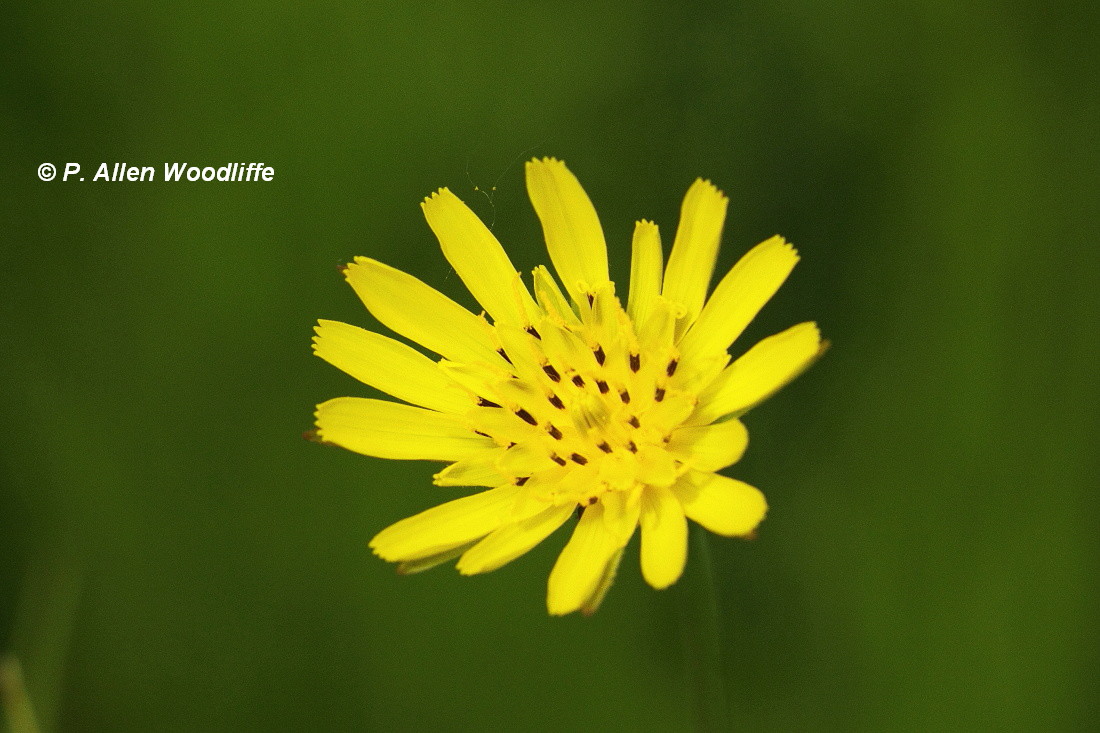
You've probably all seen those plants having a giant Dandelion-like seed head. It is the seed head of one of either Goat's Beard (Tragopogon dubius) or Common Goat's Beard (Tragopogon pratensis). They are common along roadsides, the inland part of sandy beaches, and certainly along railroads


 Goat's Beard
Common Goat's Beard
Some species that are not overly problematic in natural areas, but fairly common regardless are:

Everlasting Pea (Lathyrus latifolius)

Butter-and-eggs (Linaria vulgaris)

Rough-fruited Cinquefoil (Potentilla recta)

Teasel (Dipsacum sylvestris)

This next image shows the exotic Cabbage White butterfly (Pieris rapae) on the exotic Catnip (Nepeta cataria), while the image that follows shows a male and a female Cabbage White on Viper's Bugloss (Echinocystis lobata), also exotic.

 While it is nice to see butterflies flitting about, this European invader is one of the most widespread of butterflies, and it is a pest.....just ask any vegetable gardener or farmer, especially those producing cabbage, cauliflower, brussel sprouts, kale, broccoli, radish, turnip and other members of the Cruciferae family.

Then we get into some nastier, aggressive species. For example, White Mulberry (Morus alba). It is common along hedgerows, roadsides, urban and rural lots, railroad corridors, river valleys even some high quality natural woodlands. The dilemma is that the fruit is tasty to birds, racoons even humans. If you want to find birds in mid summer, find a few White Mulberry trees with abundant fruit as shown in the next image. There you will also find various fruit-eating birds, including American Robins, Gray Catbirds, Brown Thrashers, Cedar Waxwings and the like. However after the birds gorge themselves on these tasty berries, they leave and being members of the group of birds known as Passerines (perching birds), they perch on wires, fences, tree branches. And as the saying goes, what goes in must come out.....so when their digestive processes have completed the job, the seeds are pooped out wherever they happen to be sitting, sometimes several kilometres from where they originated. After a few decades, White Mulberry is all over the landscape.

White Mulberry
The unfortunate added dilemma is that there is a native mulberry in Ontario, the Red Mulberry (Morus rubra). It is limited in Canada largely to Fish Point Provincial Nature Reserve on Pelee Island, Point Pelee National Park, Rondeau Provincial Park and in the Hamilton area around the Royal Botanical Garden. There are a few other locations, but those are the main ones. Red Mulberry is now a legally endangered species, partly because of loss of the forested habitat which it prefers, but even more so because it hybridizes with the much more prolific White Mulberry. Even where Red Mulberry is relatively common, most specimens have some White Mulberry genes in them.

Another problematic plant species is White Sweet-Clover (Melilotus alba). It is a biennial, meaning that it takes two years to get to the seed-producing stage. Disturbed areas and even good quality natural areas such as tallgrass prairies, can have this species in abundance.
White Sweet-Clover

It can be difficult to find in an area one year as the first year's vegetative growth is under way. The following year it is super evident. It is a prolific seed producer, and the seed can last for years in the seed bank, so it is very hard to control. It also has a cousin, known as Yellow Sweet-Clover (Melilotus officinalis).
Abundant White Sweet-Clover

Another abundant but perennial species is Spotted Knapweed (Centaurea maculosa).
Spotted Knapweed

Spotted Knapweed in abundance
With these last two species, there is somewhat of an upside to them, fortunately. Pollinators love them! I have walked by some large expanses of both the White Sweet-Clover and Spotted Knapweed and been blown away by the number of bees, flies and butterflies that are present. In spite of the abundance of these plants, it almost seemed as if there weren't enough to go around....bees were almost lining up to find a spot on a flower head.

This brings me to what I consider one of the worst of the worst in terrestrial areas: Dog-strangling Vine, also known as Pale Swallow-wort (Vincetoxicum rossicum).

It is a perennial, a fast-growing vine and a prolific seed producer. It has seeds somewhat similar to milkweed, which are transported by air, so it can spread quickly. It also spreads very easily if even a small piece of a stem is transported to a potential site elsewhere.

Vincetoxicum rossicum
 Note its growth habit in the next image. As a vine, it climbs over existing vegetation, smothering it, to the point that it can be by far the most dominant vegetation at a site. Some places in urban areas are completely dominated by this beast.
It is not as abundant in Chatham-Kent as places farther east....yet. But I first noticed it in eastern C-K when I was doing some inventory work along this same railroad corridor in 2012. This year, I found it much more common between Chatham and Tilbury. It has probably been there for awhile, judging by its abundance, but it is only going to get more abundant. Effective controls for this species are not generally available. Even herbicides are only marginally effective.


There are many more exotic species present throughout southern Ontario and elsewhere. In fact on average even in a good quality natural area, the non-native plant species make up about 20-25% of the total list, but are often much greater in overall abundance. In highly disturbed sites such as railroad corridors, they can make up an even greater per cent of the plant list. They are here in abundance because of the great levels of alteration of the original landscape, courtesy of you and I and our predecessors. But that will be the topic of a future post.