Showing posts with label Fan-shaped Jelly Fungus. Show all posts

Friday, 20 December 2024

Winter owls and fungi

 Okay, owls and fungi aren't a normal mix of topics I cover. But it works for the moment. Owls have become more visible at this time of year, and are always highly sought after by keen birders and even casual ones. Some are year-round residents, such as this Eastern Screech Owl.

It shows up regularly in the cavity of this American Beech tree at Rondeau, although it can be frustratingly absent for long periods. I managed to photograph this on the day of the Christmas Bird Count, as well as a day or so afterwards. Speaking of the CBC, this count totaled 102 species! Considering the windy, cool and rainy weather, that was quite remarkable, but with a good number of excellent birders out to cover their territories, it turned out quite well. This count regularly ends up in the top one or two counts in Ontario.

Continuing with the owl theme, a Barred Owl, usually a resident of much more northern areas, showed up at a small conservation area within the count circle, where a good stand of pine trees were established a number of years ago. It was only seen on one day, and fortunately it was within the CBC count period although not on the count day, so it gets to be added to this year's overall count. I went out to look for it the following day, but was unsuccessful in finding it. Another keen birder had been out slightly earlier in the day, and also did not see it. I know when a Barred Owl showed up in Rondeau on our CBC several years ago, which my birding partner and I discovered, although it remained in the park for several weeks, it moved around quite a bit, so one was never sure where to find it. This next photo is of the one we discovered on that CBC in 2018.

A few years later, in January of 2023, I photographed this next one, in the village of Shrewsbury.

It was sometimes quite visible from one of the streets, and there were many people who got to see it. Again, it moved around so wasn't always found at the same spot, but a little bit of perseverance often paid off. It remained in the area for several weeks. Hopefully the one that was seen just a few days ago in the local conservation area will show up again!

Another even more northern owl species that may show up in southwestern Ontario in winter is the Snowy Owl. It isn't a guarantee every year, but some years there can be quite an influx. A couple of years ago, on the St. Clair NWA CBC, there was a total of 23 Snowies observed! But the following year, there were none. It has been mostly absent this late autumn, but one has shown up intermittently in the area not far from Mitchell's Bay. Sometimes they are sitting on a pole and quite photographic, but more often than not, they are well out in a field, and even with a high powered lens and lots of cropping, the photo is a good record shot only, such as this next one.

Moving on from owls, the late autumn is a good time to look for the fruiting bodies of lingering fungi. Here are some of the ones I have found.

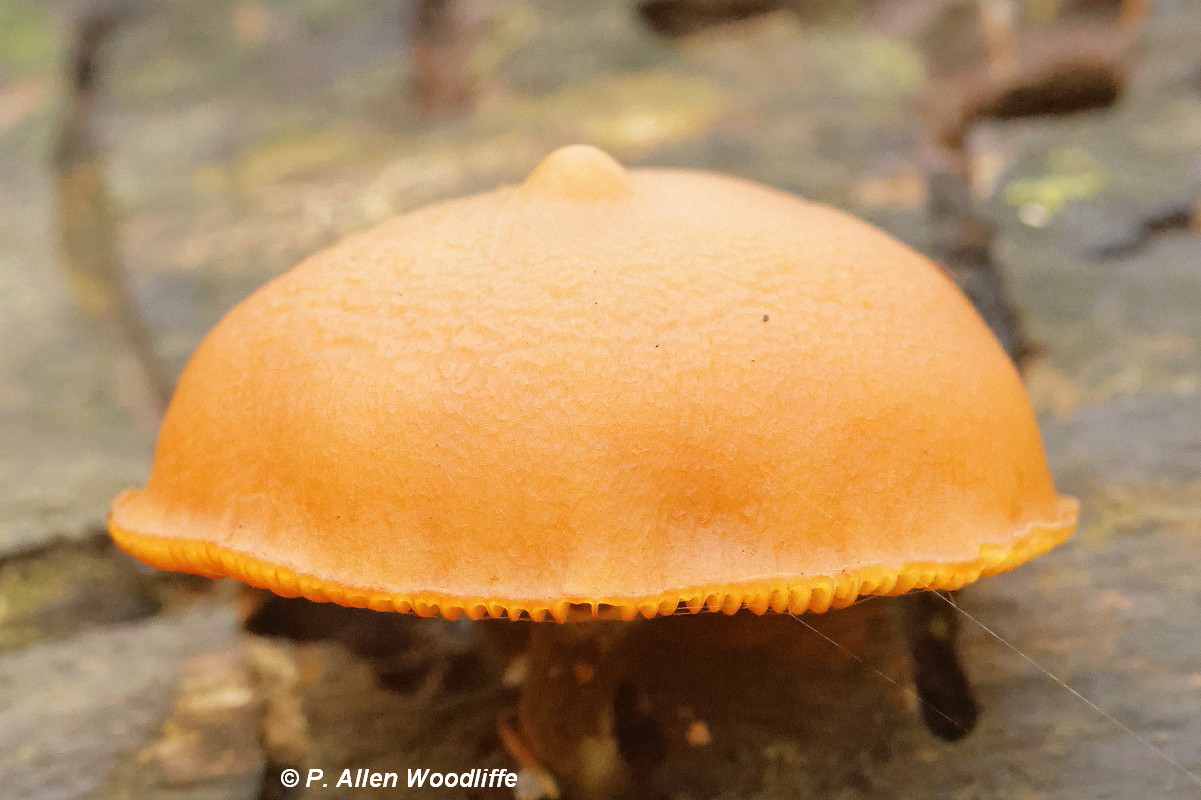
Fan-shaped Jelly Fungus

A type of Inkap
Not sure about this next one, but it could be a Honeycomb Coral Slime Mould.

Aspen Oyster Mushroom
These next two are in the Bonnets (Mycena) group.


A Common Gilled Mushroom

Rosy Crust

Milk-white Toothed Polypore


Pear-shaped Puffball
These next two show different angles of the fairly common Turkey Tail.

A few birds were willing to be photographed on some of my travels.

Hairy Woodpecker
Horned Grebes are in their winter plumage, and scattered here and there, but are typically quite shy for photographers as they dive under and pop back up a little way from where they went down. I managed to get these next two photos in the marina at Erieau.

There were about 20 Killdeer seen on the above mentioned Christmas Bird Count. I photographed one of the 4 I found a day or two later, along the marsh trail of Erieau.
And while Rondeau Bay is mostly unfrozen, it means most waterfowl are well out from shore, probably with the lingering effects of the recent hunting season causing them to be cautious. However some birds, such as this male Redhead, lingered also in the marina at Erieau.

Not something I would usually find while out exploring, but this kayaker chose a day when Lake Erie was quite calm, and paddled quite a way along the east beach of Rondeau, heading to some unknown destination. Perhaps Erieau?


If you would like to subscribe, or unsubscribe, to Nature Nuggets, send an email to: prairietramper@gmail.com


Tuesday, 15 December 2020

Late Fall Forays

 It is that time of year, when winter hasn't arrived, the woodlands have few birds in them other than the resident species such as woodpeckers, but the unfrozen wetlands still have birds holding off on the migration. 

But a walk through the woods can still be inviting, and there are other things to see such as this rather attractive jelly fungus. 

Fan-shaped Jelly Fungus

I've been out scouring around to see what I can find, as the Christmas Bird Count season is almost here. Technically today, Dec 15, is the first day of the count period, but most counts, if folks are going through with them, will not likely start until the coming weekend. Social distancing is quite easy to do, and it is healthy to get out and get some fresh air and exercise. The big difference for most, will be not to have any meal and tally gathering at the end of the day.

Some of the local sewage lagoons continue to attract lots of waterfowl. The Ridgetown lagoons have been a good place to check lately, with some less common geese species hanging out. There is always a good number of Canada Geese, but several Snow Geese continue to be there.

The 'grin' patch is a key characteristic to look for.....
...compared to the smaller and much rarer Ross's Goose, which doesn't have the grin patch, has a stubbier bill and if you get the right angle, can see a slightly bluish patch at the base of the bill.

Lots of Tundra Swans are coming and going.

There is usually a good variety of ducks, but often many of them are on the far side of the far pond and difficult to get a good close-up photo of. These two Common Goldeneye were in the closest pond.
Sandhill Cranes have become much more common in recent years, but at this fairly late date, most have continued on with their migration. A few groups are still around, such as this one that I 'shot' today up near the Bear Creek Unit of St. Clair NWA.

Snowy Owls are showing up and sticking around, and hopefully will continue to do so for the upcoming bird counts. They seem to be particularly fond of staying well away from roads, so getting a photo at a distance seems to be the only option most times.

Occasionally there will be a couple fairly close together.

The usual mix of other raptors are scattered around, with the most common one being Red-tailed Hawk.


 Rough-legged Hawks are much less common, and the dark phase of this species, shown in the next two photos, is even less common than the light phase.


There will likely be at least a few Northern Harriers around all winter, but they are difficult to photograph. I got this one at quite a distance. Fortunately its white rump is fairly visible.

I was actually on my way to a spot along Stefina Line, south of Blenheim, which periodically has one or more Short-eared Owls, when the Northern Harrier flew by. A bit later I arrived at the large pasture, which has a combination of short grass, some longer and weedier grass and some shrubby trees. As long as the habitat was good for a healthy mice or voles population, it would be good for raptors. I met up with three other people who were also on the lookout for the owls. The Short-ears don't seem to fly during nice daylight, but more often just at dusk. On this heavily overcast day, there was nothing moving, so two of the others left. It was tempting to leave as well, but I figured I was here, why not wait just another few minutes. And then one appeared, albeit briefly, as it flew up from the dark background and its round head and floppy flight was quite evident against the fading sky. There was no real opportunity to get a photo, so I just enjoyed the brief view with binoculars. The image below shows a Short-eared Owl at this same location taken several years ago, when one decided to show itself in much better light conditions and cooperated nicely at least for a few minutes.