Showing posts with label Great Plains Ladies' Tresses. Show all posts

Saturday, 27 September 2025

Late summer orchids of Rondeau, all are species at risk!

 There are several highlights for botanizing later in the summer. Certainly the main highlight for me is to check on three orchid species that are found at Rondeau, all of which are quite rare in Ontario. One is so rare that its only Canadian location is at Rondeau. Another one is quite restricted, but so very small that the average person would not even see it. The third, and latest flowering one, is rare, but relatively widespread in the park and generally more visible.

 Keen botanists will likely already know the three I am talking about. The first, and rarest one, is the Nodding Pogonia (Triphora trianthophoros). 

Its peak time of flowering is typically the third week of August, although on rare occasions I have seen one or more in flower on even the last day of July. This year I went out into one of its best known locations on August 1, just to see what was happening, and was quite surprised to see several in flower. One even had a double flower!

The tricky thing with this orchid is its flowering strategy. All the buds develop to a certain stage, and then remain as is. It takes a fairly significant drop in the overnight temperature to trigger the buds to open on the morning of the second day following this temperature drop. All the buds that are ready will open, but just for a single day, and it may be a week before the next suitable temperature drop triggers the next set of buds to open.

The weather this August was anything but suitable for this flowering strategy. An overnight temperature would seem suitable, but then the next three nights would see the temperature drop even more! I think the plants were a little confused with this abnormal sequence, and as a result, their flowering was difficult to predict. On more than one occasion I went out expecting, or at least hoping, to see some in flower, but in some cases they flowered the day before and were not worth bothering to photograph. And the next set of buds were not well developed at all. This next photo shows what a single plant looks like, from a distance of about 6", with a 100m macro lens! They can be easily missed, even when one knows exactly what to look for, so I seldom go out unless I am quite sure they will be in flower, and if it is the wrong day, I don't spend much time looking so as to not accidentally step on them.

I do know where some are likely to be found, even if not flowering, and by being extra careful, I managed to find some that were tucked beside a fallen log, and almost impossible to see. This next photo is of a pair of even tinier plants with very undeveloped flower buds, and again, photographed with a 100mm macro lens from a close distance. The plants are merely 4-5 cm high. Even at that, I greatly cropped the photo to get this.

Overall it was one of the poorest years I can remember in my 50+ years of monitoring this endangered orchid. Probably the relatively dry weather at a critical time was partly the cause. However I did manage to get a few photos. These next two were taken in the 3rd week of August window. All were almost pure white, and while I always hope for some with a magenta tinge that I find even more attractive, the second photo is the only one that had even a very slight magenta tinge. Ones with a magenta tinge usually occur towards the end of the flowering season. Oh well, maybe next year.


 After blooming, the seed pods develop, as this next photo shows. Upon ripening, the seed pods will become erect, and start to dry, with the sides of the pod starting to split open so that a slight gust of wind will cause the seeds inside to disperse.

The second orchid I referred to, is about the same size as the previous one, and at least once the flowers open up, will remain open for several days. However for the more common variety of this one, Autumn Coralroot (Corallorhiza odontorhiza) which is also rare, the flowers don't open, but are self-pollinated! The rarer variety, known as Pringle's Coralroot and shown here, has flowers that do open. This first photo shows a group of four plants.

A closer look at the arrangement of flowers.

Closer....


And finally, a 'head-on' view of the lip of a single flower, which is probably only about 4 mm wide.
Not exactly a show piece for the horticultural industry, but an interesting orchid nonetheless, and it is native!

The third, and last orchid to be found flowering at Rondeau is the more common of these three. It is known as Great Plain's Ladies' Tresses (Spiranthes magnicamporum).

I found my first one with a few of the lower flowers starting to open up on September 13.

A couple of days later, there were a few more starting to open.

It is rare that all of the flowers are open at the same time, but sometimes most are. There are other species in the Spiranthes genus that look similar. A couple of the key characteristics of this one is that when in flower, it has a 'fragrance' that I think is similar to hot plastic. But without getting close enough to smell it, a close look shows a slightly yellow/tan colour well inside an open flower. None of the other Spiranthes have this coloration.
There is some slight hairiness to the outer white parts of the flower, and the sepals flare slightly back if viewed from the side.

 That's about it for Rondeau's orchids for this year. But by next May, another one of the 19 species of orchids will appear. Can't wait!


If you would like to subscribe to Nature Nuggets, send an email to: prairietramper@gmail.com


Thursday, 12 October 2023

Birds, orchids and a bit of catching up

 Birds continue to be one of my things of focus when I am out of doors, of course. An outing yesterday to Rondeau resulted in seeing a good variety, especially of warblers and other small passeriformes, but they were hard to get photos of as they darted in and out of berry bushes that lined the trails and roads. I also scanned the lake, hoping that my first of season Red-throated Loon might be in sight, but it was not to be. I did see about a dozen Common Loons, however, and relatively close.


There likely were more, as they spent a lot of time diving under, and so it was hard to tell exact numbers. I'm sure a scope and more time would have revealed quite a few more. They will be increasing in numbers as they move southwards from their northern lakes.
The only warbler that I got on camera was one of the dozens and dozens of Yellow-rumped Warblers, which greatly outnumbered all other species.

I did take a bit of time to photograph a few tree species that I hadn't bothered much with in the past. Some are native such as Green Ash

Many fruit
This species shows moderately long leaf petioles, not as long as those on White Ash, but certainly a lot longer as those on Black Ash.

Eastern Cottonwood

Swamp White Oak, from a few years ago
....and White Ash, which has much longer leaf petioles. All native ash species are considered to be at risk, since the Emerald Ash Borer (EAB) that arrived a couple of decades ago has killed off many. Fortunately even relatively young individuals produce seeds, so that there is a lot of regeneration going on, and maybe eventually the species will once again dominate native forests. They may not reach the longevity and large sizes of before the EAB days. Time will tell.
under side

upper side
And some that I photographed are not native, but fairly abundant, such as Black Locust. The first photo shows the typical leaf arrangement, with the leaves showing signs of a mining insect.
This next photo shows the typical double thorn at the base of some of the leaves on a main stem.
Northern Catalpa, shown next, is also a non-native species. It had been planted by various cottagers many years ago, and some of the fruits, and therefore new individuals, are showing up in places between Lakeshore Road and Harrison Trail.

Another non-native species, and the origin in the park is unclear, is White Popular, which can grow in large clones, especially in the sandy openings along the lake shore. The leaves are distinctive with their white edges, and quite whitish undersides.
On one occasion I took a quick look at a fallen branch along the trail, and noted this nest. It is likely a vireo nest, and given the location in the main part of the beech-maple forest, is a Red-eyed Vireo nest. This vireo species is by far the most abundant of the vireos at Rondeau,

I also saw this Northern Watersnake out for a stroll along Harrison Trail. It is quite a ways from what I would consider its normal habitat, but there it was.

One of the things I hadn't really discussed much in blog posts of a few weeks ago, is the current status of one of Canada's rarest orchids, the Nodding Pogonia. It wasn't a great year for them, although I did see several dozen in the general vicinity of the main patch. It was quite a few less than the sometimes several hundred I see here.

Most were singles, and were predominantly white. I always look forward to seeing the more magenta colour forms, but it didn't happen this year. And I missed the actual single flowering day on a few occasions, so sometimes I just saw them the day past their flowering, and the photo below shows what they look like then. We are looking at trying to be more accurate in knowing which day they will flower as it is very much a factor of overnight temperature, but that is a topic for another post.
Most were single blooms, but I did see a couple of double blooms. No triple blooms that I saw this year.
Another orchid that isn't nearly as rare, but still not a common species, is this next one, the Great Plain's Ladies' Tresses, which was at its peak in late September. The individual flowers don't last long, as you can see from this next photo, as the lowest flowers are already finishing up while the uppermost ones haven't begun to open. The unusual warmth at the time likely had some role to play.

And finally, just an update regarding my book 'Life on a Sandspit'.

I have expanded the locations where it is available. People have already been purchasing some for Christmas gifts! 

The locations now include the following:

Bayview Market, Rondeau

Book Brothers, Chatham

Mindful, Blenheim

Mitton's Jeweller's and gifts, Ridgetown

Five-Eau, Erieau

Molly and OJ's, Erieau

Sydenham Field Naturalists, Wallaceburg

Friend's of Rondeau, Rondeau Visitor Centre (although very reduced hours, and that gift shop may be closed until the Christmas break)


If you would like to subscribe, or unsubscribe, to Nature Nuggets, send an email to: prairietramper@gmail.com


Friday, 15 September 2023

A western visitor and more local denizens

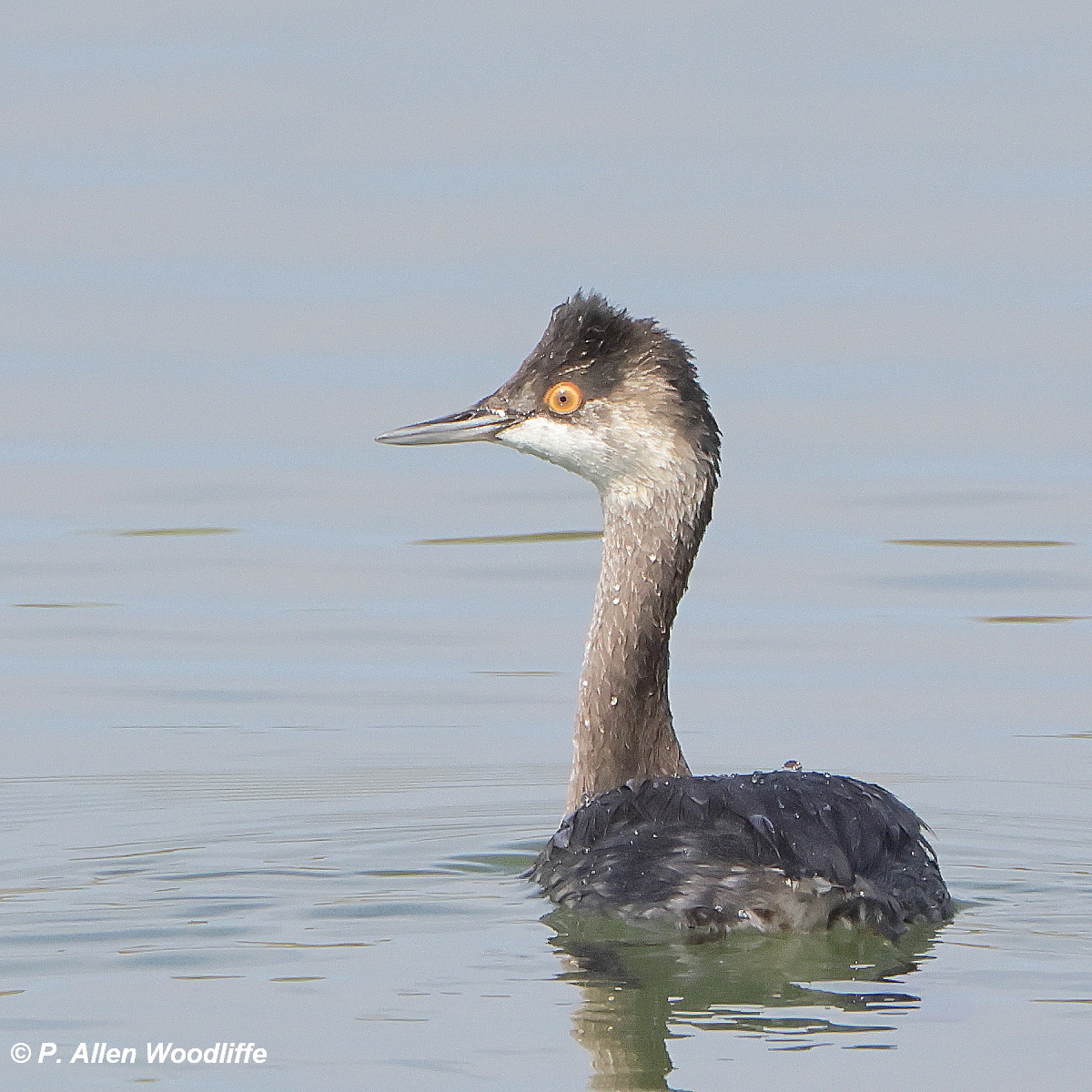
 The highlight of birds in the past few days was the presence of an Eared Grebe. Although this species does show up in various places in Ontario in most years, it is largely a species that breeds in the western half of the continent and roams a bit farther afield on fall migration. It is not reported in Chatham-Kent every year. This individual was at the Keith McLean Conservation Area, in one of the ponds which were established a year or so ago. I watched it for awhile, and it would pop up at one end of the pond, then disappear and show up at the other end. On occasion it would be across the pond from me. It never came very close, so there are all heavily cropped images.


A bit of time at nearby Rondeau turned up a few interesting things, as usual. I went part way out the newly refurbished Marsh Trail. It was nice to get back out there after it being in such significantly deteriorating condition over the last couple of years. Kudos to the Rondeau Waterfowlers group for getting this done.

I didn't photograph a lot on this visit, but did see a Merlin perched on a dead limb a long way up......

....and this Song Sparrow that perched for a short time, showing that it was missing its tail.
Along some of the uncut grassy areas in various parts of the park, mostly on the east side, there are some of these orchids showing up. They are just getting underway, as the latter half of September is when they are in their prime. It is the Great Plains Ladies' Tresses (Spiranthes magnicamporum), a rare orchid in Ontario, but fairly regular and sometimes common at Rondeau. There are other members of the Spiranthes genus to be found, but most of them occur a bit earlier in the season in similar grassy areas, and not all at Rondeau.

I spent a bit of time on one promising day at the Morpeth Cliffs, a well-known local spot to watch the hawk migration in the fall, especially when the winds are primarily from a northern direction. I managed to see at least a couple of hundred raptors on the move in the hour and a half I was there, but they were mostly way up high, and difficult to even see without binoculars let alone identify them. I did see various species, such as Bald Eagle, Broad-winged Hawk, American Kestrel, Sharp-shinned Hawk, Cooper's Hawk, Northern Harrier and of course, Turkey Vulture. There could have been others. My photos were hardly worth taking, as the birds were so high and the camera had difficulty locking focus on. Here are a couple of my more successful ones, greatly cropped, such as they are:


I went over to the Erieau Marsh Trail, but only photographed these next two subjects. This hatchling snapping turtle was crossing the path. A cyclist had just come through moments before, and fortunately did not run over the little critter. He wasn't moving, so maybe he was still in shock. I picked him up and put him on the far side of the path, in the direction he was going.

A Double-crested Cormorant gave me a photo op.

The shorebirds continue at the Blenheim Sewage Lagoons, although I haven't spent much time there as the species mix remains fairly constant. In my limited time there, I got these shorebirds:

Greater Yellowlegs

Lesser Yellowlegs

Greater in the back, and Lesser facing the camera

Stilt Sandpiper
A Northern Harrier cruised by a couple of times, and I managed to get some decent photos showing the facial features as well as the white rump. This would appear to be a female, or possibly a youngster.

Checking out the Mitchell's Bay North Lakeshore Trail often provides some nice photo ops, especially for heron types, and occasionally for others. A recent venture to that trail resulted in the following:

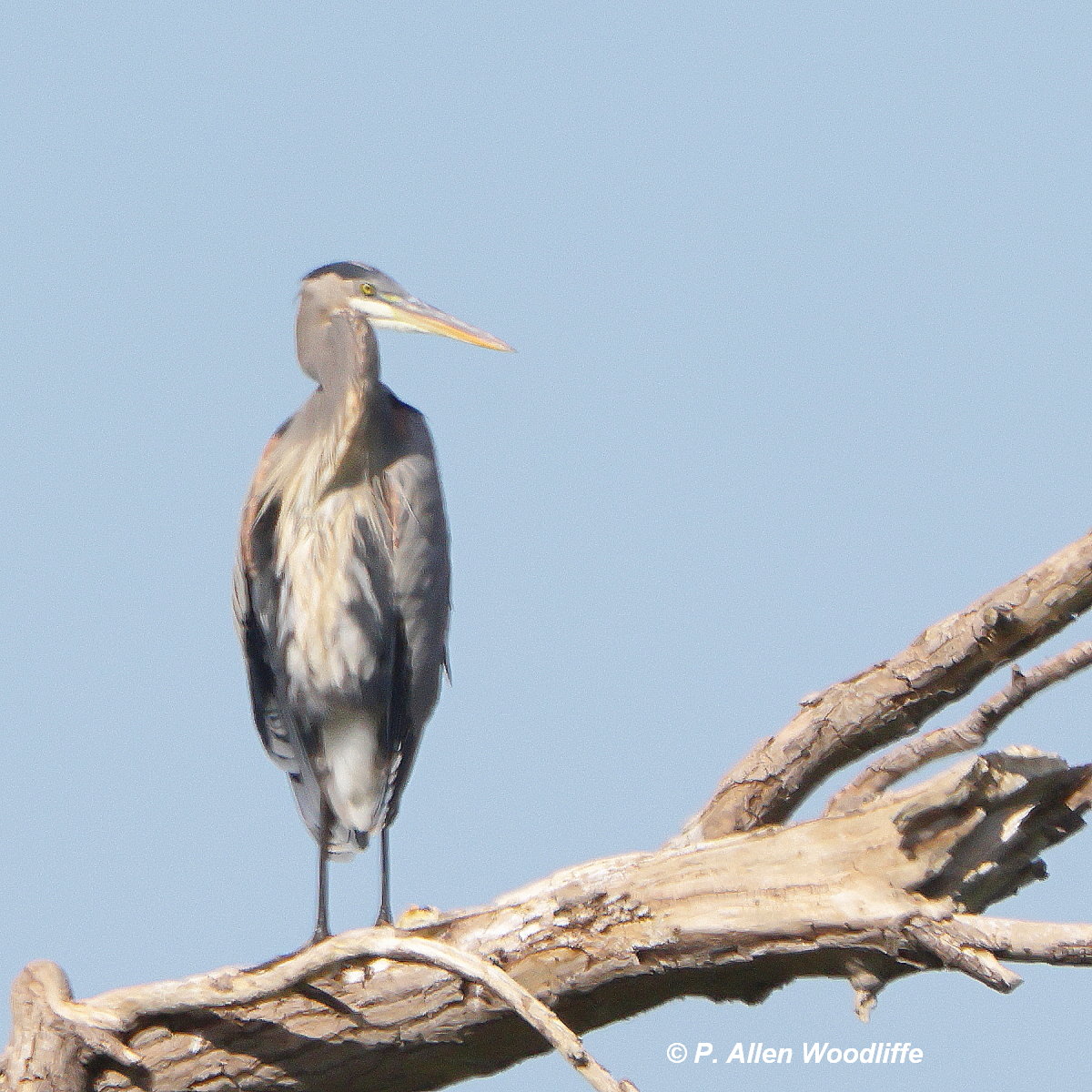
Great Blue Heron

Several Great Egrets were around in various locations, some of which provided some good photo settings for me.


There were two Green Herons, which always seem to be skulky, and did not pose in good light.

Double-crested Cormorants were quite abundant, but mostly well out on the Lake. This one liked the quiet water of an inner channel......
...at least until it thought I was getting too close.

Checking out St. Clair NWA can be worthwhile almost any time, but getting photos that I am happy with don't always happen. Here are a couple from my most recent visits. Two Sandhill Cranes landed a little way away, but in some fairly thick cover, while another half a dozen flew in and landed elsewhere.

An Olive-sided Flycatcher was perched at the top of a dead branch, and against the bland sky, was not the kind of photo I was hoping for. Maybe next time.


If you would like to subscribe, or unsubscribe, to Nature Nuggets, send an email to: prairietramper@gmail.com