On occasion there have been some fairly sunny and bright days lately. Even a tad warmish. On those days, it is always a treat to go to places where there are wetlands, especially sheltered ones. On a trip to Rondeau, with all of the sloughs and other wetland habitats, you can hear the chortling of Wood Frogs.
You can't always find them close to the trail or boardwalk. This is a photo when that was possible on one of those exceptional days a couple of years ago.
Other frogs are out as well, including Leopard Frogs. They have a tendency to wander a bit farther from the wetlands, and aren't always successful in their road-crossing efforts.
Birds have been increasing slowly and steadily. Golden-crowned Kinglets are seen in lots of places, but due to their sometimes frenetic activity, aren't always easy to get a photo of.
Brown Creepers are increasing as well, although they never seem to be as plentiful as kinglets.
I had an invitation a few days ago, to visit a private wetland complex north of Mitchell's Bay, and within easy sight of Walpole Island. Just prior to making it all the way to that spot, I decided to check out the Mitchell's Bay North Lakeshore Nature Trail. I hadn't been there for several months, and it showed a considerably different look. The main reason was that the water of Lake St. Clair has dropped from what it was over the last couple of years, leaving lots of exposed shoreline and even mud flats. I found my first shorebirds of the season (other than Killdeer) here. I got photos of Dunlin, shown first...
.....and Lesser Yellowlegs, shown next. I also saw a Greater Yellowlegs, but did not get any photos.
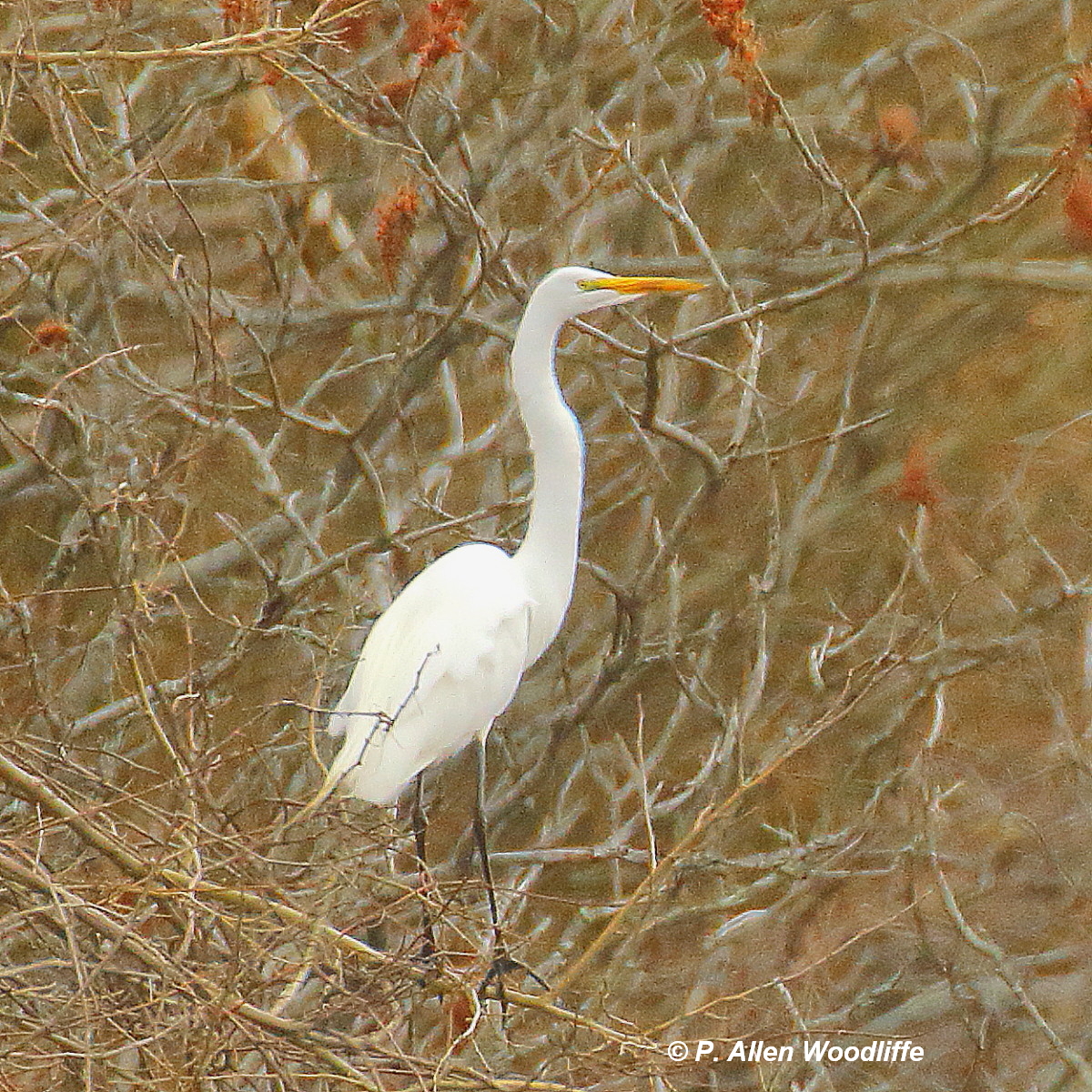
I also saw about 8 Great Egrets overall, but the only place they were right together was in a mostly obscured location along the lake. Here is a trio of them that I caught en route to that lake side location.
There were ducks, and I got these photos. Some Northern Pintail were going somewhere else......
...but this pair of Northern Shoveler was a little more tolerant of me.
There were also several Bald Eagles in view, but too far away for a photo from this vantage point. However at the next stage of my destination for that day, the aforementioned private marsh, I was more fortunate. I saw at least 8-10 Bald Eagles, mostly sub-adults as the adults were likely closer to their home territory. The only one I got a sort of satisfactory photo of was this one, against an overcast grey sky.
It was actually chasing another adult, hence the fierce open-mouth cry it was making. But the photo of the two of them interacting did not turn out.
There were another 8 or so Great Egrets in this vicinity, and I got a few photos. It isn't too surprising to see so many along this part of Lake St. Clair wetlands, as there is a heronry on Walpole.
There were also lots of ducks, as usual, but not all that close at hand other than these.
 |
Blue-winged Teal
|
This pair of Hooded Mergansers caught me off guard, explaining why the photo isn't in great focus.
A few Northern Flickers were along the edges.
On another occasion, I decided to walk part of the berm trail at St. Clair NWA. It was sunny and breezy, but quite comfortable. I saw a couple of Bald Eagles there, but they were well off along the tree line at the lake shore.
Most of the ducks were well beyond photo range, but a trio of Bufflehead came in right in front of the tower which I was on, and seemed to be more interested in the courtship activity rather than me on the tower.
There were lots of American Coot, at least several dozen scattered here and there....
...and right along the trail was a single American Tree Sparrow.
One of the Wood Duck boxes along the main access road to the NWA often has an Eastern Screech Owl peeking out. It isn't always this visible.
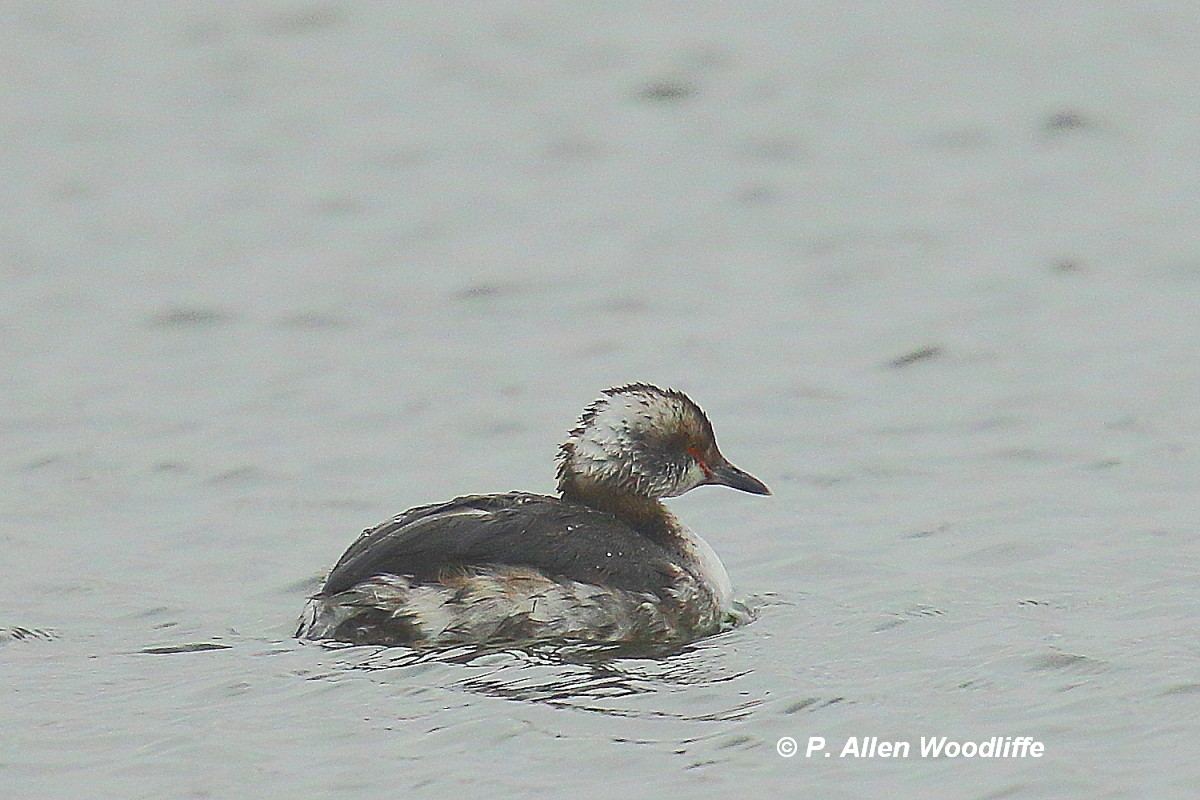
I have zipped out to Erieau a couple of times of late, mainly to see if I could catch up to the Eurasian Wigeon that gets reported from time to time. I have 'scoped the water front a few times, but it always seems to turn up somewhere else. The light hasn't always been good, but that's no reason. Here is a Horned Grebe slowly changing over from winter attire to the breeding look.
Green-winged Teal seem to be fewer than Blue-winged, at the moment, but there are usually a few around.

This was an overcast day, and I almost drove by this Snowy Owl, perched on this pole having just about finished its dinner. I couldn't really tell what the menu item was, but it had webbed feet.
I went again on Friday, since the Eurasian Wigeon was reported again from Erieau. But again, no luck finding it. The only European bird species I saw was this European Starling, a common species of course, and not all that popular with North American birders. But all things considered, they really are an attractive/colourful species.
Another non-native species is this Mute Swan, a species that is all too frequently found in local wetlands. This was along the Rail Trail, and clearly the nesting season has begun.
....as it has for Canada Geese.
While I was out along this trail, this sub-adult Bald Eagle came floating by, stirring up many of the resting waterfowl.
It made no attempt to pick off anything, but eventually continued out of sight.
After the eagle departed, many of the disturbed ducks returned to the shelter of the marsh, although they were still a bit skittish. This male Northern Shoveler didn't seem to mind me capturing it in all of its breeding finery.
If you would like to subscribe or unsubscribe to Nature Nuggets, email me at prairietramper@gmail.com