Showing posts with label Clear Creek Forest. Show all posts

Saturday, 23 March 2024

Nesting season begins, as do some spring wildflowers

 Nesting season is upon us. Of course Bald Eagles and Great Horned Owls usually are at some beginning stage of their nesting season by mid-March or even late February. I have seen eagles on their nests, presumably incubating, in at least three different sites over the last several weeks. However perhaps the biggest surprise this year is the arrival and the nest-building of a species that has never nested in Chatham-Kent that we know of, and in fact has seldom even been seen here. It is the Black-billed Magpie, as shown in the header photo and what follows.

This pair was noted almost two weeks ago, at a residence just north of Shrewsbury. I have no idea how long one or the other had been in C-K, although there was one seen and photographed a bit earlier at the NE corner of Rondeau Bay. But for some reason, this pair came along and decided a residence near the corner of Fargo Road and Bisnett Line was the place for them. They normally live in and nest in open areas, and this site met those conditions.

Normally the magpies are a mid to far western species in Canada, although a small number occur in northwestern Ontario, specifically in the Rainy River/Lake-of-the Woods area. There was one or more birds seen in Elgin and Middlesex Co last year. But here they are.


On the occasion when I saw them, they were out in the field opposite the residence, either foraging for food or looking for nesting material. There have been many folks stopping by and watching them, and some have seen the birds carrying nesting material to the upper part of a tall spruce tree. Of course this nesting activity will be closely monitored over the next several weeks to see what happens, so stay tuned. It is definitely an interesting addition to the current Ontario Breeding Bird Atlas, now entering its 4th year.

On one of the warmer and sunnier days in the last week or so, I went to Rondeau doing one of my normal things, just to meander around to see what I could find. There hadn't been a lot of new bird arrivals, but Turkey Vultures are becoming more and more visible. As is sometimes the case, several decades ago it was rather unusual to see a Turkey Vulture in C-K, but nowadays, it is a common occurrence. Even this early in the season there are a few floating around.

Killdeer are getting paired up, and hanging around a likely nesting location.
On one of the sunnier, but not necessarily the warmest of days, Wood Frogs could be heard in some of the larger and more open sloughs. Wood Frogs are about the earliest amphibian to be heard.
On one occasion as I was walking the east South Point Trail, I came across this view. At the big S bend, where the former camp office was located in the 1960s and 1970s, the former road came close to the shoreline of the lake. With the regular east and southeast winds, the erosion has continued to the point where the road, and more recently not much more than a hiking/biking trail, is almost gone right here.
looking west

same vantage point, looking north
The concrete vault that is the remains of the washroom which was part of the camp office, has been seen close to the shoreline for several years. Now, as shown in the photo above, it is well away from the shoreline.

As shorelines of sandspits such as Rondeau regularly undergo changes, it is hard to say what to expect at this point in the near future.

On another occasion I went out to Clear Creek Forest Prov Park in eastern C-K. I was looking in part, for lichens (more on that in a future post), but also wanted to see if any spring wildflowers were showing. It was a bit early, I knew, but with the weather being what is has been, and that the park is a little more inland than Rondeau which results in the earlier showing of plants, I thought it was worth checking out. I saw a few things like Cut-leaved Toothwort and Yellow Trout-lily showing some development, but none in flower. However a really early spring wildflower was well along: it is the Eastern Skunk Cabbage.

When it first appears, even sometimes through the layer of snow, it will show the dark 'spathe' which is where one will find the developing flowers. Older spathes are quite dark in appearance, but younger ones apparently have more of a greenish tinge. The ones I saw were mostly older ones.


Flower developing inside the spathe
Unlike most wildflowers, the relatively large and vividly green leaves develop well after the flowering parts of the plant, and at this point are quite visible even from a little distance. The next two photos were taken in a previous year, as they are not anywhere close to this stage yet.
The leaves are quite a bit taller than the spathe, shown next.

If you would like to subscribe, or unsubscribe, to Nature Nuggets, send an email to: prairietramper@gmail.com


Monday, 17 July 2023

Some Species At Risk birds and their related habitats

 It has been an interesting last few days. I've been out doing some grassland assessment for certain types of birds, and just wrapped up the second of two visits at two different sites, a few days ago. Each visit was about 10-12 days apart. Most notable at the one site was the promising number of Bobolink, one of the target species, and officially a Species At Risk.

The males still look quite distinctive in their typical breeding plumage.

There were several dozen Bobolinks, but at this time of year the number of fledglings certainly add to the overall total. They look very similar to the adult females, and in just a few weeks, the males will look more or less to be in the same, duller plumage as well.
As they flew around, they often landed in the grasses which bent under their weight, and then they were hard to see, and even harder to photograph. I got a lot more culls than keepers!
On occasion one would be sitting up nicely.....
...and sometimes had a caterpillar or something in its mouth, indicating they were still at the feeding young stage.

Other birds were utilizing the grassland habitats, including:

Common Yellowthroat

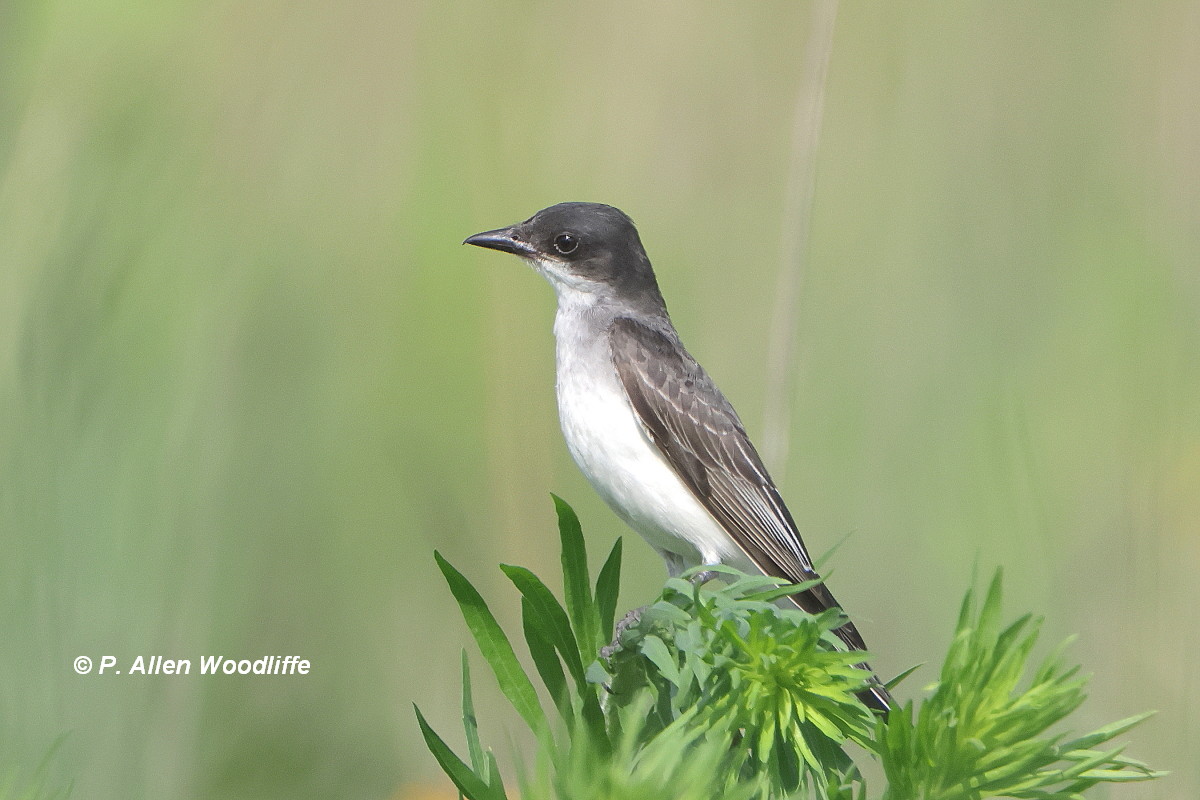
Eastern Kingbird

Song Sparrow
Along one of the shrubbier sections of the site was this Willow Flycatcher.

The grassland habitat varied. Some parts still had stems from the previous years growth quite visible, and it was here were most of the breeding bird action was.

Areas that for some reason had been matted down over the winter, showed a delayed growth, and so it was likely less appealing to the grassland birds when they returned this spring. There were very few birds using this shorter grass habitat.
Interspersed amongst the grasses were some prairie wildflowers, such as Ohio Spiderwort, one of my favourite grassland species.

While I was concentrating on birds, I couldn't help but notice some butterflies, including this Great Spangled Fritillary, a little worse for wear.....
...and given there were hundreds of milkweed plants, often in fairly dense clusters, it was a magnet for Monarchs.

Of course I have been at Rondeau on occasion, sometimes leading a tour for folks associated with the University of Windsor, but sometimes just on my own. One of the highlights was to find this Acadian Flycatcher on a nest.

As good as this find was, it was disconcerting to see the leaves right beside the nest, which tells of a questionable future. The leaves show a serious bout of Beech Leaf Disease, which is causing many American Beech trees to be in major decline. There are more than a few Am Beech trees in the park already dead, with virtually all of them in the park showing at least some signs of being affected. This will play havoc with the future of Acadian Flycatcher in Rondeau and other woodlots, as it nests almost entirely in these beech trees. On occasion they will nest in a Sugar Maple, but that is the exception. It does not bode well for this endangered bird species here in Ontario.

While some birders have reported more than one pair of Acadian Flycatchers along this Tuliptree Trail, I discovered that some people were attributing an Eastern Wood Pewee nest, shown next, to be that of an ACFL. The nest of the EWPE is typically on an open branch of various kinds of trees. At one point I actually saw an adult EWPE perched on the side of this nest, even though it is a bit dilapidated.

It is not in the fork of an Am Beech. They are both members of the flycatcher family, but quite different in many respects.

Eastern Wood Pewee
At one point I noted what I believe to be Fan-shaped Jelly Fungus on a log in a slough.
On another trail, I came across a cooperative Eastern Kingbird....
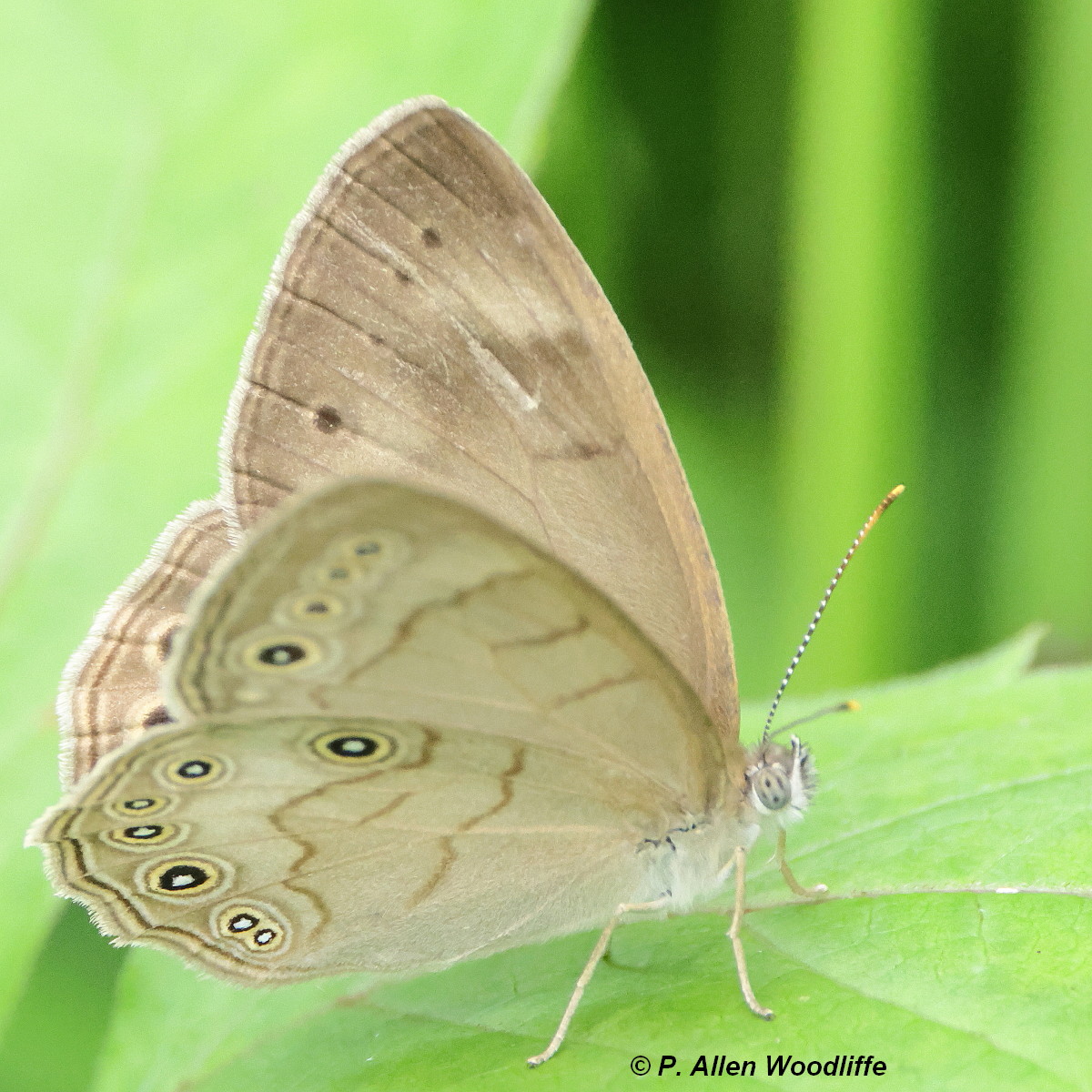
..an Appalachian Brown butterfly.....
....and a young Eastern Cottontail.
On another occasion I made a trip out to Clear Creek Forest Prov Park, for some forest photography on an overcast, relatively calm day. I was fairly happy with some of the photos I got.

While I was there, I wanted to see if there were any dragonflies to photograph in the old quarry on the north side of the forest. Due to the cool day with heavy cloud cover, there was hardly a dragonfly to be seen, so maybe next time!


If you want to subscribe, or unsubscribe, to Nature Nuggets, send an email to: prairietramper@gmail.com


Friday, 30 April 2021

Early season black lighting

 I had planned to post a few times over the last few months, to feature moth images and highlight some of the finds of late last year. Not sure where the time went, and my spring posts so far have mostly featured migrating birds, and spring wildflowers. However I will take a short break from that theme. Before the spring gets too far along, I want to feature some moths of 2021. The nights have not been great, overall, but on some evenings there has been a bit of action, even back in March. I have had the light set up in the back yard a few times, with only moderate success so far.

Earlier this week Kevin and I set up our lights at Clear Creek Forest Provincial Park, in eastern Chatham-Kent. It is a great spot for all sorts of reasons, and I always enjoy poking around the various habitats. Last year we didn't attempt any black lighting there until later in July. Our priority was to black light at Rondeau as much as possible, but by July the mosquitoes were making it quite unbearable, so we moved our efforts to Clear Creek, and found there were no mosquitoes after dark at all! What a contrast, and a delight!

Since we didn't start until July last year, clearly we had missed the early season moths, so it was time to catch up with them. It is a tad warmer in spring than at Rondeau, simply because Rondeau is affected by the cooler temperatures from the lake and bay that surround it, whereas Clear Creek Forest is a couple of kilometres inland from the lake.

Our first effort at Clear Creek was fairly satisfying. We had three lights and white sheets set up along the trail, and got about 25 species of moth in about 2.5 hours. I'm sure if we had stayed a few more hours there would have been more, but when one gets up relatively early for birds, one cannot stay out too late for moths!

Here are some of the more distinctive moths, many of which looked quite fresh and clean so were likely recent emergent individuals rather than over wintering individuals I suspect. Clicking on the image will make it larger and easier to appreciate the finer details of these delicate creatures.

This first one is an Apical Prominent, and clearly has an atypical shape, at least compared to many moths.


Bicolored Woodgrain
 This next one, the Brown-collared Agonopterix, is quite small, being only about one centimetre in length.

Canadian Melanolophila

Clover Looper

Distinct Quaker
This next one is the Double-lined Gray. A closer look at this fresh specimen shows some linear warm brown markings which can be distinctive, along with the white spot towards the outer edge of the wings.

Honest Pero
I think this next one is quite striking. It is the American Lappet Moth. While it is not uncommon, I have only seen and photographed it on one other occasion.

Linden Prominent
The emeralds are quite attractive. This one is the Red-fringed Emerald, with the first photo showing its more common pose. The second image is the same individual, but one does not often see it posed like this.


Reddish Speckled Dart

Small Engrailed Moth
The following individual is a Tawny Pug. It isn't particularly rare, but is the first time I have seen and photographed it. The body is quite short, about 7 mm in length, but the wing span at about 20 mm is impressive for the overall size of it.

Toothed Brown Carpet
Not all of them come to the lit up sheet. Some will alight on the tripod holding up the black light, and are much more difficult to see and photograph. This fresh looking individual is a Variable Carpet Moth, again, the first time I have seen and photographed it.

These are just a hint of what is to come. I intend to set up my black light at various spots again in 2021. Some will be the same as in previous years, but perhaps at a different time to see what comes in. I have a couple of new spots in mind, one in particular looks like it has an unusual habitat mix, and could provide some really interesting critters. Having found two new species for Ontario in the last year or two, I am hoping the trend continues and more new species will show up. 

There are more than 3200 species of moth known for Ontario, and with the level of interest shown in this group over the last few years, undoubtedly more are likely to be discovered. Stay tuned!