Showing posts with label sunrise. Show all posts

Wednesday, 9 September 2015

Orchids, birds, contaminants, etc

Some mornings it has been great to get up early. One morning recently, I headed to Erieau hoping for some colourful skies to capture. I got to the waterfront well before sunrise. At first things didn't look too promising, but I got momentarily distracted with this sailboat that anchored just off the fishing boat harbour. It was attractive in the pre-dawn gloom, so I attempted to use my long telephoto lens on it. Keep in mind the focal length was the equivalent of 800mm, and I handheld the camera and telephoto and took it at 1/40th of a second. This was taken 15 minutes before official sunrise, and on a cloudy morning at that. I really didn't think it would be very sharp, but was surprised at how well it turned out. There was no wind to speak of, so the boat was quite still. I guess I was also.
Oh yes.....there was some colour in the sky after the sun came up.


I've had some recent requests about late season orchids. And now that autumn is not that far away, it is appropriate that Autumn Coralroot is being sought after by some botanists.

Autumn Coralroot (Corallorhiza odontorhiza) is a diminutive little orchid that not that long ago, was considered rare in Ontario. Its perceived rarity was likely due to its rather nondescript stature. As more and more people developed an eye for it, it has been discovered farther afield than it once was, even north to the lower Bruce Peninsula.

This first image shows it in all of its splendour, from a distance of merely one metre. Can you see it?


Maybe this will help. Note the mosquito for scale resting on one of the flowers....better there than on me!
 Even closer.....
This is about as large and colourful as this orchid gets. It can self-pollinate.....on occasion, the flowers won't even open so there is even less to see!

This colourful and distinctive Hedgehog Gall was on a White Oak leaf. One or more wasp larvae of the Cynipidae family are developing inside.

While walking the forested trails to see this orchid, I noted lots of spider webs criss-crossing the path. Most of them belonged to the Marbled Orb Weaver, a colourful medium to large spider that is most frequently encountered in the late summer.

Another spider that one frequently sees this time of year, especially in areas of old field vegetation or prairie vegetation, or even along shrubby edges of the woods, is the Black-and-yellow Garden Spider (Argiope aurantiaca). Normally you see the females which are full of developing young, and looking much fatter than this one.

After my little foray along the woodland paths, I decided to check out the southeast beach where large numbers of gulls frequently rest. With the moderate southwest winds, this day was no exception, and there were several hundred gulls, with increasing numbers of terns arriving as they prepare for migration. A few Caspian Terns were present, still giving their raucous calls.....

Caspian Tern
Caspian Terns
.....as were a few Common Terns, making things a bit more interesting than just the usual Ring-billed and Herring Gull mix.

Common Tern
Two immature Little Gulls were part of the larger group, but did not come close enough to even attempt a photo of. Maybe next time.

After leaving Rondeau, I often stop in at the Blenheim Sewage Lagoon, where the fall migration of shorebirds and waterfowl is picking up. On the way, I noted this small family group of Wild Turkeys. This seems kind of late in the season for the young to be so small. Presumably the first nesting attempt of the adult was unsuccessful, and this smaller group of small young is the result of a second attempt.

A Great Egret flew over. I particularly liked the backlit conditions. One can really see the detail in the individual wing feathers. The dark area on the leading edge of the wing indicates the flesh and skeletal structure of the wing from which the feathers emanate.

There are tons of Killdeer around the lagoons these days, particularly in the mostly dry sprinkler cell. But they make a racket, and when they flush, most everything else does as well. There have been some good birds present, even a Willet in recent days, but not on the days that I was there.

One doesn't normally see an American Goldfinch pretending to be a shorebird.
 This Lesser Yellowlegs is to be expected. This was a day when the water in this sprinkler cell  just covered one of the pipes which the yellowlegs was walking on.
In the centre, to the left of the rear end of the Lesser Yellowlegs below, is a young Solitary Sandpiper, easily distinguishable at this time of year with its dark 'wrist' area.
A few Wilson's Snipe have been around. This one sat tight after all the other shorebirds flushed.
Wilson's Snipe
 One can't help but notice the bright blue/green sludge around the perimeter of some of the lagoon ponds, as well as a buildup of green algae. I don't recall it being this vivid in previous years. Is it some new kind of chemical treatment to attack the undesirable organic matter? Or something more insidious?

I recently had a link to an article sent to me (thanks, Brett!), which described the results of some tests on bats which had spent a fair bit of time feeding on insects emerging from sewage treatment plants in the northeastern US. It was surprising to find out what was in the tissue of these bats: PBDE (flame retardant), salicyclic acid, ibuprofen, caffeine, DEET, triclosan, etc. You can read about it in this link. Although many things are removed during the normal treatment of water at such facilities (most of them I believe, are the organic elements, not the inorganic ones) it makes one wonder what is not being taken out. Consider all the things that end up being flushed down the toilet....old prescriptions, as well as the current prescriptions and drugs that so many people ingest, and eventually get excreted out and flushed into the system. Most of those chemicals, hormones, drugs, etc end up remaining in the system that ends up in coming back into our homes when you turn on the taps. Think about that next time you fill your water glass, coffee-maker or whatever.....yuk!

I digressed.......blame the blue and green sludge!

Amongst the typical waterfowl showing up at the lagoons, including Ruddy Duck, Mallard, both teal, American Wigeon, Northern Shoveler and Wood Duck, was this lingering Tundra Swan. It is usually near the edge of the water of one of the ponds. I don't think anyone has seen it fly since the spring, so presumably it can't. It will likely be fine until freeze-up and after that, its remaining days are probably in short supply.
 As one approaches it, it quickly heads towards the nearest pond.

The weedy edges of the pathways along the lagoons are good places to find Bobolink towards the end of August and into early September. Both males and females look alike at this time of year.

 A few days ago, Blake Mann and Josh Vandermeulen had seen a couple of Common Checkered-Skippers. I was there later that same day but didn't see any. But I will be looking next time I go. They are quite small, but colourful. This next image is of one I saw about three years ago, along an abandoned railway not all that far away from the lagoons. In real life, it is about 2.2 cm across.

Next time I get to the lagoons, you can be sure I will be on the lookout for this rare, little lep!




Wednesday, 19 August 2015

Hot, humid and sultry, but there are still lots of reasons to get out!

During these hot, humid, dog days of summer, I have been picky about the times I am out in the field. Apparently the term 'dog days of summer' refers to the hot sultry period from early July to about August 11, and includes the period when the dog star is in conjunction with the sun (I'm Sirius :-).  I've never really enjoyed the hot humid weather, and ever since I've had to contend with Lyme Disease, it has been more of a challenge. But with so many things to see, I definitely get out when I can!

Not that long ago, I ventured out for some pre-sunrise photography, at one of my regular locations: the main harbour of Erieau, looking across Rondeau Bay to the provincial park. As I got out, I realized how sultry the weather was.....it was actually foggy on my way to Erieau, and with 100% humidity and no breeze it was not comfortable at all, even at about 5:15 a.m. I had forgotten to bring my knife to cut the humidity and haze. And the mosquitoes were already up and at it.

 I usually find the 30 or so minutes before the sun rises to have the best colours, and by using a tripod, a neutral density filter, cable release, mirror-lock-up and a low ISO rating, I can get some appealing slow shutter speed shots where the colours blend in nicely. This first one was an 8 second exposure.

Just as the sun was breaking the horizon and I was packing up, I noticed a canoe heading out, so I nabbed a photo of that as well. Obviously it took a much faster shutter speed to capture them. This next one was at 1/125 second.
I headed over to Rondeau Provincial Park shortly afterwards. The woodland atmosphere was dark and foreboding, as the sky was mostly overcast, and the fog had remained in the still air to give an ethereal look and feel. Even the birds were quiet, but couple of months ago it would have been alive with song at that hour.


Spider webs were everywhere, and obvious by the way the drops of moisture clung to the silken threads, appearing as a string of pearls.

I headed out the South Point Trail, hoping for a little breeze and some kind of action as the sun broke through the haze, the wind shook the spider webs free of dew drops and the wildlife came alive.

Some of the mid-summer wildflowers were in fine shape.

Tall Bellflower

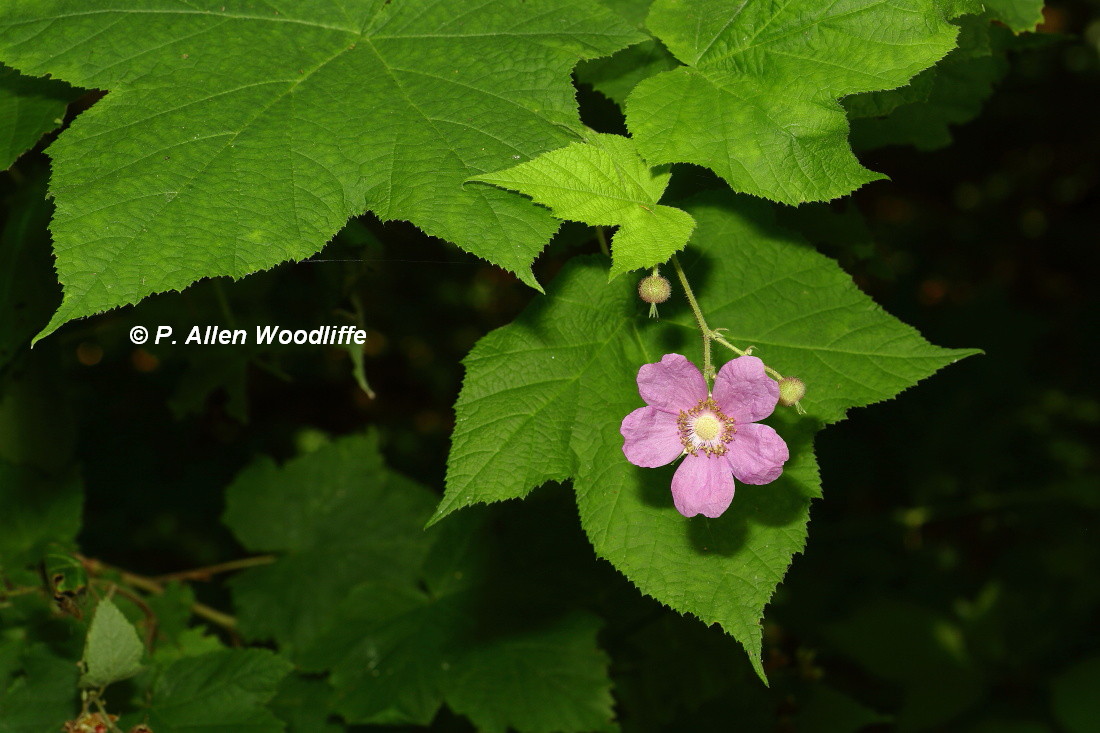
Purple Flowering Raspberry
 When I got to the 'point', it was clear that erosion was ongoing. There used to be a bench a short distance beyond and to the right of this Danger sign. This is the third bench in as many years, in three different locations, that has had to be rescued by park staff, which demonstrates the extent of the erosion. It isn't just occurring at one place. The erosion is partly due to the higher water levels this year, but also due to the presence of the large pier at Erieau which interrupts the normal water currents carrying sand.

The trail and road used to be here not that long ago!
There were a few butterflies.....I didn't see anything really unexpected, but the next two were nice and at least briefly cooperative for the camera.
Appalachian Brown

One of 5 Giant Swallowtails sipping nectar from Wild Bergamot
I explored other sections of the park, and got some photos of this Small Green Wood Orchid. It grows in wet areas on rotting logs, especially in some of the sloughs.


On another trail, I came across lots of White Vervain (Verbena urticifolia). Most people wouldn't give it a second glance let alone a first one, yet the tiny flowers, only a few millimetres across and appearing on long slender branches are simple but attractive.

I came across this tiny Orchard Spider feasting on its most recent meal.

And this is the time of year for one of Canada's rarest orchids to appear...the Nodding Pogonia (Triphora trianthophora), which as far as anyone knows, only occurs at Rondeau. I wrote a fairly extensive post about it previously, entitled: A highly endangered native orchid.

During one of my planned visits, I took park staff out to see it (it is so small and occurs in an out of the way place; none of the current park staff had ever seen it in real life before this day).

It is a bit of a hike to get to the location, crossing some of the deepest, darkest and swampiest woodland such as is shown in the image below, all the while fending off hordes of bloodthirsty mosquitoes. Other than the occasional park staff who I take to this favoured spot, I have never seen anyone else even close to it, and I love it!


And we saw plants with single flowers, doubles and the even rarer triple (from which it gets the 'Tri' part of its Latin name). I always hope to find ones that are strongly magenta in colour, but it seems that this year, for some reason, they are mostly white with just a slight tinge of magenta at best.


Thursday, 4 September 2014

Egret streamer and other odds and ends

I had been meaning to get out and do some sunrise photography for quite awhile now, but various things kept me from doing so. This morning things came together, so out I headed almost an hour before official sunrise. I like to get to my destination about 30 minutes before sunrise, since just as a sunset can be more impressive in the 30 minutes after the sun actually sets, the 30 minutes before can provide some impressive light. At least with the shortening of the days, that isn't quite as early as it was a couple of months ago!

My destination was the boat launch area at Jeannette's Creek. The overall result was not as good as I was hoping. There were virtually no clouds in the sky for the pre-sunrise sun to reflect off of. Instead there was a gentle glow with more subdued colours. The exposure for this image was 1.3 seconds. The sky was rather bland, so I cropped most of it out.


To illustrate what a difference some clouds or a bit of mist can make, I have the following two images to share, which were taken from the exact same place: the first with some very effective clouds, and the second with a low mist.


The bottom line is that you never know what you are going to encounter when you are going out for sunrise photography, and so the results are different each and every time.....and mostly worth the effort of depriving one of some sleep time. One of the features of the mighty Thames River, sometimes more appropriately referred to as the 'muddy' Thames, under these conditions is that the river looks much more impressive by reflecting the colours of the sky than it will later in the day when it takes on its more typical, and truer, muddy colour.

An added benefit of these early hours is that you have the place pretty much to yourself, and the wildlife is a bit more active.

I noted three different Osprey in the area, although none came by close enough for a decent photo, so you will have to take my word for it. Ospreys are in migration mode these days, as the southern Ontario hawkwatches indicate. So these birds which don't usually nest in the extreme southwest, are on migration from points farther north.

Another raptor that came by, and this time at least close enough for a record shot, was this sub-adult Bald Eagle. It has a mostly whitish head, still some patchy white on the belly and under the wings, but the tail is mostly dark, so it is probably about a third to fourth year bird. It circled once, dropped down to the water to attempt catching a fish (unsuccessfully, I might add) and then continued on downstream.


Several Great Blue Herons flew by.


There were also Belted Kingfishers, numerous ducks (Mallards and Woodies) and various sized flocks of Canada Geese. This morning was opening day for the early Goose hunting season, so they were stirred up and kept their distance.

Great Egrets were also observed. I saw at least 5 individuals, mostly heading upstream but this one was headed downstream. The very strong side-lighting of the golden sun made it difficult to capture the normally expected colour of the bird....very harsh lighting on a white bird against a gun-metal blue-gray sky.


I noted it was coming almost right overhead. Then I noticed something else.


The feet started to separate, and it wasn't coming in for a landing.


At this point, I decided not to look up any more, but kept an eye on the adjacent water surface. Thankfully the bird was just far enough away from being directly overhead that its digested frog/fish remains splattered on the water surface a short distance away.

I'm sure if it was trying to aim for me, it could have done a better job, so I didn't take it personally. But note the advance warning: when you see the feet separating and it isn't coming in for a landing, keep your mouth closed and protect your camera/binocular gear!

All the while these birds were going by, there was a fairly steady stream of blackbirds leaving the upstream areas and heading downstream and out along the edge of the lake. I estimated there might be somewhere between 10,000 and 20,000 birds that passed within view during the ~40 minutes of their flight. Sometimes they were widely scattered across the sky, but at other times they were densely packed in. They were mostly Red-winged Blackbirds, with a few Common Grackles throughout the flocks. I didn't see any Yellow-headed Blackbirds, but they could have been mixed in somewhere.


After leaving the Jeannette's Creek area, I continued on to Lighthouse Cove. The recently harvested tomato fields, together with the recent rainfall, were perfect for shorebirds. I didn't have a lot of diversity, but noted at least 100 Killdeer, and mixed in were 4+ Black-bellied Plover and one, perhaps two, Buff-breasted Sandpiper. Most were a fair distance away, so I have no photos to show for it. But keep a close eye out for these harvested tomato fields that have a bit of standing water in them.


Friday, 27 June 2014

An early start to a long weekend...

....literally. I arose at 4:30 a.m. to get to Erieau well before sunrise to catch the best light which I find is a half hour before the official sunrise time. I had done the same thing yesterday, although in spite of the weather radar indicating that there were minimal clouds, the entire sky was cloud covered, with only a hint of lighter cloud right at the horizon. So I sat in the car overlooking the Erieau harbour, and sipped my drive-through coffee on the one hand wishing I had stayed in bed, but at the same time enjoying the peacefulness at such an early hour.

But today was considerably better.....the sun actually put in an appearance! My favourite times are when there is some high cirrus clouds to reflect the rosy sun about 30 minutes before it peeks above the horizon, but today it was almost totally clear, with just an orangey hue. If you look closely, you can see that the lighthouse is 'on'.

10 second exposure 20 minutes before sunrise

However when the high clouds aren't present, then some shots immediately as the sun is appearing can be quite attractive.

0.8 second exposure

There didn't appear to be any birds of special note in the Erieau area, so I headed to Rondeau, hoping for some good light on a Red-headed Woodpecker's nest. At such an early hour, however, it was shaded by the nearby cottonwood trees. I did manage to get a photo of one of the adults out taking a short break from foraging for insects.


I wouldn't have minded if the woodpecker could have made a dent in the mosquito population.....they were quite feisty, so I spent a bit of time along the east beach enjoying the light breeze and the golden sunlight at the early hour.


The pioneer grasses are hardy.....they have to survive the extreme elements from intense cold and dessication in winter to intense heat in summer, not to mention the abrasive action of wind-blown sand. But eventually some pioneer trees appear, especially these Eastern Cottonwoods.

Later I went to the Tulip Tree Trail, just because I wasn't far away and there wasn't anyone else around. I was hoping to detect nesting activity of the local pair of Prothonotary Warblers. I took a few shots of the mossy upturned tree root. The mosquitoes, in spite of all the water around the trail, were not nearly as bothersome here.


While shooting this scene, I heard something slogging through the water a short distance farther along the trail. I checked it out, and watched three deer busily munching on aquatic plants. The closest one was no more than 10 metres away, and by moving slowly, they didn't seem to be bothered with my presence at all.


An event I had to be at in Chatham required me to leave Rondeau before 9 a.m......some days I don't even get to the park until 9, so it seemed odd to be leaving by then.

And now the long weekend is here, although for us retired folks, it isn't any different than any other weekend except some of my favourite places are more crowded :-)......enjoy it, everyone, and Happy Birthday Canada!