Showing posts with label Red Admiral. Show all posts

Sunday, 12 April 2026

Fair weather brings fair sightings

 The three favourite natural areas I go to, Rondeau PP, St. Clair NWA and Mitchell's Bay North Trail, have all had some better photo opportunities of late, which isn't surprising given the gradual arriving of spring.

At Rondeau, there is an increasing variety of photo ops, although I have missed lots of the first of year migrants. I plan to catch up with more of them very soon!

Eastern Phoebe

Northern Flicker
This next creature is sometimes called a Northern Brown Snake, but more officially it is Dekay's Snake. It is small, not particularly rare but not abundant either.


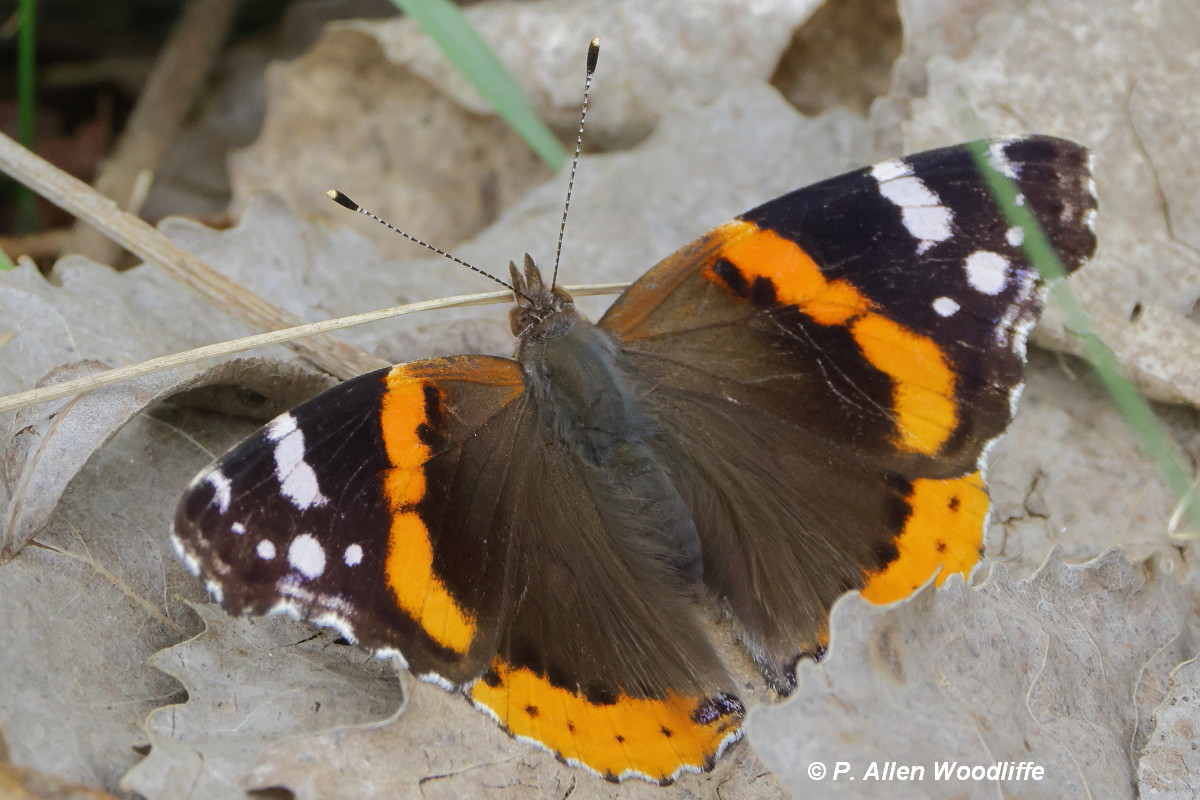
As the days warm, there is an increasing number of butterflies, including this Red Admiral.
A pair of Yellow-bellied Sapsuckers, relatively recent arrivals, were seen 'fighting' for territory on this tree, and as they were so active, neither one really cooperated for a photo that I was hoping for. Maybe next time.

 At St. Clair NWA, with the wide open skies, it can be good for seeing things and even getting a few photos. However it has been cool and windy, so not ideal, but still worth it.

On one occasion there were several flocks of Bonaparte's Gulls, averaging about 40 in number, passing through fairly quickly on their way to points farther inland. Presumably some field being worked up had attracted their interest. Bonaparte's Gulls have just arrived in large numbers in the last couple of weeks. 

Waterfowl are becoming less numerous, but still are around, like this male Bufflehead; its mate was nearby.
Sandhill Cranes are almost a guarantee these days, with as many as 15 or so typically seen in the immediate area. These next two were right on the trail, and let me get closer than I expected.
There was this third one as part of the group, but it left first, and allowed me to get some good flight shots.

At the Mitchell's Bay North trail, there are almost always 2-3 Bald Eagle's passing by, or landing on a small mud flat at the water's edge. Most of them right now are sub-adults, as the adults are presumably on or near their nest.


With the water level being what it is, there is a lot of mud flat, and I am hoping to see a good variety of shorebirds. On this occasion there were a couple of Greater Yellowlegs out feeding.


...and along one of the sunnier, quieter channels, there were a few Midland Painted Turtles enjoying some sunshine.
Tree Swallows were fairly abundant, but mostly in flight. Once in awhile, one would rest on a wire.

Certainly one of the less expected birds seen in Chatham-Kent these last few days was a Black Vulture. It was just a bit north of Clear Creek Forest Prov Park, in eastern C-K. I didn't get out to see or even look for it as I was busy with some other things. However I have been fortunate to see one in C-K in the past, including this one which I photographed inside the Rondeau Park boundary, back on March 15, 2009, a few years before I started Nature Nuggets.


If you would like to subscribe to Nature Nuggets, send an email to: prairietramper@gmail.com 


Wednesday, 12 July 2023

Rondeau Butterfly Count

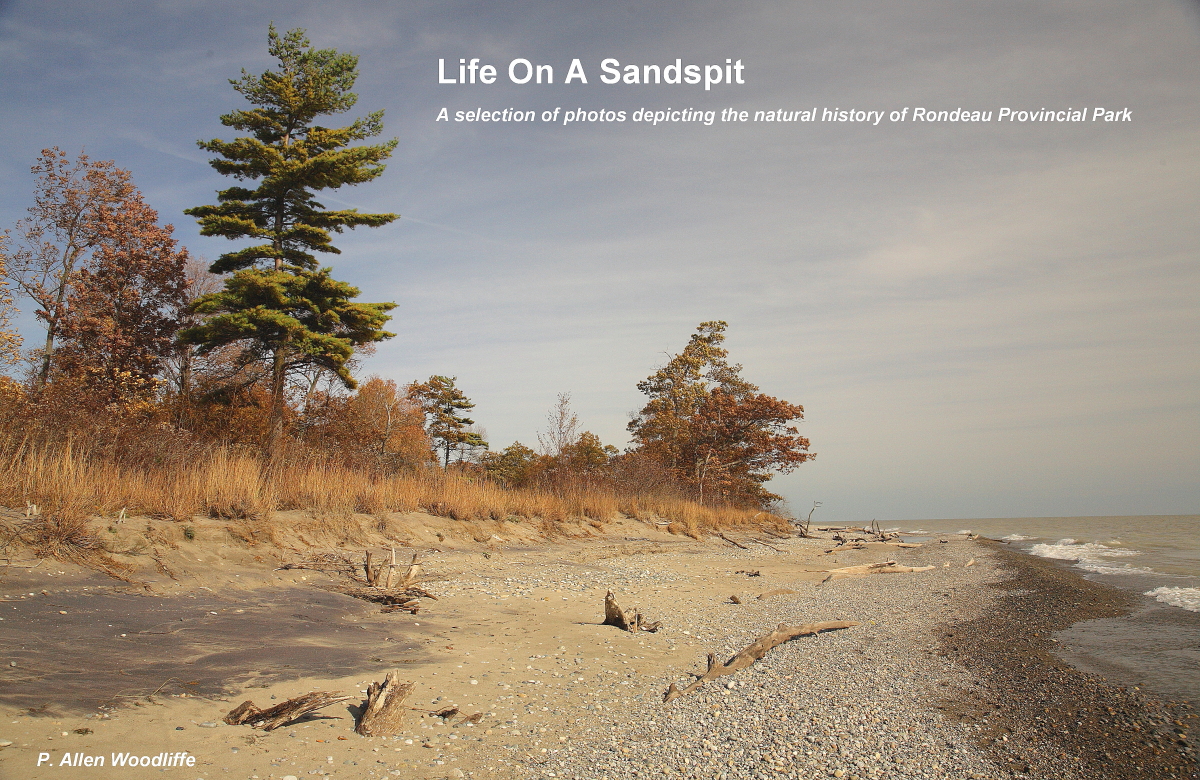
Just a brief note regarding Life on a Sandspit: it seems to have garnered a lot of interest and is doing well.

It is currently available at the Friends of Rondeau store (inside the Rondeau Visitor Centre), as well as the Bayview Market, just outside the Rondeau PP gates. It is also available via the Sydenham Field Naturalists, and you can see it, along with other nature publications on their web site here. I am slowly finding other local sites where it may be available, and will provide updates on those as they occur.

On to the butterfly count post.

Just a few days ago, on July 9, was the annual butterfly count, for the Rondeau area. Over the past 22 years, it has ranged from 35 to 47 species, averaging about 41 species. I don't have the final tally for this year, but based on the area that I and my colleagues did for this one, I think we will definitely be below average both for total species and individuals. I usually get about 18 species, but this year I got only 15. Of course weather is always a factor, and the cool, cloudy, misty weather this year did not bode well. And a downpour of heavy precipitation in the afternoon for some, did not help at all. Nonetheless, it can always be worthwhile to get out and see what is around. The following photos are ones I took while meandering through the several spots I normally cover. I didn't get photos of all the species I recorded, and the results vary.

This first one is the only swallowtail species I encountered, and just one individual!

Black Swallowtail
Bronze Coppers, next, are not a guarantee, and I only saw this one. Fortunately it cooperated to get the kind of photos that allowed me to separate it from the American Copper.

If this count was taken a few years ago, I would have no problem identifying this next one as a Summer Azure. However the lepidopterist taxonomists have examined the Celastrina genus a little differently, and it apparently is not quite so easy, so this one could be as Summer Azure, but I left it as Celastrina sp.

Common Wood-nymph

Eastern Comma

Eastern-tailed Blue

Little Wood-satyr
Monarchs, shown next, got off to a slow start in the count, but as the day wore on, I came across several areas where Common Milkweed was present in the hundreds of plants. One area could have even had more than a thousand plants, so getting several dozen Monarchs was not hard. If I had been able to carefully survey this largest milkweed site, I could have easily doubled the number of Monarchs, but by that time I was losing energy so I did most of my surveying via scanning the large field with binoculars.
Crescent butterflies are normally fairly common, but for some reason, that wasn't the case on this day. I had just this one Northern Crescent.
Although the ? on this next butterfly isn't all that visible, it was indeed a Question Mark.
Red Admirals, at 57 individuals, were by far the most common of the butterflies, other than Cabbage Whites at about 70.

Of course anytime one is out in such habitat, there are always other things to see, so I took advantage of the photo ops I was given. This Eastern Gartersnake was quietly sitting along the edge of one of the first trails I took. I presume it was trying to soak up some of the non-existent sunshine, as it never moved even a bit, although I got quite close.


Along the Erieau Marsh Trail there were the usual things like Great Blue Heron.....
...and even a Trumpeter Swan.
Song Sparrows were common in most areas.....
...as were Red-winged Blackbirds.
Along one area, which follows an old Railway Track, I saw three Wild Turkeys, but true to their character, did not allow me to get very close. This next photo is highly cropped.
Along this same part of the area I covered, I noted several clusters of a Species At Risk, known as Prairie Rose.
And I even saw the occasional day-flying moth that enabled me to shoot it: the Eight-spotted Forester.

Once all the results are tabulated, I will update the results for this count, but as far as I can tell in talking with several other counters, it will not be one of the better ones. Every year is different! Update: there was a total of 1777 individuals of 36 species recorded on this day, so definitely on the low end of average.


If you would like to subscribe, or unsubscribe, to Nature Nuggets, send an email to: prairietramper@gmail.com


Friday, 21 April 2023

(Mostly) Wetland Wanderings

 Birds returning, wildflowers blooming, turtles sunning, butterflies flitting....there is lots to take in as spring develops! 

I recently stopped in at the Blenheim Sewage Lagoons to see what was happening. There was a good variety of waterfowl, as expected, with Ruddy Duck taking top honours in terms of numbers. There were anywhere from 800 to 1000 or more scattered across the various cells. Many were in fine breeding plumage. Perhaps they have memories of the last hunting season, however, as they were not eager to be within good camera range.

The water in all of the ponds was about as high as I have ever seen it. Even two of the sprinkler cells had lots of water, which bodes well for the upcoming shorebird season if those sprinkler cell levels remain. On this day, however, I only saw Lesser Yellowlegs and Killdeer, but it is a bit early.
There were many hundreds of swallows, mainly Tree Swallows, and due to the cool temperatures, some were low down or even on the ground.
A small number of Purple Martins, like the female shown next, were mixed in on the wires and on the wing....
...I only saw a single Barn Swallow.
A couple of Savannah Sparrows were skulking around.

I next went to the Erieau Marsh Trail. It can be quite birdy, and due to the narrowness of the trail, at least some of the birds are not far off. Ducks are becoming fewer, although there are still many out on the bay but well beyond camera range. Close by the trail are the usual Canada Geese and Mute Swans nesting. This pair of Blue-winged Teal was scrounging around....

...and nearby were up to 9 Dunlin. This one is a long way from full breeding plumage, but getting there.
Blackbirds of various types are typically plentiful, and occasionally a Common Grackle was busy enough with something else that it let me get this photo. I love the iridescence of its plumage in good light.
Along the trail was this Groundhog. At first I wasn't sure what it was up to. But watching for a few minutes indicated it was on the prowl for something to line its burrow with.
It scampered back and forth several times while I watched. After it went down into its burrow, I kept moving along, and when I got to its burrow entrance just a metre or so off the trail, I could see its head at the top keeping an eye on me, to make sure I moved along.
Just as I left the trail, I noted this Osprey perched on a pole. It was apparently quite comfortable and secure, as it let me turn the vehicle around and pull into a driveway to get this photo. There are very few places to pull off along this stretch of road, so I was glad it was close by one of them.

I have been to Rondeau a couple of times lately, although the birding has been erratic. I always find other things to enjoy if the birds aren't plentiful, but I have to decide what camera/lens combination to take on my route. On one of the days, I had a wide-angle zoom intending to photograph some of the emerging wildflowers, so it was a bit of a challenge to get this Azure species. Not so many years ago, most butterfly people would be content to call this a Spring Azure but in recent years the butterfly specialists have re-configured the Celastrus genus and some of them get quite indignant if one puts a species name to the genus. I just call this an Azure species.

I also had several Red Admirals go by.
The resident Eastern Screech Owl shows up in its usual spot on occasion, but is not predictable. It was quite visible on this day.

I've also spent time at some of the wetland areas along the Lake St. Clair shoreline, and for good reason: there is always a variety of things to see there as well! At the NWA, I had this American Kestrel perched on a branch well away from the trail, but at least it stayed long enough for a distant and heavily cropped photo.

There were many dragonflies flitting about, including this pair of Green Darners 'in wheel'.
A young Painted Turtle was along the road side, but clearly it was dead.
More Red Admirals were around.
Up in the Mitchell's Bay area, I had several Forster's Terns, but most were well out over the lake. I got a single photo of one perched on a rail, just as it was getting ready to take off.
Great Egrets are often within camera range. I had about 11 on this most recent visit, and a couple were within shooting range.

There were numerous turtles out, with about 95% of them being Painted Turtles. I saw 5 of these Northern Map Turtles, the first ones I have seen this year.
Pied-billed Grebes can be heard hooting and hollering out in the marsh. I had a pair of them swim by fairly close, before they realized I was not a tree or something, whereupon they quickly made their way elsewhere.

One of my target birds for this outing was to see a Yellow-headed Blackbird, which are known for nesting in the cattail islands close by Mitchell's Bay. I did get a couple of quick glimpses of one, but it was very skittish and did not allow me to photograph it. So I include a photo of yesteryear.


If you want to subscribe, or unsubscribe, to Nature Nuggets, send an email to: prairietramper@gmail.com