A few posts ago I highlighted some of the more common and widespread wildflowers one could find in and around the forested landscapes of southern Ontario. There are a lot of rare wildflowers to be found too, if you know just where to look. Of course with the profusion of luxuriant vegetative growth, it can be really challenging, even where there is a trail running through the forest.
And where there isn't even a trail....good luck!
In the provincial scheme of ranking species, which I have followed in this post,
S1 means there are fewer than 5 occurrences in the province and the species is Critically Imperilled; S2 means there are fewer than 20 occurrences in the province and the species is Imperilled;
S3 means there are fewer than 80 occurrences in the province, the species has declined and the species is Vulnerable to further decline.
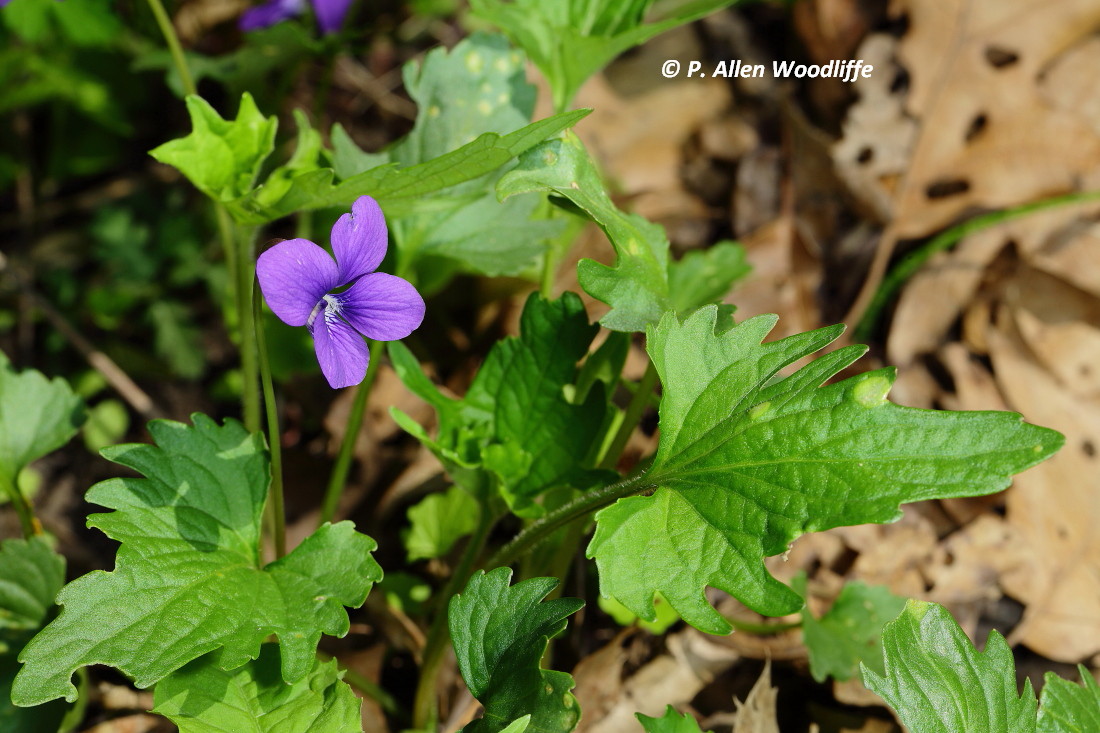
Some violets are commonplace in the spring line-up of wildflowers, and I highlighted several of those species in that earlier post. But others are very uncommon. Wood Violet (
Viola palmata) is one of those. It is also known as Palmate-leaved Violet, and is ranked as S2S3 in Ontario. Unlike most of the violets one might be familiar with, the partially lobed leaves are helpful in identifying this species amongst the others. It can be found in a bit more open habitat, usually in sandy woodland.
 |
| Wood Violet |
Pale or Cream Violet (
Viola striata) is another very uncommon violet. It is ranked as S3 in Ontario. It is often found in rich soils of deciduous forests.
 |
| Pale Violet |
I photographed the previous species at a place known as Newport Forest, in Elgin County. It is privately owned by the Thames Talbot Land Trust thanks to the former owners Kee and Pat Dewdney. The Dewdneys acquired this place quite a few years, always with the intention of protecting, enhancing and documenting the wonderful forest ecosystem there. Over the course of many years of inventory, there has been an impressive array of flora and fauna recorded for this site. One of the highlights in this woodland is the impressive display of Virginia Bluebells (
Mertensia virginica), also an S3 species. I have had the privilege of having access to this site on several occasions.
 |
| Virginia Bluebells |
Trilliums are a well known group of species in general, but not many people have seen this next one. It is Drooping Trillium (
Trillium flexipes) and is S1 in Ontario and legally
Endangered. It only occurs in Middlesex and Elgin counties. It is similar to Nodding Trillium which is more common, but the length of the filaments (stem of the stamens) is exceedingly short in Drooping Trillium.
 |
| Drooping Trillium |
Recently I was on sort of a circle tour, trying to photograph some of the rare wildflowers that don't occur in Chatham-Kent and take more of an effort to get to. While travelling through the Strathroy area, we noticed that a major storm had gone through, as quite a few hydro service trucks were out to make repairs on the hydro lines. Judging by the clouds still in the sky, it was clear that more violent weather was likely on its way. I had to stop along the road and get a few pics.
This next image was taken from the same vantage point, but in the opposite direction of the previous one. The sun had come out a bit and highlighted the field, contrasting nicely with the dark bluish-gray sky.
In this next photo, I had intended to catch it when it looked like a hand was emerging from the cloud reaching down to the ground. But there were too many trees in the way, so by the time I found a more open vantage point, this is all that was left.
One of the plants I was looking to photograph on this foray was Bird's-foot Violet (
Viola pedata). I found a few that were past their best, and although I took a couple of record shots, I have dipped into my photo archives to show a much better example of this species, which is S1 and legally
Endangered. Note the even more finely cut leaves than what the Wood Violet, above, has.
 |
| Bird's-foot Violet |
Another one which I was hoping to re-shoot was Wood Poppy (
Stylophorum diphyllum) which is also S1 and legally
Endangered. It is only known from three sites, all in Middlesex County. However it, too, was past its best, so these next two images are from my archives. I guess next year I will have to take a break from the birding season and catch up to these rarities when they are in their prime!
 |
| Wood Poppy |
Two other significant species are Goldenseal (
Hydrastis canadensis), which is legally
Threatened.......
 |
| Goldenseal |
.......and American Ginseng (
Panax quinquefolius), which is legally
Endangered. Both species are sought after for their alleged medicinal properties, which is partly the reason for their decline. Therefore I will not indicate where these are found.
 |
| American Ginseng |
Orchids are often of interest, and it is surprising to many people that there are more than 65 species in Ontario. Nineteen have been recorded within Rondeau Provincial Park.
Puttyroot is S2 in Ontario. It hasn't yet been ranked as officially rare, threatened or endangered, but is currently under review. As you can see, it isn't large or showy which makes it easily overlooked, especially in the dappled sunlight on the forest floor.
 |
| Puttyroot |
Another orchid which is even rarer and has not yet been found at Rondeau, although it could be hidden away somewhere, is Purple Twayblade (
Liparis liliifolia), a legally
Threatened species. It is not all that showy either, and can easily be overlooked as well, since sometimes it occurs in fairly dense vegetation. I have been watching this particular population for a couple of decades or more. I hadn't actually been to this site for almost a decade and wasn't sure if it was still there. I was delighted to find out that my recollection of field reference points got me back to the right spot and the population was indeed still there. A bonus was that some of the flowers were still in fine shape.
Many plants have invertebrates making use of them and so insect residue and spider webs amongst the flowers are the norm. Sometimes I try and 'clean them up' before photographing them, but at other times, I try and show them exactly as they are. Note the web material dangling from this orchid blossom.
A future post will deal with flowers on trees...some rare and others not so rare.