Showing posts with label Butterfly Milkweed. Show all posts

Saturday, 12 July 2025

Prairie plants and other colourful elements of nature

I thought it was time to give the Sandhill Cranes header a rest, and this new header features a beautiful day-flying moth called a Nessus Sphinx. It was quite active visiting some Common Milkweeds in my yard, so I snapped a bunch of photos, as you might expect :-).

In spite of the greater heat and humidity of late, it is still worth getting out from time to time. A popular plant to see and photograph these days is Butterfly Milkweed. 

This site is at the north end of Rondeau, immediately across from the campground. This photo was taken several years ago, and although it had grown rather shrubby of late, it has been burned in the spring over the past 2-3 years, so it getting more open again, and the Butterfly Milkweed is fairly abundant.

It is always worth paying attention to other things that are around. On one occasion several years ago when I was photographing this patch of Butterfly Milkweed, I caught a glimpse of a large butterfly visiting a nearby patch, and realized it was not a species I was familiar with. So I grabbed my other camera and got this one photo before it took off. I tried to follow it, but it could fly much quicker than I could get through the vegetation!

Once I got home and checked to see what it was, I discovered it was a Gulf Fritillary, and it was the first photographed/confirmed individual for Canada! You can see the wings are a little tattered, so it likely got blown off course via a southerly wind, and ended up at Rondeau. One just never knows what might be out there waiting to be found...

 Something to be aware of regarding these prairie/savanna habitats at this time of year, is the presence of something called Chiggers. They are the larval stage of a type of mite. They are very tiny creatures, which you can barely see even with a hand lens. They will get onto clothing, and eventually on your skin, and a few hours after they catch on to you, you may notice some little red itchy spots! They aren't known to spread any disease like deer ticks that can pass Lyme Disease on, but they can be quite itchy for a few hours. Some people react more strongly to them than other folks, but it is worthwhile to be aware of them. Something like calamine lotion will alleviate the itch fairly quickly in most cases.

 This sandy prairie site is a good spot for other prairie/savanna plants. A common but rather small one is Pale-spiked Lobelia, and it, too, has been in flower for a few days. 


The flowers can be almost pure white, or have a distinct tinge of blue.

 And another prairie species, mainly towards the north and open sections of the Marsh Trail is this next one, Tall Meadow Rue.....


 .....and Wild Bergamot, which also grows in prairie-like settings.

A close relative, but more woodland than prairie, is Scarlet Beebalm. It is quite uncommon.

Some other prairie/savanna species, although not found at Rondeau, include Foxglove Beardtongue...

Foxglove Beardtongue


...and Climbing Prairie Rose, which when found often is climbing up a small open tree. I have even seen this species growing along roadsides in Chatham-Kent, which of course are quite open and have dead trees so provide a good climbing medium.


Next is a plant that is quite rare in Ontario, called False Indigo Bush, which normally grows in prairie/savanna habitat. It is not native to Rondeau, but was likely intentionally planted by someone who may have been the same person who planted the endangered Prickly Pear Cactus back in the early to mid 1990s, and is found in the same general area.


I have been keeping an eye on the progress of another Species At Risk, American Ginseng, which is indeed native to Rondeau.
 
 
 The flower buds were developing earlier in the season....
...and eventually put out a few small flowers, which aren't very showy....
....but have developed into a few seed capsules, that eventually will turn red.
 

A few other things to feature on this post, include a couple of fungi such as this Goblet Waxcap...

...and one with only a Latin name, called Crepidotus nephrodes.
Another plant which can grow in a variety of places, including the edges of woodlands, is Common Selfheal.
This next plant is a shrub, and like many others growing along trails and roadsides, is not native. It is Common Privet.

If you would like to subscribe, or unsubscribe, to Nature Nuggets, send an email to: prairietramper@gmail.com




Sunday, 26 June 2022

Hooray for Pollinators!

 This past week has been National Pollinators Week. While many people think of the honey bee as a main pollinator, and it is a frequent one, it is not a native species. Fortunately there are myriad other pollinators, most of which are native, that will pollinate many different things. After all, if plants weren't pollinated, our choices of things to eat would be greatly reduced!

We are fortunate to have a twelve plot community garden in the municipal park behind our place. It is designed for individual gardeners to grow things for their tables. Sometimes surplus produce is donated to a local food bank.

The garden is coming along nicely, although with the relatively hot dry weather of late, gardeners must water their plot to ensure things continue to grow as planned.

There is lots of diversity of things planted, such as:

Patty Pan

Peppers

Potatoes
Lots of one of my favourites....
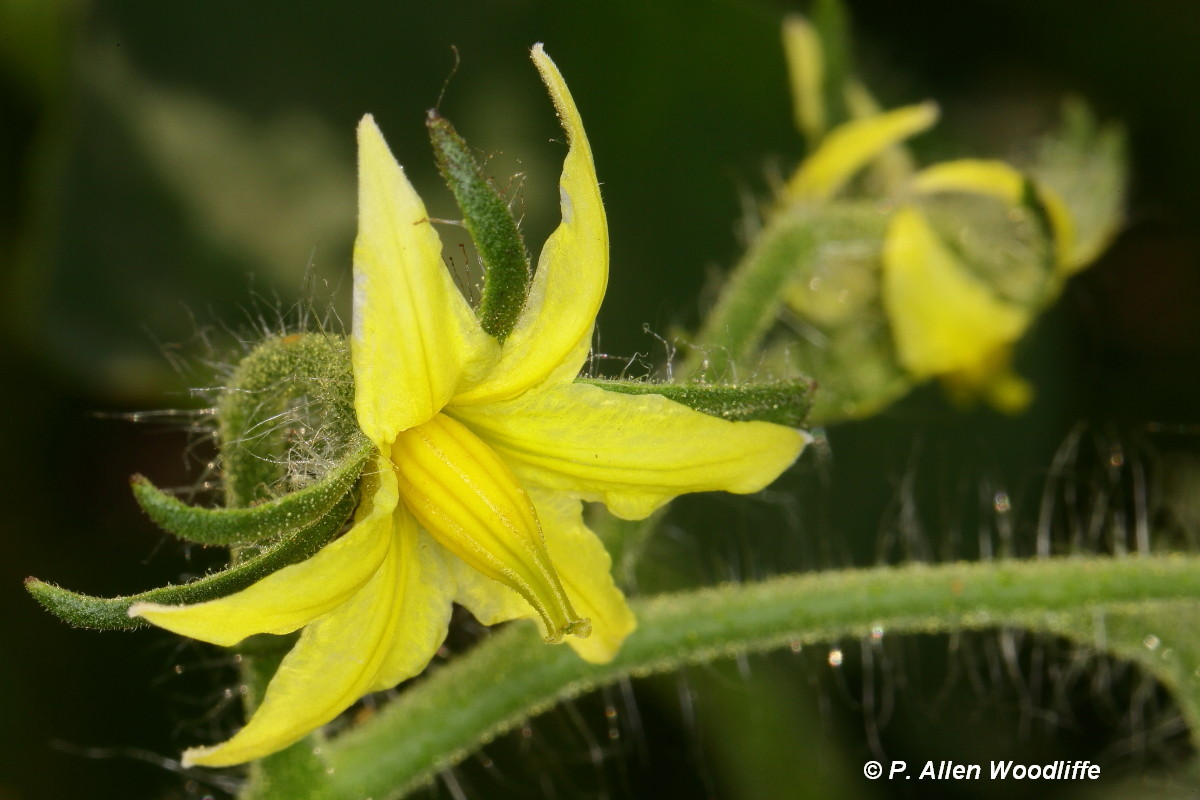
Tomatoes

...some of which are already well developed.

There are lots of other things, such as onions, garlic, zucchini, sweet potatoes, beets and others, as well as herbs such as dill and fennel.

Many of these items rely on pollinators to complete their growth and production. Undoubtedly some pollinators would find these plots even in their relative isolation, but in order to increase the chances of suitable pollinators, two of the twelve plots have been established as a pollinator patch. More than twenty species of mostly native prairie plants have been established in the pollinator patch, which will attract many hundreds of pollinators over the season. And as part of the life cycle of the pollinators, some will lay their eggs on the leaves and stems of the prairie plants. The young pollinators that emerge from the eggs will overwinter in the stems, so that they will be available for the next season's pollinating process. Therefore we do not 'clean up' the dead plant material until spring, so as to give the next generation of pollinators a chance to survive and be ready for pollinating in the subsequent year.

In this pollinator patch, there will be plants in flower and developing seed throughout the season. Right now the following species are in flower:

Butterfly Milkweed

Common Milkweed

Oxeye, or False Sunflower

Pale Purple Coneflower
This next one is mostly finished flowering.
Foxglove Beardtongue

Wild Bergamot

And here are some of the insect stars of the show:

Eastern Calligrapher

Milkweed Bug
This next one, a type of Lady Beetle, is native. So many of the Lady Bugs we commonly see are not native, but have been quite prolific.
Ursine Spurleg Lady Beetle

Long-legged Fly
If you look closely through some of the plants, you may see the face of a little critter staring up at you.
This is a Milkweed Longhorn Beetle, and it is one of the more common beetles I've seen lately.

Not all invertebrate creatures are pollinators, but may be something that feeds on them, such as this spider. I'm not sure what species it is yet, but I enjoyed watching it sit on the stem, then suddenly race out to attempt to grab a small fly type of insect, and then retreat to this spot to wait for the next potential victim.

All of the above were photographed in the last couple of days. Here are a few other garden creatures that I have photographed in this pollinator patch at other times.

The first one is a Carrot Seed Moth. Although most moths are night fliers, it has been recognized that regardless of the time of day or night, some moths play an important role as pollinators.


Eastern Carpenter Bee

Hyaline Grass Bug

Pruinose Squash Bee

Seven-spotted Lady Beetle

It seems with the recent hot dry weather, pollinators and things like butterflies are less evident so far this year. Even things like Monarch butterflies, not a pollinator but certainly something that depends on plants, especially milkweeds, are not as plentiful as one expects. Some sources indicate that the overwintering numbers of Monarchs this past year in Mexico showed an increase from previous winters, suggesting the population of this Species At Risk was rebounding. I have seen a few here and there these last few weeks, but not a lot. Hopefully the weather adjusts to maximize the pollinators as well as Monarchs, if the weather is the difference maker and not the use of pesticides or other insect controlling technology.

Regardless, next time you enjoy those French Fries, tomatoes or whatever plant you are eating, take a moment to thank a pollinator for being able to do what they are designed to do!


If you would like to subscribe, or unsubscribe, to Nature Nuggets, send an email to: prairietramper@gmail.com


Sunday, 3 July 2016

Milkweeds and Monarchs

Milkweeds are nicely coming into bloom these last couple of weeks. There are nine species of milkweed in Ontario, some of which are quite rare. Some of the more common ones include the bright orange Butterfly Milkweed (Asclepias tuberosa) .

 One that is not uncommon, but many people would not notice it, is the Poke Milkweed (Asclepias exaltata), which grows in small numbers along the edges of lush deciduous forests.
 An uncommon species more or less restricted to prairies and savannas is Purple Milkweed (Asclepias purpurascens).
Of course the most common one is, as its name suggests, Common Milkweed (Asclepias syriaca). It is the most aromatic, in my opinion. Fortunately milkweeds were removed from Ontario's Noxious Weed List a little more than a year ago, and that will greatly benefit the declining Monarch butterfly population.

I tried to count the number of Common Milkweeds in my yard....some of which I planted several years ago, and others that just came up on their own. I counted approximately 105 plants, the majority of which will likely flower this year.
More pollinators are found on Common Milkweed than the others, presumably due to their more aromatic nature. Bees, ants, beetles, butterflies all can be found, sometimes all at the same time. But milkweeds can also be traps, as certain sized insects may get their leg trapped in the flower parts and cannot escape. The bee in this next image is one of several bees I have noticed dangling from the flowers in my yard.


Adult Monarchs have not been plentiful yet this year. In fact I have not seen any in our yard, but clearly at least one has been there.


About a week ago, we spied at least 5 good-sized larvae on various milkweeds in our yard, and the neighbours had a couple on theirs as well. They were all about the same size, so it is likely they all were from the successful efforts of a single female Monarch passing through and laying eggs a few weeks earlier.
 A couple of the milkweeds had two larvae feeding on the leaves.
A few days later, they all disappeared. I expect they all left the milkweed plants to find a safe place elsewhere, in order to make their chrysalis where they will develop into an adult.

Go Monarchs!