Showing posts with label Winterberry. Show all posts

Tuesday, 7 October 2025

Such a variety of things to enjoy even fairly late in the season

 The last couple of posts have featured some of my regular 'go to' places along Lake St. Clair. But, not surprisingly, I have spent quite a bit of time at Rondeau making use of the sunny, summer-like weather, although I try to choose times when the heat and humidity aren't too mid-summer like. And there are always things to see and photograph, so here we go!

Plants are declining in diversity of flowering, but there are some highlights that I look forward to. Winterberry is scattered throughout some of the damper, shrubby habitats, and their bright red berries are nice to see.


 Other colourful ones quite visible and in good flower include:

Broad-leaved Goldenrod

Closed Bottle Gentian, next, is always a highlight, although the abundance this season has been quite poor.


Cylindrical Blazing-star
If you look closely at the Broad-leaved Goldenrod, above, you should see this Pale Green Assasin Bug, presumably waiting for something to assassinate.


Hairy Goldenrod
The leaves of Hairy Goldenrod are not nearly as broad as the Broad-leaved species

Spotted Jewelweed

White Heath Aster

White Rattlesnake Root
  There were still some of this hardwood forest species lingering:
Richweed

As shown above, plants can have various insects making use of them. 

Four-toothed Mason Wasp

Green Stink Bug

Dimorphic Snout

Ambush Bug

I haven't been out with the black light, but I still keep an eye out for moths, as in the Dimorphic Snout shown above. Some, along with other insects, may be spending the daylight hours on the side of a building.

Bent-lined Dart

Common Tan Wave

Maple Spanworm

Northern Walkingstick
At other times, while walking along a trail, there are insects conveniently found on the railings.

Yellow-necked Caterpillar Moth

White-eyed Borer

Spurred Darkling Beetle

Spined Soldier Bug

Maple Zale Moth caterpillar

Caterpillars even of the same species can show quite a bit of variation in their appearance. These next two are both Banded Tussock Moth larvae.


This next one, showing two angles, does not have a common name. It's scientific name is Acanthocephala terminalis.

Other creatures I've encountered include an Arrowhead Orbweaver nicely suspended in its web, with a uncluttered background.....

...a Chinese Mantis. It is interesting that amongst most insects, this species can turn its head and keep an eye on you.


Cross Orbweaver
Unfortunately sometimes with all the traffic of vehicles and bicycles, small snakes such as this Northern Brown Snake can be a victim

Hump-backed Beewolf

Mourning Cloak

Red Admiral

Rubbed Dart
I've spent a bit of time roaming the sandy beach areas, thinking of Marie as it was her favourite part of the park. I came across a few Seaside Grasshoppers, which when they aren't in flight can blend in very well...
 ...and I came across this White-footed Mouse hiding under a piece of wood.

Not in the park, but hanging out for a few days at the Keith McLean Conservation Lands nearby, was this Hudsonian Godwit.


 Whew! That's it for this post! If you have managed to get to the end, good for you!


If you would like to subscribe or unsubscribe, to Nature Nuggets, send an email to: prairietramper@gmail.com 


Saturday, 1 July 2023

Forest, grassland and river highlights!

 Perhaps the three different habitats in the title are an odd mix, but the reality is those are what I have been exploring lately, and for good reason which hopefully will become apparent as this blog post unfolds.

Forests are fascinating at any time of year, but with the lush green growth, they are extra inspiring to me, especially on an overcast day with no wind. They have an atmosphere like nowhere else, and one feels a little overwhelmed in a good way, when one takes the time to see the multitude shades of green and gray, and tries to make sense of every little detail laid out before you. The forest has so many stories to share. Given that the main birding season is over, the trails are a bit quieter, so bird and insect song is subdued but noticeable. A small photo about 3" X 5" really doesn't do the area justice. If you click on the images, it will make them a bit larger, but still not quite like the real thing.You really have to get out and immerse yourself in the setting to appreciate what it has to offer, in my opinion.


These next two photos show Winterberry, not a common shrub, but a bit widespread in damp areas. It will have bright red berries in the fall, which are readily consumed by migrating warblers and thrushes.


 There are birds around, to be sure, such as this Acadian Flycatcher, which seems to be persistent along one stretch of the Tuliptree Trail but I am not sure it has found a mate....

 ...and Eastern Wood-Pewees are pretty reliably encountered.

House Wrens, too, can often be heard, and sometimes seen. This one was half of a pair of them investigating a cavity in a tree stub. The presumed male, shown here, seems to be half asleep while bubbling away!

A pair of Prothonotary Warblers can occasionally be cooperative along this trail. More on this species in a future post.

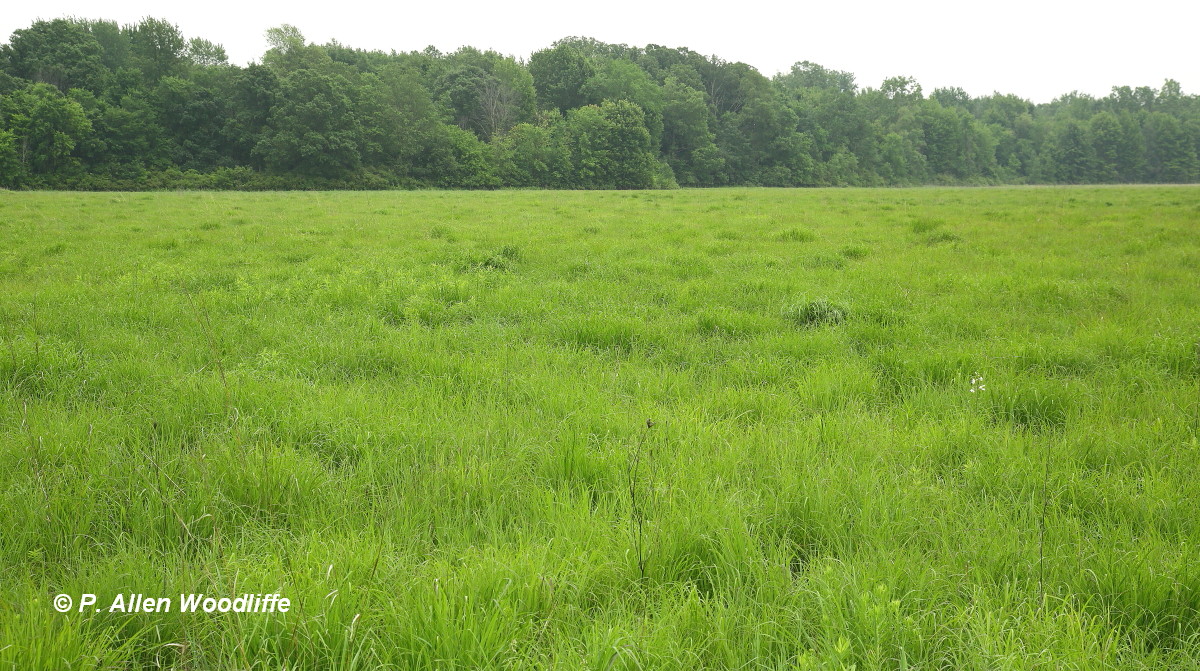
I have recently been out to a couple of grassland areas, in northeast Chatham-Kent and southeastern Lambton as part of a Grassland Bird Assessment project. Parts of them were at quite an early stage of growth, and didn't have a lot of grassland bird activity. No doubt the vegetation was much shorter when the grassland birds arrived, making it less desirable.

Other parts had some vegetation structure from 2022, and had more going for it, it seemed.
Bobolink was one of the target species, and there were a few around, but often partially hidden in the grass which made locking the focus on the bird difficult.....
...so I had to wait for them to be in flight, and in spite of their somewhat erratic flight, was able to capture a few photos.


Common Yellowthroats were fairly widespread.....
...and a few females popped into view from time to time.
There were a few butterflies flitting around, such as this Common Wood-Nymph. There were others, but I didn't want to get too distracted by them since birds were my main target.

I also spent some time at places where I could access either the Thames or the Sydenham rivers, sort of in preparation for an upcoming project entitled Natural Treasures of Chatham-Kent. More on that in a future post.

A shrub that was in fine flower on one occasion was Ninebark, shown in the next two photos.

These two rivers have an exceptional diversity of mussels, many of which are at risk, such as these next two species.
Deer Toe Mussel

Deer Toe Mussel

Pimpleback

Pimpleback
 It was interesting to note that of the first three species of mussel I photographed at one spot along the Thames, all three were considered Species At Risk! It just impressed upon me about the diversity of mussels that occur in these rivers, and how special they are.

Damselflies and dragonflies are also well represented.

Ebony Jewelwing

Calico Pennant
And a few butterflies were also present, including this Baltimore Checkerspot, not particularly rare, but not all that common either.


If you would like to subscribe, or unsubscribe, to Nature Nuggets, send an email to: prairietramper@gmail.com