Showing posts with label butterfly count. Show all posts

Wednesday, 12 July 2023

Rondeau Butterfly Count

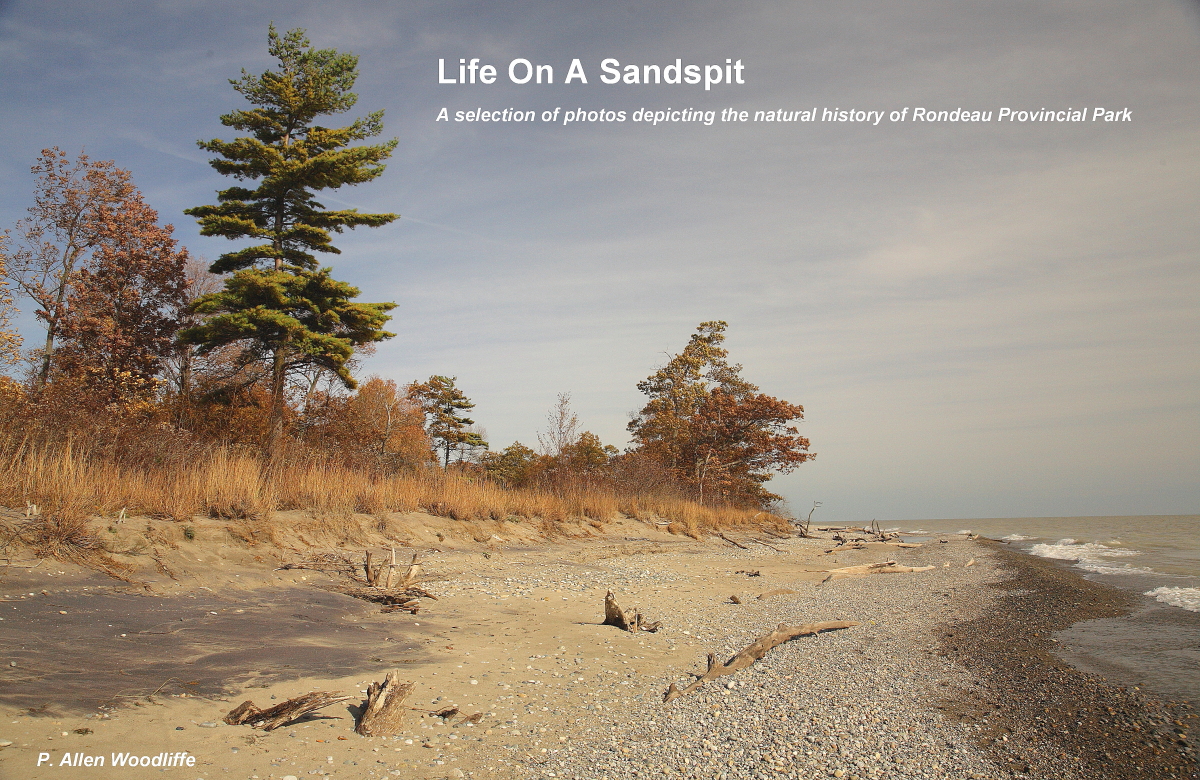
Just a brief note regarding Life on a Sandspit: it seems to have garnered a lot of interest and is doing well.

It is currently available at the Friends of Rondeau store (inside the Rondeau Visitor Centre), as well as the Bayview Market, just outside the Rondeau PP gates. It is also available via the Sydenham Field Naturalists, and you can see it, along with other nature publications on their web site here. I am slowly finding other local sites where it may be available, and will provide updates on those as they occur.

On to the butterfly count post.

Just a few days ago, on July 9, was the annual butterfly count, for the Rondeau area. Over the past 22 years, it has ranged from 35 to 47 species, averaging about 41 species. I don't have the final tally for this year, but based on the area that I and my colleagues did for this one, I think we will definitely be below average both for total species and individuals. I usually get about 18 species, but this year I got only 15. Of course weather is always a factor, and the cool, cloudy, misty weather this year did not bode well. And a downpour of heavy precipitation in the afternoon for some, did not help at all. Nonetheless, it can always be worthwhile to get out and see what is around. The following photos are ones I took while meandering through the several spots I normally cover. I didn't get photos of all the species I recorded, and the results vary.

This first one is the only swallowtail species I encountered, and just one individual!

Black Swallowtail
Bronze Coppers, next, are not a guarantee, and I only saw this one. Fortunately it cooperated to get the kind of photos that allowed me to separate it from the American Copper.

If this count was taken a few years ago, I would have no problem identifying this next one as a Summer Azure. However the lepidopterist taxonomists have examined the Celastrina genus a little differently, and it apparently is not quite so easy, so this one could be as Summer Azure, but I left it as Celastrina sp.

Common Wood-nymph

Eastern Comma

Eastern-tailed Blue

Little Wood-satyr
Monarchs, shown next, got off to a slow start in the count, but as the day wore on, I came across several areas where Common Milkweed was present in the hundreds of plants. One area could have even had more than a thousand plants, so getting several dozen Monarchs was not hard. If I had been able to carefully survey this largest milkweed site, I could have easily doubled the number of Monarchs, but by that time I was losing energy so I did most of my surveying via scanning the large field with binoculars.
Crescent butterflies are normally fairly common, but for some reason, that wasn't the case on this day. I had just this one Northern Crescent.
Although the ? on this next butterfly isn't all that visible, it was indeed a Question Mark.
Red Admirals, at 57 individuals, were by far the most common of the butterflies, other than Cabbage Whites at about 70.

Of course anytime one is out in such habitat, there are always other things to see, so I took advantage of the photo ops I was given. This Eastern Gartersnake was quietly sitting along the edge of one of the first trails I took. I presume it was trying to soak up some of the non-existent sunshine, as it never moved even a bit, although I got quite close.


Along the Erieau Marsh Trail there were the usual things like Great Blue Heron.....
...and even a Trumpeter Swan.
Song Sparrows were common in most areas.....
...as were Red-winged Blackbirds.
Along one area, which follows an old Railway Track, I saw three Wild Turkeys, but true to their character, did not allow me to get very close. This next photo is highly cropped.
Along this same part of the area I covered, I noted several clusters of a Species At Risk, known as Prairie Rose.
And I even saw the occasional day-flying moth that enabled me to shoot it: the Eight-spotted Forester.

Once all the results are tabulated, I will update the results for this count, but as far as I can tell in talking with several other counters, it will not be one of the better ones. Every year is different! Update: there was a total of 1777 individuals of 36 species recorded on this day, so definitely on the low end of average.


If you would like to subscribe, or unsubscribe, to Nature Nuggets, send an email to: prairietramper@gmail.com


Tuesday, 12 July 2022

Butterfly count--Rondeau

 This past July 10 was the annual Rondeau area butterfly count. It is always something to look forward to, although we went into it with some trepidation this year. The hot, dry weather for most of the last month or so, which followed a cooler and wetter spring prior to that has, I think, played a bit of havoc with invertebrate populations. Certainly pollinating insects in general seem to be less abundant than what we normally expect, and butterflies are not as abundant either. Other parts of Ontario even here in the south seem to have been blessed with a bit more precipitation as of late, so hopefully the dearth of invertebrates in this immediate area is just a localized condition.

At any rate, I began my usual route, at the McGeachy Pond Trail, at about 9 a.m. As I walked and looked, I began to think that my next blog post will have to feature something other than butterflies! I walked to the far end and back over a period of about an hour, and came up with two butterflies, both of which were Cabbage Whites, and even those two were only noted on the return. 

Yikes! This was not going as hoped. It didn't help that the butterfly bush that was located at the residence at the far western end of this trail had died.

But I kept on, and went next to the Erieau Rail Trail. The first part was quite shaded, and there was more bird action than butterflies. I had things like a pair of Carolina Wrens, Downy Woodpecker, and a Warbling Vireo scolding me to get my attention.


At the observation platform, there were Barn Swallows building a nest under neath.

There were a few butterflies to be found, especially where there were patches of Catnip. For some reason, the patches of Common Milkweed or Canada Thistle were not as interesting to the butterflies that were around. Catnip was the plant to check out, as these Red Admirals would attest.


I explored other areas as well, including one that Steve, Keith and Jim and I always check out just west of Blenheim. It didn't disappoint with the usual mix of Wood Nymphs, Little Wood Satyrs, Eastern Tailed Blues and such.

I continued on my way and the other three covered more of their typical territory. We had decided that the local sewage lagoons, sometimes a real hotspot for butterflies, would not be worthwhile this year. The extreme dryness on and adjacent to the berms, and the recent mowing, left very little to attract butterflies, so why bother.

One of the spots that never fails, is along the B-Fit trail at the south side of Blenheim. There are a couple of large cells designed to hold excess water, and a walking trail goes around. At one point a landowner has established a nice garden mix of native and non-native wildflowers that always attract insects. Except for the time I was there this year. There is a mix of Purple Coneflower, Bee-Balm and even Butterfly Bush among others. But there was not a single butterfly to be seen when I was there. I mean, butterfly bush is supposed to be a guarantee! But not this time.

Fortunately it wasn't a complete waste of time, as the one cell had a lot of dogbane and Swamp Milkweed in it, and there were at least 6-7 Monarch butterflies flitting around there.

I also spent some time along a wide road allowance, which has a seldom used railway line along it, and part of it is adjacent to a wet woods. For the size of the area, it was the most productive part of my day. There were of course a multitude of both Orange and Clouded Sulphurs and Cabbage Whites,

There were also a few Azures. One used to be able to call them Summer Azures with a fair bit of confidence at this time of year. However in recent years, at least some expert lepidopterists have decided/discovered that it isn't quite as easy to separate the different azure/Celastrina types as once thought. Even putting them on iNaturalist as a Summer Azure, someone will eventually respond declaring they cannot be separated, and downgrade the observation to Celastrina sp. So they are just Azures for now. Such is the realm of taxonomy.
I was pleased with the number of hairstreaks visiting some of the milkweed patches. I had at least 6 Banded Hairstreaks in just a few minutes.
I had the occasional Delaware Skipper.....
....and I was a bit surprised to see at least 4 Dun Skippers. I think the wet woods adjacent to this site was definitely the reason for them, as they are not generally a common skipper in my experience.
Dun Skipper

Hobomok Skipper

Silver-spotted Skipper, one of the largest of the skipper group, was fairly numerous, with at least 7 at this location.

I had been at Rondeau a couple of days earlier, scouting around even though it wasn't my territory. I thought I was fortunate to have seen and photographed this next one, a Black Dash. I don't think it is commonly seen either, and I haven't heard what the final tally for butterflies was on this count, so maybe it will only be a 'Count Period' record.

I ended up with a mere 17 species of butterfly, a little lower than usual, but not all that surprising given the recent weather, the somewhat limited habitat variation and the way the day began. Monarch numbers were lower than usual, as I only had 16.


If you would like to subscribe, or unsubscribe, to Nature Nuggets, send an email to: prairietramper@gmail.com


Sunday, 25 July 2021

Butterfly count during National Moth Week

 I had intended to get this post featuring my efforts for the Rondeau butterfly count out a few days ago. 

Really. 

But alas, many other things happened, not the least of which was processing well over 1000 images of moths taken over the last little while, including those during this past National Moth Week.

The Rondeau butterfly count was held on July 18. It was supposed to be the week before, but the weather had something to do with it. Sunny conditions are much more appealing to butterfly activity than rain, so the 18th it was.

My territory isn't some of the most productive habitat, but someone has to do it. I started off in the Erieau area, covering the McGeachy Pond trail as well as the Rail Trail. Butterfly diversity wasn't plentiful, but maybe it was too early in the day. Others described the slowness of activity before 10, and that was certainly what I experienced. Nonetheless, I did what I could to not only see butterflies but hopefully get a few photos. Certainly some of the most popular nectaring plants were past their best. I did manage to get about 8 species of butterfly here.

Certainly there was no shortage of Cabbage Whites, and this first photo shows the way one normally sees them once they have stopped fluttering.

On occasion you can catch them with their wings open.
There were a few Eastern Commas.....
...but only a single Red Admiral.
Summer Azures were not plentiful either at least along these two trails.
The day before I had been at Rondeau, and probably saw at least 100 of these Summer Azures along one trail. The difference was that at Rondeau, there are more coyotes, who don't pick up after themselves, leaving their digested food remains out in plain view and available for things like certain butterflies.

There were at least three of such coyote discards, with as many as 20 or more azures vying for a place at this dining spot.

Maybe if people out walking their dogs along the Erieau trails were not so responsible at picking up after their canine pets, I would have seen more of these azures. Just kidding, of course, and there is no certainty that the dog food remains would be as appealing to butterflies as the menu that coyotes feed on.

 This American Toad was resting on one of the boardwalks going out into the marsh.

 When there weren't many butterflies to focus on, there were a few birds. Nothing out of the ordinary, but there were the usual Yellow Warblers.....

....and Singing, er Song, Sparrows.

I next met up with Keith and Steve to check out an old field type habitat closer to Blenheim. It is getting more grown in, so it isn't as productive as it has been in years past. It was a good spot to find Common Wood-Nymphs, which although they were plentiful and easy to document when in flight, typically drop down in the vegetation and make it difficult to see let alone get a photo.

Next stop for me was along the Fargo Road railway tracks, where there is a wide vegetated area for several kilometres, some of which was adjacent to the only wooded area in my territory. There were a few more butterflies, including Monarchs, which were usually found at each site I checked out.

I got a single Question Mark.....
....and a tattered hairstreak, which I concluded was a Banded Hairstreak.
With the abundance of flowering plants attracting pollinators, such as Spotted Knapweed and milkweed species, I had a few moths to check out. Okay, they aren't butterflies but since it was National Moth Week, I thought I could include these attractive moths that upon a casual glance actually look like a small hummingbird. Hence these are known as the Hummingbird Clearwing, a member of the Sphinx moth group.

A Wild Turkey was out patrolling the tracks when I got there, but decided to disappear into the nearby wooded area before I could get a closer photo.

I did a few other spots, including the B-Fit trail on the south side of Blenheim. There are lots, and I mean lots, of Swamp Milkweed. Probably over 1000 plants in one of the pondwater storm cells that the trail goes around. I was hoping for a deluge of butterflies, but other than Monarchs, there wasn't anything else that I could see.

In a few places were some Swamp Rose Mallow, but only one was in flower. It is a species at risk in Ontario.
At one of the residences adjacent to the trail was a colourful garden full of plants that pollinators love. I saw Monarchs and a couple of Summer Azures, but that was about all. One plant stood out as unusual. It is Queen-of-the-prairie, a tallgrass prairie species but not native to Ontario. It is more common in the mid-west.

The Blenheim Sewage Lagoons were also on my list of places to check out. Unfortunately a lot of the usually best areas had been recently mowed, so there wasn't much to look at. I did see a few ducks, including Ruddy Ducks. Even though they are normally a mid-western species, there always seem to be a few hanging out here throughout the breeding season.

In one section of the hayfield which was cut and baled a few weeks ago, there was a good crop of trefoil and clover. I got my only two Black Swallowtail butterflies here.
Northern Crescents were not abundant anywhere, but I saw a few.
I also checked out the grassy fields along the north side of Blenheim. The wildflowers that were so abundant in the past are largely gone, so it is mostly grasses. Other than Monarchs, there were no butterflies to be seen, but I did note a couple of Bobolinks lingering.

All in all, it was a fairly typical count for my area. Maybe slightly fewer species, but the wet weather just prior to the count, and a slightly later date, might have made a difference. 


Additional note: Please be advised that if you are a subscriber to this blog, the blog site has indicated that sometime after July it will no longer be providing automatic email notices of when this blog is published. I will try and get a subscriber's list assembled and let you know, but in the meantime, if you would like to be advised of the publication of future posts of Nature Nuggets, let me know via this email: prairietramper@gmail.com.

The blog post appears to still have the email subscription function. The blog feeder has just indicated that it will discontinue after July.