Showing posts with label heronry. Show all posts

Sunday, 1 April 2018

Late March finds

It wasn't so long ago that the Rondeau landscape looked a lot like this.
Spring has been slow to take hold, although there have been a few days where it teased us somewhat. But that has been good for a lot of waterfowl diversity, and these last couple of weeks in March have been wonderful for catching great looks at so many species. Rondeau Bay has had thousands, possibly tens of thousands, of ducks, although in the last week or so the numbers have declined as they move on towards their nesting grounds. Mitchell's Bay and Lake St. Clair have experienced a similar onslaught of waterfowl.
Canvasback male
Greater Scaup (rounded head)
Lesser Scaup (taller head with more of a point)
 Northern Pintail are never a really common species in this area, and they like quieter shallower water than the scaup species. Flooded fields are a great place to find this striking species.
Ring-necked Ducks are one of my favourites, although for some reason I don't seem to be able to get the super close-up shots that I would like. There are a couple of Redhead mixed in with this group of Ring-necks.
Redheads, like scaup and Canvasback, can be present in huge numbers.
 Snow Geese are not common here. In eastern Ontario and western Quebec there can be upwards of 100,000 Snow Geese present right now. An occasional Snow Goose, like this 'blue' phase one in the middle below, is a highlight in the southwest.
Sometimes in the flooded fields, a few gulls will congregate. In the flooded field just across the road fro McGeachy Pond, outside of Erieau, there has been both a Lesser Black-backed Gull...
.....and a Glaucous Gull, which also has been seen along the harbour and fish tug mooring area of Erieau itself.
Not technically a species of waterfowl, but a water bird, is this American Coot, which have been around for the last week or so and numbers are building.
The only 'shorebird' I've encountered so far is Killdeer, but I expect a few other species such as both yellowlegs, Dunlin and others to start to show any day now.
On the occasional warm day, a brave Eastern Painted Turtle has been seen out basking in the sunshine.
Great Blue Herons have arrived, and in the usual nest tree just east of Shrewsbury on Rondeau Bay a few have appeared. This nest tree has been collapsing for a few years now. This old willow was first used as a nest tree about 15 years ago. There are only 4-5 nests still there now, with most of the nesting birds having moved a little distance away in a clump of willows.
 Another long-legged water bird is Sandhill Crane, which have been seen in proximity of large wetlands in both the Rondeau Bay area as well as Lake St. Clair.
Birds other than waterbirds are making their presence known. There has been a major influx of sparrows in the last few days, especially Song Sparrows. A reasonable search for birds at Rondeau will usually turn up anywhere from 50 to 125 of them without any trouble. They aren't all that cooperative for the camera, however.

Carolina Wrens are in full song on sunny days. Given the length and severity of the winter, I am surprised to see as many this spring as I do, since winters can be extremely hard on this year-round resident. I guess the abundance of spiders and such were enough to keep them alive.
 Eastern Phoebes have arrived in the last few days, the first of several flycatcher species to show up in the spring.
The woodlands are fairly quiet so far. The Black Oak savanna habitat at Rondeau will be greening up soon, but hopefully, will attract a few Eastern Bluebirds and Red-headed Woodpeckers.
While the lake can be quite riled up in March, one of the windiest months of the year, it can also be quite placid. I enjoyed a walk along the South Point Trail of Rondeau on one of those placid days. I wonder how much longer this tree is going to be upright, given its proximity to the water's edge.
 Since it often is still below freezing at night, and even some days, some ice remains where the wave action has splashed up, making for some interesting photos.


More reminders that winter hasn't left us altogether is the abundance of Snowy Owls still around. Just a few days ago while driving between Chatham and Mitchell's Bay, I counted no fewer than 12 Snowies!

Sometimes they pick the only patch of snow left on the ground.
 When the snow is all gone, they may choose a cluster of corn stalks.

 This one decided being inside a small chain link fence compound beside some gas pipes was the place to be. At first I thought it might not be able to get out, but after I got out of the car to investigate, it promptly got up and out with no trouble at all, and flew out into the corn field a few hundred metres away.
 I left, but apparently it thought the fenced compound was the place to be, as when I came back 20 minutes later it had returned inside the fence!

And now on to what the month of April brings.....


Friday, 29 May 2015

Have you seen anything?

Quite often when I go along a trail, people I encounter ask that question. While I know that this is posed mostly by birders who want to know what interesting birds I have seen that they should be hopeful in finding themselves, I often pause before answering because in reality, there has been a lot to see. But what I am seeing may not just be birds. Birds of course are fascinating, but they are just one part of the forest ecosystem that we are hiking through, and really are only a small part of it. The trees, the wildflowers, the ferns, the reptiles and amphibians, the multitude of insects......the diversity is enormous! Sometimes you may not see the animal itself, but you may see evidence of its being there earlier.....leaves that have been munched on by the caterpillar of a butterfly that is now flitting along the trail; a pile of poop which attracts butterflies and other insects; a nipped off branch that is evidence of a deer, or rabbit. And if there aren't specific things in those groups of things to see, there is always the shadows and shapes of the many things that are everywhere. The light is always changing, moment by moment as the sun travels across the sky causing the shadows to change at the forest floor level. At one point a wildflower may be in complete shadow and a few minutes later it is in brilliant sunshine.

The peak of the spring bird migration has now passed and resident species are settling down to nest. The forests of Rondeau can be full of bird song at various times of day. At other times it is relatively quiet, but there are other things to take note of. While I was on the boardwalk near where the Prothonotary Warblers are nesting, this Five-lined Skink approached me. It came to within about half a metre of my foot before it scampered off in the other direction.
Just over the edge of the boardwalk, this Green Frog was resting, appropriately, amongst Frog-bit....it is the circular plant on the frog's back. Frog-bit is not native, but showed up at Rondeau in the marsh back in the mid-1970s and has been expanding to quiet waterways ever since. The tiny floating plants are one of the three species of duckweed that occur at Rondeau, and the tiniest floating plants in this image are Watermeal.
At ground level in the forest are plants such as this Canada Violet, one of two species of white violets occurring at Rondeau. The other species is almost finished flowering now.
Another flowering plant which is quite abundant in the richer part of the forest is Sweet Cicely. The individual flowers are quite small. In a few weeks you will hardly notice the plant at all, but a bit later you will notice them for an uncomfortable reason: if you are walking off the trail, you will end up with sharp pointed black seeds stuck into your socks or pants, poking into your skin. As you pull the seeds out, you are dispersing them to perhaps a new area.
Sweet Cicely
In a different location, I was checking for another pair of Prothonotary Warblers that nested in a box last year. I didn't see any activity this time, but I did encounter a large Leopard Frog.....
.....and a Snapping Turtle. One doesn't often see snappers in the sloughs, but they are there.

There are a lot of Tuliptrees at Rondeau....it is the unofficial flagship tree species for the park, as it is the largest provincial park in the Carolinian Life Zone which Tuliptrees are more or less limited to in Canada. Appropriately there is even a trail with that name. One of the highlights at this time of year is to see the numerous flowers on these trees. Unfortunately the flowers are typically very high up in the tree, since they require a lot of light. There are a few open grown Tuliptrees, and where you find them, there are lower branches which often have flowers. Two of the best spots to see them at about eye level are in the campground (not far from site 71) and at the north end of the parking lot for the Marsh Trail.

 Some of the flowers will have pollinators visiting, such as this honey bee in the image below.

There are still birds to be heard and seen. Acadian Flycatchers have one of their Canadian strongholds at Rondeau, and there are currently at least 4-5 known singing males or pairs right along the trails or roads. Who knows how many are back in the less accessible part of the forest.

In more open areas of the forest, one may come encounter an Orchard Oriole, another southern species. The black and chestnut brown pattern of the adult male are unmistakable.

Butterflies are becoming more abundant. There were several Spicebush Swallowtails, appropriately, at the Spicebush Trail parking lot.
 Question Mark butterflies are also fairly widespread.
At the Visitor Centre, a Blue Jay was taking a bath, apparently unconcerned who was watching and photographing the event.

Near Shrewsbury, there is a small colony of Great Blue Herons nesting in a half-dead willow tree. These shots were taken from the marsh edge, but I hope to get the kayak out one of these days and get different shots.
Adult heron approaching the nest tree
Arriving at the nest, the adults greet each other
On the sandy shores of the lake, including at Erieau, there are some rare plants. This next image is a close-up of the flowers of Sand Cherry, ranked as S3 (rare) in Ontario. There is an abundance of these flowering shrubs at the Laverne Kelly Memorial Park at Erieau, but it is very uncommon at Rondeau.

The Blenheim Sewage Lagoons are always good for a different diversity of wildlife. The sprinkler cells vary in their condition from one visit to the next. On occasion hundreds of shorebirds, especially Dunlin, are present. But mixed in may be some much rarer shorebirds, such as this White-rumped Sandpiper.

For some reason, a lone Tundra Swan is still present at the lagoon. Presumably it cannot fly.

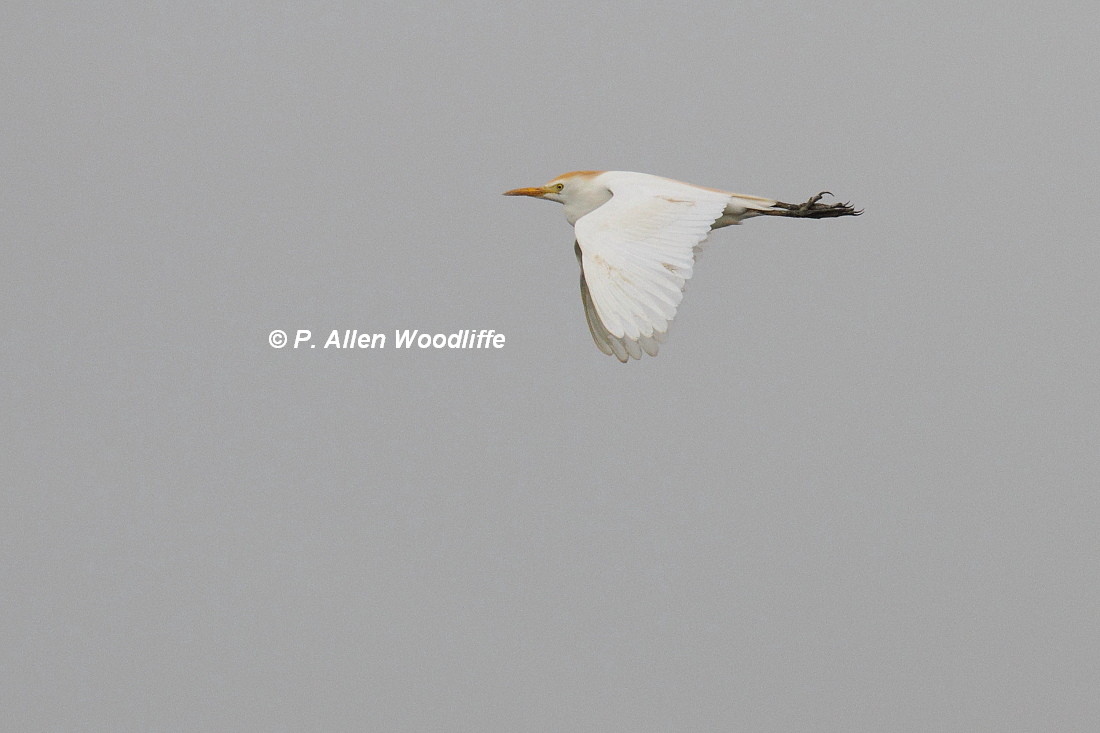
Not that long ago, I had a Cattle Egret in breeding plumage arrive at the lagoon, circle around a bit and then land in the grassy area.

In an unmowed part of the lagoon, I flushed out a small sparrow.

Given the way it allowed me to get very close before flushing, I assumed it had a nest nearby and so upon closer examination I discovered this nest of three hatchlings and two eggs.