Showing posts with label Brown Thrasher. Show all posts

Tuesday, 9 May 2023

Back to birds, mostly

First of all, a Life on a Sandspit update: it is currently available from the Friends of Rondeau bookstore at the Visitor Centre. The selling price is $27. Part of that, of course, goes to support the Friends. I am working on having the books also available at other local outlets in southern Chatham-Kent. There may be an option to make them available by mail, so stay tuned.

So many cooperative birds to photograph! I likely will have another wildflower post in the near future, as they continue to appear on the landscape, but this is prime birding season, so it is back to birds for this one.

I've spent a bit of time at St. Clair NWA, as it is fairly close to home. One of the highlights of my most recent visit was seeing about 7 Palm Warblers right along the trail. They aren't always the easiest bird to photograph so I was pleased with this opportunity. Most of the time they were on the ground, but on occasion they would get up and grab on to a plant stem.


Chipping Sparrows were here and there.
A few goslings were out exploring their wetland with their parents.
There is often an American Coot or two seen....
....and always a few Red-winged Blackbirds which pose for a short time.

I have heard Soras there from time to time, but they seldom show themselves. I'm hoping that Virginia and King Rails might be heard on a future visit, and also see or at least hear American and Least Bitterns. They are undoubtedly there now, but aren't easy to see.

A little farther up the edge of Lake St. Clair, there are good spots to see terns. This pair of Forster's Terns were getting right into the mating season.


There were lots of Painted Turtles, as usual, but I only shot this Northern Map Turtle, a species at risk.

I stopped at the Blenheim lagoons briefly on one occasion, in between showers. Lots of Ruddy Ducks were there although most were well out from the edge......

....and due to the cold weather, there were hundreds of swallows, mostly of the Tree Swallow type, but a few Barn Swallows, one of which is shown next. They are always a challenge to photograph as they swoop erratically in their chase for an insect to devour.

A short visit to the Erieau Rail Trail turned up a few warblers and others things. I did not get to see the Yellow-throated Warbler that showed up for a day, but I did see some dowitchers. The only one I got a photo of was a Short-billed. The other one that was a little farther away might have been a Long-billed. Both have been reported over the last few days.


Tree Swallows are always around, and occasionally take a rest on a branch.

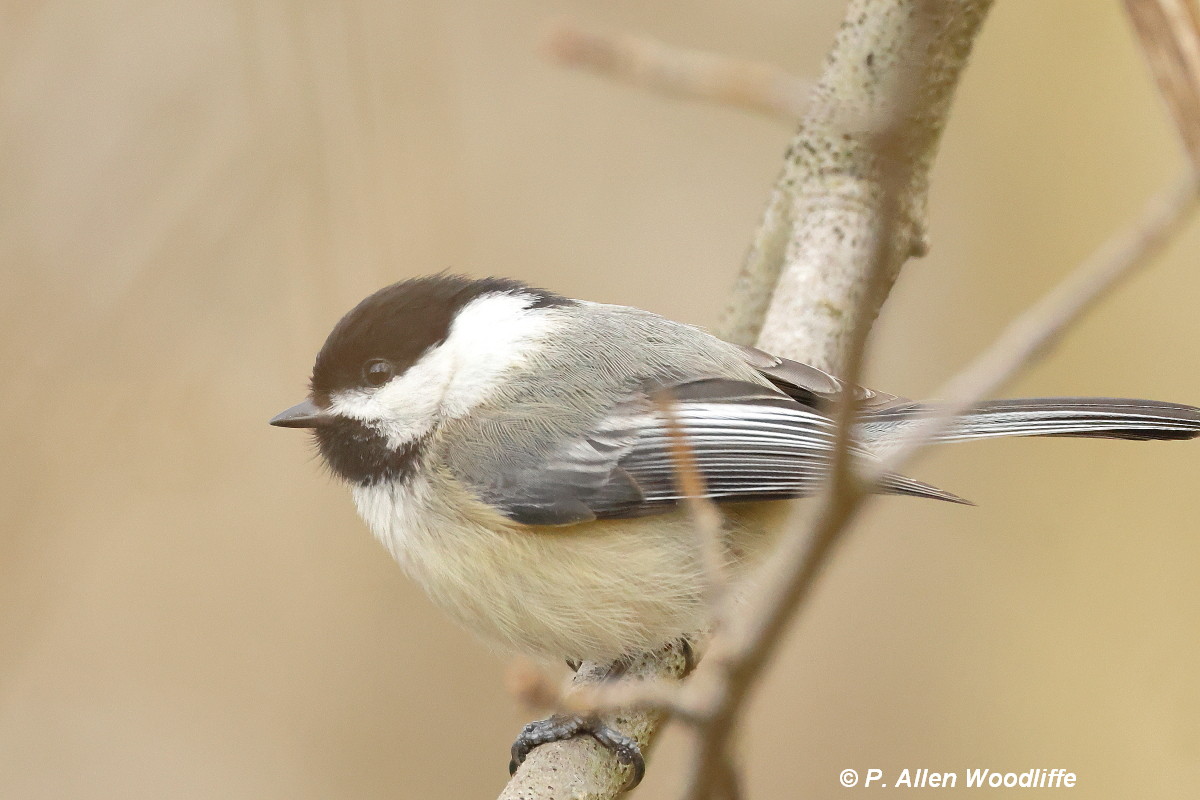
Rondeau is where I have spent a little more of my birding time. There is always something to see, even if sometimes there is lots of distance between birds, and even more distance between birds to photograph. Black-capped Chickadees were quite abundant not that long ago, but most seem to have moved on....
....and most Dark-Eyed Juncos have also moved on. I was surprised to see three along Tulip Tree Trail recently.
Downy Woodpeckers are less vocal via tapping than a week or two ago, so they must be into nesting mode.
While an occasional Brown Thrasher had been seen not that long ago, it seems to be more abundant lately.

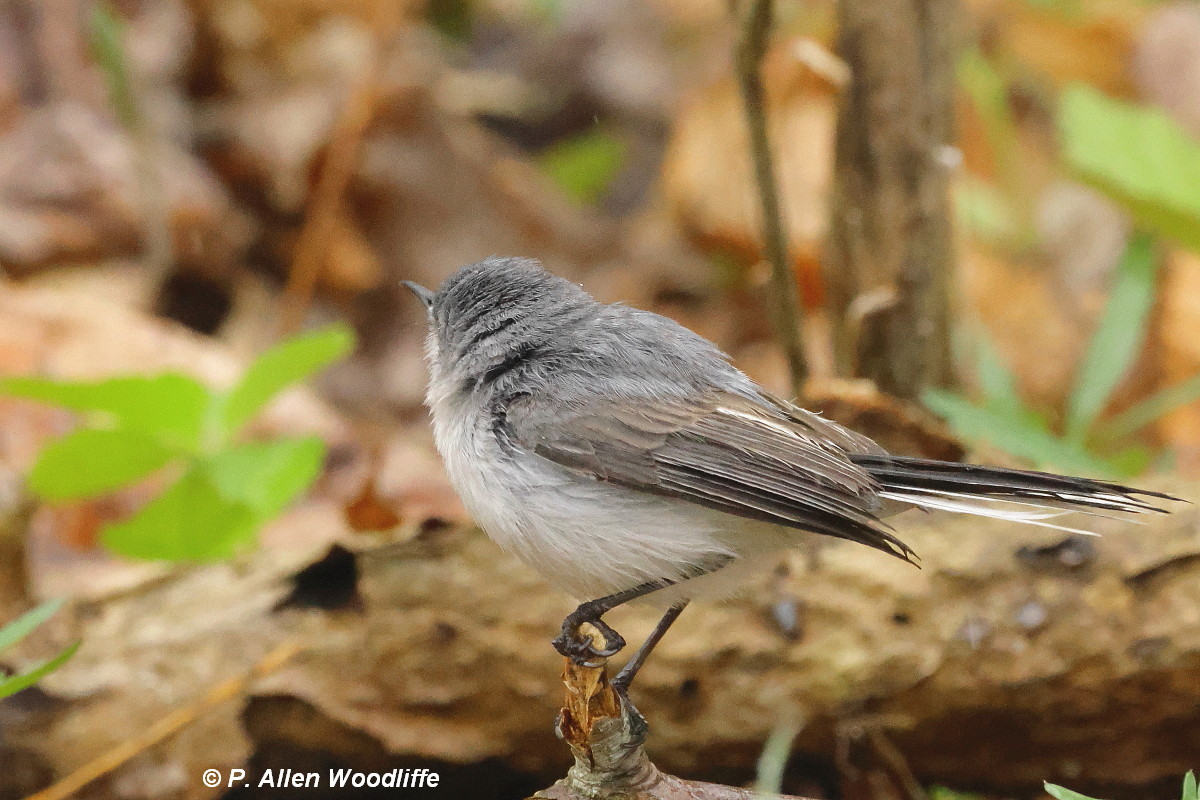
I managed a shot or two of a Blue-gray Gnatcatcher as it flitted continuously and erratically at ground level searching for bugs in the rain.
Eastern Phoebes are scattered around on established territories.
Eastern Towhees are more often heard than seen, but this one cooperated for a few minutes in a tree by the trail.
House Wrens are fairly common, singing loudly and frequently.


Killdeer are in nesting mode, and sometimes faking it.
Northern Flickers are common, but are skittish when a birder is around. I guess they feel safer high up in a tree.
A Northern Waterthrush entertained a few birders near the Log Pond on one occasion.

The feeders at the Visitor Centre always attract birds and birders....and sometimes even in broad daylight this normally nocturnal critter just couldn't resist.

Along the trail, there are still some Hermit Thrush, although they are dwindling in number....

...a few Rose-breasted Grosbeaks are always enjoyable to see....a real crowd pleaser!

A recent highlight was to see this Red-headed Woodpecker at a distance, but at eye level.

 Another highlight was while I was exploring a little used trail. I noted a Pileated Woodpecker fly in nearby. It seemed a bit more silent than usual and I watched it fly to a dead tree that was full of holes. It gradually moved up and poked its head into one that looked fresh, and then backed out. Almost immediately the male dove out, and headed straight towards me before veering off! I don't think it was intentional.

The female then headed back to the hole and got in.
I plan to keep an eye on this nesting pair, as the several pair that call Rondeau home are not often nesting in somewhat of an accessible location. Fingers crossed!

This Solitary Sandpiper was busily hunting for food in the vicinity of the Log Pond.

White-breasted Nuthatches are always fun to see as they meander up a tree trunk.
As I was walking down Harrison Trail, I heard an unfamiliar chirp. I eventually tracked it down to this Wood Thrush. Every year one has to re-familiarize oneself with bird calls, songs, etc.
Yellow Warblers will soon be by far the most numerous warbler encountered at Rondeau and area.They are always fun to see.
Not that long ago a Black Vulture was seen at a couple of places just outside of Rondeau. I wasn't there that day, but I have seen that species on several occasions over the years. But I have paid a bit closer attention to vultures I have seen, including this pair of Turkey Vultures perched on this tree trunk just outside the park, which lent themselves nicely for a photo op.


If you would like to subscribe, or unsubscribe, to Nature Nuggets, send an email to: prairietramper@gmail.com


Saturday, 12 June 2021

Atlassing explorations

 Now that the peak of bird migration is well behind us, there is time to look for other things. That doesn't mean unusual birds won't appear. This White-faced Ibis showed up a few days ago at the Keith McLean Conservation Area. It isn't the first time one or more has put in an appearance here. There were two a year or so ago, but I couldn't make it. This individual represents the first one I have seen in Ontario.


They aren't the best shots, but the bird was a long way off and not approachable. These first two photos are at an equivalent of about 100X or more.

I had seen a small number out in southern Manitoba almost three years ago, and although they were much closer, the lighting was a challenge.


While I was at the KMCL, I got some photos of the nesting Osprey. This adult was keeping an eye on things while its mate was incubating.

There were quite a few Marsh Wrens chattering and scolding amongst the cattails.
 Atlassing is now the main birding priority, so I've been out to various places. The Acadian Flycatchers and Prothonotary Warblers at Rondeau have continued to be cooperative for viewing and even photographing. This Acadian Flycatcher individual is nesting in a Sugar Maple, one of the few times I have ever found a nest in anything other than an American Beech tree. Perhaps the ongoing effects of Beech Leaf Disease is the cause.


I can never get enough of a Prothonotary, especially a cooperative one! And along the way, one might come across this breeding adult Common Five-lined Skink, a species at risk....

....or a much more common Eastern Chipmunk....
...or on the much smaller scale of things, a Six-spotted Tiger Beetle, which may have more, or fewer, than six spots. I didn't name it!

I was out to the Dealtown Crown Land Prairie site a few days ago. It is off the beaten path, which makes it quite infrequently visited by anyone, but all the more rewarding when one finally gets to it. Unfortunately it is becoming extremely shrubby in places and is in desperate need of a prescribed burn, but I doubt it will happen any time soon. Grassland birds are less common than they used to be, but shrub land type birds are definitely on the increase.

 Yellow Warblers are abundant.

Willow Flycatchers are present in small numbers.
It is slightly early for Cedar Waxwings to be in full nesting mode, but it won't be long. They are likely to be staking out a territory, or at least feeding on the abundant fruit of Red Cedar.
There were several Brown Thrashers. They do a lot of 'chukking' to let you know they don't appreciate your presence, but seldom come into view. They typically skulk in the thicker tangles, but periodically pop up into partial view....
...and on occasion don't seem adverse to being in full view, but at a safe distance. A good telephoto lens is definitely handy.

Yesterday I spent some time in northwestern Chatham-Kent, including some time at a private property I have landowner permission to access.

This sub-adult Bald Eagle flew over, but it is too young to be breeding, so it didn't get counted as a breeding individual. Not to worry, however, as there is an active eagle nest already known for this square.

While I was scanning the patches of cattail vegetation out on the lake, this Black-crowned Night Heron flew almost right overhead.

I also saw three adult Yellow-headed Blackbirds, two males and a female, but they were skittish and I didn't try too hard to get a photo.

I also had permission to access the Mitchell's Bay Sewage Lagoons. During the last atlas, from 2001-2005, they were quite good, but this time around two of the ponds are completely vegetation free even around the edges, except for some grassy/weedy stuff, and the third pond is chock full of Phragmites. Even the area beyond the ponds had been recently mowed. Overall the birding there was poor at best. I did get a couple of Spotted Sandpipers among a handful of species, including the one in this next photo.

Today I went to the municipally owned McKerrall Woods, a few kilometres north east of Chatham. The section of property as one approaches the woodlot is a grassy hayfield, and on a previous visit a few weeks ago, had things like several Bobolink and Savannah Sparrows. I was hoping that maybe a Dickcissel might be there today. Had I been there a week ago, I may have encountered one, but alas, the hay had been cut and more than half of it was now baled. There were no grassland birds other than a couple of Savannah Sparrows that looked out of place given the severe change of habitat quality. 

There was a Turkey Vulture roosting on one of the bales.

The walk in the woods was pleasant, but not overly 'birdy'. Just a handful of the expected species in and around the wooded area. This vulture came by and sat in a tree; I wondered whether it was checking on a nest site, but I couldn't find any evidence of it, and after I moved a bit, it decided to leave the area.
Next up....more atlassing, or a post on spring orchids, or black lighting adventures!