Showing posts with label Blue Cohosh. Show all posts

Saturday, 13 May 2023

Wildflower parade continues; Virginia Bluebells are a highlight

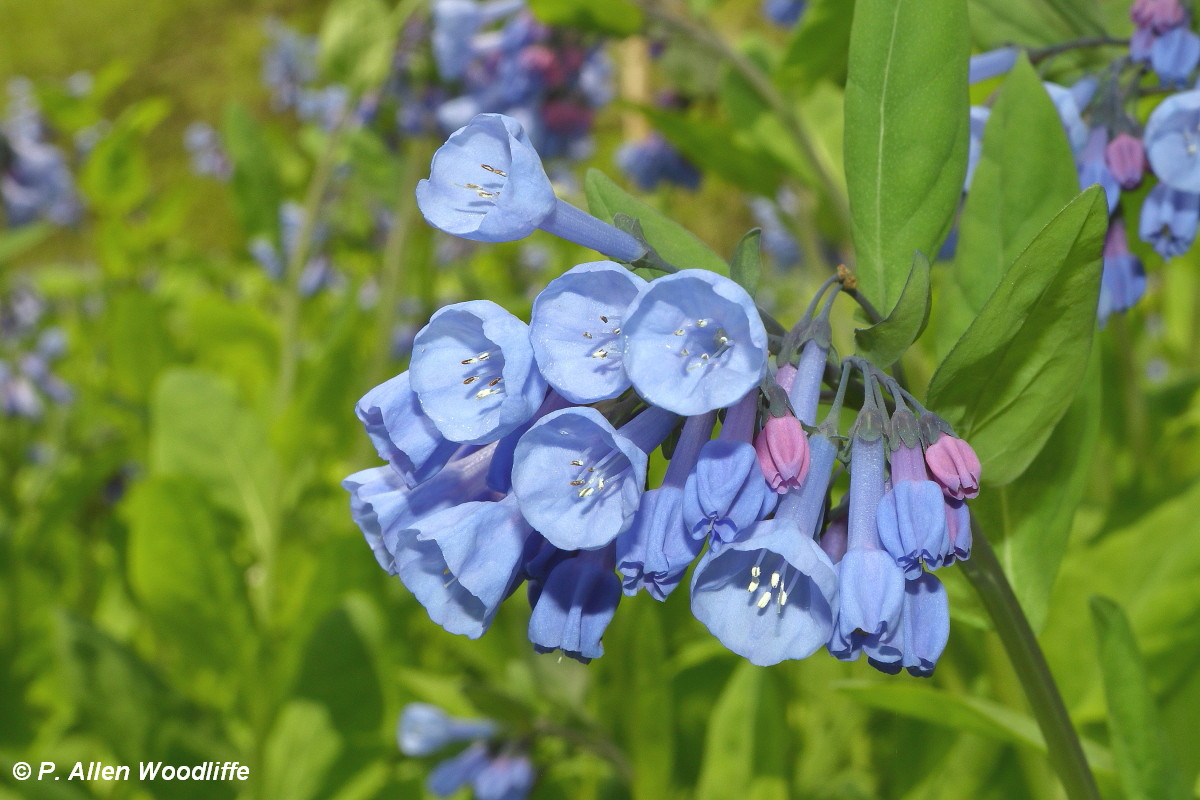
 There are lots of birds around these days, but wildflowers often get less attention. Therefore this will be another post which features the magnificence of many landscapes that birders frequent, but may not always pay as much attention to. That being said, I want to start off with a species of wildflower that is overall quite uncommon, but where it occurs, can be overwhelmingly dominant. I am referring to Virginia Bluebells (Mertensia virginica).

It is not a species that occurs in Chatham-Kent as far as I know, at least not naturally. It will be in an occasional private garden. But the populations I know of and have immersed myself in over the last decade or so are in two places in Elgin Co, and another in a nature reserve that borders Lambton and Middlesex.

These wonderful plants are relatively short-lived, but are dominant when in full bloom. The photo above was actually taken a few years ago at the Sydenham River Nature Reserve. The ones that follow were taken along a hiking trail in Elgin Co, where my sister and her husband invited me to join them a few days ago on their annual trek to see these beauties. It took the better part of an hour along the trail to get to the first of three patches, including a few ups and downs along the trail, so definitely not in the relative flatlands of Chatham-Kent! It covered several acres along Dodd Creek. Most were in full flower, with a few pink undeveloped ones yet to appear.
As in many populations of plants, there can be some anomalies, such as this next one which is fully open but has retained its pink colour.
It was a beautiful day and we had the place to ourselves. Sunny, mild with hardly any wind, and the only sounds were a few Baltimore Orioles vying for territory in the trees above, as well as the babbling creek nearby. (Thanks Susan and John!)


All in all it was a wonderful few hours enjoying this piece of creation.


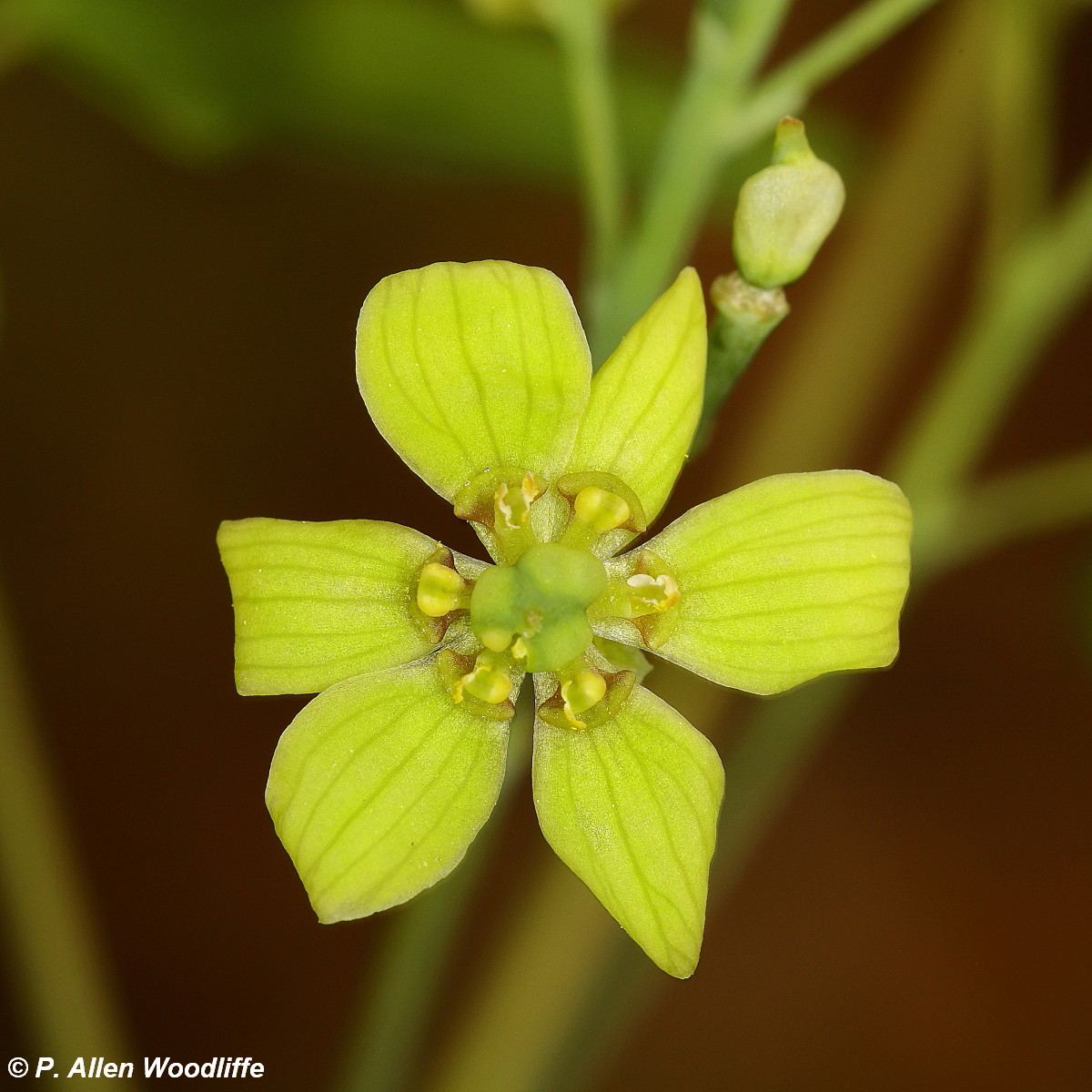
Closer to home, I continue to be on the search for wildflowers while out birding or whatever. This first one is Blue Cohosh, the later blooming species compared to the one I featured a couple of blogs ago. The flowers are noticeably yellowish, not purplish.
Violets continue to be abundant, with this Downy Yellow Violet one of the most common.....
...a far less common species is this aptly named Long-spurred Violet, which grows in small scattered groups rather than being as widespread as either the yellow or blues ones.
Large-flowered Bellwort appears in clusters here and there.

There are still some Red Trilliums, and I have a hard time resisting them.
Skunk Cabbage was in its prime a few weeks ago, but I missed them at that time. It is not common in most places that I travel.
It is mostly visible by its leaves, rather than flowers these days.
A wildflower soon to be out is Canada Mayflower. The leaves, as shown next, are fairly widespread, and I suspect there may be a few out in flower that I haven't caught up to.

White Trillium continues to show well....

...as in this scene from Clear Creek Forest Prov Park.
Wild Blue Phlox is scattered here and there along roadsides and trails at Rondeau.
Wild Geranium is becoming more plentiful, and the flowers can vary a little in appearance.

Wood Anemone is relatively diminutive, but always pleasing to see if you get down close to it.
...and the sloughs of Rondeau, while dropping in water levels slightly due to the lack of precipitation over the last few days, continues to support members of the Yellow Water Crowfoot.

There will be a steady, but slightly decreasing stream of wildflowers appearing in the next few weeks due to the closing of the forest canopy. Some will likely appear in a future post.


If you would like to subscribe, or unsubscribe, to Nature Nuggets, send an email to: prairietramper@gmail.com


Sunday, 1 May 2016

April showers.....

...and you likely know the rest of the saying. While it is a cute little saying that has been around forever, it isn't entirely true. After all, there were lots of flowers in April...what stimulated them? And it is fortunate they are present in April. Since at times the birding is a bit slower than most birders would like, why not take a few moments to diversify one's interest and check out other things?

Some of my fellow bloggers have already highlighted wildflowers they have come across, which is great. Allow me to share some of the things I've encountered in various woodland settings over the past few days.

One of the earliest species is the Hepatica, either Sharp-lobed or Round-lobed. The difference is in the subtle shape of the tips of their leaves, which often are not all that visible when the first flowers appear. The flowers can be quite white....

Hepatica
 ...or an attractive shade of purplish blue.
 Cut-leaved Toothwort can be fairly abundant in places.
Lots of Cut-leaved Toothwort

Cut-leaved Toothwort
Blue Cohosh can occur in two species: the earliest one being Giant Blue Cohosh (Caulophyllum giganteum) with its purplish leaves, and the slightly later one being Blue Cohosh (C. thalictroides), with its greener leaves.
Giant Blue Cohosh

Blue Cohosh
 Purple Spring Cress is an attractive purplish flowered plant, usually growing in wet woods.
Purple Spring Cress


Dutchman's Breeches is often fairly abundant, and easily identified by the spray of white flowers resembling pants hung upside down.
Dutchman's Breeches

Similar in some ways to Dutchman's Breeches but not nearly as abundant, is Squirrel Corn. The dissected leaves are similar but the flowers are more heart-shaped.

Squirrel Corn
While I was busy photographing this Squirrel Corn, I had an audience. This Raccoon was watching me, enjoying the warm, sunny day from its tree limb perch.


Spring Beauty is just that...a very attractive pinkish flower with darker purple lines.
Spring Beauty
 A very abundant spring flower is Trout Lily (a.k.a. American Dog-toothed Violet). Its mottled leaves are extremely abundant on the forest floor of rich woods. However only a very small per cent of plants will have flowers, and even then, they will only be fully out on a bright sunny day. If the sun disappears behind a cloud for a few hours, the petals close up.
Trout Lily
Trilliums are just beginning to appear in flower. White Trillium, Ontario's provincial flower, is by far the most abundant.
White Trillium
Red Trillium (a.k.a. Stinking Benjamin since the flowers have a stinky smell to attract flies, which transfer the pollen) is far less common. The red flowers usually hang down and are less noticeable than the more upright flowers of the White Trillium.
Red Trillium
A very rare colour form of the Red Trillium is sometimes found, although in several decades of exploring woodlands, I have only seen it on a couple of occasions. I will be checking a known spot for it in a couple of weeks, where one plant has appeared for the last three successive years.


An undesirable wildflower just beginning to appear is Garlic Mustard. It is highly invasive, and produces massive amounts of seed. The seed can be transferred from one location to another on the mud of one's boots, so be careful when you are tramping around an area with this species!
Garlic Mustard


Spring flowers are not limited to herbaceous plants. Spicebush, a very common shrub in southern Ontario's wet woods, is in flower before the leaves appear.
Spicebush
Eastern Cottonwood also has its flowers appear before the leaves. This next image shows the male flowers of this species.
Eastern Cottonwood
Other trees are beginning to flower, and will continue for the next several weeks. Some are distinctive and can be told easily before the leaves or flowers emerge, such as this next one.
Bitternut Hickory
The bright mustard yellow leaf buds, visible all winter, are just beginning to expand into new leaves. This is a distinctive characteristic of Bitternut Hickory, an uncommon but widespread tree in southern Ontario deciduous woodland.


Wednesday, 29 April 2015

Swamp Tromp

Last week my friend Darren invited me to check out a wonderful wet woods  in eastern Chatham-Kent. Wet woods are generally known as 'swamp' as per the wetland classification system. Most people don't get overly excited about hiking through a swamp, as it conjures up visions of getting ones feet caught in the oozing, black, bottomless, muck while being surrounded by a gazillion mosquitoes. Certainly that can be the case under extreme circumstances, but at this time of year with the sunlight beaming through the leafless woods and the relatively cool temperatures, hiking a swamp can be kind of fun if you are prepared for it.

Swamp in early summer
 Good knee-high rubber boots are a necessity, unless you are like a former MNR colleague of mine who loved wetlands and swamps in particular. He would just wear an old pair of sneakers, put on an old pair of pants and strike out wherever the mood took him. Are you reading this Gary? That is one way to do it, and then you don't have to worry about having the water go over the top of your boots so that you end up walking around in wet boots the rest of the time. Although I have done it that way, I prefer a good pair of rubber boots. Go ahead and call me a wimp, but it keeps my car a lot cleaner at the end of the day!

So with boots in hand.....er, on feet, Darren and I struck off. At times we were hiking through more upland woodland to get to our destination, all the while surrounded by carpets of developing spring wildflowers. There was Bloodroot, Spring Beauty and Yellow Trout-lily (a.k.a. Dogtooth Violet), which I have included images of in a couple of my most recent posts. Wild Ginger and Blue Cohosh were also noted, and there was even a White Trillium that was just ready to pop open.

Wild Ginger

Wild Ginger flower close-up
 The flowers of Wild Ginger are often under the leaves, as they are pollinated by ground beetles.

Blue Cohosh
But the lower areas beckoned, where the residual water of snow melt and spring rain was responding to the tug of gravity, and the accumulation of water meandered along the contours of the forest floor, winding its way towards the Thames River not all that far away. Spicebush is an abundant wooded wetland shrub; its waxy yellow flowers were ready to burst open as well.
Spicebush
 The woods were relatively devoid of bird song.....not all that atypical for interior woods this early in the season. But we enjoyed the gentle sounds of water trickling by. A few butterflies were noted, including Eastern Comma and my first of the year Spring Azure.
Eastern Comma
 An occasional frog was briefly seen plopping into the water, only to disappear at the muddy bottom. They could have been either Wood Frogs or Chorus Frogs. In spite of the sunny day, we saw only a single Eastern Garter Snake.

Skunk cabbage, which is related to the more well known Jack-in-the-Pulpit, is plentiful in these wet woods. Their actual flower emerges early in spring, well before the leaves do. The following image shows what is left of the flower in between the much larger leaves which now predominate.

Skunk Cabbage close-up

Skunk Cabbage dominating the swamp
Water Cress is plentiful, and clusters of Marsh Marigold are more and more obvious. Some marigolds had flowers already open and in just a few sunny days their brilliant yellow will be dominant, looking something like the following images, taken at another wet woods in a previous year.

Wet woods featuring Marsh Marigold


Marsh Marigold
 As with any natural area, the views keep changing as the weeks pass by. I encourage you to get out and explore a local swamp!