Showing posts with label Eastern Prairie Fringed Orchid. Show all posts

Tuesday, 9 August 2016

Wetland Wanderings

Wetlands are fun places to explore, especially if you can keep dry. Fortunately there are various opportunities in the area with trails traversing these habitats and include Rondeau Provincial Park, St. Clair National Wildlife Area and the two trails up along the Lake St. Clair shoreline both north and south of Mitchell's Bay.

I decided to check out some wetlands in the Mitchell's Bay area recently. Some friends (Bill & Judy) who have waterfront property on the lake near one of the trails, has a very nice wetland right in front, where waterbirds are seen daily. I had been particularly interested in photographing one of the pair of Common Gallinules that occur in the wetland, and Bill has been able to get numerous fabulous full frame shots. Unfortunately the two times I was there recently, they decided to stay well hidden. I did get some decent photos of the resident Pied-billed Grebes. This first one is of an adult.
 There were several full grown young around as well.

I spent a bit more time at the Mitchell's Bay North Nature Trail. It is always fun to check, since it goes through various wetland areas. Some of the drier sections have been planted into tallgrass prairie. One of the plants quite noticeable now is Cup Plant (Silphium perfoliatum).

 You can see by the way the leaves are joined where it gets its name.

There used to be a lot of wet prairie along the shoreline of Lake St. Clair. Some small pockets remain.
Maybe at some point, parts of the wetland at Mitchell's Bay will look like the photo above. If so, maybe the endangered Eastern Prairie Fringed Orchid (Platanthera leucophaea), as shown in the next three photos, will appear.

Note the very long spur tube extending behind the more obvious flower. It is pollinated by night flying sphinx moths, which extend their long proboscis down the tube.

But on this trip, it was mainly the more typical wetland plants that were the prevalent ones.
Fragrant Water Lily (Nymphea odorata)


Pickerelweed (Pontederia cordata)

Arrowhead (Sagittaria sp)


Swamp Rose Mallow (Hibiscus moscheutos)
There were the usual bird species around.....Caspian, Common and Forster's Terns, Great Egret, Great Blue Heron, Green Heron, etc, etc, but very few that were close enough to bother photographing (not to mention that a few that I did try and shoot were heavily backlit and did not turn out). But a family of Eastern Kingbirds were around.

The always present Mute Swans were here and there......
....and a couple of Northern Harriers flew by along the edge.


Saturday, 4 June 2016

National Prairie Day

The first Saturday in June has been declared National Prairie Day. At least that is the case in the USA, but Canada has not yet designated it as such. But since tallgrass prairie is extremely rare in Ontario, and is in fact one of the most endangered ecosystems in North America, I am promoting National Prairie Day on this side of the border as well.

Tallgrass Prairie (TGP) harbours a huge number of rare, threatened and endangered species, as well as a multitude of species that have not even been evaluated yet, but are equally as rare. In fact you can hardly venture onto a TGP without stepping on them!

TGP was widely scattered across parts of southern Ontario, but has been greatly reduced. It is believed that less than 1% of the TGP present at the time of settlement still remains. Some of the best remnants are at places like Walpole Island First Nation......

 ....and Ojibway Prairie Provincial Nature Reserve in Windsor......
 ...and as far east as the Alderville First Nation in the Rice Lake area.

There is a host of colourful, and rare plants, including Colicroot (Aletris farinosa)
 Colicroot can be quite abundant in places. Sadly this prairie site below with dozens of Colicroot was destroyed in the process of building the new Herb Gray Parkway in Windsor. Some of the individual plants were transplanted to a more secure location. While it saves individual plants, the overall TGP habitat is nonetheless destroyed. But that is the topic for one or two other blog posts.
 Milkweeds are a significant part of a TGP habitat, including Prairie Milkweed (Asclepias sullivantii)
Prairie Milkweed
 ....and Purple Milkweed (Asclepias purpurascens), both of which are rare.
Purple Milkweed
 Butterfly Weed (Asclepias tuberosa) is not as rare, and a delight to come across in any setting.
Butterfly Weed

Some of the rarest plants include species like Eastern Prairie Fringed Orchid (Platanthera leucophaea)
 and Pink Milkwort (Polygala incarnata)

 and Slender Bush Clover (Lespedeza virginica)
 and Small White Lady's-slipper (Cypripedium candidum)

The previous four species are all legally Endangered. This next species, Yellow Fringed Orchid (Platanthera ciliaris) is extirpated, since it has not been seen in Ontario in many decades. I had to go to Ohio to photograph this one.

There are various groups of fauna typical of TGP that are also on the rare, threatened or endangered list, including Eastern Fox Snake.
 and Henslow's Sparrow. This image below is one of the first times I attempted to digiscope a bird.
The heart of the TGP region is in the midwestern USA. Some of the best remaining prairie landscapes are in Missouri. Some are national natural landmarks, such as Golden Prairie.

Golden Prairie

Some are state parks, such as Prairie State Park where the bison do indeed still roam.

Scissor-tailed Flycatchers are fairly common.

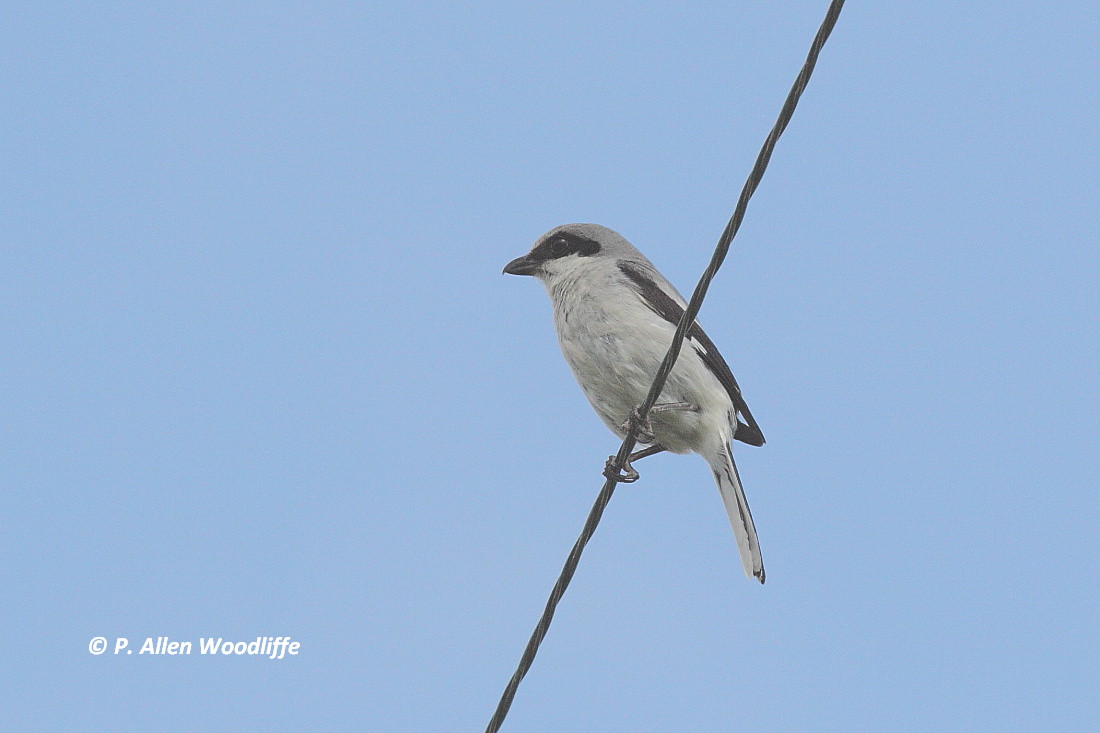
 Loggerhead Shrikes are periodically seen.
Loggerhead Shrike
 Dickcissels are abundant.
Dickcissel
 Many have interesting and appropriate names, such as Sky Prairie, Paintbrush Prairie or Gayfeather Prairie.
Sky Prairie
 Others have retained a name that represents a native connection, such as Wa-Kon-Tah Prairie or Kickapoo Prairie.
Wa-Kon-Tah Prairie

Tallgrass Prairies are amazing landscapes and warrant a high priority for protection. Get out and explore a prairie soon!


Monday, 7 July 2014

Early season native orchids


The topic of orchid flowers conjures up thoughts of exotic flowers from the tropics, and the ones sometimes used as a corsage on special occasions. But not too many people think about some of the plant species which naturally occur in Ontario as being orchids. The fact is, there are approximately 60 species of orchids that are native to Ontario! And some are quite colourful and exotic looking in their own right. Rondeau Provincial Park can lay claim to 19 species growing within its confines, but the orchid capital of the province are the counties of Bruce and Grey, and especially the Bruce Peninsula, where at least 44 species of orchids are known.
One of the earliest to appear in the southwest is the Showy Orchis, which grows in rich hardwood forests. In spite of its name, it is not that showy unless you get down for a closer look. It seldom gets more than 15 cm (6 ") high, and may be obscured by taller vegetation. At Rondeau, it typically begins to bloom about the third week in May.

Showy Orchis

At about the same time, and in slightly more open woods, may be found the Yellow Lady's-slipper. It occurs as a large form and a small form, which generally occupy different habitats, but there may be some overlap.

Large Yellow Lady's-slipper


The Small Yellow Lady's-slipper can sometimes be found on some of the better quality native tallgrass prairies. There it can hybridize with an extremely rare native orchid, the Small White-Lady-slipper, especially if the flowering times overlap, which they usually do. The hybrids are even rarer than the Small Whites, and can take on some unusual but attractive colour combinations that draws the attention of serious botanists and photographers.

Small White Lady's-slipper


Small White Lady's-slipper
This species is, as its name implies, small, seldom growing over 20 cm (8") high. It does occur in one or two other places in Ontario, but in somewhat different habitats. The bulk of the Ontario population occurs on the private lands of tallgrass prairie in Lambton County. It is an Endangered Species under the various provincial and federal statutes.

Another type of Lady's-slipper is the Pink Lady's-slipper a.k.a. Moccasin Flower. Depending on the latitude, it may be in flower in May but a little farther north, will still be in flower in early June. It prefers the slightly more acidic sandy soils in sand dune systems which have developed to the point of also growing coniferous trees. It also occurs at the edges of bogs, which are not found in extreme southwestern Ontario.

Moccasin Flower

Moccasin Flower


By early June, another orchid appears in flower....the Puttyroot. This occurs in rich hardwood forests, and is not nearly as colourful as the previously shown ones. But it can grow taller than the others.

Puttyroot in flower


Puttyroot flower close-up
The Puttyroot isn't visible in flower for long. One of the ways to find it, however, is to look for their distinctive leaves during a period of late autumn to early spring when there is no snow cover. It is not a really rare species, but is certainly not common in spite of its relatively widespread range in southern Ontario.

Puttyroot leaves
An uncommon orchid in southwestern Ontario, but more common in the marl wetlands and fens of the Bruce Peninsula is the beautiful Grass Pink. In the southwest it may occur in very small numbers in wet grassy areas including tallgrass prairies.

Grass Pink


Later in June, another rare orchid appears, the Eastern Prairie Fringed Orchid. In spite of its rarity, it grows in a wide variety of habitats, from high quality tallgrass prairie, to the edges of marl lakes, to fens of eastern Ontario and even along wet ditchbanks! Some type of disturbance or environmental condition to keep the vegetation open seems to be the key to survival, so at least in tallgrass prairies, the regular occurrence of fire at the right time of year is a necessity.

Eastern Prairie Fringed Orchid

Eastern Prairie Fringed Orchid
One of the interesting aspects of this latter species is that it is pollinated by night-flying moths, and specifically the Sphinx Moth types. I was monitoring a population of this orchid near the former Windsor Raceway in the 1970s and early 1980s. It eventually died out, and one of the main changes in its environment were the extensive night lights that were along the road and the raceway. Moths don't function normally under well lighted conditions, so it is possible that the population of orchids went unpollinated, stopped producing seed, and the older plants eventually died out. Interestingly since that time, another population appeared a few hundred metres away, in a well shaded environment.


More on orchids in a future post....