Showing posts with label Ohio Spiderwort. Show all posts

Monday, 17 July 2023

Some Species At Risk birds and their related habitats

 It has been an interesting last few days. I've been out doing some grassland assessment for certain types of birds, and just wrapped up the second of two visits at two different sites, a few days ago. Each visit was about 10-12 days apart. Most notable at the one site was the promising number of Bobolink, one of the target species, and officially a Species At Risk.

The males still look quite distinctive in their typical breeding plumage.

There were several dozen Bobolinks, but at this time of year the number of fledglings certainly add to the overall total. They look very similar to the adult females, and in just a few weeks, the males will look more or less to be in the same, duller plumage as well.
As they flew around, they often landed in the grasses which bent under their weight, and then they were hard to see, and even harder to photograph. I got a lot more culls than keepers!
On occasion one would be sitting up nicely.....
...and sometimes had a caterpillar or something in its mouth, indicating they were still at the feeding young stage.

Other birds were utilizing the grassland habitats, including:

Common Yellowthroat

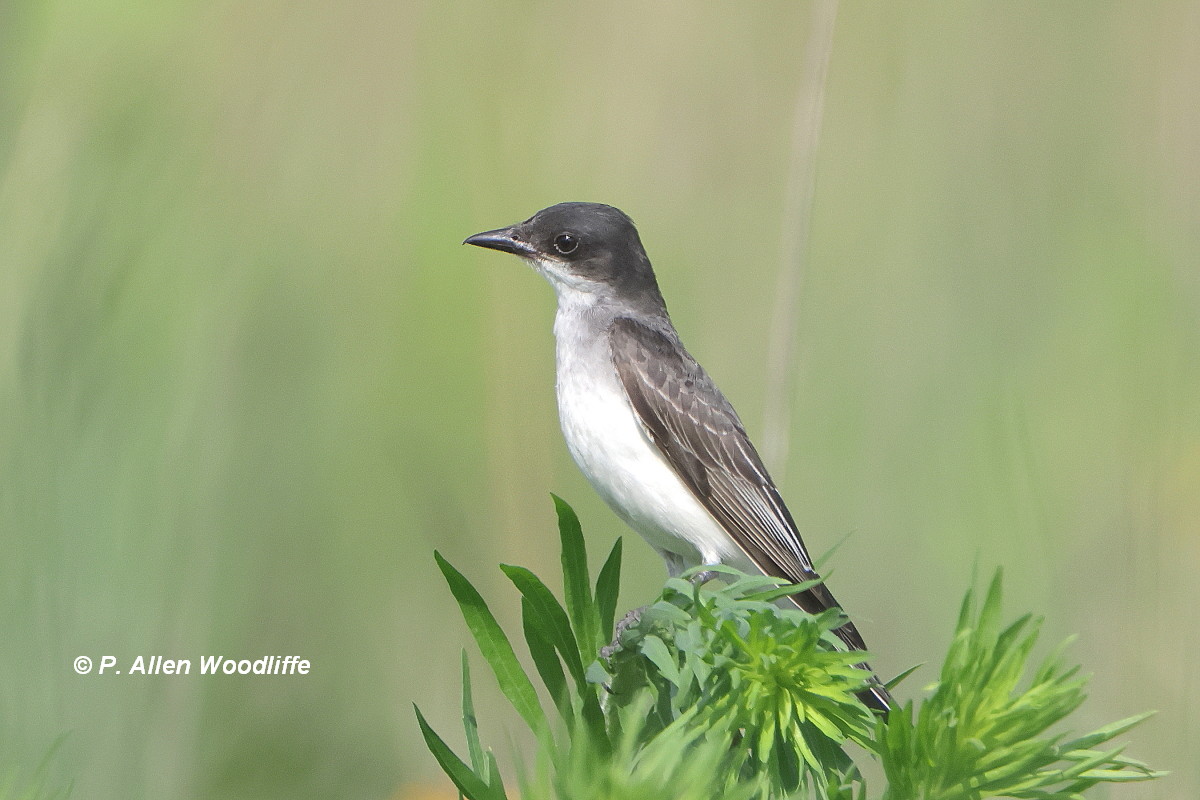
Eastern Kingbird

Song Sparrow
Along one of the shrubbier sections of the site was this Willow Flycatcher.

The grassland habitat varied. Some parts still had stems from the previous years growth quite visible, and it was here were most of the breeding bird action was.

Areas that for some reason had been matted down over the winter, showed a delayed growth, and so it was likely less appealing to the grassland birds when they returned this spring. There were very few birds using this shorter grass habitat.
Interspersed amongst the grasses were some prairie wildflowers, such as Ohio Spiderwort, one of my favourite grassland species.

While I was concentrating on birds, I couldn't help but notice some butterflies, including this Great Spangled Fritillary, a little worse for wear.....
...and given there were hundreds of milkweed plants, often in fairly dense clusters, it was a magnet for Monarchs.

Of course I have been at Rondeau on occasion, sometimes leading a tour for folks associated with the University of Windsor, but sometimes just on my own. One of the highlights was to find this Acadian Flycatcher on a nest.

As good as this find was, it was disconcerting to see the leaves right beside the nest, which tells of a questionable future. The leaves show a serious bout of Beech Leaf Disease, which is causing many American Beech trees to be in major decline. There are more than a few Am Beech trees in the park already dead, with virtually all of them in the park showing at least some signs of being affected. This will play havoc with the future of Acadian Flycatcher in Rondeau and other woodlots, as it nests almost entirely in these beech trees. On occasion they will nest in a Sugar Maple, but that is the exception. It does not bode well for this endangered bird species here in Ontario.

While some birders have reported more than one pair of Acadian Flycatchers along this Tuliptree Trail, I discovered that some people were attributing an Eastern Wood Pewee nest, shown next, to be that of an ACFL. The nest of the EWPE is typically on an open branch of various kinds of trees. At one point I actually saw an adult EWPE perched on the side of this nest, even though it is a bit dilapidated.

It is not in the fork of an Am Beech. They are both members of the flycatcher family, but quite different in many respects.

Eastern Wood Pewee
At one point I noted what I believe to be Fan-shaped Jelly Fungus on a log in a slough.
On another trail, I came across a cooperative Eastern Kingbird....
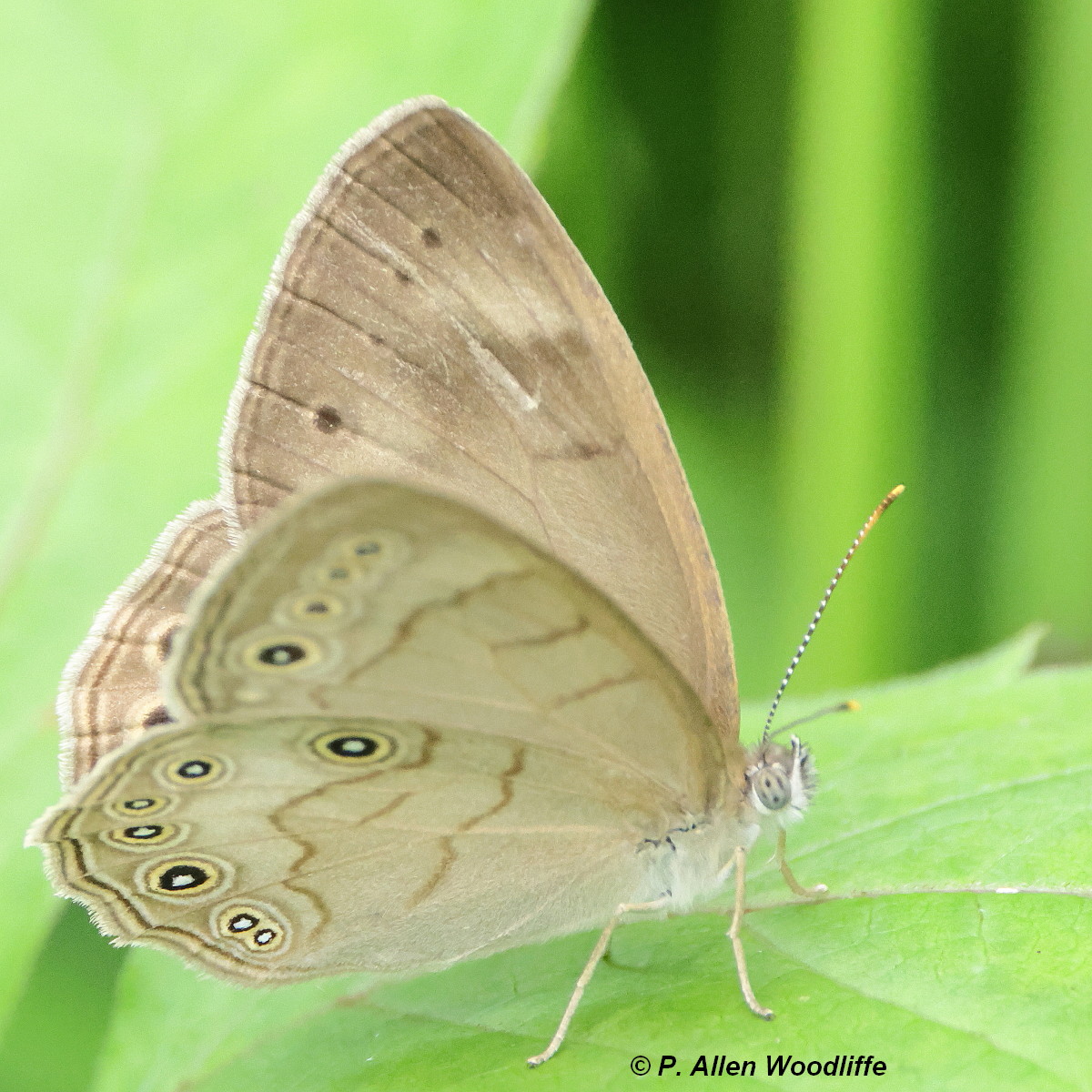
..an Appalachian Brown butterfly.....
....and a young Eastern Cottontail.
On another occasion I made a trip out to Clear Creek Forest Prov Park, for some forest photography on an overcast, relatively calm day. I was fairly happy with some of the photos I got.

While I was there, I wanted to see if there were any dragonflies to photograph in the old quarry on the north side of the forest. Due to the cool day with heavy cloud cover, there was hardly a dragonfly to be seen, so maybe next time!


If you want to subscribe, or unsubscribe, to Nature Nuggets, send an email to: prairietramper@gmail.com


Saturday, 28 June 2014

Visiting Western Chatham-Kent

I had had it in mind for awhile to pay a visit to a couple of places that don't get much attention. And I thought that provincial parks would be extra busy on this sunny, hot, holiday weekend. So off I headed to a piece of crown land near Dealtown that was acquired a couple of decades ago, and was turned from farmland into a tallgrass prairie nursery. It has been burned in the past, but not for several years, so it is getting quite shrubby. Given the natural expansion of these prairie plants, it has become more of a prairie patch than a nursery consisting of rows upon rows of various prairie species.

My intent was to see if some good grassland birds were making use of this site. A few years ago I had two Henslow's Sparrows there, and on more than one occasion, Dickcissels have nested. Since Dickcissels seem to have made a spot near Wheatley their home in the last couple of years, I thought maybe one or more would also be here.

I ventured onto the property with only one lens: my 500mm lens with 1.4X extender, making it an equivalent of 700mm. I saw numerous butterflies and dragonflies, but they were hard to shoot with this lens combination, so I decided to concentrate on my feathered avian quarry. But there were various skippers, Northern Crescents, Little Wood Satyrs, Viceroy and others which I didn't pursue. And a diversity of dragonflies as well, especially lots of Saddlebags. Maybe next time I will leave the big telephoto at the car and take something more amenable to photographing lepidoptera and odonates.

Given that much of the site is getting shrubbier as the years go by, the bird species have adjusted as well. Alas, I didn't catch up to a Dickcissel or Henslow's Sparrow. But there were lots of Field Sparrows, Song Sparrows, an occasional Savannah Sparrow, Yellow Warblers, Common Yellowthroats, Gray Catbirds, Brown Thrashers, a couple of Eastern Meadowlarks, Northern Cardinals, American Robins, American Goldfinches, a few Cedar Waxwings and of course numerous Red-winged Blackbirds.

Northern Cardinal


American Goldfinch


Cedar Waxwing

Gray Catbird

Eastern Meadowlark
Yellow Warbler
I also scared up three deer, including a fawn probably no more than a month old, but which was able to scoot away so fast that there was no possible way for a photo. One of the does was a bit more cooperative, and at least stood tall enough to be able to see it through the grassy vegetation.


Tallgrass prairie plants are very attractive, at least a lot of them are. Some of them are extremely rare as well. It may come as a surprise to some that Ontario is indeed a prairie province, although it wasn't as major a vegetation type here as it was on those other prairie provinces. However the botanical diversity of the prairies in Ontario exceed those of the traditional prairie provinces. Some of the more colourful species in flower today included:
Purple Milkweed

Foxglove Beard-tongue

Butterfly Milkweed

Ohio Spiderwort

Another species that occurs on prairies but also in old wet fields is Ragged-fringed Orchid. Yes we have wild orchids in Ontario...more than 60 species in fact, and some of them are extremely colourful. I will be doing a post or two in the future about some of the orchids of Ontario.

Ragged-fringed Orchid

After leaving this prairie site, with good intentions to come back soon, I headed for the Tilbury area, and specifically the sewage lagoons. Sewage lagoons are not everyone's idea of a good place to spend time, but the wildlife like it and therefore so do biologists and naturalists. This one is technically in Essex County, but it is operated by the municipality of C-K for the Town of Tilbury. And it even has a welcome sign, so how could I not go!


Although birders are welcome, the water levels are such that there isn't a great diversity of birds at the moment. On some occasions it has been very good for shorebirds as well as waterfowl and wading birds. Today the shorebirds were completely absent, except for a single Spotted Sandpiper and a couple of Killdeer. Waterfowl were limited to Canada Geese, Mallards and Wood Ducks. As common as Double-crested Cormorants are becoming, there were even 3-4 of them in the area. A few wading birds were around, including several Great Blue Herons, Great Egrets and Black-crowned Night-Herons. I also saw an adult Common Moorhen, but as is their usual behaviour, it was quite shy and would not let me get its photo.

Black-crowned Night-Heron

Great Egret

For some reason the egret thought it was hidden behind these old stalks of Phragmites, as it would not come out into the open. Hmmmm...I wonder what else goes on in an egret's mind......

 OK,  Red-winged Blackbirds aren't very exciting in general, but they are attractive in their own way and I just had to take this photo when the opportunity came by.

Since I was now a bit northwest of Tilbury, before striking out for home in Chatham I thought I would check out Lighthouse Cove, at the mouth of the Thames River just across the county line into Essex. As expected on a sunny holiday weekend, it was busy and so were the nearby waters of Lake St. Clair. Boats were everywhere, constantly coming and going. I suspect the serious fishermen were well beyond view from shore.


The boat launch area was fairly crowded. However an enterprising photographer no doubt employed by an advertising agency found enough space to park his brand new shiny red Cadillac next to the water, pull out three Nikon cameras with lenses, and get his young female model with long black hair and bright red lipstick and in a striking black dress to lean up against the car to showcase its allure.

I almost took a photo of this, but instead thought it was time to leave.