Showing posts with label Wild Blue Phlox. Show all posts

Saturday, 13 May 2023

Wildflower parade continues; Virginia Bluebells are a highlight

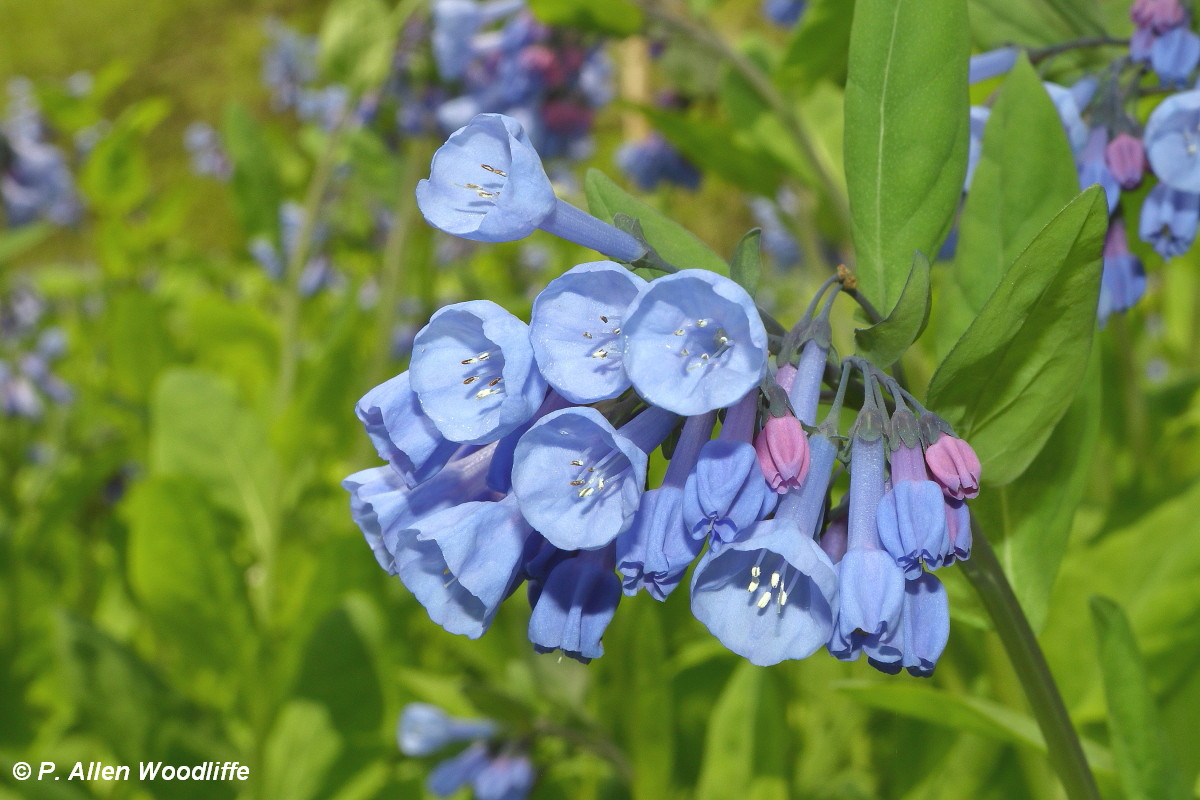
 There are lots of birds around these days, but wildflowers often get less attention. Therefore this will be another post which features the magnificence of many landscapes that birders frequent, but may not always pay as much attention to. That being said, I want to start off with a species of wildflower that is overall quite uncommon, but where it occurs, can be overwhelmingly dominant. I am referring to Virginia Bluebells (Mertensia virginica).

It is not a species that occurs in Chatham-Kent as far as I know, at least not naturally. It will be in an occasional private garden. But the populations I know of and have immersed myself in over the last decade or so are in two places in Elgin Co, and another in a nature reserve that borders Lambton and Middlesex.

These wonderful plants are relatively short-lived, but are dominant when in full bloom. The photo above was actually taken a few years ago at the Sydenham River Nature Reserve. The ones that follow were taken along a hiking trail in Elgin Co, where my sister and her husband invited me to join them a few days ago on their annual trek to see these beauties. It took the better part of an hour along the trail to get to the first of three patches, including a few ups and downs along the trail, so definitely not in the relative flatlands of Chatham-Kent! It covered several acres along Dodd Creek. Most were in full flower, with a few pink undeveloped ones yet to appear.
As in many populations of plants, there can be some anomalies, such as this next one which is fully open but has retained its pink colour.
It was a beautiful day and we had the place to ourselves. Sunny, mild with hardly any wind, and the only sounds were a few Baltimore Orioles vying for territory in the trees above, as well as the babbling creek nearby. (Thanks Susan and John!)


All in all it was a wonderful few hours enjoying this piece of creation.


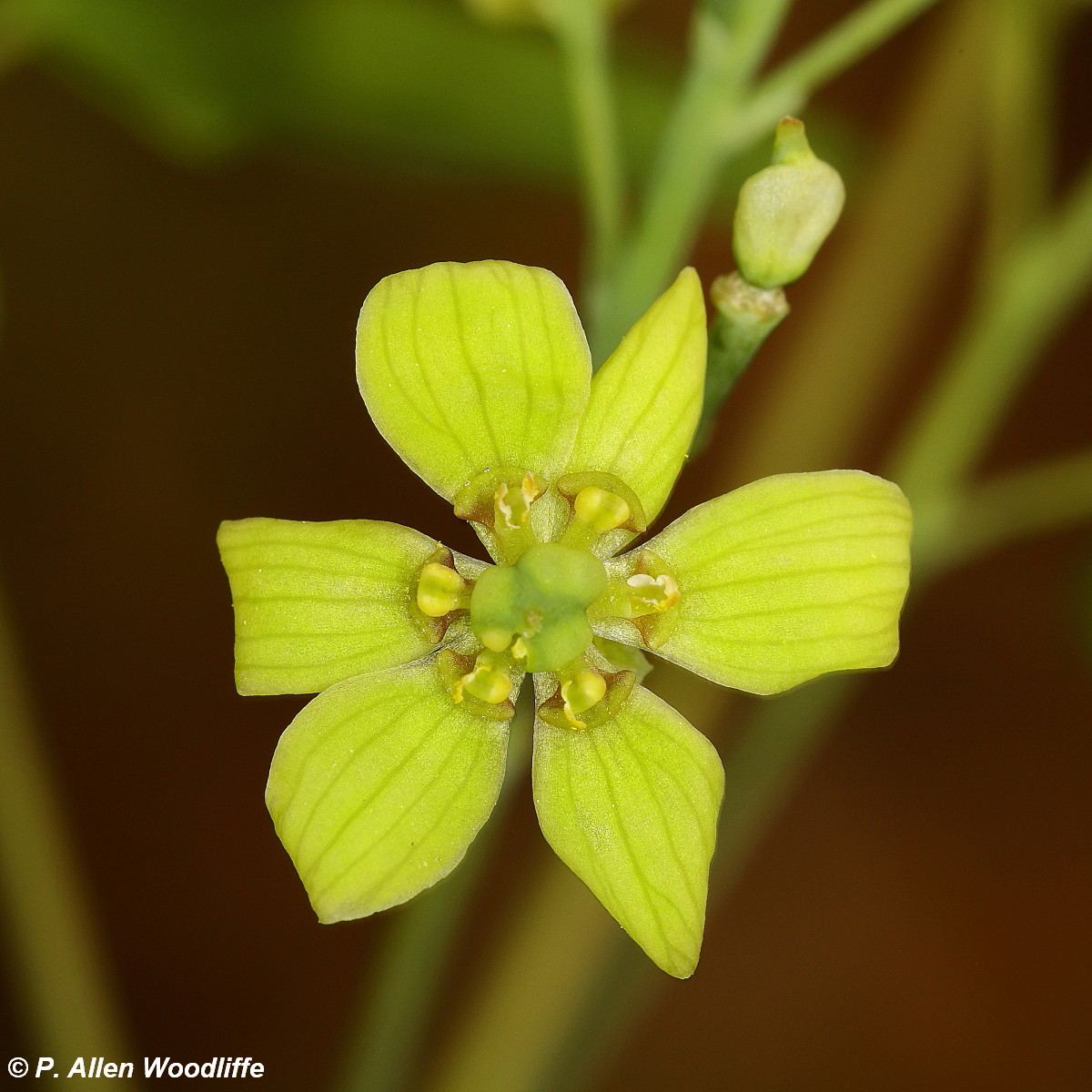
Closer to home, I continue to be on the search for wildflowers while out birding or whatever. This first one is Blue Cohosh, the later blooming species compared to the one I featured a couple of blogs ago. The flowers are noticeably yellowish, not purplish.
Violets continue to be abundant, with this Downy Yellow Violet one of the most common.....
...a far less common species is this aptly named Long-spurred Violet, which grows in small scattered groups rather than being as widespread as either the yellow or blues ones.
Large-flowered Bellwort appears in clusters here and there.

There are still some Red Trilliums, and I have a hard time resisting them.
Skunk Cabbage was in its prime a few weeks ago, but I missed them at that time. It is not common in most places that I travel.
It is mostly visible by its leaves, rather than flowers these days.
A wildflower soon to be out is Canada Mayflower. The leaves, as shown next, are fairly widespread, and I suspect there may be a few out in flower that I haven't caught up to.

White Trillium continues to show well....

...as in this scene from Clear Creek Forest Prov Park.
Wild Blue Phlox is scattered here and there along roadsides and trails at Rondeau.
Wild Geranium is becoming more plentiful, and the flowers can vary a little in appearance.

Wood Anemone is relatively diminutive, but always pleasing to see if you get down close to it.
...and the sloughs of Rondeau, while dropping in water levels slightly due to the lack of precipitation over the last few days, continues to support members of the Yellow Water Crowfoot.

There will be a steady, but slightly decreasing stream of wildflowers appearing in the next few weeks due to the closing of the forest canopy. Some will likely appear in a future post.


If you would like to subscribe, or unsubscribe, to Nature Nuggets, send an email to: prairietramper@gmail.com


Sunday, 10 May 2020

Early May explorations

The good news is that non-operating provincial parks (i.e. those without campgrounds) will be open beginning tomorrow, May 11, and operating parks, such as Rondeau, will be open for day use beginning on Friday, May 15. So those of us who have been playing by the rules, will finally be able to get into some of our favourite places like Rondeau. I know there are those who disregard the rules and have entered closed provincial parks from time to time over the past few weeks. Unfortunately there are occasionally a few people who think rules apply to others, not themselves and sometimes even flagrantly post their observations from those closed places on eBird. Shame on them!

In the meantime, there are other places to explore that are open. I was at the Erieau/McGeachy Pond trail the other day. It was one of those very windy days (remember them?). During the hour or so I was along the trail, there was only one young couple who (safely) passed me by.

The birds were mostly in the sheltered places of course, which is where they were most likely to find insects.

Palm Warblers were abundant. I estimated at least 20 along the trail, most of which were on the gravel path or nearby shrubbery.
 One of them took time from the busyness of hunting for food, to sing.
 It was windy, with quite brisk NW winds. Most birds, if they got up a bit, had their feathers ruffled, such as this Blue-gray Gnatcatcher, one of at least 4 I saw along the trail....
 .....and this Yellow-rumped Warbler.
 There were a few Hermit Thrush.....
 ...and several Yellow Warblers.
 White-crowned Sparrows outnumbered White-throated Sparrows by at least 10:1.
 There wasn't much flowering, except in a couple of places where patches of Purple Dead Nettle occurred. It is not native.

A brief stop at Sinclair's Bush resulted in seeing some nice displays of Marsh Marigold in the lower wet spots.

 Sinclair's Bush is always worth a visit to see the abundant diversity of wildflowers. Red Trilliums are often more nodding (not to be confused with the much less common Nodding Trillium) than White Trilliums.

 Wild Blue Phlox, easily identified by its pin-wheel appearance, is starting to appear.
One day when I was on my way to Tilbury, I stopped by Fletcher Ponds. It was way too windy and exposed to see much in the way of birds, but along the path I came across these Shaggy Manes. I am more likely to see them in the autumn.....does that mean we missed summer? Some days it seems like it!
I have been to Paxton's Bush on the north side of Chatham on several occasions. It helps that it is only a 10 minute walk from home. At this time of year, among other things, I am checking on the nesting Great Horned Owls. That saga is coming to an end, but I will leave that for a future post. There have been a few migrant birds, but not many. I had my first Chimney Swift of the year there today, along with a few of the usual warblers. A pair of Eastern Phoebes are in the process of building a nest under the bridge that crosses the creek.
 Mallards have hatched at least a few ducklings.

 So far this Eastern Gray Squirrel has safely evaded the Great Horned Owl buffet unlike some of the local American Crows.
 It has been somewhat dry so far, and the spring wildflowers seem to be in less abundance than usual. But Spring Beauty continues to thrive....
 ....as are a few willows, just coming into flower.
With the warming temperatures this week, along with the forecast southerly to southwesterly winds, I expect the bird migration to get into high gear, so stay tuned and stay safe!


Tuesday, 6 June 2017

Colourful May Wildflowers

A few weeks ago I posted about April showers bringing April flowers, of which there are many that show up late in that month. However May seems to have the greatest diversity of flowers, especially in woodlands before the trees leaves get too dominant. The profusion is amazing, especially along some trails. In fact I have had birders tell me that when the birding got a bit slow, they thoroughly enjoyed the abundance of wildflowers.

This first one shown started in April, but May is its normal flowering period, and this population did persist flowering well into May.
Goldenseal (Hydrastis canadensis)
Forests with developing heavy canopy have the earliest species. Wild Geranium (Geranium maculatum) is abundant.
 Less obvious is the Virginia Waterleaf (Hydrophyllum virginianum)

 White flowers, such as this Sweet Cicely (Osmorhiza claytoni) don't stand out as much as more colourful ones. This is one you need to watch out for, especially if you venture off a trail, since the developed seeds are black and sharp-pointed and will penetrate clothing and prick you.
A similarly looking white flower is White Baneberry (Actea pachypoda), sometimes known as Doll's-eyes since the white berries with black dots were used by pioneers as eye's for home-made dolls.


Wild Blue Phlox (Phlox divaricata), sometimes called the pinwheel flower, is plentiful. It is just as often pinkish-purple or white as it is blue.


Mayapple (Podophyllum peltatum), in peak flower in May, should prossibly be called Juneapple, since the little apple fruit seldom occurs until June. Parts of the plant are poisonous.

On one occasion when I was getting ready to photograph some of the wildflowers, I encountered a species I had never seen in Rondeau before: False or American Gromwell (Lithospermum latifolium). In fact until I came across this small clump, it was considered an historical species for Chatham-Kent, and hadn't been seen in Rondeau since the early 1960s. It is nice to update the historical records.

A fairly rare woodland wildflower blooming in May is Virginia Bluebells (Mertensia virginica). There are historical records for Chatham-Kent, but a fabulous colony of them occurs on a private property along the Thames River in Elgin County.


In more open woods, especially where there are lots of oaks and leaf development is slower, are a slightly different mix of wildflowers. Wild Columbine (Aquilegia canadensis) is widely scattered, and often sought out by hummingbirds which can sometimes be seen hovering beneath the flower with its long bill up into the flower searching for nectar.
 On a very few occasions, you might encounter a pale yellow form of this normally bright orange-red flower.
 Robin's Plantain (Erigeron pulchellus) is quite restricted to sandy/grassy openings of the oak forest.
 False Toadflax (Comandra richardsonii) is another very restricted species, and not nearly as large and colourful as many others.
 Wood Betony (Pedicularis canadensis) on the other hand is usually quite abundant in these oak forest openings. They may be purplish, as shown in the first image, or yellow, as shown in the following one.

 An abundant member of the Lily family, growing in sandy soils along oak forest edges, is this Starry False Solomon's-seal (Maianthemum stellatum).

Just a few of the more obvious and sometimes less obvious, herbaceous wildflowers to be found in May, with some of them persisting into June. Herbaceous plants aren't the only ones with flowers. Woody plants have them too...some are obvious and some are so diminutive they aren't noticeable unless you look really, really hard for them. Some will be featured in a future post.