Showing posts with label Indian Paintbrush. Show all posts

Friday, 4 June 2021

National Prairie Day

 Tomorrow, June 5, is National Prairie Day. At least it is if you reside in the USA. Canada has not included this in any way, which is unfortunate since prairie in Canada is very important in the natural scheme of things. Think of the prairie provinces, for example. But even here in Ontario prairie, and in particular tallgrass prairie, has been an important part of the Ontario landscape. It still is to a much smaller extent, since most of the original tallgrass prairie in the province has been converted to agriculture. There are still a few small pieces left, including parts of Essex Co in the Windsor area (Ojibway Prairie complex), some very small pieces in Chatham-Kent, surviving as remnants along railways, wetlands and the like, and in Lambton where some of the finest tallgrass prairie in the province occurs within the Walpole Island First Nation. Farther east there are remnants in the Dutton area, the Brantford area and the Rice Lake Plains area at the Alderville First Nation. 

Alderville FN prairie

Closely associated with tallgrass prairie is oak savanna, occurring in various places such as Rondeau Provincial Park and Turkey Point Provincial Park. Some may note that I don't include Pinery Provincial Park in the oak savanna mix. Although what is there now is quite like oak savanna, it is largely artificially created and maintained, a result of major changes to the original Pine-Oak forest that were there up until about the mid 1800s when large scale logging took place. If you want to read more about that history check out a blog post I did in 2019.

One of the prairie plants I always looked forward to seeing at Rondeau was this one, Indian Paintbrush (Castilleja coccinea), also called Scarlet Painted Cup. For years I used to see a small patch of it near the intersection of Bennett Avenue and Harrison Trail. However gradually the site became more and more shaded, and I haven't seen it there for more than two decades. But this spring, a fellow birder saw a clump of it at the edge of a wet dune towards the southeast part of the park. I was elated to see it!

Even at a bit of distance, the brilliant orange colour stood out.
Most of the orange is not on the flower part per se. The actual flower is this smaller tubular feature shown in this next photo. While this is only a single clump of about 5 stems, it was heartening to see.
Just to give an idea of what it can look like on a high quality prairie, note this next photo. This is Diamond Grove Prairie, in southwestern Missouri. The site had been burned and there was lots of fresh greenery appearing, which caused the brilliant orange of Scarlet Painted Cup to stand out across the acres and acres of this impressive prairie. I took this in May of 2008 while I was on a two week exploration trip of Missouri's fabulous prairies.

The Missouri Prairie Foundation is certainly a leader when it comes to identifying, protecting and educating about tallgrass prairie, and is responsible for establishing National Prairie Day.

I have spent several weeks over several years in the past, exploring the Missouri prairies. I have been to well over 100 different tallgrass prairie sites in the USA, about half of which were in Missouri. Fortunately having been an active participant in several North American Prairie Conferences has enabled me to see some of the best examples in the US. Here are just a few. The first one is Coyne Prairie, showing the Scarlet Paintbrush mixed in with Wood Betony.

This next one is Golden Prairie, a National Natural Landmark where you can stand in certain spots and not see anything but prairie for 360 degrees.
Sky Prairie, shown next, is smaller but has a wonderful diversity of colour.

Ontario's prairies are just as important in their own way. They are at the edge of the broader tallgrass prairie range, so have a slightly different mix of flora and fauna. This first one is in the Windsor area, and while about 15 years ago it supported undoubtedly the largest population of a species at risk called Colic-root, those white flowered plants, it is now even more at risk as it no longer exists. Unfortunately it was sacrificed to make way for the new highway system as one enters the city via 401.

Fortunately some of the best parts of the Ojibway Prairie Complex remain, although parts of it are in serious need of further management such as prescribed burns. This next photo shows part of the Ojibway Prairie Prov Nature Reserve featuring an impressive stand of Dense Blazing-star, designated as a Threatened species at risk.
Dense-Blazing-star is also well represented at some of the finest parts of tallgrass prairie at Walpole Island.
Earlier in the season the same site had a showing of orange flowers, but not the Scarlet Painted Cup. It is Butterfly Milkweed.
At Rondeau, at a recently burned site, the Butterfly Milkweed can be impressive as well.
At the end of the season, this next photo show what the Black Oak savanna at Rondeau can look like, where tallgrass prairie grasses dominate.

Of course tallgrass prairie is important for more than just vegetation. There are more than a few bird species that do best on the open prairie. Some are fairly common, such as Savannah Sparrow.


Less common is Eastern Meadowlark.
Even less common, and a species at risk is Bobolink, with the distinctively coloured male, shown first...
....and the more subtly coloured female.
An Endangered species is Northern Bobwhite, which is almost certainly gone from Ontario although there are occasional reports of birds away from their former tallgrass prairie range. They are probably the result of wildlife releases. This next photo was taken in Missouri.
Another Endangered species, and also likely gone from Ontario, is Henslow's Sparrow. I digiscoped this at a prairie restoration site about 20 years ago.
Not in any specific 'at-risk' category is Dickcissel, a species which over the last couple of decades has begun to breed in Ontario somewhat regularly in very small numbers and has periodically shown some surges in those numbers from time to time.
Tallgrass prairies are certainly wonderful and fascinating parts of the Ontario, Canadian and North American landscape. Unfortunately they are too easily converted to other uses, so need a strong appeal to people to ensure they survive in a healthy condition.


Monday, 23 July 2018

Westward Ho!

We just got back from a 'quick' trip out to Alberta, as far north as Grande Prairie, primarily for family events. It turned out to take a little longer than our initial plans, but that is another story. And we really hadn't intended for this trip to be a natural history exploration type, but there was so much of it along our route that it was hard to ignore it. So a few short days ago, and three weeks after we started out, we arrived back home.

There is too much to show and tell for a single blog post. This first post will portray some of the highlights from the roadsides in those prairie provinces.

It is partly true that the prairies are flat. Some areas are incredibly flat, and are where one finds remnants of tallgrass prairie, such as this site in the very southern part of Manitoba. It is part of the Aspen Parklands and Tallgrass Prairies near Tolstoi.
I had been here on one occasion, back in 1991, and seemed to recall that a lot of it was more open than what I was seeing on this trip. It was quite overgrown by comparison, at least if I was going by my recollection. This photo above is by far the most open of anything I saw on this preserve this time. There were a few of the typical tallgrass prairie plants, including Purple Prairie Clover....
 ....White Camas (which is attractive to the human eye, but quite poisonous to livestock).

 Wood Lily. The 'Western' Wood Lily is the provincial flower of Saskatchewan, but it is the same species as the one found in Ontario: Lilium philadelphicum.
 This next one is the yellow form of Indian Paintbrush. The red form is sometimes abundant on more southern tallgrass prairies that I have seen in places like Missouri.

We saw a few butterflies, but it was too hot for a lot of butterfly activity. I was hoping for a Poweshiek Skipper, a very rare species found on these Manitoba tallgrass prairies, but I was not successful.
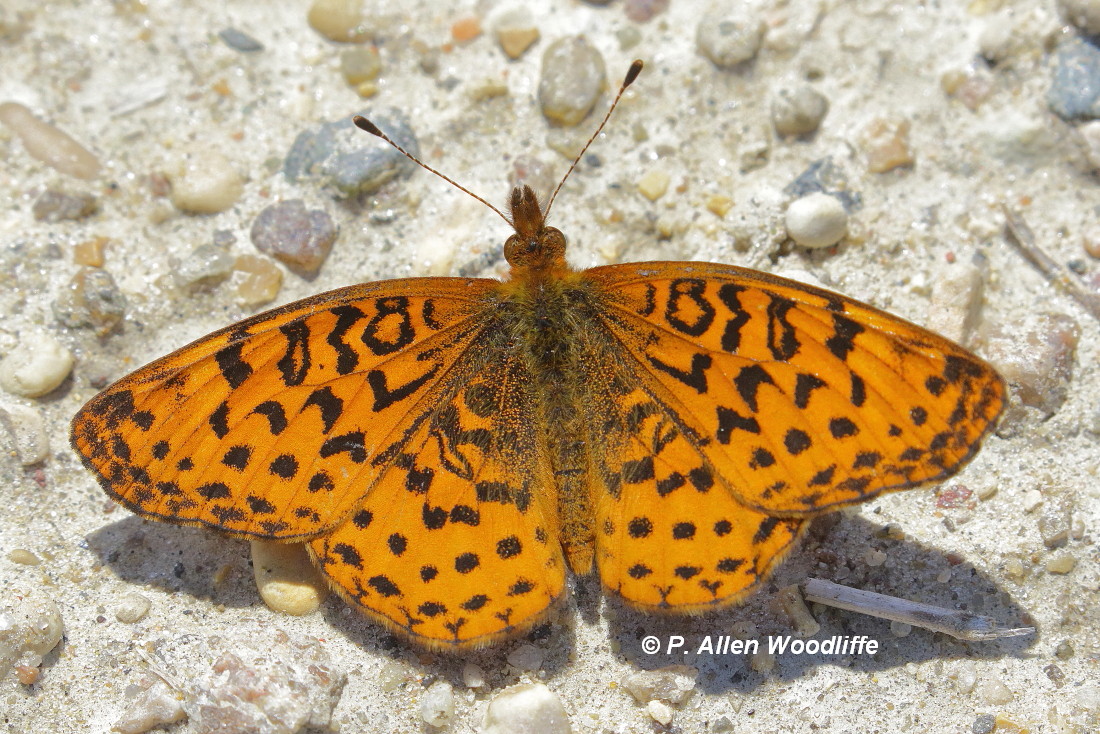
Meadow Fritillary
 Monarchs were widely scattered, but not abundant.
A bit farther north, we came across these colourful wildflowers, which is a different species of Indian Paintbrush.


Wildlife different from what we are used to here in southwestern Ontario was fun to search out. Richardson's Ground Squirrels, locally known as gophers, were plentiful, and often fairly cooperative.

We got a fleeting look at a White-tailed Jackrabbit. It is similar in size and shape to the European Jackrabbit of southern Ontario.
We saw a few Pronghorn.....
....and a few more Mule Deer.
 We did see a few bears in various places.....three altogether and all in Alberta north of Edmonton, but we never saw Goldilocks :-). They were scooting across the road pretty quickly and only got photos of this one bear. Thankfully Marie had her cell phone handy.

A nice variety of birds was noted even along the road way.
Western Kingbird
Interior form of Horned Lark
Lark Bunting
 In places where there are no, or very few, trees, birds like Common Nighthawk have to improvise. It was unusual to see them sitting on fence posts!
Black-billed Magpies are widespread. They can be seen scavenging along the road when the opportunity arises (this next photo is one I took on a trip in the fall of 2007)....

...or wherever they can find something, even in people's back yards.


Although some parts of the prairies are flat, in reality most of it is anything but flat. There are some impressive sand dunes, which we had to bypass on this trip. But the various river valleys made for an enticing landscape.
 In some of these river valleys dams were built to create small recreational lakes. While their main intent was water control and recreation, some of the native fauna was able to make good use of them as well. We didn't see a lot of these American White Pelicans, but a few scattered about.

By comparison, Franklin's Gulls were fairly abundant.


The next post will deal with one of the iconic features of the prairies: swales and potholes.