Showing posts with label Eared Grebe. Show all posts

Friday, 15 September 2023

A western visitor and more local denizens

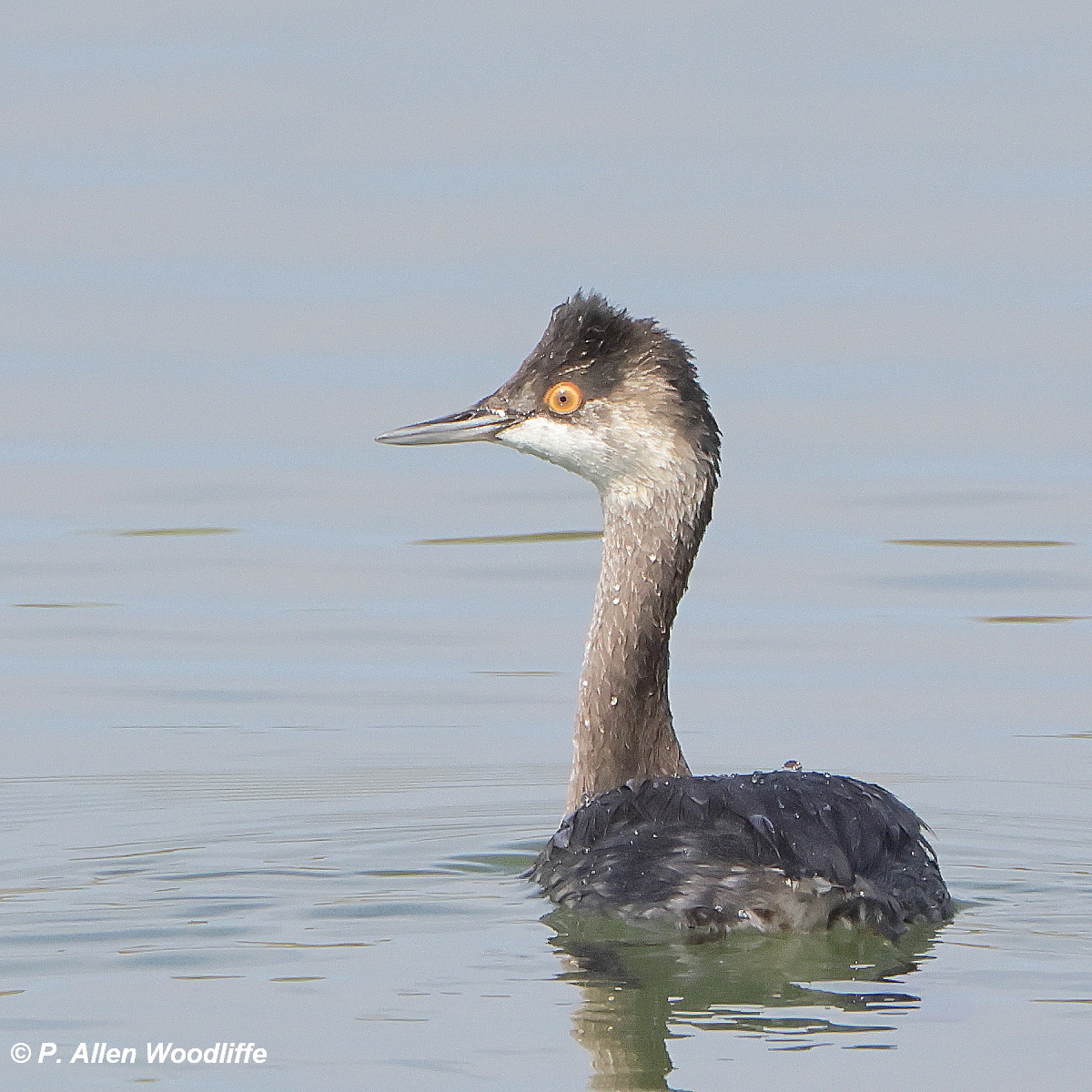
 The highlight of birds in the past few days was the presence of an Eared Grebe. Although this species does show up in various places in Ontario in most years, it is largely a species that breeds in the western half of the continent and roams a bit farther afield on fall migration. It is not reported in Chatham-Kent every year. This individual was at the Keith McLean Conservation Area, in one of the ponds which were established a year or so ago. I watched it for awhile, and it would pop up at one end of the pond, then disappear and show up at the other end. On occasion it would be across the pond from me. It never came very close, so there are all heavily cropped images.


A bit of time at nearby Rondeau turned up a few interesting things, as usual. I went part way out the newly refurbished Marsh Trail. It was nice to get back out there after it being in such significantly deteriorating condition over the last couple of years. Kudos to the Rondeau Waterfowlers group for getting this done.

I didn't photograph a lot on this visit, but did see a Merlin perched on a dead limb a long way up......

....and this Song Sparrow that perched for a short time, showing that it was missing its tail.
Along some of the uncut grassy areas in various parts of the park, mostly on the east side, there are some of these orchids showing up. They are just getting underway, as the latter half of September is when they are in their prime. It is the Great Plains Ladies' Tresses (Spiranthes magnicamporum), a rare orchid in Ontario, but fairly regular and sometimes common at Rondeau. There are other members of the Spiranthes genus to be found, but most of them occur a bit earlier in the season in similar grassy areas, and not all at Rondeau.

I spent a bit of time on one promising day at the Morpeth Cliffs, a well-known local spot to watch the hawk migration in the fall, especially when the winds are primarily from a northern direction. I managed to see at least a couple of hundred raptors on the move in the hour and a half I was there, but they were mostly way up high, and difficult to even see without binoculars let alone identify them. I did see various species, such as Bald Eagle, Broad-winged Hawk, American Kestrel, Sharp-shinned Hawk, Cooper's Hawk, Northern Harrier and of course, Turkey Vulture. There could have been others. My photos were hardly worth taking, as the birds were so high and the camera had difficulty locking focus on. Here are a couple of my more successful ones, greatly cropped, such as they are:


I went over to the Erieau Marsh Trail, but only photographed these next two subjects. This hatchling snapping turtle was crossing the path. A cyclist had just come through moments before, and fortunately did not run over the little critter. He wasn't moving, so maybe he was still in shock. I picked him up and put him on the far side of the path, in the direction he was going.

A Double-crested Cormorant gave me a photo op.

The shorebirds continue at the Blenheim Sewage Lagoons, although I haven't spent much time there as the species mix remains fairly constant. In my limited time there, I got these shorebirds:

Greater Yellowlegs

Lesser Yellowlegs

Greater in the back, and Lesser facing the camera

Stilt Sandpiper
A Northern Harrier cruised by a couple of times, and I managed to get some decent photos showing the facial features as well as the white rump. This would appear to be a female, or possibly a youngster.

Checking out the Mitchell's Bay North Lakeshore Trail often provides some nice photo ops, especially for heron types, and occasionally for others. A recent venture to that trail resulted in the following:
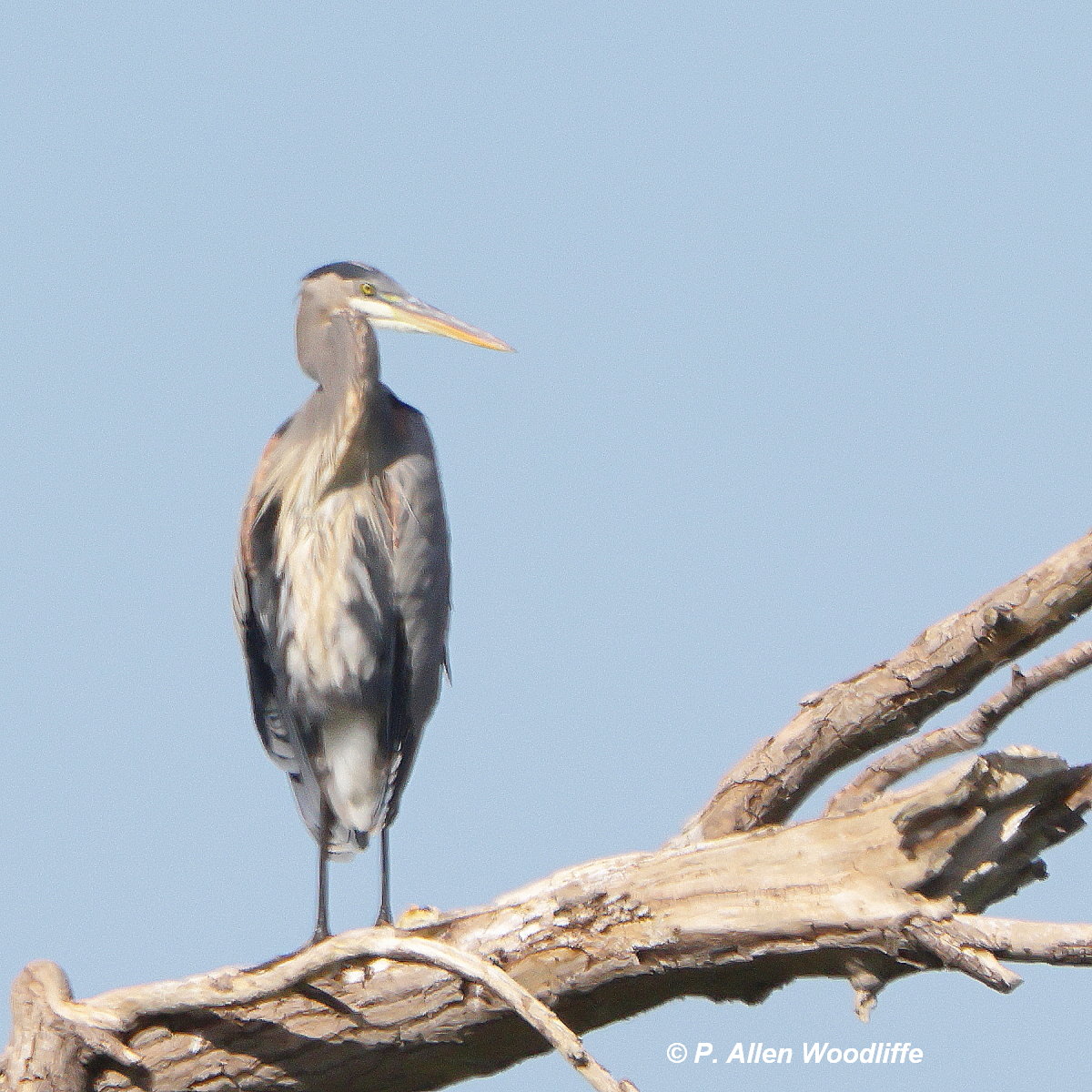
Great Blue Heron

Several Great Egrets were around in various locations, some of which provided some good photo settings for me.


There were two Green Herons, which always seem to be skulky, and did not pose in good light.

Double-crested Cormorants were quite abundant, but mostly well out on the Lake. This one liked the quiet water of an inner channel......
...at least until it thought I was getting too close.

Checking out St. Clair NWA can be worthwhile almost any time, but getting photos that I am happy with don't always happen. Here are a couple from my most recent visits. Two Sandhill Cranes landed a little way away, but in some fairly thick cover, while another half a dozen flew in and landed elsewhere.

An Olive-sided Flycatcher was perched at the top of a dead branch, and against the bland sky, was not the kind of photo I was hoping for. Maybe next time.


If you would like to subscribe, or unsubscribe, to Nature Nuggets, send an email to: prairietramper@gmail.com


Wednesday, 12 May 2021

Waterbirds and Warblers

 The bird migration continues, and shorebirds are increasing. The Keith McLean Conservation Area is fair to good, but not quite as productive as the last couple of years. Fortunately the Blenheim Sewage Lagoons are better for shorebirds than they were this time last year, as two of the sprinkler cells have water in them.

There is typically almost a dozen species of shorebirds present on a given day. Here are some of them.

Dunlin are quite abundant, with some in almost full breeding plumage complete with black belly.

Some are along the pond edges rather than the sprinkler cells, partially hidden by the grasses.
Least Sandpipers are becoming more numerous.
Both Lesser and Greater Yellowlegs are fairly abundant, particularly the Lessers, shown next.

Always a nice bird to get is a Short-billed Dowitcher.
Another highlight is Wilson's Phalarope. There were at least two when I was there. On at least one occasion in the past, this normally western species has actually nested at these lagoons.

Several Semipalmated Plovers were scattered around.


 One of the other bird highlights at the lagoons this spring is a nicely plumaged Eared Grebe. Unfortunately it was always way off on the far side, so this is a heavily cropped photo.

This is what a closer look would show. I photographed this while out in the prairie provinces back in 2018, where the species was commonly seen in so many prairie swales and potholes.

Most of the last few days have been cool and breezy, so the hundreds of swallows that gather are either anxiously swooping over the water hoping to catch an insect or two, or resting in some sheltered part of the complex to save energy. This one was in the grass, quite tolerant of me passing by.

Another plover similar to the Semiplamated one shown above, has recently arrived along the beach at Erieau. It was first seen yesterday, and I got out this morning to see and attempt to photograph it. This is one of my better photos. It has a distinctively paler back than the other species, and is quite endangered. There are historical records of them breeding in the Rondeau/Erieau area, but not since about the 1940s. It is an endangered species, and fortunately is making a slight recovery, so maybe it will once again be nesting along these shores.

The warbler activity has been slower than most birders would like, but that seems to be the case most years. There are some species I have yet to catch up with, but Yellow Warbler is certainly not one of them. As is often the case, it is one of the most abundant species. Given its abundance, it is hard to believe that back in the 1970s it was on the Audubon Blue List, as a species of concern considering its significant decline. How times have changed!

Always a crowd pleaser is the Prothonotary Warbler, the unofficial bird of Rondeau considering that its first nesting record for Canada was at Rondeau back in the 1930s, and the park has been considered a stronghold for the species. The abundant slough habitat is certainly to its liking. There were two males vying for territory on this day, although not very close to the boardwalk, so these are heavily cropped photos. Hopefully before long, I will be getting a few much closer ones.

And while watching and waiting for the Prothonotary to show up within camera range, a pair of Wood Ducks were nearby. One can never get enough photos of the dramatically coloured male Woody!


Friday, 21 February 2020

Rare, Regular Migrant Birds of the Rondeau Area

In my last post I featured quite a few rare types of birds that are known to breed, or have attempted to breed, within the Rondeau Provincial Park Checklist Area.

This post will feature some of the rare but regular migrants that have not yet demonstrated any evidence of breeding. While the previous post required some evidence of breeding to be included, I don't have as clear-cut a definition of rarity. Therefore this list is somewhat subjective.

Generally anything included here will be out of regular breeding range and always an extra highlight to see. Undoubtedly an observation would be posted on a rare bird alert of some type. However they are almost 'expected' rarities, in my opinion, as they occur most years, or at least likely once every 4-5 years. I didn't go into all the Rondeau records to see if a species fits that definition exactly, so take this definition with a grain of salt. If you don't see something on this list that you think should be included, it might be on the next list if I felt it was a bit rarer, or it may be because I don't have a good enough photo yet :-).

They will be featured more or less alphabetically rather than in any checklist order.

First up is American Avocet, a striking large shorebird that shows up briefly every year or so, typically at sewage lagoons, flooded fields, or sometimes along the shoreline.
Next is Cattle Egret, not a species that is considered native to North America, but arrived as a result of major storms bringing a few of them across the Atlantic in the middle of last century. They show up irregularly, and have bred in southwestern Ontario on occasion. The closest places are at Fish Point on Pelee Island back in 1976 where breeding was confirmed (I saw the nest), and another time at Walpole Island in the early 1980s where it was in breeding condition near some appropriate habitat, but never confirmed.
 Eared Grebe is a common nesting species in the innumerable wetlands of the prairie provinces, but only seen in the Rondeau area from time to time on migration.
 Eurasian Wigeon usually appears in the spring and/or fall when huge numbers of puddle and diving ducks show up on places like Rondeau Bay. It can be a challenge picking one out amongst the thousands of ducks at those times of year, especially if there are a lot of Redheads. They often are only well seen through a 'scope. This particular individual was at the Keith McLean Conservation Lands in 2019, on 'Lake McLean'.
 Franklin's Gull is pretty unusual, and I almost put it into the rarer category. However there are enough records over the years to indicate it fits here, at least during those years when masses of the smaller Bonaparte's type gulls are passing through.
 Along with large numbers of geese, one might find the occasional Greater White-fronted Goose. They are seen almost annually, but are sometimes harder to find when mixed in with large numbers of the larger Canada Goose.
 Henslow's Sparrow used to be more regular than it has been. It is an Endangered species in Ontario, and it is doubtful that any nest in the province now.
 Nelson's Sparrow is a regular breeding species in the far north, and when it migrates is very challenging to find. It is a very furtive sparrow and it probably passes through annually in small numbers. It occurs primarily in the fall and may linger, presumably when the urgency to reach their wintering ground isn't quite as strong as it is to head north in the spring.
 Purple Sandpiper is typically a very tolerant shorebird, enabling one to get some good photos. However it doesn't occur all that regularly, and can sometimes go undetected for several years in a row. Usually when it does appear, it may do so for only a very few days.
 Red Phalarope is another shorebird that nests in the far north, and is seen very irregularly in the Rondeau area. Both of these shorebirds definitely get a lot of attention when word gets out that they are around.
 Red-throated Loon was always considered a fairly rare migrant. However in the last few years, they have been documented much more regularly in the fall and early winter on western Lake Erie, and can be seen from good vantage points along the Rondeau shoreline. It was first recorded on a Rondeau Christmas Bird Count back in 1981, and not again until 4 years ago. On the 2018 count we had a huge number flying through conservatively estimated at 70 individuals.

 Ross's Goose was considered a real rarity in eastern North America not that long ago. But the numbers have recovered recently, in part due to the major increase of the similarly looking Snow Goose population in the northeast. It was first recorded on a Rondeau Christmas Bird Count in 2001 and we have had it on 5 other CBCs since then.
 Snowy Egret is a species much more common south of the border, and erratically seen in Ontario. Most often they appear in mid to late summer, when post breeding wanderers may show up and stick around for a few days, depending on the weather and the feeding opportunities.

Trumpeter Swans aren't really a migratory species in the sense that most of the rest of the birds on this post are. They have never nested in the Rondeau area that we know of, and it is only in the last couple of decades where they are seen somewhat erratically.
 Western Kingbird shows up periodically, which follows a general pattern that some members of the flycatcher family are known for. You will hear more about that in the next post or two. There are a few records for the Rondeau area, but several years can go by in between records, and they don't stay long.
 Worm-eating Warbler is one of those southern warblers that gets a lot of attention when one is reported. They appear most often in early May when the weather conditions are such that a strong warm front comes up from south of the border. In the last few years, however, it seems that one of the dominant wind directions in early to mid May is from the east or north east, which holds back good movements of the more southern specialties like this warbler.

That is it for this post......come on back for a future one which will feature what I consider to be much rarer migrant species, with another post featuring mega rarities at some point after that.