Showing posts with label Lark Bunting. Show all posts

Saturday, 5 July 2025

Lark Bunting, and more!

 Certainly the most intriguing bird of recent days was the occurrence of a Lark Bunting, seen at the grassy/shrubby pasture along Stefina Line. It is a young male due to the brownish feathers above the obvious white ones in the wing. It is possible it showed up here due to the very dry conditions in its normal western range, and also perhaps of the air quality caused by the proliferation of wildfires.

This first photo shows what it typically looks like as it perches on a fence post. I was fortunate to take this photo in Grasslands National Park, in southern Saskatchewan a few years ago. 

Even though I spent several hours over a couple of days watching this particular bird at the pasture, the photos I got were not as high quality as I was hoping for. It spent most of its time 100 metres or more well out in the pasture, and although it was observed doing its aerial flight and singing, it seldom came very close. There were many dozens of birders from various parts of Ontario that lined up along the road, to see this unusual species, and in looking at the photos posted on eBird, occasionally someone would get a fairly close photo when the bird stopped by at a good spot for at least a few seconds. Here are a couple of my photos that I managed to get. This first one is when it landed on a steel gate by the corral.

This next one is when it was perched on one of several of its favourite shrubs a long way out. Both photos are heavily cropped.

The Lark Bunting is officially considered Threatened in Canada, and is limited to the western prairie regions, most commonly in southern Alberta and Saskatchewan. It is more abundant in the mid-western USA. 

As I was waiting for better photo ops, I managed to get this dragonfly perched on some grass by the road.

Widow Skimmer
Tis the season for dragonflies, of course. When I was out at St. Clair NWA one late afternoon, as it was slightly cooler, I photographed these two. 

Halloween Pennant

Blue Dasher

I got a few birds along the way, either at this NWA or on another day at the similar type of habitat a bit farther north, at the Mitchell's Bay North Shore Trail. This first one is an adult Bald Eagle that for some reason was hanging out along the roadside. It probably was after something in the canal immediately adjacent to the road, but after allowing me to get a couple of photos, it decided to move on, so I did also.

This Eastern Kingbird cooperated nicely before heading off to chase an insect.
The adjacent wetlands are often used by Great Blue Herons....
...and Great Egrets, that are always fun photo opportunities.
A critter that isn't often up and visible is this Groundhog, that paused momentarily on the trail before scampering out of sight.
Of course Killdeer are quite common...
....and Red-winged Blackbirds are super abundant, but don't always like sitting up for a good photo at a close distance.
 They are often busy squawking about something.....

...or just hanging out, perhaps keeping an eye on a nearby nest.

If the birds don't cooperate, there are usually other things that are more tolerant of my approach, such as this Yellow Iris, attractive but not native.

This female Northern Map Turtle was busy laying eggs along the side of the trail. Usually if a turtle is well underway in the egg-laying state, it will remain tolerant, unless it feels particularly threatened. I just walked quietly by, got a photo, and let her carry on. Hopefully more of this near threatened species will be emerging from the nest in a few months!
This Northern Blue Flag, in the same family as the Yellow Iris shown earlier, is a common native species found in wetland areas.
Next is a large bracket-type fungus called Dryad's Saddle.
Flowering Rush is another common, but not native wildflower common in or adjacent to wetlands.

If you would like to subscribe or unsubscribe to Nature Nuggets, send an email to: prairietramper@gmail.com

Monday, 23 July 2018

Westward Ho!

We just got back from a 'quick' trip out to Alberta, as far north as Grande Prairie, primarily for family events. It turned out to take a little longer than our initial plans, but that is another story. And we really hadn't intended for this trip to be a natural history exploration type, but there was so much of it along our route that it was hard to ignore it. So a few short days ago, and three weeks after we started out, we arrived back home.

There is too much to show and tell for a single blog post. This first post will portray some of the highlights from the roadsides in those prairie provinces.

It is partly true that the prairies are flat. Some areas are incredibly flat, and are where one finds remnants of tallgrass prairie, such as this site in the very southern part of Manitoba. It is part of the Aspen Parklands and Tallgrass Prairies near Tolstoi.
I had been here on one occasion, back in 1991, and seemed to recall that a lot of it was more open than what I was seeing on this trip. It was quite overgrown by comparison, at least if I was going by my recollection. This photo above is by far the most open of anything I saw on this preserve this time. There were a few of the typical tallgrass prairie plants, including Purple Prairie Clover....
 ....White Camas (which is attractive to the human eye, but quite poisonous to livestock).

 Wood Lily. The 'Western' Wood Lily is the provincial flower of Saskatchewan, but it is the same species as the one found in Ontario: Lilium philadelphicum.
 This next one is the yellow form of Indian Paintbrush. The red form is sometimes abundant on more southern tallgrass prairies that I have seen in places like Missouri.

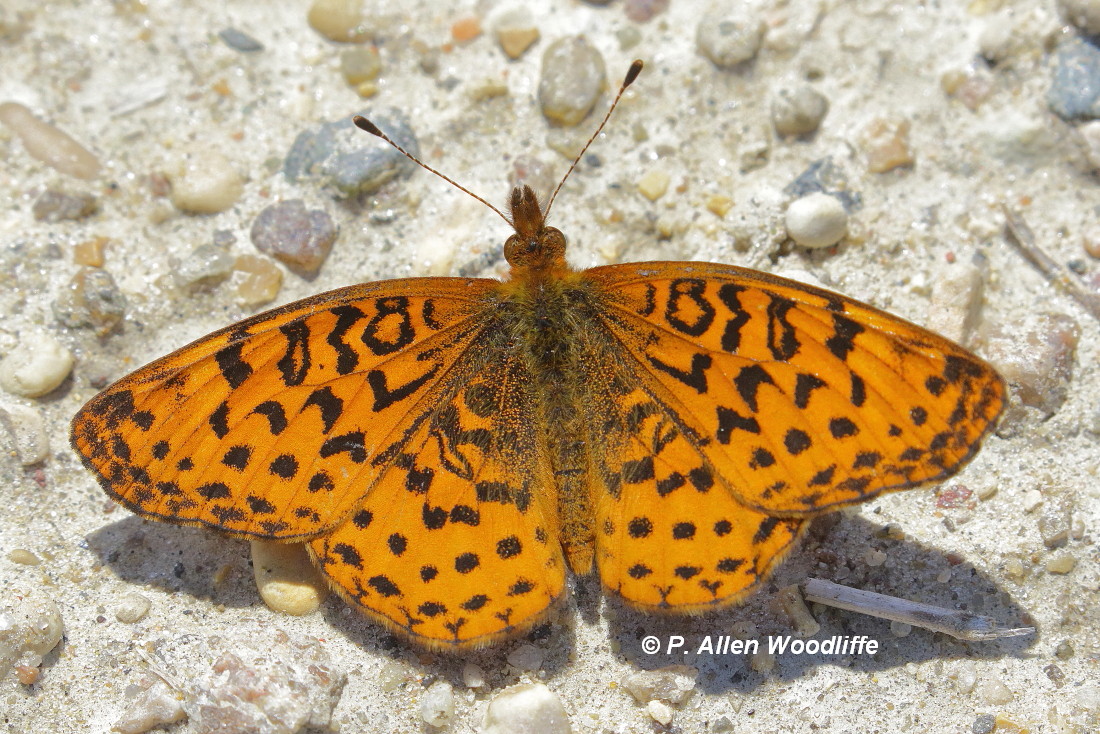
We saw a few butterflies, but it was too hot for a lot of butterfly activity. I was hoping for a Poweshiek Skipper, a very rare species found on these Manitoba tallgrass prairies, but I was not successful.
Meadow Fritillary
 Monarchs were widely scattered, but not abundant.
A bit farther north, we came across these colourful wildflowers, which is a different species of Indian Paintbrush.


Wildlife different from what we are used to here in southwestern Ontario was fun to search out. Richardson's Ground Squirrels, locally known as gophers, were plentiful, and often fairly cooperative.

We got a fleeting look at a White-tailed Jackrabbit. It is similar in size and shape to the European Jackrabbit of southern Ontario.
We saw a few Pronghorn.....
....and a few more Mule Deer.
 We did see a few bears in various places.....three altogether and all in Alberta north of Edmonton, but we never saw Goldilocks :-). They were scooting across the road pretty quickly and only got photos of this one bear. Thankfully Marie had her cell phone handy.

A nice variety of birds was noted even along the road way.
Western Kingbird
Interior form of Horned Lark
Lark Bunting
 In places where there are no, or very few, trees, birds like Common Nighthawk have to improvise. It was unusual to see them sitting on fence posts!
Black-billed Magpies are widespread. They can be seen scavenging along the road when the opportunity arises (this next photo is one I took on a trip in the fall of 2007)....

...or wherever they can find something, even in people's back yards.


Although some parts of the prairies are flat, in reality most of it is anything but flat. There are some impressive sand dunes, which we had to bypass on this trip. But the various river valleys made for an enticing landscape.
 In some of these river valleys dams were built to create small recreational lakes. While their main intent was water control and recreation, some of the native fauna was able to make good use of them as well. We didn't see a lot of these American White Pelicans, but a few scattered about.

By comparison, Franklin's Gulls were fairly abundant.


The next post will deal with one of the iconic features of the prairies: swales and potholes.


Sunday, 15 March 2015

Another year begins...


Three years ago Marie and I went to Arizona for a month over the latter part of March and the first part of April, spending two weeks of that time renting a house on its own 10 acres of Sonoran Desert. The southeastern part of Arizona is a fabulous place to visit for a lot of reasons, but especially if you like arid, sunny, warm conditions towards the end of winter. In combination with the spectacular scenery, abundant wildlife, relatively low density of the human population and some terrific national parks and wildlife areas....well it doesn't get much better than that, at least for me. Since the early 1980s, we have been to various parts of Arizona about 8 different times.

One year ago, I started this blog. It has been an interesting and rewarding experience, in part due to all the supportive readers and comments I have received. So I will begin the second year of this blog with some highlights of the Arizona desert, including some southwestern birds which have shown up in southwestern Ontario.
This first scene is on the property we were staying at. The owners even created a one kilometre trail which traversed the different sections of this desert. Even so, it is usually quite easy to walk around this type of desert. The rainfall is so limited that plants are spread out as their roots compete for moisture. On some days while we were there, the relative humidity was down to about 10%! In this image are several examples of the iconic single stemmed and multi-armed Saguaro cactus as well as the Santa Rita Prickly Pear in the left foreground.

There were feeders set up, which the wildlife visited readily.
Round-tailed Ground Squirrel
Gambel's Quail male
 We thought that the female Gambel's Quail were incubating, and on the day we left, this newly hatched family came by.
Gambel's Quail female and chicks
We had Curve-billed Thrashers visiting regularly; in fact one pair was nesting in a Cholla cactus within a few metres of the house.
Curve-billed Thrasher exiting the nest area in a Cholla
Curve-billed Thrasher on a Saguaro
We had Gila Woodpeckers all the time as well, including a pair nesting in a large Saguaro.

It is possible that this nest cavity might be a future roosting spot for the diminutive Elf Owl. We didn't see any Elf Owls on this trip, but have done so on other trips.

As expected, cactus were abundant, and some were even in flower while we were there, such as this Pink-flowered Hedgehog.

And lots of Santa Rita Prickly Pear.
We did travel to many other fascinating places while in the Arizona, including Buenos Aires National Wildlife Refuge right adjacent to the Mexican border, Madera Canyon and Ramsey Canyon (both of which are at the northern limit of the Mexican mountains and regularly have Mexican birds nesting), and San Pedro Riparian National Conservation Area, where the river flows from Mexico into Arizona. And Saguaro National Monument, very close to Tucson, is a must!

A short time before our time was up, we noticed that some of the Saguaros were in flower. They are usually near the top of mature arms, so not always easy to get a good photo of. But their position makes them more likely to be pollinated by bats, their main pollinator.
 And the desert skies gave some great opportunities to capture some sunset shots. This next photo was taken along one of the trails in Tucson Mountain Park, adjacent to Saguaro National Monument.
We saw other birds, including Acorn Woodpecker, Green-tailed Towhee, Pyrrhuloxia, Vermilion Flycatcher and Lark Bunting, as well as a few species that normally breed in Canada but spend the winters in the south, such as White-crowned Sparrows.

Acorn Woodpecker
Green-tailed Towhee
Lark Bunting
Pyrrhuloxia

Vermilion Flycatcher
I show these birds, because over the years several of them have put in an appearance in southwestern Ontario!

A Green-tailed Towhee showed up at a feeder in Windsor a couple of decades or more ago. Lark Bunting has appeared on several occasions, including a couple of times in the Rondeau checklist area, but not since the mid-1970s until one was seen very briefly along the Marsh Trail in 2014. A Pyrrhuloxia showed up at a feeder in West Elgin a few years ago. And a Vermilion Flycatcher appeared at St. Clair NWA late in the year in the 1990s, but didn't linger long enough for the Christmas Bird Count.

I have been fortunate to see all four of these species in Ontario....but I'm waiting to get one or more on my Rondeau list....will this be the year?

Another southwestern species that did show up at Rondeau and is now included on the park's checklist is this Cassin's Kingbird. Unfortunately I was the only one to see it at the park when I found it back in November of 2013, and since it was already dead, can't count it on my park list. But since some individuals of the southwestern flycatchers group have a tendency to end up going north instead of south in the fall, there is always the possibility of another rare flycatcher to show up.


And with that, I will begin another year of this blog. Thanks again for all of the visits and support!