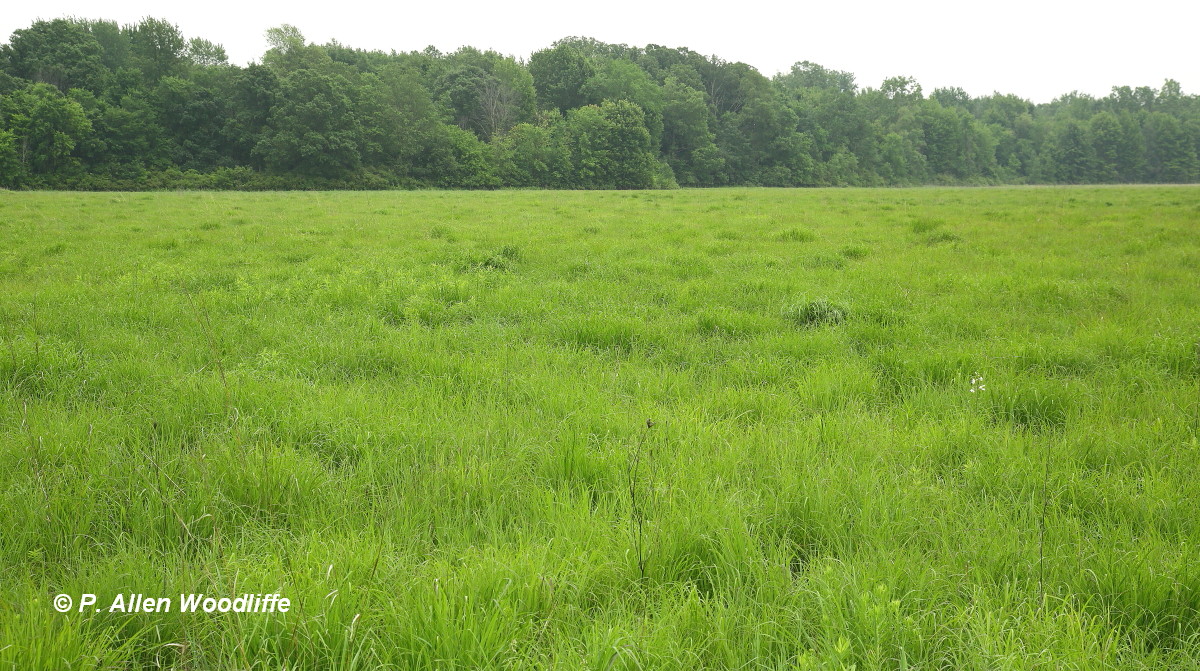
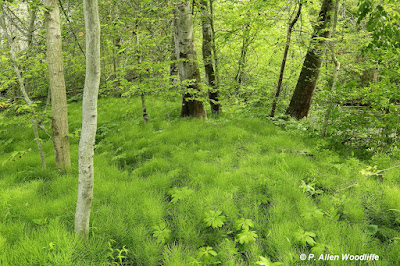
I have always been intrigued with forested habitat. There is always something new to see, even if one travels the same route for many years, and therefore provides so many photographic opportunities. It can also be an inspiration, a balm to the soul, especially considering the turbulence that life throws you from time to time. The exercise and fresh air is always a healthy thing as well.
I've had a lot of fun photographing woodlands, with varying degrees of success. I have been asked, from time to time, about helpful hints for successful forest photography. So with this post, I will attempt to share some of the things I have found to result in the kind of photos I am fairly happy with.
First of all, there isn't necessarily an absolute right and wrong way to capture forest photos, other than to make sure you have a camera with you, and it has enough battery power as well as a flash card of some type. One of the ABCs of photography is Always Bring Camera. Of course with the way phone cameras are developing these days, and most everyone will have a phone with them, even those cameras can take some fairly impressive pics, but may require a bit of processing to get the most out of them.
Successful forest photography can be spontaneous, but it can also benefit from a bit of planning: what will the weather be like, what lens(es) should I have, do I need a tripod, etc.
Many folks will go out to a woodland trail on a bright, sunny day, with some great weather for hiking. However that can present challenges for a good photo. The camera averages the light, so the area in shadows is almost totally dark, and the bright spots with all the colour may be overblown. The next photo is an example of this.
(As always, click on the photo for a larger view)
I waited a bit and a few minutes later, a cloud came over the sun, giving much more even lighting, and a more satisfactory result.
If you can focus on an area where all or most of the light is the same brightness, that often resolves the issue of extreme contrasting light. But one has to be open to looking for a different perspective.
Look up at the sky.....
...or at your feet.
Photographing the seasonal changes can be especially effective if you take a series of photos from the same vantage point. Here is an example of a series along the Spicebush Trail at Rondeau.
 |
Late April
|
 |
Early May
|
 |
Late May
|
 |
Early October
|
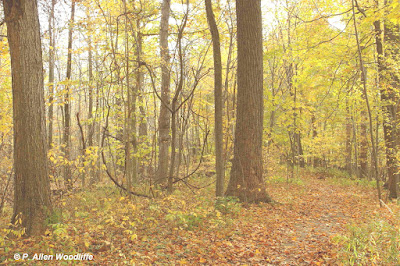 |
Early November
|
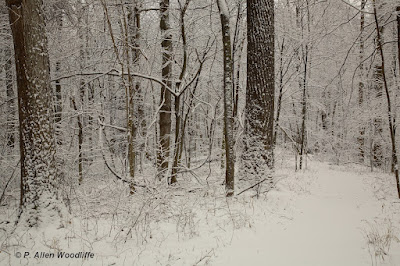 |
| February |
I used to do this at a few spots back in the film days. When giving a presentation using slides and a dissolve unit, one slide would blend into the next, and one could see a whole season unfold on the screen in just a few seconds.
Here is another sequence, from Bennett Ave at Rondeau.
 |
| May |
 |
| July |
 |
| October |
 |
| November | |
 |
| December |
Here is a comparison of a great view in Clear Creek Forest Provincial Park, from essentially the same vantage point.
 |
| May |
 |
| October |
This next photo was taken the same day as the previous one, but showing a different perspective of the same scene.
Another cool thing is to take a photo of the same place, but several years apart, to show the changes. The first one was taken in late May of 2008, showing a nice layer of Mayapple growing beneath a canopy of American Beech.
With Rondeau being a sandspit and subject to the changing water levels, the last few years have caused some changes to the ground layer of vegetation. This next photo was taken in early June, 2021, from essentially the same vantage point. One can see a few Mayapple leaves, but the predominant vegetation is that of Horsetail, a species that thrives in damp to wet situations. It clearly shows the results of the change in the water table.
Sometimes you can find a spot where most things work well at eye level.
But sometimes if you want to show the height of the trees from a fairly close-up vantage point, there can be some minor challenges. This next photo was taken with a 24mm wide angle lens. The large tree on the left is a Tuliptree, and in real life is quite straight. However it shows an unnatural curvature, the typical effect of a wide angle lens at a close distance.
This next image was taken at the same vantage point, and the camera was on a tripod. However I switched the 24 mm wide angle lens to a 24 mm tilt/shift lens, which creates a straighter tree.
While the tilt/shift lens works well for vertical images, it can also work well for landscape images, as the next pair show. In the first photo, this normally straight Tuliptree, the large one on the left, shows an unnatural lean. The large Tuliptree down the road a little way, is straight enough.
 |
24 mm wide angle
|
Here the largest Tuliptree is as straight as it is in real life.
 |
24 mm tilt/shift
|
The extra cost and fuss using a tilt/shift lens isn't for everyone, and in lots of cases, isn't necessary, but it can be helpful depending on how critical one wants to be.
Sometimes keeping an eye on a certain spot can work well, as in the following case. The endangered Red Mulberry occurs in a few places at Rondeau. It is slow to develop its leaves in the spring, and is one of the last trees to drop its leaves in the autumn. In this next photo, most all of the trees and shrubs have had their leaves turn to a golden yellow. Not so with the Red Mulberry. Its large leaves are distinctly green and are nicely highlighted here.
Often when I am photographing a forest, I look for an interesting trail layout. Curving trails are always more interesting to me, and here I've captured the winding trail along the Tuliptree Trail at Rondeau.
Foggy, misty days will bring out a different mood than those bright, colourful days. The foggy day here in early December, along with the curving trail, and a person shown for perspective can be satisfying. Here Marie wearing her yellow coat is taking a photo a little farther along the trail.
A winding trail through the woods invites one along for the walk and view.
This Tuliptree trio is always a highlight on this trail. But rather than just enjoy it at eye-level....
....look up!
If you want to subscribe, or unsubscribe, to Nature Nuggets, send an email to: prairietramper@gmail.com