I've been giving my camera equipment, as well as myself, a good workout lately, but being careful not to get too caught up in the heat and humidity. Rondeau gets a lot of my attention, as most readers will know. And this is a wonderful time to find late summer flowering plants, as well as a multitude of different insects that come to visit. Here are some of the highlights, starting with plants. American Ginseng is an endangered plant, and I have been keeping an eye on a few individuals as they progress through the season. This first photo shows a plant with developing seeds. A short time after they turn red, they will fall off.
One that is coming into peak form right now is American Hog-peanut, next, a member of the legume family.
A Carolinian species that likes rich woods is next. It is known by several common names, the main one with which I always thought was appropriate is Richweed (
Collinsonia canadensis).
There are quite a few along the Rondeau Road area, in various stages of development.
A colourful, but not native plant is Creeping Bellflower. It is not widespread.
One that I thought was quite late to be in flower, but was in fine condition, is Flowering Spurge. It often is found in open areas, such as prairie or savanna, but this one was along a heavily shaded road edge.
Great Blue Lobelia, next, is fairly widespread and distinctive.
 |
| Indian Tobacco |
 |
| Lopseed |
A plant that I am always on the hunt for, although knowing its unpredictability in flowering makes it a challenge even at the best of times, is this little orchid, the Nodding Pogonia. It is an endangered species, with the only known location in Canada being at Rondeau. It is often very difficult to see, as this next photo shows. I photographed this with a 100 mm macro lens at a distance of about 6 inches! It can easily be missed, or worse, stepped on, so its location is not advertised, and even I seldom go out unless I think the weather has triggered its flowering, when it is more noticeable.
It looks a little bit showier when it finally opens, for a day.
 |
| Pale-leaved Woodland Sunflower |
Another endangered species is next. It is Rough Blazing-star, and generally considered to be a prairie or savanna species. It occurs in a couple of savanna type habitats at the park.
Related to the Creeping Bellflower, shown earlier, is this native one, known as Tall Bellflower.
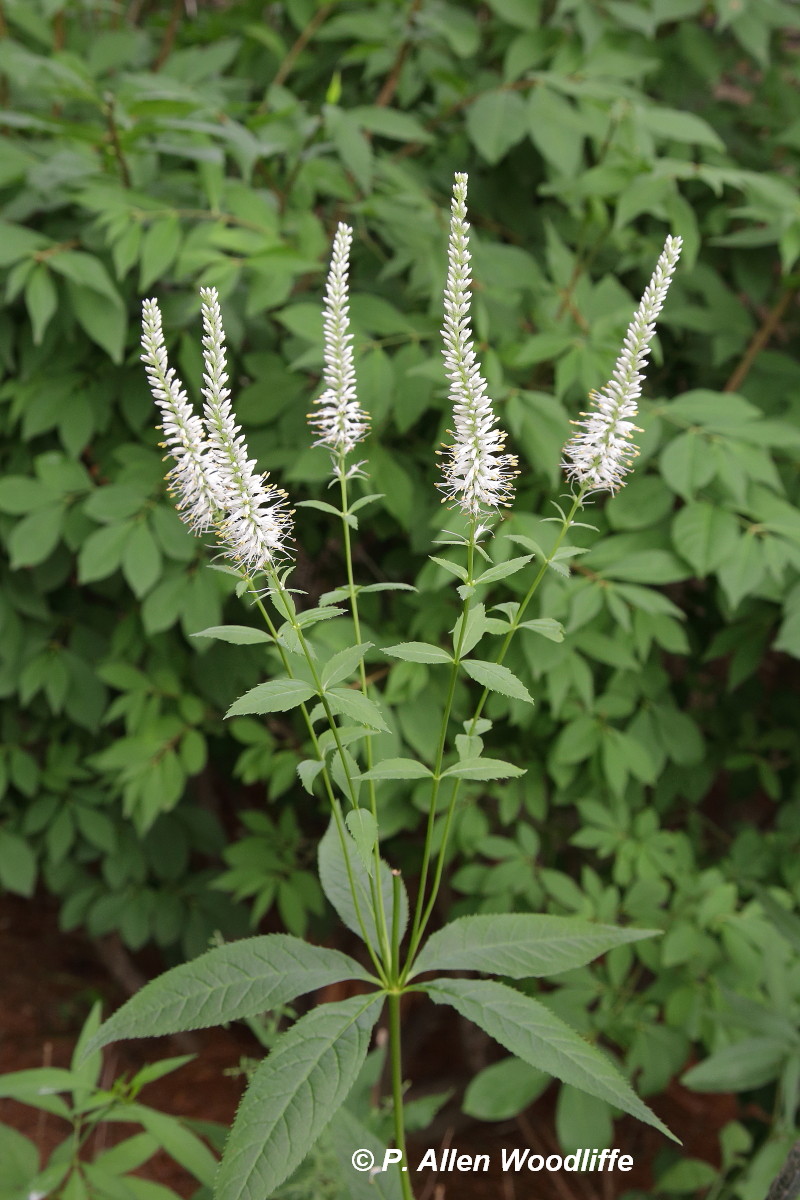
And a tall flowering plant but with tiny flowers is next: White Vervain.
 |
| Wood Nettle |
And finally, Woodland Sunflower. It differs from the Pale-leaved Woodland Sunflower, shown previously, in that the base of the leaves are tightly clasping the stem.
And there are various insects to see in a variety of places.
 |
| Ailanthus Webworm Moth (not native) |
 |
| Fall Webworm Moth caterpillar |
Next is a member of the Leafcutter Bee group. Specific species is yet to be determined.
 |
| Lemon Cuckoo Bumble Bee |
 |
| Northern Paper Wasp |
Next is a Perennial Mason Wasp, an endangered species.
 |
| Pitted Mason Wasp |
 |
| Pure Green Sweat Bee |
 |
| Spurred Ceratina |
On one occasion when I was out exploring I came across this chunky looking caterpillar. It is a Tulip-tree Silk Moth, the first time I had ever seen this caterpillar.
It was partially wrapped up in this dead American Beech leaf when I first discovered it.
For anyone who has been out roaming the park in recent weeks, you might have noticed a lot of Spicebush shrubs looking very unhealthy. Some just show signs of a problem with a few of the outer leaves....
...while others are completely dead, or at least appearing so.
The cause is somewhat inconclusive at this point, but there are several things that may be happening. The most likely one is something called Laurel Wilt. Regardless, it is quite widespread at Rondeau, especially towards the north end. Hopefully the cause can be determined, but it is unknown what a solution might be, if any exists. I plan to discuss some of the major forest changes at Rondeau in more detail in a future post.
Also a reminder is that both my books, Life On A Sandspit, and Natural Treasures of Chatham-Kent, are available at the following locations:
-Friends of Rondeau Bookstore (inside the Rondeau Visitor Centre)
-Bayview Market, just outside the Rondeau gates
-Mindful Market and Eco Hub, main street, Blenheim
-Mitton's Jewelers, main street, Ridgetown
-Book Brothers, King St E, Chatham
If you would like to subscribe, or unsubscribe, to Nature Nuggets, send an email to: prairietramper@gmail.com