Showing posts with label Black-necked Stilt. Show all posts

Thursday, 12 May 2022

Bird migration continues, with regular, rare and very rare sightings

 Now that we have entered the middle third of May, birders expect lots of bird action. While it seldom is as active as most birders would like, there has been a steady stream of birds arriving.

I have been to Rondeau a couple of times lately, of course. The lake effect of the wind off the water keeps things cooler than inland, and so the leaves on the trees have not developed as far along as trees inland. Therefore the birds even high in the trees are a little more visible.

Almost all of the expected warblers, vireos and flycatchers have been recorded, although not in very great abundance. Here are some of the ones I've been able to capture on digital film so far.

 While looking for a reported Kirtland's Warbler, along with several dozen other birders, this Cape May Warbler obliged at the top of a low red cedar. The Kirtland's never did show up again.

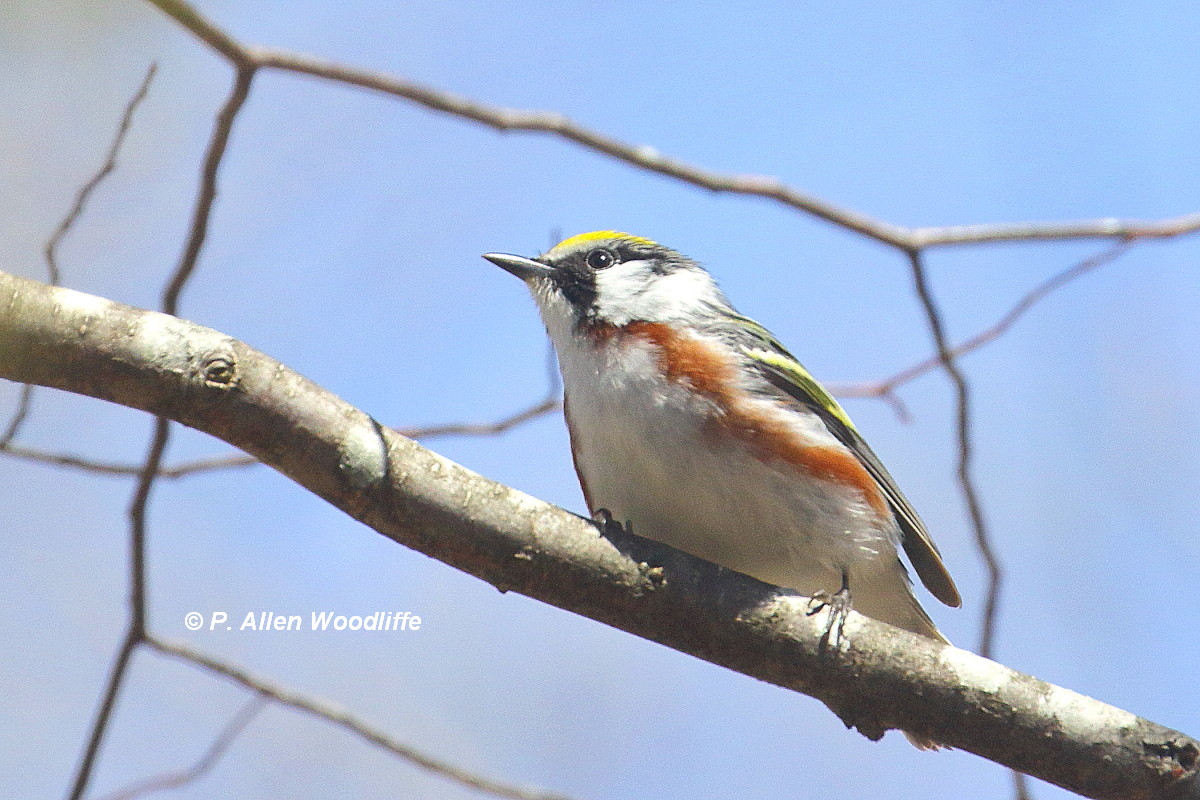
Chestnut-sided Warblers were one of the more common warblers in the last few days.
Magnolia Warblers are beginning to increase in numbers.

Nashville Warbler
One of the warbler highlights of spring, and throughout the summer breeding period, is to see a Prothonotary Warbler. They never cease to draw oohhs and aahhs from any birder observing one.
Only the males have shown up so far, although the females will be arriving soon if they haven't already. Rondeau happens to be the first location in Canada where this species was discovered nesting, and it has remained the main stronghold for this very rare species.
Aside from warblers, things like Blue-gray Gnatcatchers are widely scattered. They are constantly on the move, and get into a variety of postures as they attempt to glean insects from the twigs, etc.
Great-crested Flycatcher is a breeding flycatcher at Rondeau.
Lincoln's Sparrow, on the other hand, is not a breeding species, and they are typically quite furtive along trails and forest edges.
Northern Cardinals are not uncommon, but when one pops up for a photo, I will take it. They are heard regularly throughout the park.
White-throated Sparrows were around by the dozens, even the hundreds, for a few days. Their numbers seem to be dropping now, as they have moved on to their more northern breeding locales. This one was enjoying some morning sun on an otherwise cool morning, and allowed me to approach fairly closely.
Wood Thrush is not a common species, and due to its overall decline in Ontario, is considered a species at risk. Their flute-like calls are always nice to hear in the quiet of evening.
On one occasion, I was heading down a trail to get GPS coordinates of a rare orchid that I had discovered a new location for a few days earlier. I noticed this Turkey Vulture preening and soaking up some early morning sunshine.
On another trail, I heard the distinctive churring of a Red-headed Woodpecker, and located it on a dead tree not far away. It seemed to be staking out its territory, checking out some holes in the tree, and otherwise looking quite at home. While this species is on the decline, the numbers reported at Rondeau this year seem to be a bit higher than the past few years, so hopefully it is a good sign.

American Woodcocks have been back for several weeks, and are well underway in the nesting process. They rely on the cryptic coloration, and so allow quite a close approach.

On sunnier days, one has to be vigilant regarding where one is walking. This Ribbon Snake was on Harrison Trail, and I could have easily missed it.
It is a species at risk, and although it looks generally similar to the much more common Eastern Gartersnake, can be told via its more distinctive yellow lines, and the small white patch in front of the eye.
Red Trilliums are starting to be in good bloom these last few days. They are typically in flower a bit earlier than White Trillium, shown following, and are also starting to appear rapidly in the considerably warmer temperatures of late.

I made a brief stop at Bannerstone Conservation Area, just north of Rondeau. I saw a Bay-breasted Warbler, normally a species that shows in the latter part of the warbler migration...

....and the Tree Swallow boxes look like they have been claimed by some for this season.
I got wind of a pair of Black-necked Stilts being at the Blenheim Sewage Lagoons yesterday, so of course I decided to stop in and look. Sure enough, along with numerous Dunlin, Lesser Yellowlegs and a single Wilson's Phalarope and such, there were the two stilts.

 Quite a few birders had already seen them during the day, but they still allowed a couple of distant photos. These are cropped quite a bit. This is a species that normally will be found in the mid-west, but occasionally show up here in southern Ontario on migration, much to the delight of birders.

The male has a completely black back....

...whereas the female has a brownish back.

I've also spent a bit of time at St. Clair NWA where the large managed wetland complex is a wonderful and accessible spot for finding marsh birds.

Common Yellowthroats are, rather common, although one is more likely to hear them than see them. On occasion a male will sit up in an open spot at the top of the cattails, or in this case the invasive Phragmites, and belt out its call.

Black Terns are a somewhat declining species. On this day, I saw about 18, with many of them flying north along the lake shore so were likely continuing their travels to their breeding grounds. A few will likely remain. They fly a bit erratically, so getting photos is not an easy thing to do!


Eastern Kingbirds like the openness along the wetland complex edges.
Blue-headed Vireos were using the shrubby edges to rest and forage before moving northwards.....
....an Eastern Wood-pewee was also there, but just using the shrubby edges for resting and feeding as well.
Warbling Vireos, on the other hand, like the openness of the cottonwood edges and at least a few will likely stay to nest.

The next few days look quite promising for bird migration, so I plan to be out a few times putting my camera to good use!


If you would like to subscribe, or unsubscribe, to Nature Nuggets, send an email to prairietramper@gmail.com


Friday, 28 February 2020

Some of the even rarer migrant birds of the Rondeau checklist area

Before I get to the mega/ultra rare migrant birds of the Rondeau checklist area, there is still a group of birds that are merely quite rare, and in fact I expect a number of relatively keen birders of Ontario have seldom if ever seen them. As in the past post, the ones on this list below are based on my opinion, not on any official list. Some will be on the Ontario Bird Records Committee (OBRC) list of birds requiring documentation.

This first species could arguably be in the previous post. It wasn't that long ago when seeing one in southern Ontario was quite a noteworthy event, and it still is to some extent. However the population in Ontario has been expanding from its more limited northwestern Ontario range, and in the last year or so has been documented nesting on one of the islands in the western end of Lake Erie. Both of these birds were photographed in the Erieau area.

Harlequin Duck is still quite rare, although once in awhile one or more can be found staying around for a few weeks such as these two that were off the tip of Rondeau and quite visible from Erieau in the winter and very early spring of 2016.
 Hudsonian Godwit is a pretty impressive large shorebird, only seen occasionally on migration. It nests in the north as well as the northerly prairie provinces. It is most frequently encountered at sewage lagoons later in the summer as post breeding birds are more likely to wander. It could also be included in the previous post of rare migrants, rather than in this post.
The Hudsonian Godwit's larger relative, the Marbled Godwit, shown next, nests regularly in the lower part of the prairie provinces and is not as commonly seen here in southwestern Ontario. The species is very seldomly seen in the Rondeau area. This bird was one I photographed from a kayak at Mitchell's Bay on September 24, 2013.
Staying with the shorebird group, the Black-necked Stilt is a western species found most often in the vicinity of prairie potholes. It seems they are most often seen in southwestern Ontario during the spring migration when they get blown off course. They don't stick around for long, however. There have been a few records over the years, and the pair shown next was photographed at the Keith McLean Conservation Area just outside of Rondeau in 2019. Most records are at sewage lagoons, but the high water and excellent shorebird habitat at KMCA was beneficial for birds and birders last year.
 A rare shorebird due to the decline of its migration and wintering habitat is this next one, the Red Knot. The one shown in the foreground of the next photo is an immature bird I photographed from my kayak along one of the sandy islands at the south end of Rondeau on Sept 27, 2012. It has a chunky body like a dowitcher, but with a relatively short bill. That is a Black-bellied Plover in the background.
 A small shorebird that may be more common than reports indicate is this next one, a Western Sandpiper. It migrates late in the season, and without careful study, could be passed off as the much more common Semiplamated Sandpiper. It was photographed at the Blenheim Sewage Lagoon in mid-November, and I had one on the Blenheim/Rondeau Christmas Bird Count at a mud flat at the south end of the marsh trail a few years earlier.
 Barred Owl might seem to be an odd one for this category. Nonetheless although it is not rare in most of Ontario, it is quite rare in the very southwestern part of Ontario. It shouldn't technically be classified as a migrant, although this one moved well south of its normal Ontario range and wintered at Rondeau. There hadn't been a record for Rondeau for more than 20 years until Josh, my birding partner, and I encountered this one on the 2018 Christmas Bird Count. It stuck around for a couple of months around the northern part of the park where the local squirrel population kept it well fed. Numerous birders attempted to track down this individual, and were mostly successful in finding it.
 Black Vulture used to be a considerable birding highlight in Ontario, but in the last decade or so this species has been seen in the eastern end of Lake Erie/western end of Lake Ontario on a fairly regular basis. I am only aware of 3-4 records for the immediate Rondeau area. The first one I came across was feeding on the carcass of a Virginia Opossum, so this generally southern species of vulture probably felt quite at home feeding on a familiar carcass. This bird was seen just northeast of the park boundary, but only for a couple of days. I photographed it on March 3, 2009.
 Bohemian Waxwings are more common in the Boreal forest region, and seldom have any need to come as far south as the Rondeau area. I have only seen them here on a couple of occasions in the winter. This bird was photographed along the McGeachy Pond trail, on Dec 3, 2016.
 Cave Swallows are somewhat erratic. If they are going to be encountered in Ontario, it is most likely to happen in the mid to late autumn when the weather conditions help them along. For awhile they were on the OBRC list requiring documentation, but for a short time were taken off due to the regularity of them being seen in the autumn. Their occurrence has dropped off so one again the OBRC is requesting documentation. This bird was photographed flying over Erieau on Oct 31, 2010, where a few had been seen the day before and they spent the night under the docks of the fish tug harbour area.
 Eurasian Collared-Dove shouldn't really be called a migrant. It was introduced from Europe a number of years ago and has been gradually expanding its range in North America. Nonetheless, it has only been recorded in the Rondeau area on a couple of occasions. This one was photographed at Rondeau along the southern end of Lakeshore Road on September 24, 2017.
 Fish Crow has sort of the same story as the Black Vulture, above. A small population of this more southerly crow has become established in the Niagara peninsula area and a bit beyond. On occasion the species will show up elsewhere. I only know of a couple of records for the Rondeau area. This one I photographed at the south end of the South Point Trail on May 29, 2011.
 Laughing Gull, shown here in the lower middle of the photo, is quite irregular. The bird here is a first year bird which showed up with a large group of summering gulls out along the south beach of Rondeau, back in the early 1980s. It is scanned from a slide, so not the best clarity, and it does blend in with the gravel beach making it even more difficult to see clearly. There are a few records for this species over the years.
 Neotropic Cormorant has been showing up a bit more in the last few years. One might get caught up with a movement of the very abundant and larger Double-crested Cormorant, and end up well out of its normal range. It is more abundant along the southern and eastern shores of the Atlantic. There are at least 3 records for the Rondeau area. The one shown here, on the left of the two Double-crested ones, was in the Rondeau/Erieau area off and on for a few days in May of 2019. I photographed it on May 23.
 Townsend's Warbler is a western species that occasionally gets blown way off course. For some reason Rondeau is a place where it is most apt to show up in Ontario, as there are 5 records, more than any other location in Ontario. I found the park's first one in the spring of 1983, near the west end of the old Dillon Trail. Only a handful of birders who were in the park got to see it, as it was before any kind of bird alert was available and cell phones were non-existent. Word of mouth was the only way to advertise its presence. All of the records are either in the early spring or the late autumn. The one shown here I photographed on Nov 11, 2017 in the Bate's subdivision just north of the park. There were a lot of birders that came to see it, and since it stayed into December, a lot of birders arrived again to get it on their winter list. The bird even stayed around long enough to be added to our Christmas Bird Count list.
 Townsend's Solitaire is a species that is relatively common in the montane region of western North America. On occasion, one ends up heading east rather than southward or northward on their migration. There have been very few records at Rondeau, but when it shows up, will be found either in spring or fall. This one was photographed along Lakeshore Road just north of the Visitor Centre on April 30, 2010. It was first recorded about a week earlier at the south end of Lakeshore Road, but was not seen during the in between days.
Even rarer birds will be featured in a future post!


Friday, 17 May 2019

Black-necked Stilt, Summer Tanager, Endangered Species Act at Risk, Other bird highlights, Part II

I will get to the Warbler Parade eventually, but in the meantime, there are too many other things to post about!

The Keith McLean Conservation Lands continues to be a draw for so many birds. There are currently at least 207 species of birds recorded for this relatively small site, which has only been accessible for the last 5 years!

Just a few days ago a Glossy Ibis appeared. And yesterday came the report of a pair of Black-necked Stilts. Of course the very high water that has flooded some of the fields along the creek system has created super habitat for such birds. In fact there are typically more shorebirds in both numbers and diversity in these flooded fields than there has been at local sewage lagoons, which are traditionally a hot spot. Once the field dry up, that will change.

Needless to say, the presence of these stilts, normally a mid-western species, caused a lot of interest amongst the throngs of birders in the area. They weren't always close by, or in the best light, so in order to capture the photos below, I and several other photographers had to approach very slowly and carefully along the edge of the creek system in the opposite direction of the road.
 This is a pair, as the male has the darker, black back and the female has a slightly browner back.

This is as close to the boundary of Rondeau that I am aware this species has come. I have seen them twice before within the park's checklist area, but one of those times was at the Ridgetown Sewage Lagoons and the other time, just last year, was at the Blenheim lagoons. If the birds like this spot, it is always possible, but not terribly likely, that they may even attempt to nest!

Not nearly as rare as the stilts, but just a 'regular rarity' is Summer Tanager. One or more occurs almost annually any more, but still draws a lot of attention. Just this last week or so, a young male has been seen in the vicinity of a very active cottage feeding area in the park. There are several hummingbird feeders as well as various suet, niger, sunflower and mixed seed feeders spread out along the Lakeshore Road side of the cottage, so there is a lot to attract birds. Baltimore Orioles and Rose-breasted Grosbeaks are common, as are numerous grackles and other blackbirds. The tanager has to be persistent to get anything it seems, but it does manage to get sustenance from both the suet and one of the sunflower feeders.


Endangered Species Act: At Risk
On another topic, and a very important one, it is interesting to know that today, May 17th, is Endangered Species Day, at least in the USA. It is ironic that here in Ontario where we have a relatively recently produced Endangered Species Act, 2007, it is undergoing a major revision. Not that it couldn't have undergone some tweaking to make a few improvements. But if a casual reader reads the general statements by politicians within the conservative government currently in power, one might think the proposed changes are an improvement. I will not refer to them as progressive conservative, the official name of the party, since at least based on environmental issues it is anything but progressive. In fact in spite of the wording of the proposed revisions it is a very poor attempt to make one think the gov't knows what it is doing to benefit the endangered species. In reality it is making the current Act virtually meaningless, giving politicians almost carte blanche authority to remove any protections of legislated endangered species and their habitat.

If you are interested to see the list, along with photos, of the current species that are Endangered, Threatened or Special Concern under the Act, check out this site. Over the years when I was working within MNR on behalf of such species at risk, I contributed many photos. I think at last count I had over 40 photos of these species on this link, a few of which follow here.

Cucumber Magnolia
Red Mulberry
Drooping Trillium
Nodding Pogonia
Wood Poppy
Eastern Hog-nosed Snake


If you are concerned about the future of Ontario species at risk, contact your MPP and strongly contest what the conservative gov't is trying to do by essentially gutting the current Endangered Species Act. One way to make your voice heard is through this link.

Lyme Disease Awareness Month
And finally, better late than never, May is Lyme Disease Awareness month. Ticks that are carriers of Lyme Disease are out in full force in many areas of Ontario and beyond. I have written several blog posts on the topic, since I have contracted Lyme Disease 6 times over the past 42+ years. The most extensive post can be found here. If you want more information, check it out, or one of the seven other posts (just go to the right hand side of the post page and under the heading 'Labels', scroll down and look for Lyme Disease). If you or your pets spend any time out doors, especially in the April-November period, please ensure you take extra precautions to reduce the likelihood of contracting this disease.

It is the Black-legged Tick, a.k.a. Deer Tick that is believed to be the primary carrier of Lyme Disease. It is about one-quarter to one-half the size of the more common American Dog Tick, a.k.a. Wood Tick.
Black-legged Tick
American DogTick
Be safe!