The season is having a hard time making up its mind! It is technically, still winter, and will be for another few days, but usually by this time hints of spring are a little more noticeable.
Some species of waterfowl that were noticeable by their absence over the winter, have arrived, presumably enticed by some early spring-like weather a couple of weeks ago.Things like Northern Shoveler.....
...and American Wigeon, are pretty regular now.
Now that the ice is gone from the local water bodies, there are thousands of diving ducks scattered across the open water. Redhead, scaup species, and Canvasback, shown next, are the most abundant.
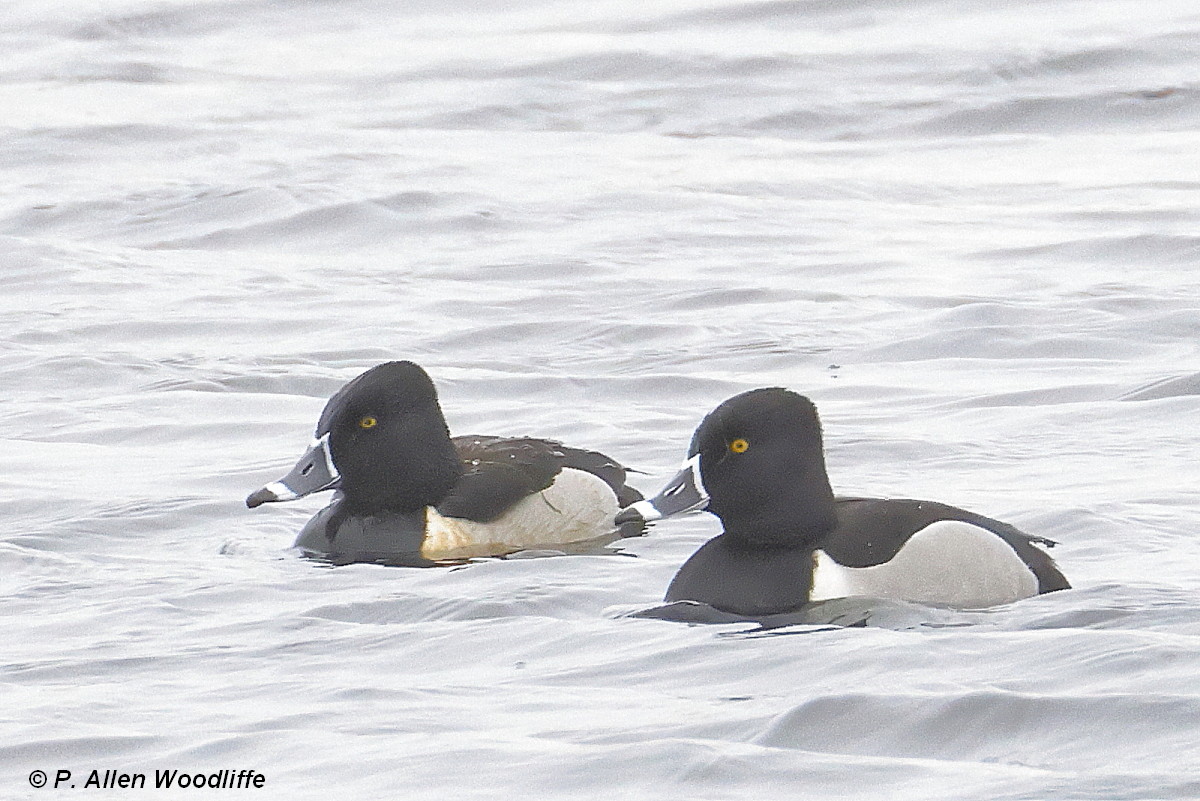
Ring-necked Ducks are well represented but in much smaller numbers, sometimes even on ponds.
With the bit of a warm spell in the last couple of weeks, even shorebirds are beginning to appear. Killdeer are, of course, one of the first to show in spring. In the right mudflat types of habitat, it is not uncommon to see up to a dozen or more over the course of an outing.
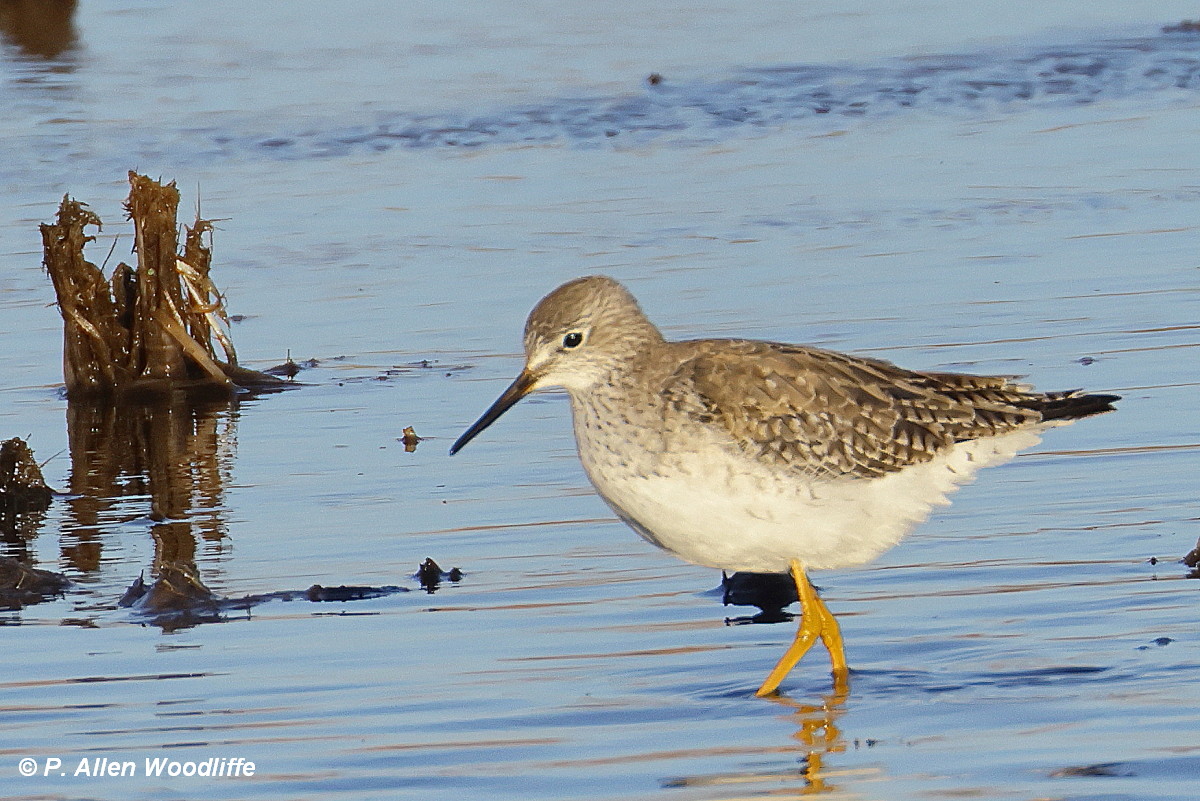
Definitely early is this Lesser Yellowlegs, seen periodically in the Erieau/McGeachy Pond area.
If conditions are right, one or more Wilson's Snipe may be present all winter, but with last autumn's dryness leaving some of their regular haunts quite uninhabitable, the species was completely absent as far as we know, since last December. But this one has appeared in the last few days at the Keith McLean Conservation Lands. It can be quite cryptic and, from a distance, it blends in so well that at first I missed it. When I checked more closely a few minutes later, scanning with my binoculars, I picked it out, and was able to get a photo that, heavily cropped, allows it to stand out nicely.
On one of the same days, I saw this Wooly Bear caterpillar crossing my path. It is something that almost everyone has encountered at this caterpillar stage, anytime from late autumn to early spring.
Less frequently encountered is what it looks like as an adult, a beautiful Isabella Tiger Moth, which readily comes to black lights.
On another warmish day, a Leopard Frog had emerged. Unfortunately, it was still cool enough to be unable to escape the impact of a wheel.
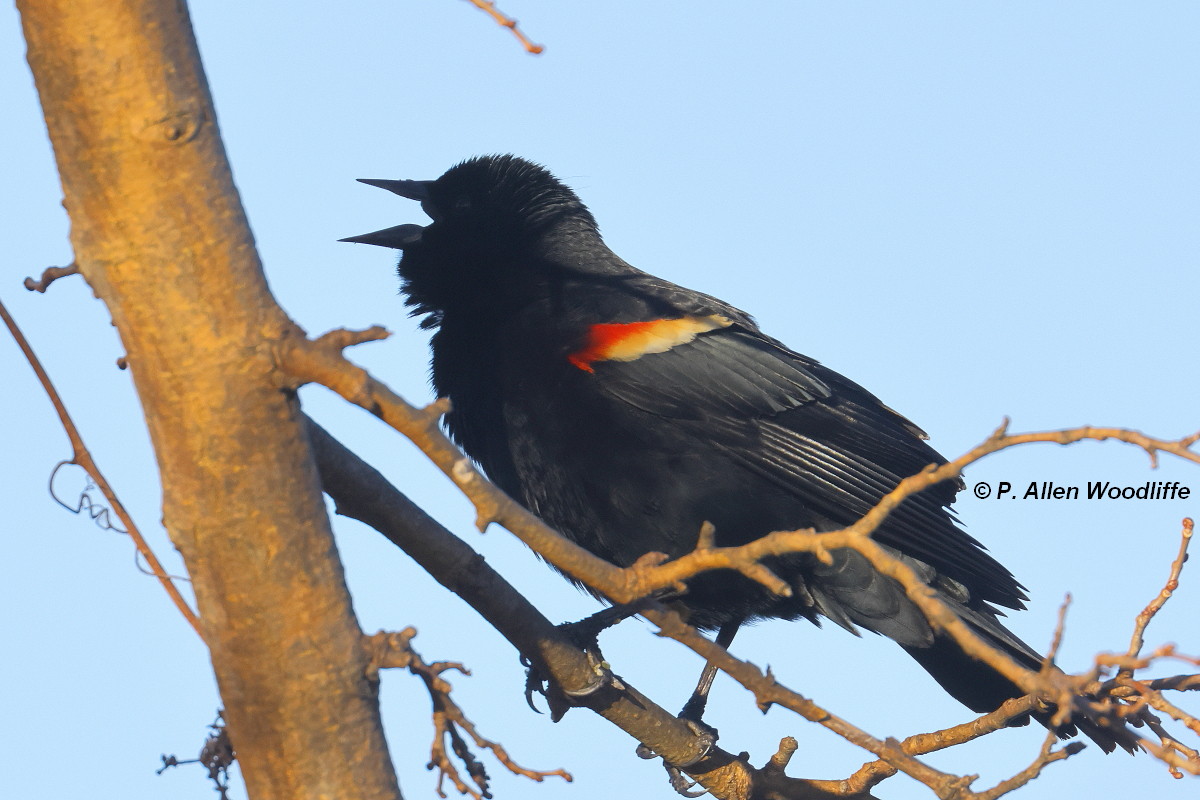
Blackbird types are showing up in large numbers, most notably Red-wings, which are staking out territories in the wetlands of the area. The females will be arriving in larger numbers very soon.
Far less abundant are Rusty Blackbirds at the moment, although their numbers will hopefully increase over the next few weeks. They will continue on to northern habitats of the Boreal Forest area for their attempts at successful nesting.
Horned Larks were almost non-existent over the month of January, but by February they were showing up in good numbers, scattered throughout the agricultural landscape. Some will migrate up to the sub-arctic lowlands, and nest in the tundra there. But many will stick around the fields of southern Ontario and if they are lucky, get a family raised and fledged before the agricultural activity gets in full swing.
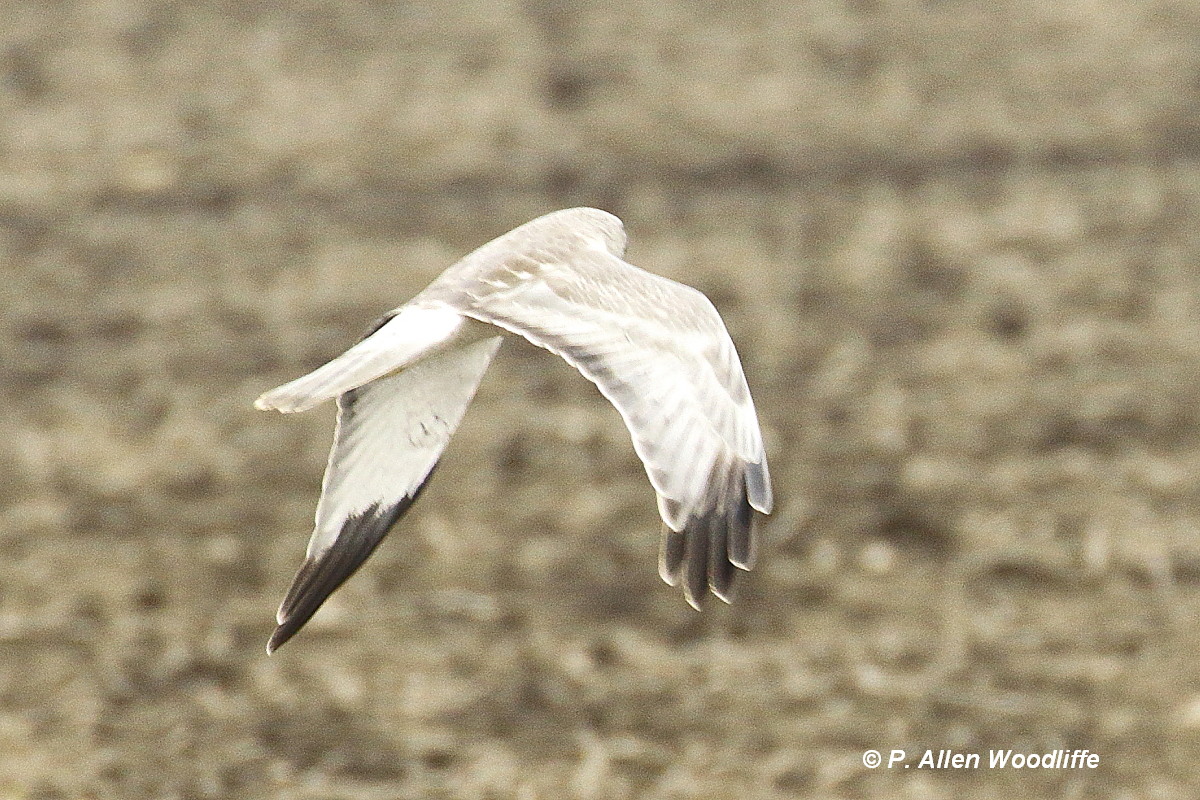
Northern Harriers are more plentiful on the landscape. Photo opportunities are not easy to come by, but this one, a male sometimes known as a "Gray Ghost" was somewhat cooperative in that it allowed me to follow it from along the road as it swooped over the fields, and I managed to keep it in reasonable focus in spite of its erratic flight.
Snowy Owls have been noticeable by their absence this season. Last year they were quite abundant, with a record 23 individuals seen on the local Christmas Bird Count. This year it is quite a different story, as I have seen less than 10 individuals all winter. So I was pleasantly surprised to see this individual along a grassy drain, although well out in a field. A careful approach enabled me to get this greatly cropped photo. But I will take it!
It eventually must have thought I was getting too close (but probably at least 150 metres away) and decided to head out farther into the field.
It is unusual to have seen at least three species of shorebirds quite recently yet still seeing a Snowy Owl, but late winter can certainly be highly variable, as this present season is indicating. What will the next few weeks bring???
If you would like to subscribe, or unsubscribe, to Nature Nuggets, send an email to: prairietramper@gmail.com