Showing posts with label Slender Bush Clover. Show all posts

Saturday, 4 June 2022

Promoting Prairie

 Today, June 4, is National Prairie Day. At least it is in the USA, but hasn't been recognized as such in Canada yet, which is unfortunate since tallgrass prairie is a significant habitat type throughout many provinces. Regular readers will know that I am a huge fan of tallgrass prairie.

The first three photos are representative of some of the 100+ prairies I have explored in the mid-western US, mostly in Missouri.

Diamond Grove Prairie

Golden Prairie

Treaty Line Prairie

These next two are from southwestern Ontario.

Island Prairie, Walpole Is
The following photo is of a small patch that occurs at Rondeau, and features an impressive stand of Butterfly Weed. It could arguably be called part of a Black Oak Savanna. The large Black Oak with its spreading limbs certainly fits the savanna theme.

Prairies are becoming increasingly recognized for their value beyond the species diversity they support. Certainly grassland birds are becoming quite rare, as are some of the multitude of invertebrates inhabiting them. But even more so, old growth grasslands, which means grasslands that have never been plowed, store huge amounts of carbon. An old growth grassland has enormous amounts of herbaceous material below the surface. Some high quality species have root systems that go 6 metres or more below ground.

Some of the rarest plants in Ontario occur in tallgrass prairie, or the closely related oak savanna. This first one, Tall Green Milkweed, only occurs in one location in Ontario.

Eastern Prairie White-fringed Orchid is technically not limited to prairie, but usually has its greatest abundance there. It is a Species At Risk (SAR).
Closely related, but now gone from Canada, is the Yellow-fringed Orchid.
Giant Swallowtails, at one time considered a candidate as a SAR is seen feeding on Ironweed, a species limited to prairies.

Ironweed
An endangered species and therefore a SAR, is Slender Bush Clover.
Rough Blazing-star is a SAR.
Its more common relative, Tall Blazing-star, can be quite dominant in some limited prairies.
Another orchid, Purple Twayblade, is a SAR.
Pink Milkwort, next, is limited to only a couple of prairie sites in Ontario.
Goat's-rue is also a SAR, being limited in Ontario to only a couple of places.
This next photo shows one of the largest populations of a rare prairie species, Colicroot. Unfortunately this prairie patch was completely destroyed to allow for an expanded highway development.
A Cylindrical Blazing-star meadow graces some of the beach dune area of Rondeau. Although technically not a tallgrass prairie in the normal sense, it is a variation of it, and supports mostly tallgrass prairie plant species.
Prairie and savanna can occur in the same area, as is the case for this scene from Ojibway Prairie Provincial Nature Reserve in Windsor, which features a tall candelabra type plant called Culver's root
A little more on the oak savanna side of things is this scene featuring a Black Oak savanna at Rondeau Provincial Park.

Tallgrass Prairie and Black Oak Savanna: two of the most endangered habitats in Ontario. I encourage you to get out to explore and appreciate them!


If you would like to subscribe, or unsubscribe, to Nature Nuggets, send an email to prairietramper@gmail.com


Saturday, 4 June 2016

National Prairie Day

The first Saturday in June has been declared National Prairie Day. At least that is the case in the USA, but Canada has not yet designated it as such. But since tallgrass prairie is extremely rare in Ontario, and is in fact one of the most endangered ecosystems in North America, I am promoting National Prairie Day on this side of the border as well.

Tallgrass Prairie (TGP) harbours a huge number of rare, threatened and endangered species, as well as a multitude of species that have not even been evaluated yet, but are equally as rare. In fact you can hardly venture onto a TGP without stepping on them!

TGP was widely scattered across parts of southern Ontario, but has been greatly reduced. It is believed that less than 1% of the TGP present at the time of settlement still remains. Some of the best remnants are at places like Walpole Island First Nation......

 ....and Ojibway Prairie Provincial Nature Reserve in Windsor......
 ...and as far east as the Alderville First Nation in the Rice Lake area.

There is a host of colourful, and rare plants, including Colicroot (Aletris farinosa)
 Colicroot can be quite abundant in places. Sadly this prairie site below with dozens of Colicroot was destroyed in the process of building the new Herb Gray Parkway in Windsor. Some of the individual plants were transplanted to a more secure location. While it saves individual plants, the overall TGP habitat is nonetheless destroyed. But that is the topic for one or two other blog posts.
 Milkweeds are a significant part of a TGP habitat, including Prairie Milkweed (Asclepias sullivantii)
Prairie Milkweed
 ....and Purple Milkweed (Asclepias purpurascens), both of which are rare.
Purple Milkweed
 Butterfly Weed (Asclepias tuberosa) is not as rare, and a delight to come across in any setting.
Butterfly Weed

Some of the rarest plants include species like Eastern Prairie Fringed Orchid (Platanthera leucophaea)
 and Pink Milkwort (Polygala incarnata)

 and Slender Bush Clover (Lespedeza virginica)
 and Small White Lady's-slipper (Cypripedium candidum)

The previous four species are all legally Endangered. This next species, Yellow Fringed Orchid (Platanthera ciliaris) is extirpated, since it has not been seen in Ontario in many decades. I had to go to Ohio to photograph this one.

There are various groups of fauna typical of TGP that are also on the rare, threatened or endangered list, including Eastern Fox Snake.
 and Henslow's Sparrow. This image below is one of the first times I attempted to digiscope a bird.
The heart of the TGP region is in the midwestern USA. Some of the best remaining prairie landscapes are in Missouri. Some are national natural landmarks, such as Golden Prairie.

Golden Prairie

Some are state parks, such as Prairie State Park where the bison do indeed still roam.

Scissor-tailed Flycatchers are fairly common.

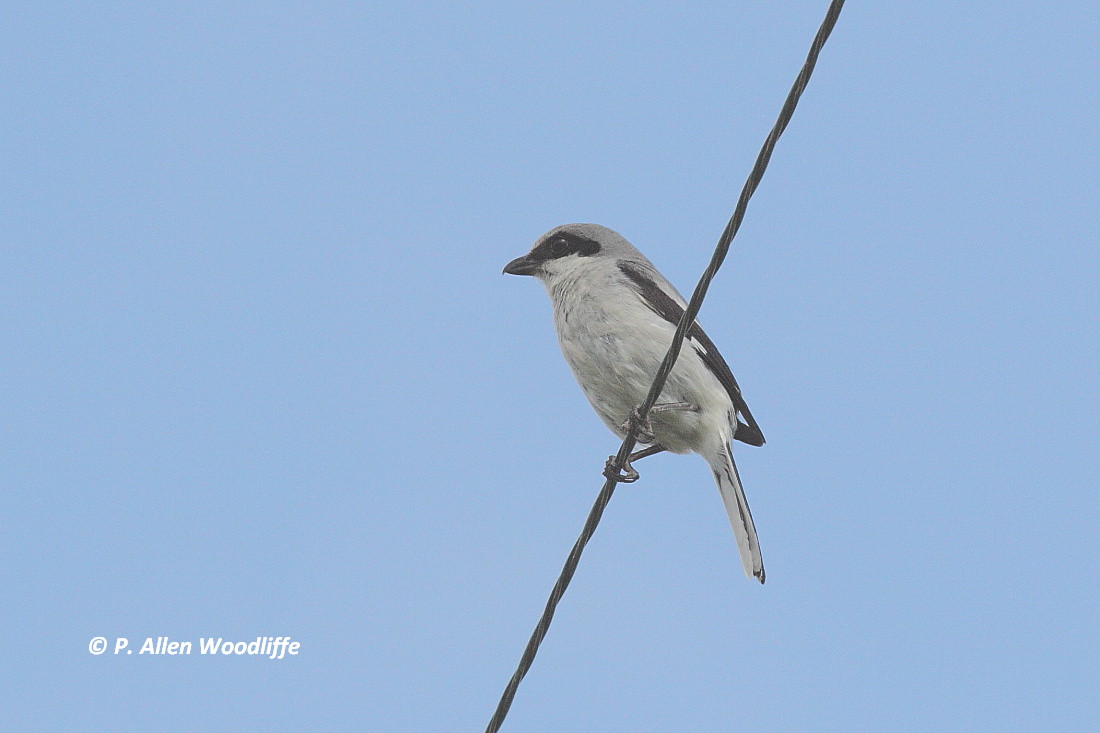
 Loggerhead Shrikes are periodically seen.
Loggerhead Shrike
 Dickcissels are abundant.
Dickcissel
 Many have interesting and appropriate names, such as Sky Prairie, Paintbrush Prairie or Gayfeather Prairie.
Sky Prairie
 Others have retained a name that represents a native connection, such as Wa-Kon-Tah Prairie or Kickapoo Prairie.
Wa-Kon-Tah Prairie

Tallgrass Prairies are amazing landscapes and warrant a high priority for protection. Get out and explore a prairie soon!