Wetlands are the place to be these days, it seems. On one occasion I went out to St. Clair National Wildlife area, which is often a good choice. There are thousands of individuals of waterfowl to be seen, partly because of the great wetlands, and partly because the hunting that takes place in adjacent wetlands, causes many of the birds to take refuge in this NWA. Of course at this time of year, Mallards are by far the most numerous.
American Black Ducks are building in numbers. At the time of settlement, they undoubtedly outnumbered the Mallards, simply because Mallards were a species more common to the west, and Am Black Ducks were more common in the wooded wetlands of the east. Now that the habitat is much more open and wooded wetlands have been converted to agriculture and other forms of development, Mallards are more abundant.
Along the trail I noted quite a few White-crowned Sparrows, both adult birds, shown first....
...and first year birds, shown next.
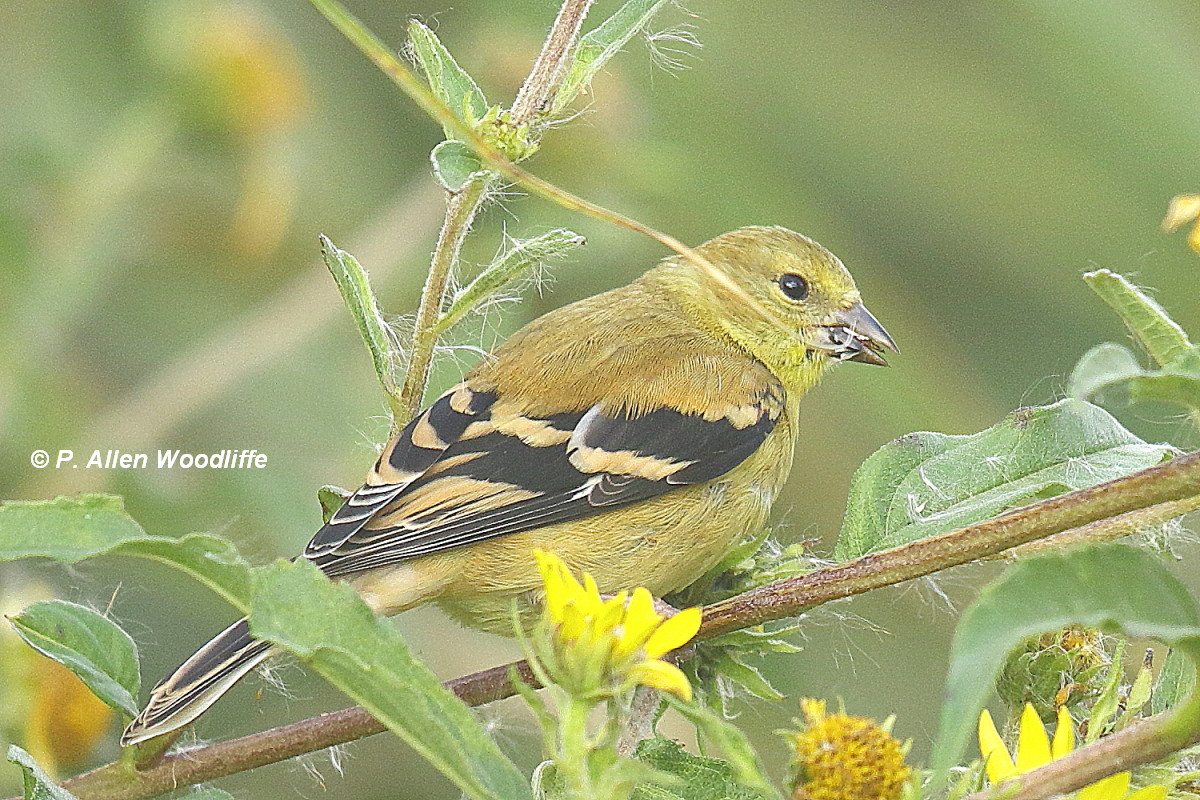
Lots of American Goldfinches were feeding on the numerous sunflower type plants along the trail.
Wood Ducks are quite common here as well, although at the time these flew by, the bland sky made for extra challenging photography.
At some other wetlands along Lake St. Clair, I had better success at getting more identifiable photos of Wood Ducks.
Not a wetlands species, but along one of the shrubby edges, I encountered this Eastern Phoebe. Again, the bland sky made it a challenge!
In other parts of the wetlands, I came across wading water birds. It was fairly breezy, and these two seemed to be content just to hunker down and face into the wind.
Great Egrets are quite plentiful in the local wetlands, and for good reason. They nest in some of the larger wetlands nearby, and there are lots of things for them to feed on locally. They are especially common in the non-hunted wetlands.
They are regularly seen even in some of the road side ditches.
Will we see them in the numbers and concentration that sometimes have occurred in the past?
If the water levels are low enough, it might happen again, but probably not this year. This setting occurred a few years ago, when the water was drawn down at SCNWA and this photo was taken from the access road at daybreak. There were over 100 birds in the overnight roost.
One morning while I was having my second cup of coffee, this Cooper's Hawk landed in the tree outside the window, with its breakfast (or lunch?) in its talons.
There had been some interesting waterfowl seen from the Erieau Marsh Trail on a couple of occasions: Brant and Greater White-fronted Goose. Neither are common locally, especially the Brant. Unfortunately they did not want to show themselves on a couple of occasions when I was out looking for them. I had to settle for a Trumpeter Swan, not a common species in this area.

I must admit that when I first saw it, I noted the yellow on the black patch of the bill. Many field guides would point out that Trumpeters do not have yellow on those lore areas, only Tundra Swans.
However the size of the swan, more or less the size of the nearby Mute Swan and much bigger than a Tundra Swan, gave reason for a more careful look.
In fact on occasion Trumpeters
can have a bit of yellow on the lores, and the size of the bird, in addition to the somewhat pointed white feathering at the top of the bill, and the large and long bill, definitely made it a Trumpeter.
A Great Blue Heron was close by, and usually they are nervous and are quick to get out of camera range. This one must have been quite acclimatized to people on the trail. At any rate, it hardly paid any attention to me, so naturally I had to oblige and take a photo or two (actually, more than two :-)

I also stopped by the Keith McLean Conservation Lands to see if I could catch up to, and even photograph, one of the Nelson's Sparrows that have appeared there in the last week or so. This site is becoming increasingly popular for this sparrow at least on its autumn migration, and if the food supply and weather conditions work out, one or more may stick around until the Christmas Bird Count in mid-December.
The amount of weedy vegetation between the agricultural fields and the wetlands is increasing, much to the delight I am sure, to these uncommon sparrows. And with all of the construction going on to create habitat for fish species, etc., there is even more weedy vegetation. I thought it might make finding the Nelson's more challenging to find, if there was only a very small number present. So I was pleased to find at least two in fairly short order and, with a bit of patience, getting some photos.
Savannah Sparrows were more numerous.....
...and even an occasional Marsh Wren popped into view long enough for a photo.
I have been into Rondeau on occasion, partly to look for plants. There are lots of asters around. I was looking specifically for a species that had been recorded for the park many years ago, but not seen in more than half a century. I did not find any sign of it...yet.
Here are a couple that I captured. Neither are particularly rare, but asters in general can be challenging. In fact Asa Gray, one of the main authoritative plant specialists of early last century, who wrote one of the standard botanical reference manuals of the day, Gray's Manual of Botany, wrote that if he ended up in an insane asylum, to blame it on Asters, as it would be because he had gone half mad trying to sort them out! (My paraphrase) With my limited capacity for sorting out this group, I don't spend a lot of time with them.
This first one is known as Arrow-leaved Aster, and the base of the leaf shown in the second photo shows that characteristic.
A quite common aster is Sky-blue Aster, especially abundant in dry grassy areas such as the Black Oak Savanna.
I've also been out black lighting when the weather seems appropriate, with some success, and sometimes in spite of the weather. The moon can vary, sometimes being almost full....
...and other times just showing a sliver of itself.
A future post will deal with some of the highlights of those night-time adventures.
If you would like to subscribe, or unsubscribe, to Nature Nuggets, send an email to: prairietramper@gmail.com