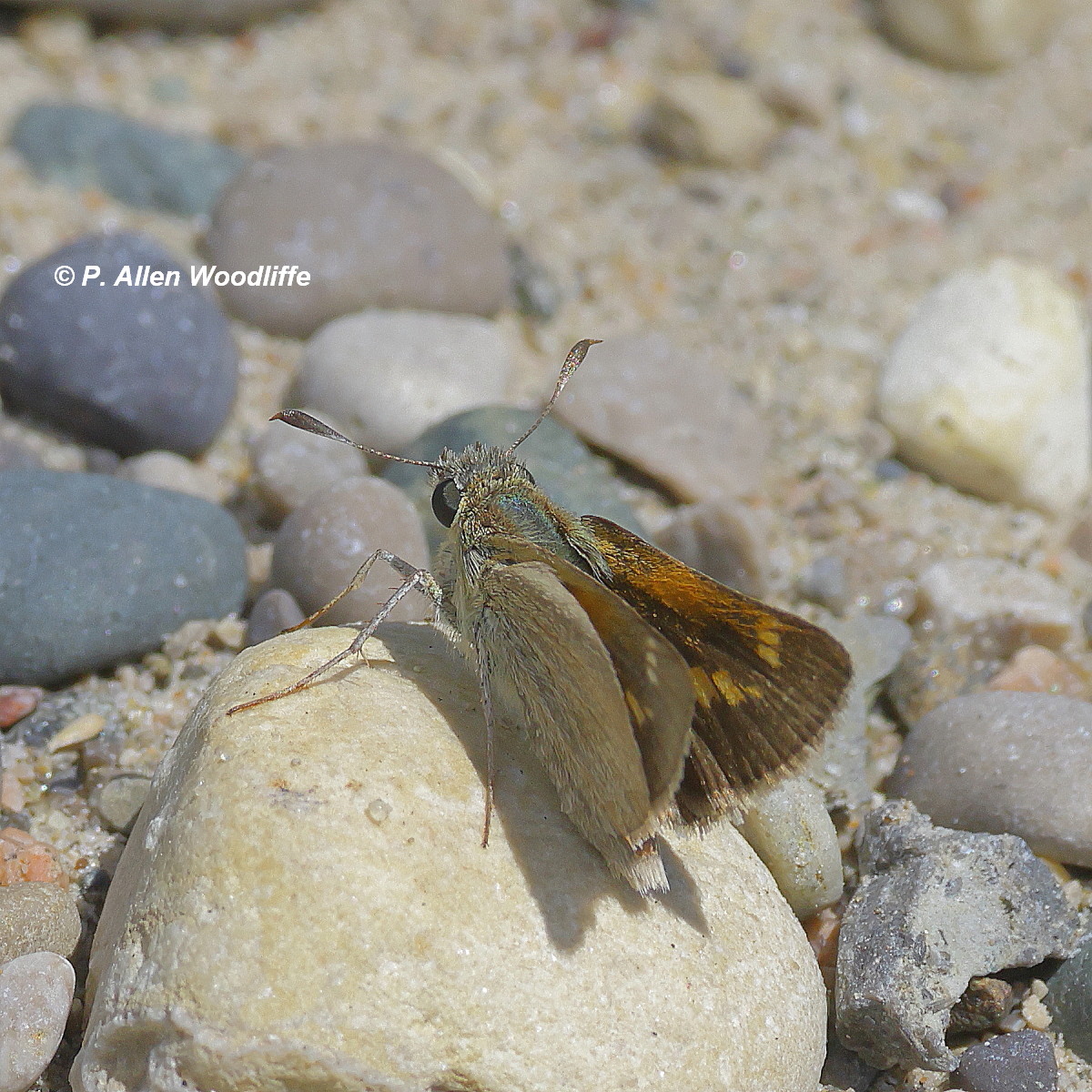
It is the final day of National Moth Week, and while I have been out searching for them, there are lots of other things to be looking for. More on the moths in a future post, but for this one, I will highlight some of the other things I have been up to.
A check of the Blenheim Sewage Lagoons can often be worthwhile, especially now that shorebird numbers are increasing as they meander their way south. I stopped in earlier this week and spent most of my time trying to photograph the shorebirds that were utilizing a large weed mat along the side of one of the cells.
This first one is a young Spotted Sandpiper, easily told by the evidence of barring across the back.
 |
Semipalmated Sandpiper
|
 |
Pectoral Sandpiper
|
This next one is a Greater Yellowlegs. While the bill doesn't look as long is it might, it is probably due to the angle. It is more substantial than the slender bill of the Lesser Yellowlegs, a few of which were nearby for comparison.
An American Avocet was seen and photographed here a day or so later, but it apparently didn't stay long. One has to keep checking to see most things that pass through!
One of the projects I was involved with these past few days was to do a search for grassland birds at two fairly large tracts of land that had been planted up into prairie. The project took some time to get approved, so while it should have been undertaken at the end of May through to the third week or so of June, it was do it now or not at all.
The first site I visited was this. The area in the foreground of the first photo was mostly non-native grasses, but the birds liked it nonetheless. Past the tree alongside the creek a little way back, is a quite large area of planted prairie, probably in the order of 50 acres or so. It was planted almost two decades ago, and has been periodically mowed for hay, but other than that, been left alone. These two areas was where there was a huge number of Bobolinks. Clearly they were in large, multi-family groups that had fledged and were making use of the habitat until they got the urge to migrate.
This next photo shows another part of the property, and while it doesn't have as much grass content, it shows a lot more diversity of wildflowers. The Bobolinks were not nearly as plentiful here, but I suspect it could be attractive to Dickcissel and Eastern Meadowlark.
 |
Grey-headed Coneflower
|
 |
Grey-headed Coneflower
|
While I was traveling through this second part, a white-tailed doe and her fawn jumped up and scrambled by me.
The Bobolinks were not all that easy to photograph, in spite of their abundance. Altogether, I estimated seeing 109 Bobolinks, so clearly it was a good production year for them. I suspect there were actually more, as it was hard to get a good count when they were in flight. Bobolink is officially a Threatened species in Ontario, so their abundance at this site is certainly good.
They were often well down in the tall grasses, and once in awhile one would get out in the open, but for the most part, when one decided to fly off, a large group that were hunkered down in the grasses decided to leave as well, and quickly got out of camera range. But on occasion, one would be out in the open long enough to get a quick shot or two. These are all greatly cropped. This first one nay be a young bird, while the second is more likely an adult female.
There were a few males, but most of them were showing signs of moulting and will eventually look more like an adult female.
A Baltimore Oriole stopped by for a very brief photo session.
This area is in the future plans to be surveyed more thoroughly, starting much earlier in the season, since some grassland types are finished nesting and either harder to document or have already moved on. It is hopeful that next year I will come across Eastern Meadowlark (Threatened), Grasshopper Sparrow (Special Concern) or even Henslow's Sparrow (Endangered). I suspect it may also be attractive to a species such as Dickcissel, which does not have any official Ontario status yet.
I wasn't far away from the community of Florence, where the Sydenham River passes through, and there is access to the river. It is often a good spot to check for dragonflies and damselflies, so off I went.
This first one is, I believe, a Blue-fronted Dancer. There were a few of them around.
Ebony Jewelwings, next, are always a delight to see. Their flight seems rather loopy and distinctive.
The American Rubyspot is always fun to see and photograph. I only saw a couple of them here on this day.
I am not 100% certain of this next one, but most of the features, especially the pattern on the thorax, point to it being a Black-shouldered Spinyleg. I have photographed it here before, and it is a known spot.
There were a few butterflies around, but the only one I photographed here was this one, a Red-spotted Admiral a.k.a. Red-spotted Purple. I haven't seen many of them this year.
I spent a few hours another day at another grassland area, this one in southern Lambton County, known as the Sinclair Management Area. It is quite a large area, with probably at least 80 acres planted into tallgrass prairie, mainly for seed production so that other areas can be planted into prairie. Tallgrass prairie used to be a fairly large and important vegetation type in southwestern Ontario, but most has been converted to farmland. Fortunately efforts are being made to restore some area to this vegetation type, although just planting a seed mix does not change it over quickly. It is a start, but what is lacking is the decades, even centuries, it will take to change the soil structure, mycelium and invertebrate fauna that are all part of a healthy ecosystem. But it is a start.
These first two photos show a portion of this site. The first one looks generally north east, the second one generally south east.
A lot of it is primarily devoted to grasses, such as Big Bluestem, Switchgrass and Indian Grass. At this point, the grasses are tall, with some approaching two metres in height. That makes it difficult to see through at times, and early in the morning it is totally saturated with dew, so that means I am quite drenched as I attempt to make my way through it.
For some reason the target grassland birds were not nearly as diverse here as they were at the previous site. Maybe it was due to things like Bobolink already having left the site, which this late in the season is entirely possible. A lot depends on when they got started in the breeding season. Or maybe it was due to the height of the grasses and me not being as able to see birds dispersing as easily as I saw it at the previous site. At any rate, it was a start, and another visit next year at the main part of the breeding season will hopefully shed more light on the use by some of these grassland species. I did see a few Common Yellowthroats.
It wasn't a total disappointment, however. There were a lot of Monarchs, a Special Concern species.
 |
Monarch feeding on Mountain-mint
|
Here is a Monarch sipping nectar from Dense Blazing-star, a Threatened species.
I probably saw as many Monarchs as I did grassland birds.
A little later I swung by Clear Creek Forest Prov Park. I hadn't been there for awhile, and thought I might find some interesting odes. Unfortunately they weren't plentiful. I attempted to shoot a few in flight, but as usual, it was quite a challenge. Here are a couple of the best I could do. These are a couple of Calico Pennants, a fairly common species darting all over the place and challenging to track.
Fortunately a few butterflies were easier.
 |
Eastern Comma
|
 |
Question Mark
|
This Giant Swallowtail was almost constantly on the move, but I waited it out to get some full frame photos.
If you want to subscribe, or unsubscribe, to Nature Nuggets, send an email to: prairietramper@gmail.com