My camera has been busy! Of course with so many things appearing as the spring unfolds, it's no wonder. Birds are fairly plentiful, although most days have been a bit quieter than normal. Then one hears of some rarity well off from where you are, and you know by the time you get there, it may have moved on. In my early days of birding, one just went out and found things, and maybe you would hear about something rarer a day or two later, or read about it in next week's newspaper column. What a concept. Nowadays one can hear about rarities all over the place, almost instantaneously. I expect for serious listers, that can add to the stress of birding, and take away some of the enjoyment of being out in nature for the mental and physical health benefits of just being out.
But enough of that.
I have been out fairly regularly, and try to plan my outings to where I think the most bird action might be. Sometime you win, sometimes you lose. But getting out for exercise, fresh air and looking for things is always a win. And as I started off on this post, my camera has been fairly busy. Rondeau is by far my 'go to' place, although I will venture to other locations on occasion, especially if I am going right by. Here are some of the bird highlights I have photographed at Rondeau. Regular readers of this blog will realize the variety of warblers to be seen, and while there are some that I have yet to catch up to, there has been an average variety to see on any given day, but they aren't always easy to photograph.
 |
American Redstart
|
 |
Black-throated Blue Warbler
|
 |
Cape May Warbler
|
 |
Chestnut-sided Warbler
|
 |
Tennessee Warbler
|
 |
Wilson's Warbler
|
 |
Yellow Warbler
|
There are lots of non-warblers to aim the camera at. One species which is always a target is the Acadian Flycatcher. This species showed up in the same quite accessible territory of a pair of last year, and cooperated nicely.
There are many, many Gray Catbirds around.
A Pileated Woodpecker, although a permanent resident of Rondeau, is always nice to see, especially when one can get a photo or two. This one was vigorously digging into a rotten log along Tulip Tree Trail, probably on the search for carpenter ants.
Red-headed Woodpeckers continue along Black Oak Trail.
Red-eyed Vireos are, or will be, quite abundant......
.....but a Yellow-throated Vireo is not common. It has nested here on occasion.
Cuckoos are starting to show, but they are difficult to photograph. This Yellow-billed is the more common of the two, and will nest at Rondeau.
Philadelphia Vireos are regular on migration.
Chipping Sparrows are quite abundant.
Swainson's Thrushes are decreasing, as the majority have left for the north.
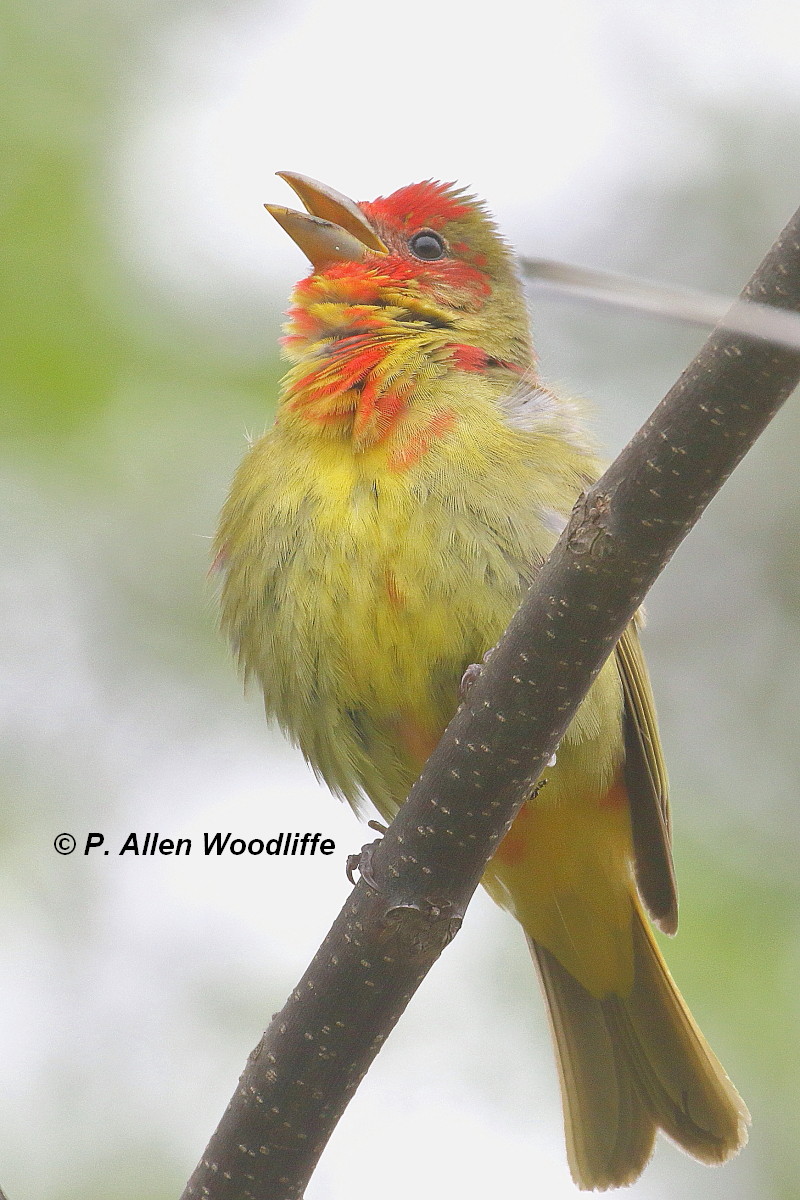
A young male Summer Tanager was cooperative near the north end of the park. A female was reported, and it is possible that they will attempt to nest. It is becoming an almost regular species, but mainly one or two at the most in any given year. It was back in 1985 when there was a slightly bigger influx of this species, and a pair of them attempted to breed along the South Point Trail.
In between birds, there are always other things to see, such as an Eastern Garter Snake feeding on an American Toad.
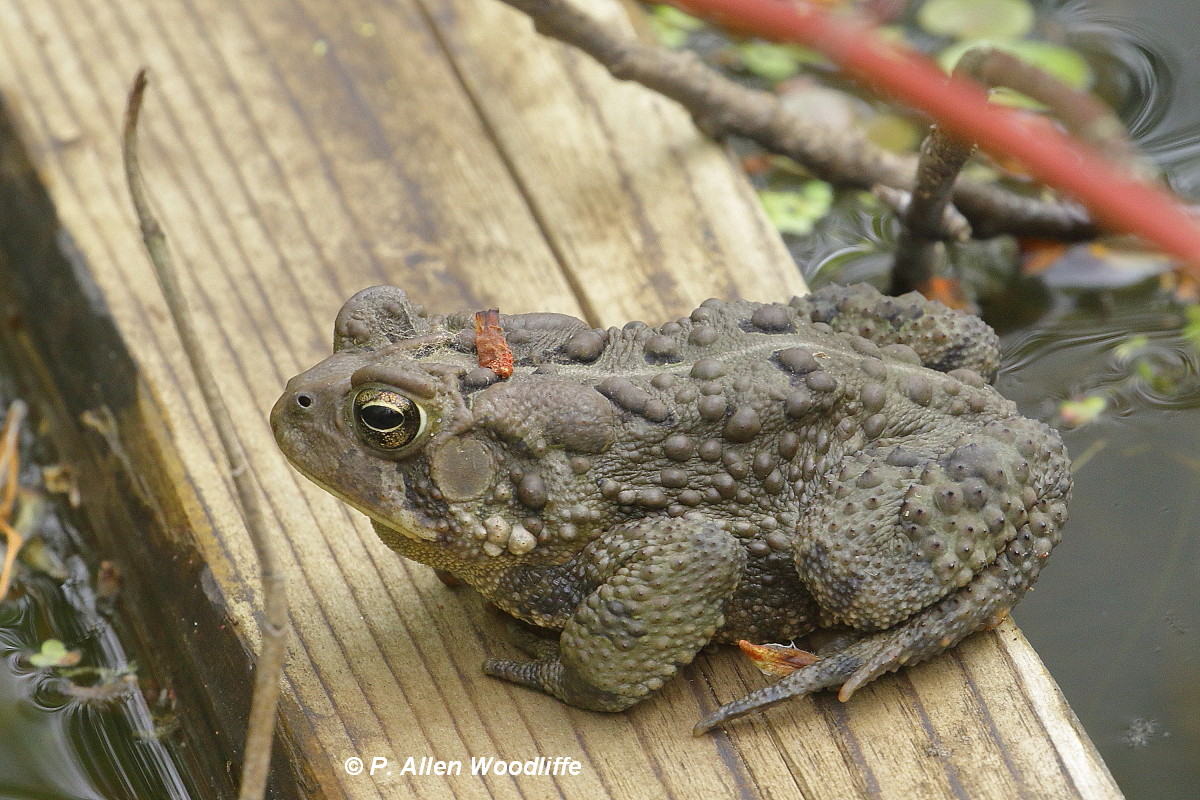
This much larger Am Toad was safely out on a piece of wood floating in a slough.
Turtles are on the prowl, and this Common Snapping Turtle was crossing the road in front of me.
Yellow Lady's-slipper are not common at Rondeau, but I am aware of a couple of locations. This one is viewable, with binoculars, along one of the trails.
Not an orchid, but a rare plant, is Goldenseal, shown next. Its origin at Rondeau is not certain, but it does occur in two locations.
This next orchid is known as Showy Orchis. It is not very big, but grows in several locations that I am aware of.
A question I am often asked in spring, is what is this impressive flower on this tree? Actually this photo shows it a little farther along than when it is first noticed, and it is not a flower at all, but the emerging leaves of Shagbark Hickory.
Shorebirds are passing through in usual numbers and diversity. Short-billed Dowitchers, even with an apparent long bill, are scattered about.
Semiplamated Sandpipers are becoming more common....
...but Dunlin are by far the most numerous at most places I have been to.
Red-necked Phalaropes are not common at all, and in fact are not seen every year. A pair of them have recently appeared at the Blenheim Sewage Lagoons. They were on the far eastern side of one of the lagoons, much too far away to try and photograph. I carefully went around to the eastern side berm, knowing the light was not at a good angle, but at least I was much closer. With a bit of processing, I was able to get a few photos that are at least decent record shots.
As an update for anyone wanting to know the outcome of the Great Horned Owls nesting in the laundry basket at Paxton's Bush:
The two young finally took their first flights, and this one was seen high up in a nearby maple tree just a few days ago. Now that the leaves are fully out, and the birds spend most of their time high up, it will be very difficult to see them from this point on.
If you want to subscribe, or unsubscribe, to Nature Nuggets, send an email to prairietramper@gmail.com