I will get back to the Birds of Chatham-Kent, then and now, series before long, I hope, but as spring slowly and steadily unfolds nearby, featuring my current travels and discoveries is more relevant.
McKerrall Woods is an interesting woodland only a few kilometres from home. I included it in my Natural Areas of Chatham-Kent series awhile ago, and for more information on it, check out this link. It is not well known, but a nice representative upland/lowland woods a little way off the gravel road, and other than when I led a spring wildflower hike to a few folks several years ago, I have never seen anyone there during my visits that I make several times a year. I enjoy the peace and quiet of natural areas, so especially if I think the more well-known natural areas will be busier, I retreat to areas such as McKerrall Woods.
So on a nice, sunny, warmish day on a weekend a short time ago, I set out for McKerrall Woods. As usual, I had the place to myself, other than the normal woodland creatures. Wood Frogs were chortling, and woodpeckers were drumming or otherwise making them selves known. I got my first ever Pileated Woodpecker for this site. I tracked it down, but was not able to get a good photo, so I have delved into my archives here.
Other than that, I got about 20 of the usual species, and had a pair of Turkey Vultures soaring a little above the tree canopy. I have seen them here before, not surprisngly, and thought I had discovered a nest last year but it turned out not to be. Maybe this year I will be more successful.
I've been to Thamesgrove Conservation Area a few times, but mainly when the weather doesn't look all that great for going very far away. It isn't terribly birdy yet, but there is always something, and occasionally I even get a photo or two, such as of this first of season Hermit Thrush.
Even closer to home is Paxton's Bush, which I get to several times a week. I came across my first Bloodroot flowers of the season.
Brown Creepers continue to be in woodlands on their northerly migration, and even our yard on occasion.
If I get a decent chance for a photo of Downy Woodpecker, or any other regular species, I will try to benefit from its cooperation.
Red-breasted Nuthatches are a little more abundant now, as they get into migration mode.
The local Great Horned Owls have utilized this laundry basket nest again this year. The ear tufts of the adult are visible, and a close look indicates there are two fluff balls present.
I include a trip to Rondeau as often as I can, although lately it has never been more than twice a week. That will change soon, I expect. Lots of walking will invariably bring one across a nice variety of both flora and fauna.
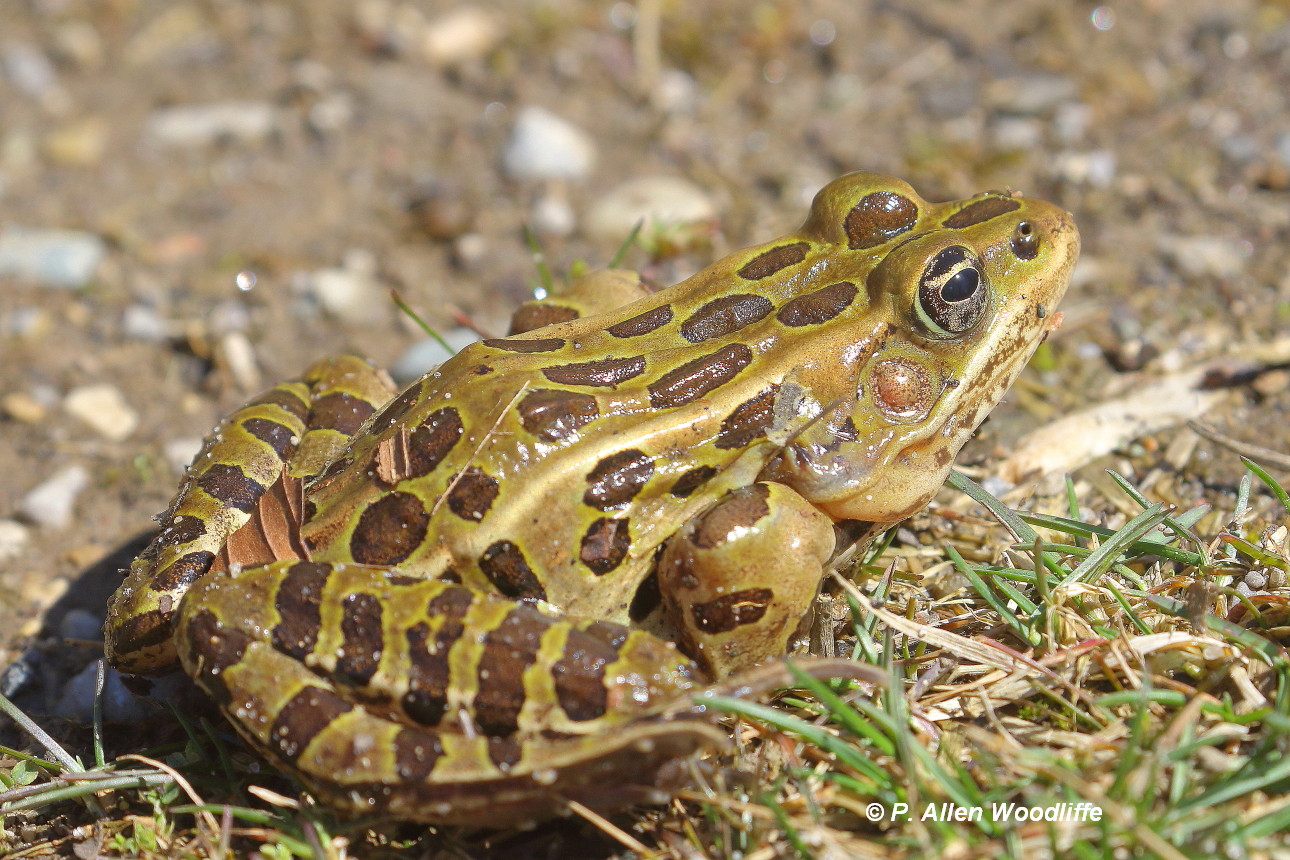
Frogs are plentiful and I have heard Spring Peepers already. Leopard Frogs are calling everywhere, and show up on trails and roads.
On a warmish day, snakes can be seen slowly roaming about, like this Eastern Gartersnake.
I've had a few butterflies, including this Eastern Comma, as well as a couple of Mourning Cloaks that were constantly on the move, so no photos.
Spring wildflowers are appearing, such as this Sharp-lobed Hepatica. Due to the cooler water surrounding the park, winds keep the unfolding of spring a little slower than inland, so it is always nice to see the first native spring wildflowers. There are some non-native species that have already appeared, such as Snowdrops, Siberian Squill and Colt's-foot. They are usually close to cottage lots, so undoubtedly were brought in by the leaseholders.
 |
Sharp-lobed Hepatica
|
I came across my first migrant warblers of the season at Rondeau, a Yellow-rumped Warbler, looking crisp and clean compared to the more drab overwintering individuals of this species.
I also encountered my first of the year Eastern Bluebird....
.....and an Eastern Towhee that enabled me to get this photo.....
.....as well as one of three Fox Sparrows I noted along the Black Oak Trail.
One has to be on the lookout for trail 'hazards' as well as the flora and fauna along the trail. Coyote scat is fairly regularly seen, but this one doesn't seem to be coyote since there is no hair or fur in it. I suspect it might be from a member of the weasel family.

This next item is a pupa of some overwintering moth species, as near as I can tell. It was wriggling slightly so maybe it will emerge.
I've checked out some wetlands along Lake St. Clair from time to time as well. Beaver are becoming more plentiful in recent decades, and one sees evidence of their huge houses from time to time.
As I was starting out along the Mitchell's Bay South Nature Trail, I saw my first of the year Barn Swallow, preening on the wire in the vicinity of 4 Tree Swallows.
When I started down the trail, I was interested to see the huge number of Midland Painted Turtles out basking in the sun. In my first time past this group, and close to the beginning of the trail, I counted 77 individuals. As I continued down the trail, I tallied a total of 142 individuals, quite a remarkable number.
On the return, I took a closer look at this first bunch and noted that more turtles had emerged to sun themselves. When I recounted, I found that there were at least 20 more, bringing the overall total to about 162! I was hoping to find a Blanding's Turtle in with them, but all were painted.
Double-crested Cormorants are not uncommon at all...
...nor are Song Sparrows.
Golden-crowned Kinglets were present in small numbers, flitting and feeding amongst the shrubbery.
There were several Great Egrets, not surprisingly, but they don't often cooperate for a camera. One has to peer through the taller Phragmites vegetation to have any hope of a relative clear photo.
Bald Eagles, such as this sub-adult, are frequently seen from a distance. The partial back lighting didn't make it any easier to get this photo.
Happy Easter, everyone!
If you would like to subscribe, or unsubscribe, to Nature Nuggets, send an email to: prairietramper@gmail.com