Showing posts with label Thread-waisted Wasp. Show all posts

Friday, 2 August 2024

Beach Creatures

 On several occasions during my outdoor forays, I have spent time along the southeast beaches and grassy sand dunes of Rondeau. This was in part due to the beach being one of Marie's favourite places to hike along when we were out at the park, and it was partly because, although it was fairly warm, there was often a breeze and the mosquitoes were not a problem! My most recent outing was on Aug 1, which is Marie's birthday, and I thought of her regularly while I was out and about.

Beaches and  shorelines can be great places to see birds, especially shorebirds as their name implies, with a greater variety during the times when they were migrating through the area. Some of the larger, and sought after species would include things like Whimbrel, shown first....

...or Willet, shown next.
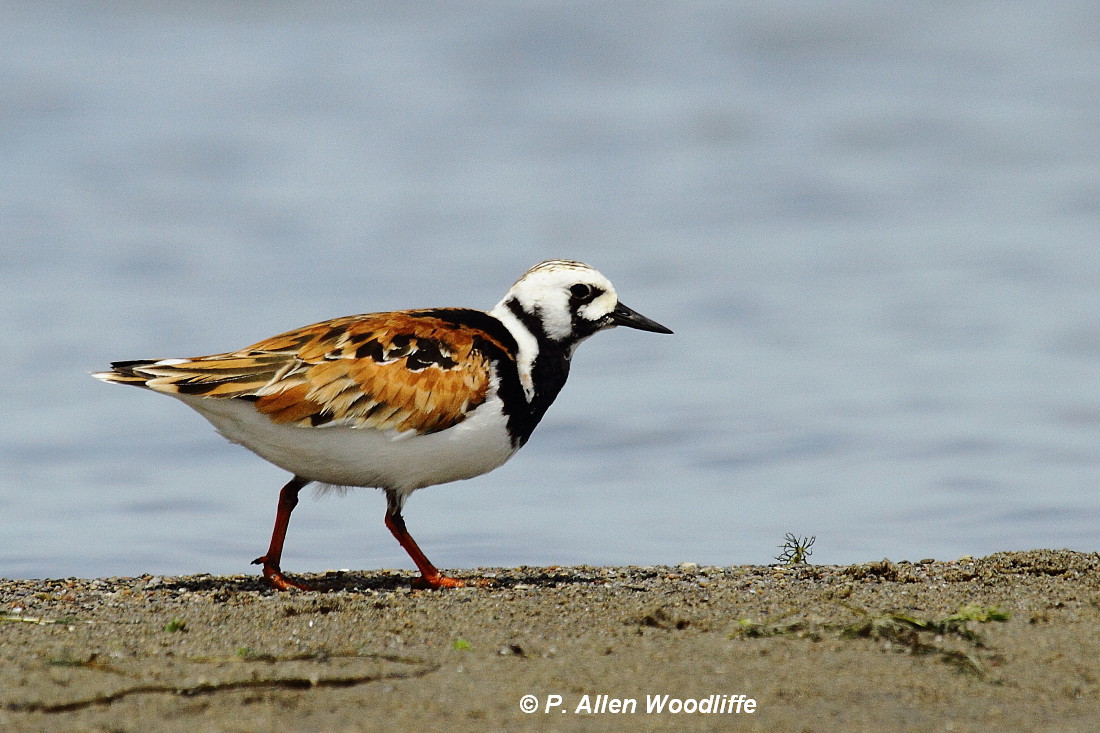
More common are Ruddy Turnstones, this one in vivid plumage.

 Of course the Spotted Sandpiper is a breeding species, and one or more can be found regularly.

In most cases, the shorebirds will be gathering right along the shoreline, but on occasion when some miniature inlets have been established due to the intensive wave action of recent months, such as the one shown next, they may be a little more attractive to shorebirds. They will warrant periodic inspection as the shorebird migration season builds, that is for certain.

Of the shorebirds shown above, I only saw the latter species during my recent times there. But the shorelines can also be a popular place for gulls, sometimes in abundance.

Bonaparte's Gulls are building in numbers, as their breeding season has come to an end. They nest in the relatively far north, such as where there are scattered coniferous trees at the edge of the Hudson Bay Lowlands. This next photo is one I took while doing some wildlife surveys in Polar Bear Provincial Park, back in 1989, as it was nesting in a Spruce Tree several metres above ground.


 Here in southern Ontario, they are non-breeders, but can be present in large numbers both spring and fall. This first one is in its non-breeding plumage......

...whereas this next one shows an adult in almost full breeding plumage. There were several dozen of this species along the shoreline on one or more of my recent visits, along with both Ring-billed and Herring Gulls.

 But my primary focus was the small insect critters that inhabit the sandy areas scattered amongst the grassy dunes. I was really hoping to catch up to a Bronzed Tiger Beetle, which I had captured in my photos of a couple of years ago, and one photo of which ended up being included in my Natural Treasures of Chatham-Kent book.

I didn't see any on my recent visits, but I will keep trying. Maybe it was a bit early in the season, or maybe they were smarter than I was and stayed under the sand to avoid the heat!

But there was a good variety of other little creatures which I was able to capture via my camera. They are all very small, with most of the following being about a centimetre in length, and some are quite cryptic, That combination makes it difficult to even see them let alone photograph them. This first one is an American Sand Wasp. It seldom rests on the sand, but is often hovering in flight, as the second image shows, or is busily burrowing its way into the sand, shown in the third photo.


Next is a Band-winged Bee Fly. They were fairly common.
Next is a type of Tarantula Hawk Wasp, known as Caliadurgus fasciatellus.
This next one is probably a not quite adult Carolina Grasshopper.
Probably an Eastern Dobsonfly, next.
This next one is a type of Flea Beetle. They were also fairly common, but not often seen unless they were in flight, and when they landed, they often tumbled over on their back before righting themselves.
This next one is a Seaside Grasshopper. One seldom saw them unless they were in flight, and as the second photo shows, they can blend in quite well to their sandy surroundings when the wings are folded. These photos, along with most of the other insect ones, were taken with my 500 mm lens which on the particular camera I was using, was the equivalent of about 16X and I could focus down to about a metre. Each one was then greatly cropped.


Thread-waisted Wasp
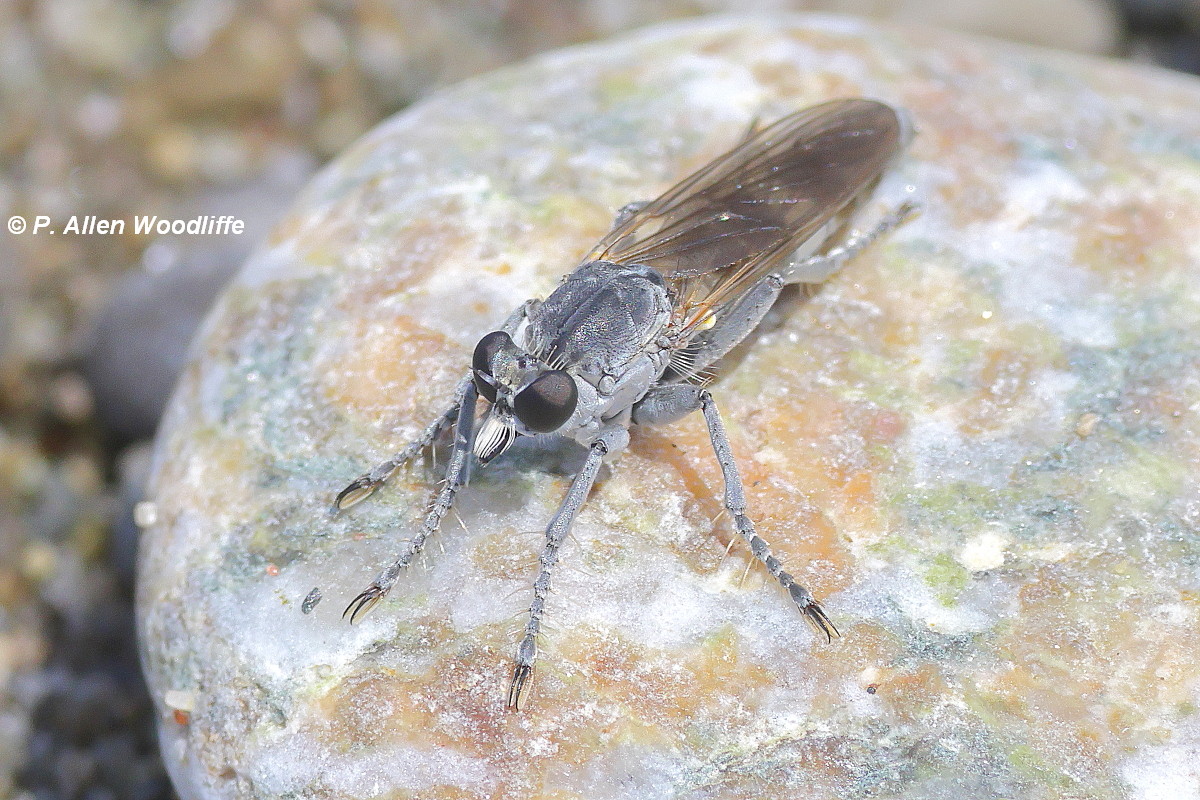
Next are a couple of images of a Three-banded Robber Fly.

A little larger and generally more obvious were a few damselflies, such as this one which seems to be a Tule Bluet.
In my searching for photographic objects above, I came across a couple of frogs hidden under a piece of wood. Due to them being mostly covered with sand, it was hard to see the details to be absolutely certain of their identity, but it seems they were Green Frogs. It was a little surprising to see them here, since normally that species is associated with quiet wetlands along with at least some forest cover. Out on these wide open sandy dunes, there was virtually no water other than the lake itself, and the arid conditions here seemed highly unlikely for them, but there they were.


Aside from concentrating on the small creatures of these habitats, one can easily get distracted by some of the larger and colourful elements, especially plants. A bit earlier in the season, one will find the yellow or Hairy Puccoon clusters scattered around the dunes.

At this time of year, there is a bit of a pinkish/purple haze through the beach grasses.

This is prime season for the colourful Cylindrical Blazing-star, which is officially a Species At Risk, but here it is quite abundant.


There can sometimes be a white colour form of this rarity, which brings a pleasant change to the pink/purple dominance.

 Then as with most natural areas, there is the occasional non-native species which gets established. Here is a Common Yucca, past flowering but distinctive nonetheless. They are scattered throughout the grassy beach dunes, and are undoubtedly present due to having been introduced on cottage lots at some point in the past.

I will be out again, maybe in not such hot weather, and see other little creatures. In the meantime, I will enjoy such outings, and think fondly of Marie being out there with me, at any time of the year.


Sunday, 21 July 2019

Poking Around the Pollinator Patch

In addition to all of the wildflowers we have in our own yard, we are very involved with a community garden in the municipal park behind us. We decided at the outset three years ago to set aside one of the twelve plots to be planted with (mostly) native wildflowers, especially tallgrass prairie types. Considering that if we were at this location 150 years ago, there would be some impressive tallgrass prairie habitat likely within view.

Some of the ones now in flower are:
Purple Coneflower
Oswego Tea
Wild Senna
Gray-headed Coneflower
Blue Vervain
Wild Bergamot
Boneset  
With all of the hot and humid weather lately I have spent more time and in smaller amounts, heading out the back door and exploring these pollinator patches. There is always something to see. I've been able to put my macro equipment to good use. It most often consists of: a full frame camera, a 100mm macro lens, one or more extension tubes and a ring flash.

Common Milkweed is fairly abundant in both the yard and the pollinator patches. I originally planted them to benefit Monarch butterflies, and that has been successful. But with the very aromatic and numerous flowers, it has been great for attracting all sorts of other insects as well. The flower structure is quite intricate. But it is more than just a source of pollen.
 After taking a close-up of one flower, it wasn't until I got the photo on the computer that I realized there were a whole lot of tiny critters living in the flower as noted in the next two photos. It turns out that they are a type of Thrips, a tiny insect that survives by sucking out the juices of plants. They can spread disease in commercial crops, especially in greenhouses. However they are a source of food themselves, to other insects.

 Flies make use of milkweed, such as this Green Bottle Fly.
 After I took this photo of a Green Bottle Fly I noticed something else in this next one, just slightly above the fly. It is a beetle larva of some kind.
 There are some large, impressive looking wasps that frequently buzz around. This next one is the Great Black Wasp, which has a body length of about 5 cm. They are busily gathering nectar for themselves, or looking to parasitize another insect which they will take to the location where they have laid an egg. The paralyzed, but not dead, insect will be ready and waiting for the larva to feed on when it hatches from its egg.
 Another, slightly smaller wasp is this Great Golden Digger Wasp.
 With all of the wasps and bees around, I have never felt threatened by any. They are busily carrying on with their daily lives, and by moving slowly and carefully I can get within a few centimetres of these wasps.

This next one is a colourful moth, known as the Squash Vine Borer Moth. It isn't one you want to have around if you are growing things like squash or zucchini.
 Speaking of squash, this next one is a Squash Bug.
It isn't something you want to have around either, as it lays dozens of eggs under the leaves and can seriously affect the plant. The good news is that there are some insects that specialize in parasitizing these bugs, and the best known one is the Feather-legged Fly, shown next. Note the feathery extensions on its hind legs.
 Here are a variety of other insect pollinators and other invertebrates I've captured on digital film over the last few days.
Bicolored Striped Sweat Bee
Cuckoo Bee
Transverse Flower FLy
Crab Spider possibly a Misumessus sp
 This next one, a Four-spotted Sap Beetle is very small, about 4 mm.
Four-spotted Sap Beetle
A type of Fruit Fly (Strauzia sp)
 Honeybees frequently visit milkweeds, and they frequently get their legs caught in the "horns" of the milkweed flower. Some are unable to escape, and ultimately die. Sometimes if I see one struggling to get free, I will very quickly and carefully grab its body and gently tug it free. As soon as I pull my hand back I quickly release the bee so as not to get stung. So far so good! And although it is possible that on occasion a bee might lose a leg in the process, at least it has 5 other ones to carry on its activities with. This bee in this next photo had just extricated itself from a milkweed flower all on its own, and paused on the leaf of a Wild Senna nearby to recompose itself. I had time for this one photo.
 These Lace Bugs, shown next, are very tiny, only about 2-3 mm long.

Long-legged Fly
Margined Leatherwing Beetle
Morning Glory Plume Moth
Red Milkweed Beetle
Red-banded Leafhopper
Root-maggot Fly (~ 3-4 mm)
Thread-waisted Wasp
Yellow-collared Scape Moth
There are others that I have photographed that I haven't yet identified. Since I go out almost daily to photograph whatever else I can find, so there will likely be another instalment of my photos in the pollinator patch.