Showing posts with label Large-flowered Bellwort. Show all posts

Saturday, 9 May 2026

It's spring wildflower time!

The last few weeks have been increasingly busy, so I am behind in my blog production. 

I know there are at least some who get this blog, who aren't able to get out and enjoy the spring wildflowers like they used to. So I try and do at least one post to feature many of the spring wildflowers. 

This first one is what I thought was suitable considering the cold winter we just came through. It is one I took at Fish Point Prov Nature Reserve a few years ago, but with the verse I came across recently, it just seemed to fit.

The forest floor is covered with Dutchman's Breeches, a close-up of which is shown next.

So many flowers are becoming quite visible, at least for a short time until the canopy of the forest fills out and the forest floor becomes heavily shaded and harder for the wildflowers to peak.

Bloodroot is one of the earlier ones, and it is always a treat to see a profusion of them. 

Flowers are also occurring on trees and shrubs, such as the Choke Cherry, shown next.

Common Blue Violet

Cut-leaved Toothwort
If you look high enough, you may see flowers of a type on trees. This first one features the female catkins of an Eastern Cottonwood....
....and these are the male catkins of the same species.

Round-lobed Hepatica

Jack-in-the-pulpit

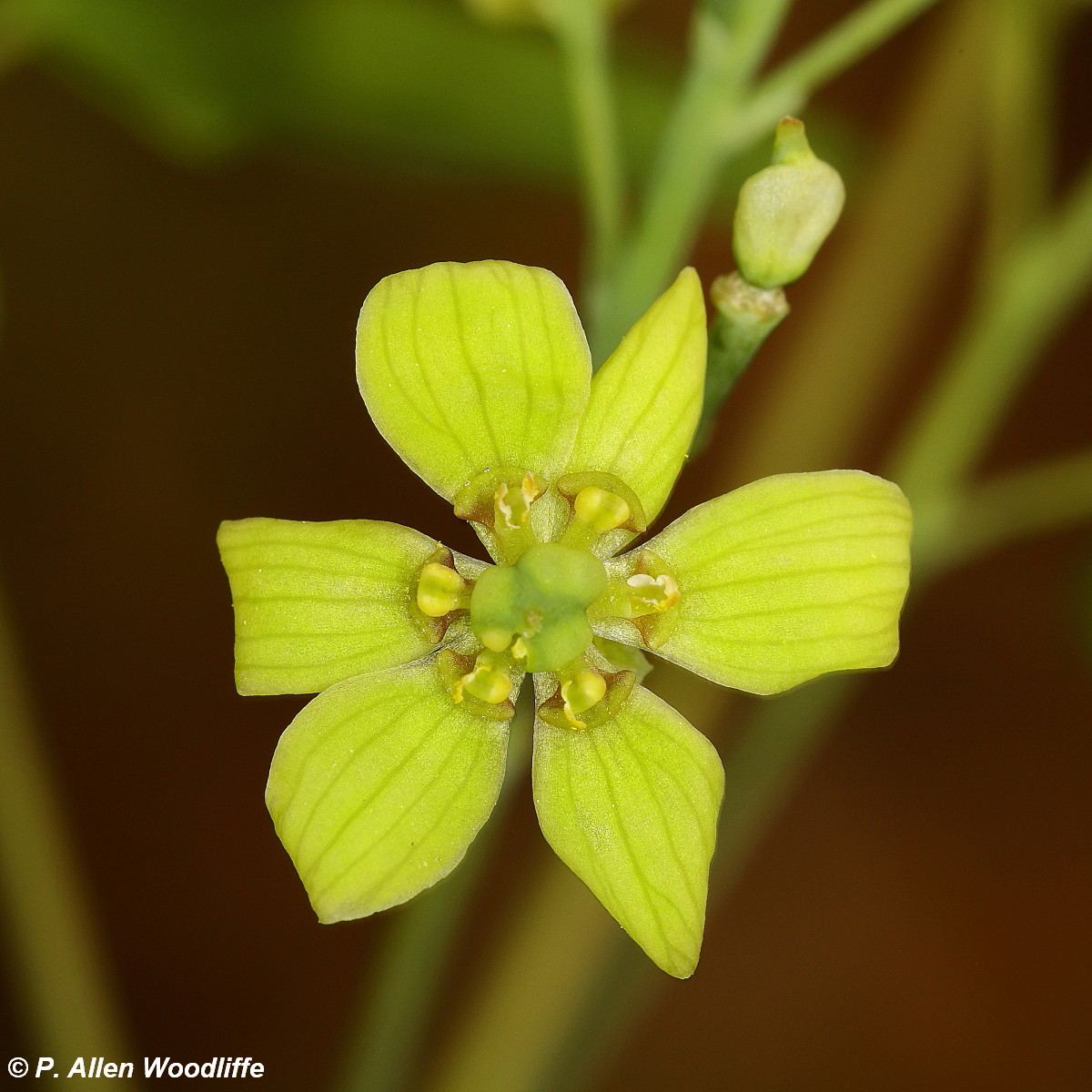
Large-flowered Bellwort

Long-spurred Violet
There is a nice woodlot not far from where I grew up and I have always been fascinated with the extensive array of Marsh Marigolds that are very abundant in the wetter sections.

Prairie Buttercup
Next is one that always attracts attention. It is Red Columbine. On rare occasion, one may even find a white version of this!

Red Trillium

Smooth Yellow Violet
Another shrub in flower right now is Spicebush, very abundant at Rondeau.

Spring Beauty
Some of the White Trilliums are still in the tight bud condition....
...but there is an increasing abundance of them in their fullness.
Yellow Trout Lily is always attractive....
...especially when they are fully open on a bright sunny day and you get a closer look.

The deer exclosures at Rondeau are always a treat to visit. Inside, the greenery is abundant, as they have not been browsed by deer at all since 1978 when they were constructed. However the flora inside is still recovering from decades of heavy browsing. This next particular photo actually does not show the abundance of Bloodroot, which was past its best when I took this. But the Large-flowered Bellwort is the current dominant.

I turned around 180 degrees and got this photo immediately adjacent to the exclosure. The wildflowers are there, but really small and scattered by comparison, as they are still being browsed by enough deer in spite of the annual deer culls over the last few years. So without regular control of the deer, the spring wildflower display just won't be what it should/could be. The fairly extensive greenery at the back is actually Japanese Barberry, a very aggressive non-native species.

However in some parts of the park, Mayapple is growing well and becoming its usual fairly dominant self.


 Here are a few other wildflowers, some native. One that is not all that common across the woodland landscape is Virginia Bluebells. I have seen it in several places, but it doesn't occur in Chatham-Kent. However in visiting a woodland where it is quite abundant, the landowner gave me several plants, which I planted in our partially forested yard, and I enjoy watching them flourish.


Another native species, but does not occur in C-K but in some sandy woodland conditions farther east is this next one: Moss Phlox. It is a very low growing plant, only a few centimetres tall.

I will finish this post with a favourite spring flower that occurs in prairie, but not in Ontario, at least not naturally. It is in the prairie patch in my yard, and is always a highlight to see! There is a pink variety as well.

Eastern Shooting-star

 If you would like to subscribe to Nature Nuggets, send an email to me at: prairietramper@gmail.com

 

Saturday, 13 May 2023

Wildflower parade continues; Virginia Bluebells are a highlight

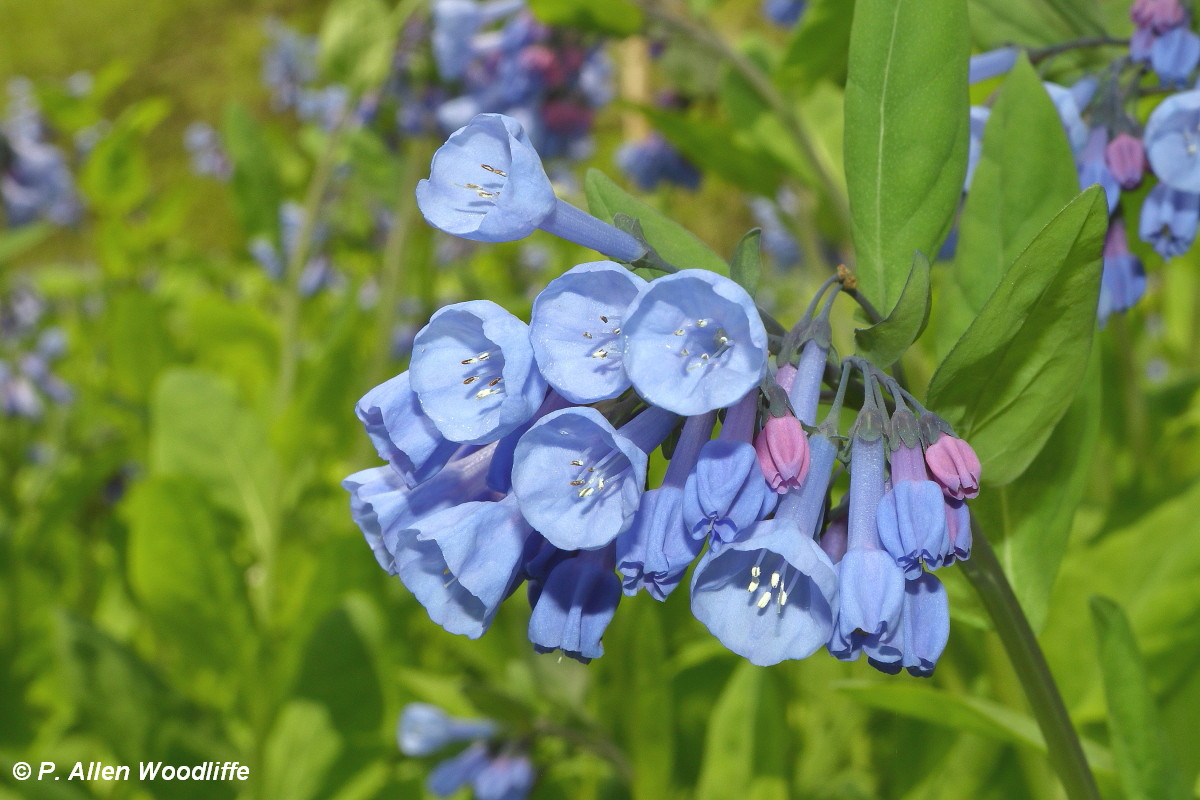
 There are lots of birds around these days, but wildflowers often get less attention. Therefore this will be another post which features the magnificence of many landscapes that birders frequent, but may not always pay as much attention to. That being said, I want to start off with a species of wildflower that is overall quite uncommon, but where it occurs, can be overwhelmingly dominant. I am referring to Virginia Bluebells (Mertensia virginica).

It is not a species that occurs in Chatham-Kent as far as I know, at least not naturally. It will be in an occasional private garden. But the populations I know of and have immersed myself in over the last decade or so are in two places in Elgin Co, and another in a nature reserve that borders Lambton and Middlesex.

These wonderful plants are relatively short-lived, but are dominant when in full bloom. The photo above was actually taken a few years ago at the Sydenham River Nature Reserve. The ones that follow were taken along a hiking trail in Elgin Co, where my sister and her husband invited me to join them a few days ago on their annual trek to see these beauties. It took the better part of an hour along the trail to get to the first of three patches, including a few ups and downs along the trail, so definitely not in the relative flatlands of Chatham-Kent! It covered several acres along Dodd Creek. Most were in full flower, with a few pink undeveloped ones yet to appear.

As in many populations of plants, there can be some anomalies, such as this next one which is fully open but has retained its pink colour.
It was a beautiful day and we had the place to ourselves. Sunny, mild with hardly any wind, and the only sounds were a few Baltimore Orioles vying for territory in the trees above, as well as the babbling creek nearby. (Thanks Susan and John!)


All in all it was a wonderful few hours enjoying this piece of creation.


Closer to home, I continue to be on the search for wildflowers while out birding or whatever. This first one is Blue Cohosh, the later blooming species compared to the one I featured a couple of blogs ago. The flowers are noticeably yellowish, not purplish.

Violets continue to be abundant, with this Downy Yellow Violet one of the most common.....
...a far less common species is this aptly named Long-spurred Violet, which grows in small scattered groups rather than being as widespread as either the yellow or blues ones.
Large-flowered Bellwort appears in clusters here and there.

There are still some Red Trilliums, and I have a hard time resisting them.
Skunk Cabbage was in its prime a few weeks ago, but I missed them at that time. It is not common in most places that I travel.
It is mostly visible by its leaves, rather than flowers these days.
A wildflower soon to be out is Canada Mayflower. The leaves, as shown next, are fairly widespread, and I suspect there may be a few out in flower that I haven't caught up to.

White Trillium continues to show well....

...as in this scene from Clear Creek Forest Prov Park.
Wild Blue Phlox is scattered here and there along roadsides and trails at Rondeau.
Wild Geranium is becoming more plentiful, and the flowers can vary a little in appearance.

Wood Anemone is relatively diminutive, but always pleasing to see if you get down close to it.
...and the sloughs of Rondeau, while dropping in water levels slightly due to the lack of precipitation over the last few days, continues to support members of the Yellow Water Crowfoot.

There will be a steady, but slightly decreasing stream of wildflowers appearing in the next few weeks due to the closing of the forest canopy. Some will likely appear in a future post.


If you would like to subscribe, or unsubscribe, to Nature Nuggets, send an email to: prairietramper@gmail.com