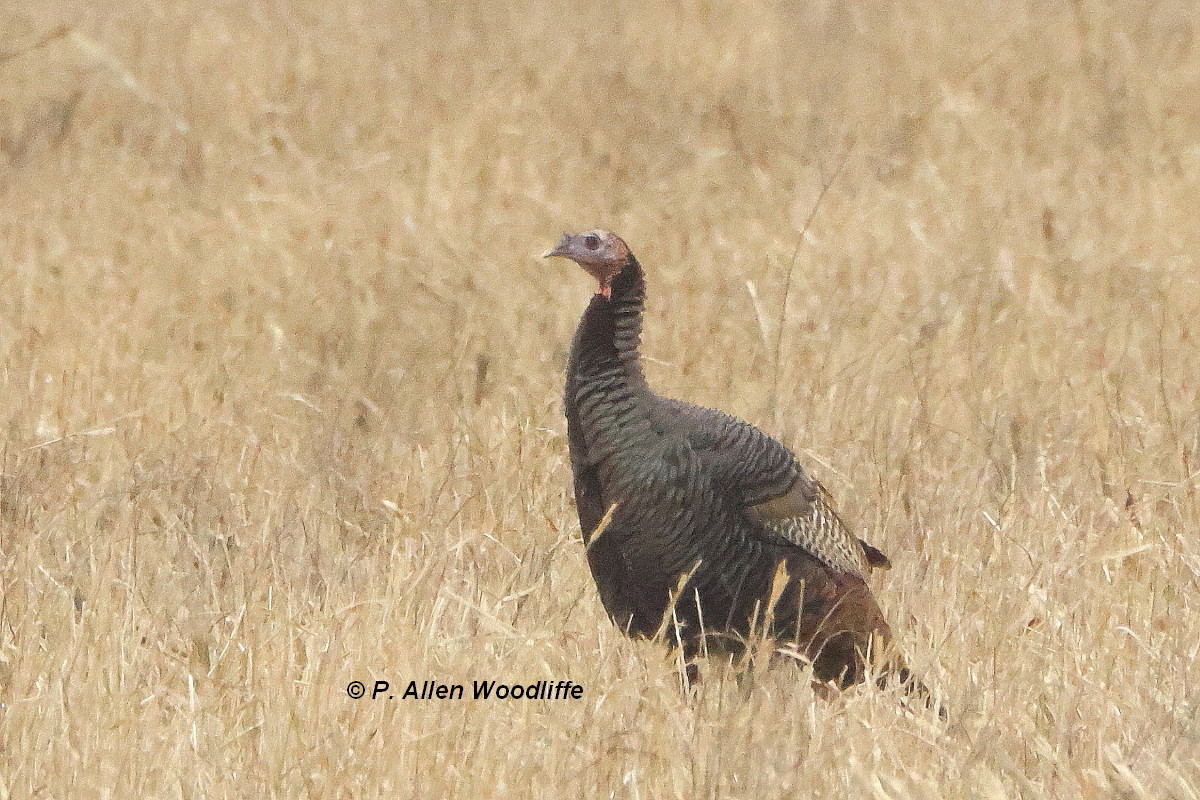
The fine autumn weather continues, but that is going to change soon! Birds have been lingering, perhaps reluctant to continue their sometimes hazardous journey to points far to the south. Or at least they have the opportunity to explore areas in southwestern Ontario that normally would not be on their southern trek route. For example, a Franklin's Gull, a western species, appeared at the Blenheim Sewage Lagoons for a short visit. This species can show up either spring or fall, but not every year, and typically only one is recorded even then.
Here is a Bonaparte's Gull, a sometimes abundant migrant, for comparison. There were several hundred of them to sort through at the lagoons, in the search for the Franklin's Gull.
While perusing these lagoons, a lingering Spotted Sandpiper, has been seen fairly regularly. It is a regular breeding species, but is typically long gone by now. It looks healthy enough, and can fly quite well, so poor health doesn't seem to be a problem.
Not quite as western as the Franklin's Gull, but certainly more abundant there than in the Hudson Bay region of northern Ontario is Hudsonian Godwit. One or more birds has been seen either at the lagoons, or the Keith McLean Conservation Area. Usually it is well away from easy viewing and photographing, but on the day I encountered it, it was in one of the smaller ponds near where the recent habitat construction activity has taken place. The excellent light, along with telephoto lens, resulted in some very satisfying photos.
Much more typical are Dunlin...
...while Pectoral Sandpipers, usually gone by now but lingering perhaps due to the fine weather, have been occasionally seen.
Tundra Swans are starting to appear, an indication that more wintry weather is not far off. Some may stay all winter, depending on the severity. While one or more Trumpeter Swans have been reported at the KMCA, and I was originally hoping these might be them, a more careful look concluded that they are indeed Tundras. The yellow spot on the lores of the bill, the more pinched look of the black area near the eye, the rounded white feathering at the top of the bill (as opposed to a more pointed white feathering arrangement for Trumpeter) and the shorter black bill all point to Tundra.
For the last few days, a Cattle Egret has been seen mingling with a small herd of cattle along the Bisnett Line, just north of Erieau. All too often it is partly obscured or too far away to get a satisfactory photo. On one occasion I was there, I got the next photo.
A relatively quick trip out in the former Dover Twp did not turn up anything unexpected, but I got a few things, including some that were present at the Owen/Bishop Cemetery, where Owen Line is closed. I got my first of the fall season American Tree Sparrow....
...a number of Dark-eyed Juncos, also recently arrived.....
....a few American Goldfinches that are transitioning to their winter plumage...
...and a few Rusty Blackbirds, a species that is a 'Special Concern' designated rarity.
Rusties are probably the most abundant this time of year, as they continue their migration to the southern US and into Central America or beyond. It is not uncommon to see a few on most outings, such as this one of a small group along the Marsh Trail of Rondeau a few days ago.
Ruby-crowned Kinglets are fairly abundant, but with their propensity to be constantly on the move and typically in shrubbery, getting a clear photo is a challenge.
Checking feeders can be a good spot to check for birds. This White-breasted Nuthatch, a resident species, was scooting back and forth regularly, heading off to a tree with some food in its mouth, hiding it for leaner times.
Its close relative the Red-breasted Nuthatch is less common, but at the moment fairly regular.
Blue Jays have staged a rather large exit from Ontario, but some will still be found.
Of course at feeders one will typically find other creatures enjoying what they can find.
On the topic of migrants, I came across an uncommon butterfly just a couple of days ago. It is a Common Checkered Skipper, a small butterfly that shows up in late summer and early autumn from points south of the border. This one looks like it has been around for a little while, as it is rather faded.
I also saw at least 12-15 Eastern Commas, almost certainly the most I have seen in one day this late in the season. They will overwinter.
There has been the occasional Common Drone Fly around. It is not native, but spread far and wide. It is a honeybee mimic.
And while walking along the east South Point Trail I came across this raccoon. It was alert enough to know I was there, although I am not sure it could see me very well.
A closer photo shows an unhealthy looking eye. Undoubtedly this individual is suffering from distemper, a disease that occurs periodically and is devastating to things like raccoons. Once the animal gets to this stage, it will not recover, and there is not much that can be done. In some municipalities where there are rescue crews to deal with this, the animal is usually euthanized to prevent a slow, agonizing death. It was about 3-4 years ago when this disease was readily apparent in raccoons at Rondeau last time.
And finally, a Snow Goose has been hanging out at the Ridgetown Sewage Lagoons as of late, and on occasion is close enough for a photo.
Snow Geese are sometimes quite abundant in eastern Ontario, as they travel to their wintering area along the Atlantic coast, but here in southwestern Ontario, we will only occasionally see one or perhaps a few mixed in with the much more abundant Canada Geese flocks.
If you would like to subscribe, or unsubscribe, to Nature Nuggets, send an email to: prairietramper@gmail.com