Showing posts with label Horned Grebe. Show all posts

Friday, 20 December 2024

Winter owls and fungi

 Okay, owls and fungi aren't a normal mix of topics I cover. But it works for the moment. Owls have become more visible at this time of year, and are always highly sought after by keen birders and even casual ones. Some are year-round residents, such as this Eastern Screech Owl.

It shows up regularly in the cavity of this American Beech tree at Rondeau, although it can be frustratingly absent for long periods. I managed to photograph this on the day of the Christmas Bird Count, as well as a day or so afterwards. Speaking of the CBC, this count totaled 102 species! Considering the windy, cool and rainy weather, that was quite remarkable, but with a good number of excellent birders out to cover their territories, it turned out quite well. This count regularly ends up in the top one or two counts in Ontario.

Continuing with the owl theme, a Barred Owl, usually a resident of much more northern areas, showed up at a small conservation area within the count circle, where a good stand of pine trees were established a number of years ago. It was only seen on one day, and fortunately it was within the CBC count period although not on the count day, so it gets to be added to this year's overall count. I went out to look for it the following day, but was unsuccessful in finding it. Another keen birder had been out slightly earlier in the day, and also did not see it. I know when a Barred Owl showed up in Rondeau on our CBC several years ago, which my birding partner and I discovered, although it remained in the park for several weeks, it moved around quite a bit, so one was never sure where to find it. This next photo is of the one we discovered on that CBC in 2018.

A few years later, in January of 2023, I photographed this next one, in the village of Shrewsbury.

It was sometimes quite visible from one of the streets, and there were many people who got to see it. Again, it moved around so wasn't always found at the same spot, but a little bit of perseverance often paid off. It remained in the area for several weeks. Hopefully the one that was seen just a few days ago in the local conservation area will show up again!

Another even more northern owl species that may show up in southwestern Ontario in winter is the Snowy Owl. It isn't a guarantee every year, but some years there can be quite an influx. A couple of years ago, on the St. Clair NWA CBC, there was a total of 23 Snowies observed! But the following year, there were none. It has been mostly absent this late autumn, but one has shown up intermittently in the area not far from Mitchell's Bay. Sometimes they are sitting on a pole and quite photographic, but more often than not, they are well out in a field, and even with a high powered lens and lots of cropping, the photo is a good record shot only, such as this next one.

Moving on from owls, the late autumn is a good time to look for the fruiting bodies of lingering fungi. Here are some of the ones I have found.

Fan-shaped Jelly Fungus

A type of Inkap
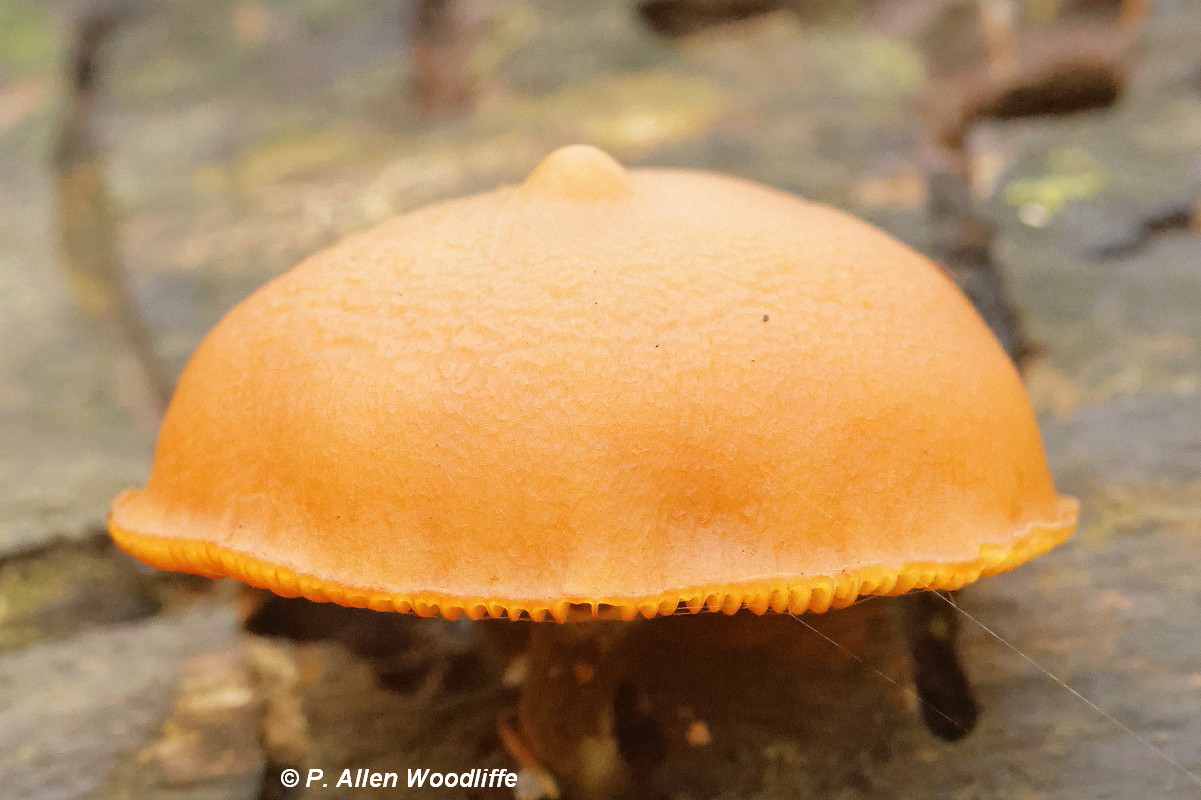
Not sure about this next one, but it could be a Honeycomb Coral Slime Mould.

Aspen Oyster Mushroom
These next two are in the Bonnets (Mycena) group.


A Common Gilled Mushroom

Rosy Crust

Milk-white Toothed Polypore


Pear-shaped Puffball
These next two show different angles of the fairly common Turkey Tail.

A few birds were willing to be photographed on some of my travels.

Hairy Woodpecker
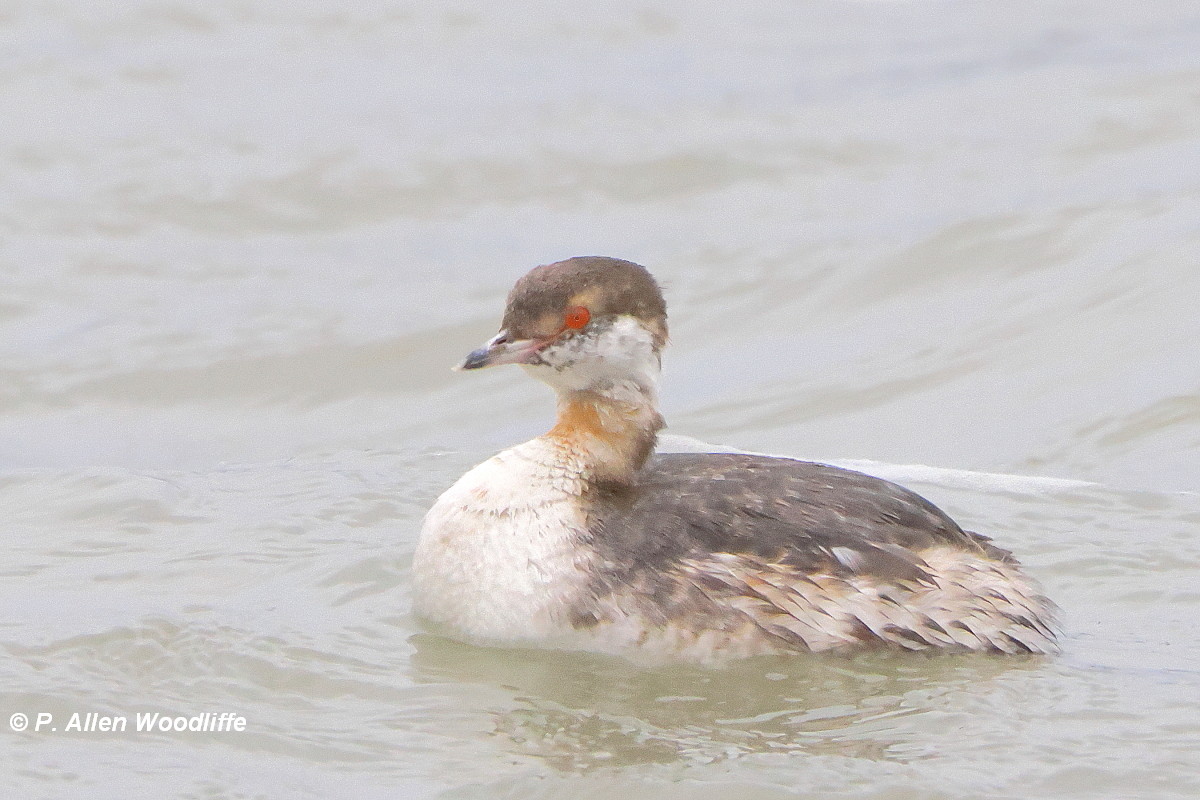
Horned Grebes are in their winter plumage, and scattered here and there, but are typically quite shy for photographers as they dive under and pop back up a little way from where they went down. I managed to get these next two photos in the marina at Erieau.

There were about 20 Killdeer seen on the above mentioned Christmas Bird Count. I photographed one of the 4 I found a day or two later, along the marsh trail of Erieau.
And while Rondeau Bay is mostly unfrozen, it means most waterfowl are well out from shore, probably with the lingering effects of the recent hunting season causing them to be cautious. However some birds, such as this male Redhead, lingered also in the marina at Erieau.

Not something I would usually find while out exploring, but this kayaker chose a day when Lake Erie was quite calm, and paddled quite a way along the east beach of Rondeau, heading to some unknown destination. Perhaps Erieau?


If you would like to subscribe, or unsubscribe, to Nature Nuggets, send an email to: prairietramper@gmail.com


Wednesday, 3 April 2024

A bit of an influx of (mostly) spring arrivals

 In spite of the cool down of late, reflecting more normal weather conditions, birds continue to trickle in. Of course some may never have left, but more of their kind seem to be showing. For example, Northern Flickers were hard to come by over the winter, but now it is not unusual to see a dozen or more in a single outing.

Likewise are the Golden-crowned Kinglets.

Chipping Sparrows are definitely new for the season on the bird front....

....as are Eastern Phoebes. They are notably hardy considering they are a flycatcher, but can survive in the cold by feeding on spiders and such, tucked under the eaves of buildings if necessary, at least for awhile.

They are quite active, on the hunt for small flying insects and don't often give the best view, but you take what you can get!

On the water bird front, the diversity of ducks continues, with more and more of each species to see. Many will be leaving for their nesting grounds soon, if some haven't already, but there are still lots around.

Canvasback

Common Merganser pair

Northern Shoveler
While the female Northern Shoveler has the same body style, the plumage is vastly different!
 
Horned Grebes
 
Shorebirds are beginning to appear. While Killdeer have been seen frequently in recent weeks, I came across this Greater Yellowlegs feeding along a muddy edge of a recently drained down channel not far from St. Clair NWA. Its smaller relative, the Lesser Yellowlegs, has been reported recently but I haven't caught up to one yet. It won't be long, I am sure.

Turkey Vultures are increasing in numbers, most often seen in flight.

But later in the day, or when the soaring conditions aren't what they like, they will come to roost.

Horned Larks are frequently seen along the roadsides and field edges. Some are paired up, and likely are in the early stages of nesting in the un-tilled fields.

Regular bird residents sometimes give a good photo op, which I may take advantage of.

On a nice sunny and partially warm day, this Eastern Grey Squirrel was tolerant of my presence, as it soaked up the sun on a convenient branch and didn't seem to move a muscle.
As mentioned in previous posts, the nesting season for some is already well underway. This next photo is of a nest that can be seen, with some difficulty, along the west South Point Trail at Rondeau. At first I wasn't sure if it was an occupied nest or not, but after taking this photo with a good zoom, and greatly cropping it, I noticed the white tail feathers sticking out towards me. They are a little difficult to see against the bland sky background. It isn't as nearly as visible as the subsequent photo, taken several years ago along the Marsh Trail.
This nest came tumbling down a couple of years afterwards, due to some high winds that took the whole tree down.
And the Black-billed Magpies continue along Fargo Road. Some observers have photographed them with nesting material in their beak, heading for the nest tree.

If you would like to subscribe, or unsubscribe, to Nature Nuggets, send and email to: prairietramper@gmail.com


Wednesday, 5 April 2023

The bird influx continues

 We are getting to that time of year that many birders look forward to: a steady influx of numerous birds, and an increasing diversity of species. The peak is only about a month away, and at this point there are some promising signs. 

I have been to places like the wetland trails along Lake St. Clair as well as near Erieau, and of course at Rondeau. There is always something if the weather is not too inclement, but a certain amount of inclement weather is to be expected, and it is the weather systems coming from the southerly directions that spur the arrival of migrants.

I saw my first of season Common Loon yesterday, hanging out in the pond where the Whooper Swan was seen periodically in recent weeks. The light wasn't ideal, but I managed to work with it.

The Erieau Marsh Trail can be quite birdy at times.

Brown Creeper

Dark-eyed Junco
Golden-crowned Kinglets have arrived in large numbers recently. It was not hard to see a dozen or more along a short stretch of this trail. Of course they are small and constantly flitting about the shrubbery, making getting a completely clear and in-focus shot difficult.

I got my first of season Eastern Towhee.
Fox Sparrows are never abundant, but it is easy to catch up to a few every early spring.
Not birds, of course, but on some of the milder days, turtles are out basking in sheltered areas. This Blanding's Turtle can usually be seen on a favourite log.
Painted Turtles can be abundant. Where there is one, there is usually a dozen or more.

Also in the Erieau area, numerous species of water birds can be seen. Horned Grebes are fairly abundant, with at least 30 in the immediate vicinity of the Erieau harbour and waterfront. Their plumages can vary considerably as they progress to their full breeding plumage.


There are still lots of both species of scaup around, such as this Lesser Scaup.
Mergansers of at least a couple of species can be seen regularly, such as this female Common Merganser.
Bonaparte's Gulls are beginning to appear in larger numbers, although considerably fewer than the hundreds or even thousands that will be in the area within a few weeks.

Yesterday I watched an adult Bald Eagle having 'fun' with the geese and ducks along the Erieau Marsh Trail. It swooped over the waterfowl, creating concern amongst them and sending dozens off in different directions. Perhaps it was just testing the birds to see if any were injured enough to be an easy catch, as feeding on dead or injured wildlife seems to be its normal approach. It appeared to be an adult just entering its fifth year. It did not catch any birds while I was around.


A trip or two to Rondeau was invigorating, but the days I picked, were not terribly birdy. But I photographed a few things anyway. Robins are, of course, fairly plentiful right now.

American Tree Sparrows haven't been abundant these last few weeks, although a few overwintered in the area.
Black-capped Chickadees, a few of which spent the winter also, have increased in numbers. Most will move on to more northern breeding grounds.
I got my first Eastern Phoebe....
....and Killdeer are showing signs of nesting.
A pair of Red-bellied Woodpeckers alighted on a broken stub long enough for me to grab a quick, distant photo.....
....and a few Turkey Vultures cruised over the park.

Along some of the wetland natural areas along Lake St. Clair, there are always a few things to see.

American Coot
Bufflehead are scattered about, sometimes posing long enough for a photo....
...and other times skedaddling away.
Ok, Canada Geese are plentiful, I know, but when one poses well and my camera trigger finger is not getting a lot of use, I will succumb :-).
Common Grackles are, common....
...as are Ring-billed Gulls. Even these gulls look impressive in their full-adult plumage. These two were discussing something related to the fish dinner in front of them, I presume.
Great Egrets are almost a guarantee to see along the Lake St. Clair wetlands, since they nest at nearby Walpole Island as well as some of the grassy islands just off-shore from Mitchell's Bay.


If you would like to subscribe, or unsubscribe, to Nature Nuggets, send an email to: prairietramper@gmail.com