Wednesday, 9 January 2019

St. Clair NWA record breaking 2019 Christmas Bird Count

The results are in and the count week is over. Officially this 39th Christmas Bird Count, centred around St. Clair National Wildlife Area along the east side of Lake St. Clair, ended up with 93 species, one better than the previous high of 92 in 2014. And one could make the argument that since Thayer's Gull, which was one of the 92 species that year, has now been dropped from full species status, the 2019 count is two higher than our previous high.

The weather was quite decent for a change, at least compared to the bitter cold and snow of the previous count, which tallied a mere 62 species. Our most recent ten year average is 78 species, so hitting 93 was major indeed. In fact I believe there were only three counts across the entire province that exceeded this total. Considering that an estimated 75% or more of this count's circle is active agricultural land, or Lake St. Clair itself, or private wetlands that were inaccessible, the total of 93 is even more impressive.

Waterbirds, and especially waterfowl, are critically important for the species diversity and overall numbers for this count. All the water was open this year, making it attractive to the myriad ducks, geese and swans. While the cold snap of November and early December caused many ducks to move on, we were fortunate that some environmental conditions caused a major influx of ducks, especially Mallards into the area just a few days before our count. At times the skies seemed full of winged waterfowl. The NWA had lots of open water patches and almost every one had many ducks and geese.
(Note: I did not have my camera with me for most of the day, so most of these photos are from a bit earlier time.)

 We achieved new high totals for several species, including over 46000 Mallards.
 American Black Ducks set a new record with 7560 being recorded.
 Our record for Tundra Swan is almost 11000; we had about half that many, which is still quite a few!
We set a new high for Ring-necked Duck at 215.
Both scaup were represented.
 Only 6 Hooded Mergansers were recorded.
 We had 71 Snow Geese, so our record of 87 was not in jeopardy. We also had two Ross's Geese, which doubled our previous high.
Snow Goose
There were eagles aplenty. Our previous high number for this count was a pretty impressive total of 27 birds achieved in 2016. The 50 birds recorded this year blew that number out of the water. What helped, I am sure, is that because there was no ice on the lake, all the eagles were limited to perching in trees along the shoreline as they waited for a crippled duck or dead fish to come into sight.
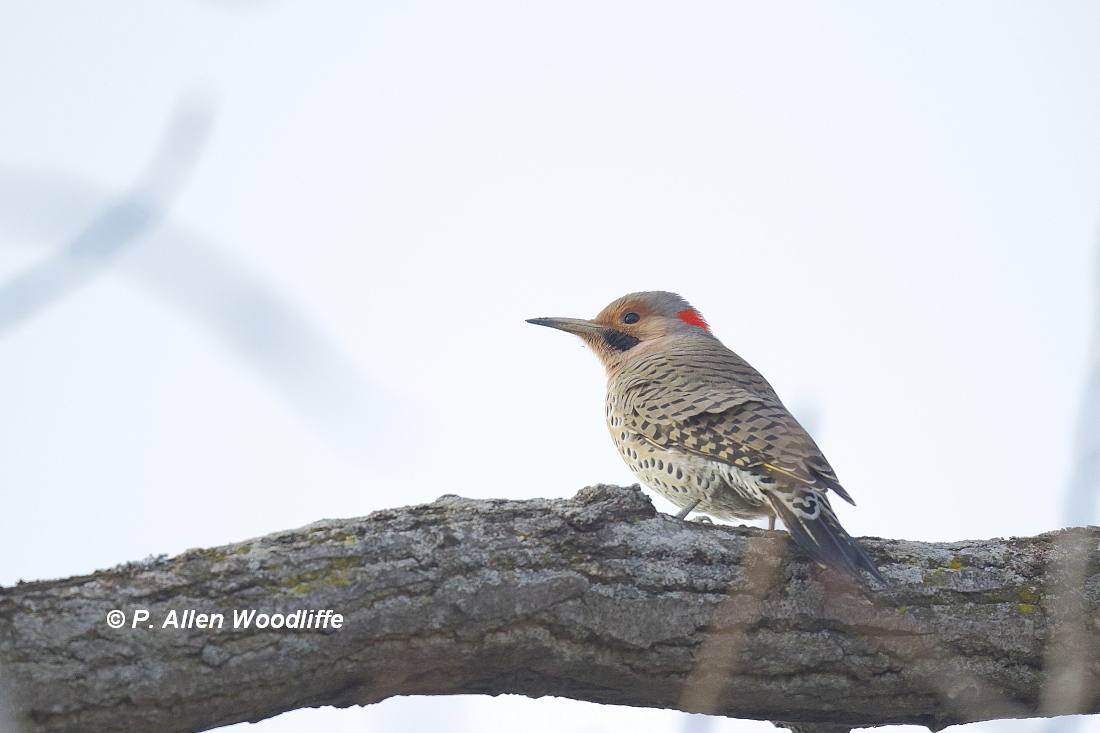
We set a new record for Northern Flicker, with 11 being seen.
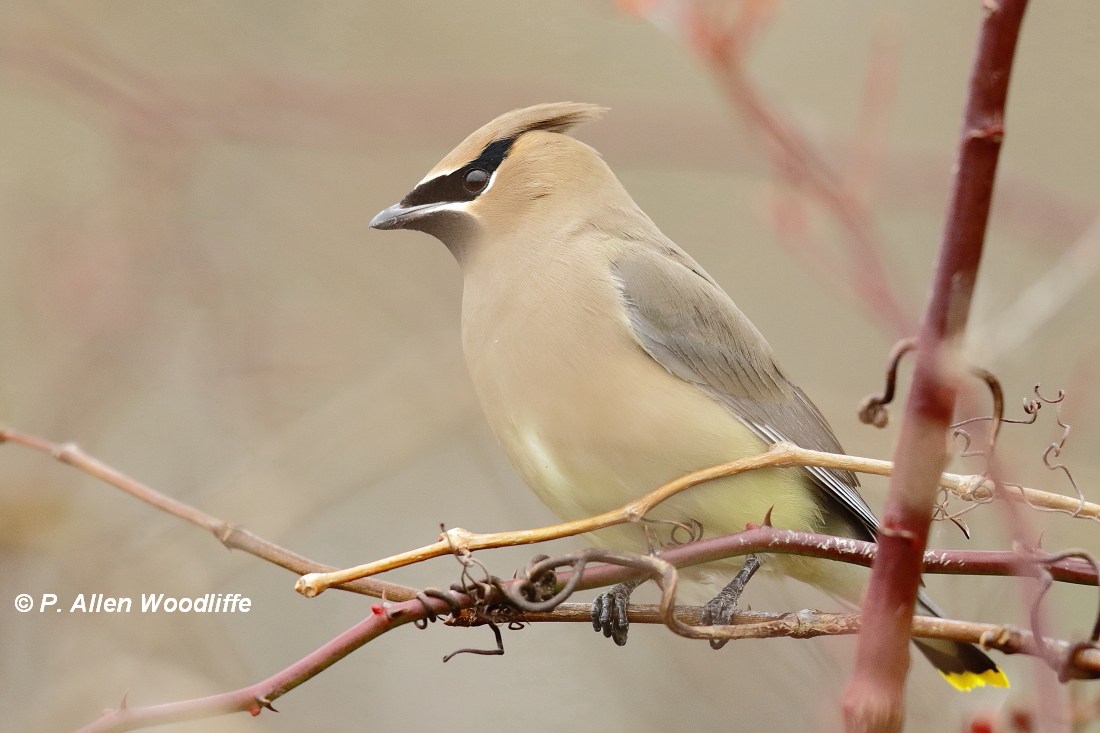
Cedar Waxwings are pretty uncommon on this count, so we were pleased that 17 were seen.
Not quite as infrequently seen as the waxwings, but still pretty hit and miss, is Common Redpoll. With the eruption of winter type finches into southern Ontario lately we were happy to count 32 of this species. Our record of 607 redpolls of 2008 will likely be intact for quite awhile yet!
It used to be that getting even one Snowy Owl was an achievement, and for the first couple of decades of this count we missed them more often than we got them. But something is happening to this arctic breeder, as we have had them for 8 straight years, and got 6 this year. It is a far cry from the 18 we had in 2016, but it is nice to consider it a regular species nowadays.

The waterfowl hunting period is now over for another season. There still are lots of ducks, geese and swans in the area, and as long as much of the lake and wetland area is open water, lots of them will remain. They won't be disturbed from being hunted, and will continue to travel between the wetlands and the fields nearby in relative safety. If a cool-down settles in over the next few weeks, with a bit of snow cover as being forecast, some will likely move on to points south so there won't be as many to see. But the St. Clair NWA is worth a visit at any time of year.


Sunday, 6 January 2019

Winter owls, of course, but a swallow and oriole?

The St. Clair National Wildlife Area Christmas Bird Count is behind us, and I will provide an overview in the next post. But since that count on Jan 1, I've been out trying to catch up with various lingering birds. The lack of any real winter in the last few weeks has likely made it a lot easier for some of them to survive.

First off was to check out the Northern Rough-winged Swallow that was found by Blake on the Wallaceburg CBC back on Dec 27. The bird has survived, but on both of my trips to check it out, there were few if any insects flying about, so I'm not sure how successful it has been in getting enough to survive on. Although it flies quite well, when it lands its wings are typically drooping, and some of the chest feathers look a little dishevelled. With the prospect of some cooler weather on the way, it will be interesting to see how long this bird survives.


On my way back and forth to Wallaceburg, I keep an eye out for Snowy Owls. They don't seem to be quite as plentiful this year as some, but there are still 4-5 around between Chatham and Wallaceburg. I always check this gas pipe enclosure, and so far this winter have not seen any owls using it. That changed on this last trip. At first it doesn't stand out, blending in with the various white pipes.
 Once you get a bit closer and with the sun at the right angle, the Snowy is quite apparent. The sun was really bright, making the white feathers of this bird a little overexposed.
A couple of other vehicles with photographers came along just about the time I was finishing up, and they got some photos as well.

Being the beginning of a new year, I was hopeful in getting the Barred Owl at Rondeau on my list. This species is so rare in this part of Ontario that there are only 4 other records for the park, and none since the early 1980s. However even though it is still around and being seen intermittently, going out to look for it is not usually successful. But on Saturday, just as I was heading out the door, I got a text from Steve that it was in campsite 6. By the time I got to the park it had moved very close to the parking lot just outside the campground. It was almost impossible to see unless someone pointed it out. This first photo is taken at an equivalent of about 12-16X.
 It doesn't really jump out, but this next very cropped photo is the equivalent of about 40X.
The dozen or so other birders eventually left, on the search for other avian targets. I watched and waited for a few minutes longer which paid off. In just 10 minutes or so, it decided to move to a lower and closer branch. I think it had heard something in the leaves, as it looked quite intently at the ground, lowering and moving its head to pin point a sound.

A few minutes later it dropped to the ground and grabbed something in the leaves. It almost immediately flew up onto another branch a bit farther away and began tugging on whatever it was in its talons. The leaves it had grabbed along with its victim dropped away and there was a small critter remaining. I pointed it out to three others who had just come by, and at that point the owl flew off towards the south and out of view. I hoped it hadn't gone too far, and perhaps it didn't, but in spite of several of us looking in the direction it flew, it was not seen again. It is quite likely it saw us, however. It is interesting that Barred Owls seem to be more plentiful in Ontario and elsewhere these last few weeks. Certainly several Christmas Bird Counts have had them, with some reporting a higher number than usual. And a recent item by CBC News, which you can read here, indicates this phenomenon is occurring farther east as well.

Satisfied with seeing my owl target, I decided to try for birds at the north end of the campground. I had seen the Baltimore Oriole tucked away in a dense tangle the other day, and in spite of my best efforts, this was the best photo I could get.
I certainly wasn't satisfied with that, so thought it would be worth another look today. Jim and Quinten and I got a brief look at the oriole high up in a cottonwood tree, but it disappeared. Mike B was in the area, and after a bit of a chit-chat, the four of us headed off in different directions. A few minutes later I got a message from Jim that he had an Orange-crowned Warbler, so I headed his way. The bird was in a large tangle and although we saw Golden-crowned Kinglets, a Carolina Wren, several Black-capped Chickadees and Dark-eyed Juncos, the warbler was well hidden. As I circled around the tangle, I inadvertently stepped on a small branch and the crack of it startled a bird larger than a warbler. It flew up into a small vine tangle and it was apparent it was the oriole! It flew up into a red cedar and although the light was quite poor, a bit of work with the photo on the computer made it reasonably identifiable.
There was the usual mix of other birds in the campground, including Yellow-rumped Warbler.

One of the park's other inhabitants met its demise not long ago. I saw this deer carcass floating at the edge of the bay. No doubt it ventured out on the thin ice a few weeks ago, and broke through, perhaps breaking its leg. Perhaps a coyote or a Turkey Vulture or, if it stays around long enough, a Snapping Turtle will have a feast of venison.


Monday, 31 December 2018

CBC season is almost over, but not quite

Only a few more days until the Christmas Bird Count period is over for another season. In recent days, local counts I've been on included the Wallaceburg count on Dec 27th, the Skunk's Misery count on Dec 30 and tomorrow, Jan1, 2019 will be the St. Clair NWA count.

For my area, the Wallaceburg count includes a good chunk of the St. Clair River as well as a few inland areas. The diversity of waterfowl on the river makes a huge difference in the number of species I am able to tally for the day. This year the river was entirely open, and many ducks had left. There was an average diversity, although nothing in really large numbers.

Some years there are huge rafts of Canvasback....
 ....and Redhead.
This year there were a few Redheads around.
Redhead with Greater Scaup

.....and I only saw a single Canvasback.
A mixed group, including the single Canvasback
There was a small number of Greater Scaup.
Redhead and Greater Scaup

 ....and the ubiquitous Mallard, although even this species was not abundant in my area.
Landbirds were noticeable by their absence, but I caught this Great Blue Heron skulking along the wet edge of a woodlot.
In between counts, I spent a bit of time at Rondeau on one of the nicer days, always on the lookout for the Barred Owl that Josh and I had found on the Rondeau count. I wasn't able to come up with that owl on this visit. As I returned to the truck on one occasion, a male Northern Cardinal was checking out its reflection in the mirror.
I scanned the lake for the ongoing Red-throated Loons. Sure enough, I saw 9 scattered in small groups here and there.
I went to the Skunk's Misery CBC, but was only able to spend part of a day due to a family commitment.  (There are one or two stories behind the Skunk's Misery name, which I may expand on in a future post.) The day started off quite dull, and even being out in good habitat before 8 a.m. I thought I got going before the birds were up. At my first stop, a nice mix of grassy field, forest, a mature conifer plantation, a  ravine and along the Thames River, I could only rustle up three species of birds, including a couple of immature Bald Eagles. As the day unfolded, in other parts of my territory a few more things came along at forest edges, roadsides and in the large Mosa Twp forest. Horned Larks were more plentiful on this day than I had seen in the previous several weeks. A nice adult Red-shouldered Hawk gave me perched and flying views. An American Robin literally fell out of a large tree, landing briefly in the snow before recovering and perching on a small twig and eventually scooting off. I ended up with 23 species for my shortened day. I didn't have my camera with me while I was out on foot, so I have no photos of this count to post.

In preparation for the SCNWA CBC, I wandered about parts of the former Dover Twp, almost all of which is within the count circle. With all of the water completely open, there is lots of habitat for waterfowl. However with the cold spell in the late fall, some of the birds left the area. There is still a reasonable diversity around, but we won't know until the count results are in just how good, or poor, they are. In a good year we will get at least 20-25 species of waterfowl.

At the NWA itself, there are lots of geese and ducks. With hunting season still on, the safety of the NWA is definitely an attraction for them! I saw a mix of puddle ducks, including Northern Pintail and American Wigeon among others. I noted a number of small white geese, and was pleased to find about 65 Snow Geese. There were half a dozen blues mixed in with them.
 It wasn't until I got these photos on the computer that I realized that there were two Ross's Geese among them. They are on the far right of this next photo. Their small size compared to the nearby Snows, along with a shorter stubby bill, a straighter feather line at the base of the bill, the lack of a grin patch and a hint of a bluish colour at the base of the bill all point to Ross's Goose, a species that not that long ago was considered a real rarity but in more recent years, is found to be a bit more regular, albeit in very small numbers.
Since Lake St. Clair is entirely open, eagles in the area can be found perched in trees along the lake shore. Without searching too hard, I saw 16 of them, sometimes as many as 3 in a single tree.
I wanted to drive up to Wallaceburg, to see if the Northern Rough-winged Swallow which Blake found on that CBC a few days earlier was still around. Although the weather had cooled off considerably, I found the swallow without any trouble. It would fly down in the water treatment cells and then perch on a wire or ledge for a few minutes. Clearly it was an unusual bird for the time of year!
Here is a bit of trivia that was passed along to me a few days ago: the Northern Rough-winged Swallow, with 26 letters in its name, has the notoriety of having the longest name of any Ontario bird species!

Happy New Year!


Monday, 24 December 2018

Merry Christmas!

I haven't been out a lot lately, taking a break in between Christmas Bird Counts for one thing, and of course getting ready for Christmas!

I was at Walpole Island for part of a day recently, doing some field work for an endangered species, White Prairie Gentian (Gentiana alba).
On another occasion I was out at Rondeau, on the lookout for the Barred Owl featured at the top of this page. It has been seen intermittently, but not very predictably. While not being very successful in catching up to the owl, I have encountered other woodland birds, including Pileated Woodpecker, Eastern Screech Owl, Great Horned Owl, the resident Red-tailed Hawk.....
....and Cooper's Hawk. The Cooper's Hawk was reluctant to leave its perch since it was busily dining on an Eastern Grey Squirrel, whose remains can be seen in this next photo.
Northern Cardinals always seem to be a Christmas type bird.
I stopped in at St. Clair National Wildlife Area briefly one late afternoon, and captured a few waterfowl/sunset photos.


That's about it for this post, but I do want to leave you with one more thing. I hope you take time to think about the reason for this time of year. And with that, I want to connect you with one of my all time favourite Christmas songs. It isn't a Christmas carol in the normal sense, but the message and the music are perfect. It is called "How Shall A King Come". I had heard this one a number of times many years ago, and only recently came across a video someone had put together with the music incorporated with some scenes from a classic big screen movie some of you may recognize (Ben Hur). You can watch and listen to it here. While it has the video to go along with it, I actually like the vocals slightly better in this version.

Merry Christmas and Happy New Year to everyone!

(Note: for some unknown reason although I can create a post, at the moment it will not let me reply to comments or put comments on other people's blogs, so my apologies for seeming to ignore the comments that others have made. It has done this before, but then eventually it will return to normal function.)


Wednesday, 19 December 2018

Rondeau/Blenheim Christmas Bird Count 2018: a terrific day

The Rondeau/Blenheim Christmas Bird Count is now history. And a bit of history was made. Although we didn't quite set a new record for species observed on the day of the count, at 114 species we missed by one. However we added a new species to the overall count: a Baltimore Oriole which had been seen sporadically prior to the count period, but stayed frustratingly absent until yesterday, which is still within the count week, so it is now added to the overall list of 192 species.

My day started out (not so bright and) early by arriving at Rondeau to try for owls in the pre-dawn. Although the wind was calm, suggesting great conditions for calling and hearing them, the residual wave action from brisk northeast winds the day before interfered quite a bit. I only heard two Eastern Screech Owls although there might have been more that heard me.

I met up with my two birding companions for the day, Josh and Jodi, at the Visitor Centre and off we went, driving the west side of the South Point Trail to the south beach. I was fortunate to have both Josh and Jodi with me for their camaraderie as well as their younger and superior eyes and ears

I always spend a bit of time first thing scanning the lake for waterbirds on the move. Sometimes there isn't much movement, but today was an exception. Aside from the usual mix of scaup and mergansers, we had White-winged Scoters and an amazing 18 Red-throated Loons. The loons were not exactly surprising, as up to a 100 had been seen off the east beach in previous weeks. But since there are only a couple of records of this species for the count (two I had seen back in 1981, and another two last year) it was noteworthy indeed.
From a previous day
Combined with those that others saw in their respective territories, our count total of about 70 red-throat individuals was a terrific start to the day.

The walk out along the south beach was certainly one of the best days in the 30+ years I have been doing this area. Some years it is inaccessible due to snow, ice, howling wind and strong wave action battering the fallen trees lining the lakeshore. Today it was amazingly pleasant being sunny with very light winds, and temperatures nicely above freezing. The south beach is a narrow strip of sand that (usually) separates the marsh and lake, at least when the high water levels haven't breached the sand spit causing a brisk and steady flow of water back and forth. There was very little wave action, making trekking along the beach on either the marsh or lake side very easy, which is always important as we cover the approximately 7-8 kilometer hike to Erieau and back.

Small birds were few and far between, although we did get things like Marsh Wren and Swamp Sparrow. One of the goals of this bit of territory is to see the diversity of waterbirds tucked in at the marsh/bay interface. We ended up with 21 species of waterfowl, including the only Northern Shoveler on the count. Other highlights included two Sandhill Cranes, two Belted Kingfishers, four American Coot, a single Great Blue Heron and a single Snow Bunting.
photo from a previous day
Our return to the start of the beach walk was highlighted by none other than a hatchling Northern Map Turtle, struggling against the waves.
photo courtesy of Josh Pickering
It is possible that some earlier wild wave action dislodged this little fellow from its winter hibernation site buried in the sand somewhere along the beach.

A brief stop at the Visitor Centre at mid-day turned up things like American Goldfinch and White-throated Sparrow.

Our next area to target was the Marsh Trail, and in particular the southern parts. As is sometimes the case, birds were noticeable by their absence, although we did see lots more waterfowl on the open water of the marsh.....
.... and get things like Bald Eagle. We ended up with five eagles for the day.

On the return to the trail entrance, we added a few Red-bellied Woodpeckers and a single Pileated Woodpecker, among other species.
Josh and Jodi tracking down birds
With the main part of our designated territory finished, and being now at the north end of the park, we decided to spend a bit of time searching for things like the White-eyed Vireo and Great Kiskadee. The former had already been seen briefly by others, but the latter species remained absent. Our walk along the southern side of the maintenance yard cedars was initially quiet, and I pointed out where I had seen and photographed the vireo just a few days earlier. And there it was again, in exactly the same spot.

A couple of other birders were nearby looking for it, so we got their attention and the white-eye kept us occupied for several minutes.

After a while, our group dispersed while Josh and I headed to the north side of the maintenance yard where the kiskadee had sometimes been seen in days gone by. A few minutes later we decided to head to the campground where the kiskadee had also been seen from time to time. On the way over, while Josh was facing me in conversation he stopped while looking over my shoulder exclaiming 'there is an owl'. I quickly turned and looked. It was probably only 50 metres away and low in a deciduous tree. It was a large owl, but clearly not a Great Horned. It only took a split second for both of us to conclude it was a Barred Owl! This was totally unexpected, as there are only 4 previous records for the park checklist area, and none since 1981. After getting a few photos, we quickly texted some other birders.
It was late enough in the afternoon that most had already finished their territories, so were able to arrive fairly quickly. The owl was on the move, however, and by the time the ten or so birders showed, it had moved into the campground. And there it was found again, at one point having picked off an Eastern Grey Squirrel which had undoubtedly never had any experience with Barred Owls (and would never have another!).

So although we didn't luck out with the kiskadee, the Barred Owl was certainly a bonus bird even though it was not a new species for this count, having been recorded on one previous occasion.

The Great Kiskadee continues to be absent, not having been seen or heard since December 9. It is interesting to know that one had shown up in recent days in Indiana, so perhaps it has made its move towards a more likely part of its range. Or maybe 'our' kiskadee will reappear somewhere in the Rondeau area, since it has a habit of disappearing for several weeks and then reappearing for a week or two. Time will tell, but for now, I have replaced my header photo of the kiskadee with the latest celebrity, the Barred Owl.
A final note: in addition to the Northern Map Turtle we saw, I heard that others saw Eastern Garter Snakes and Eastern Comma butterflies in at least a couple of different places on this warm and sunny day. Certainly not the kinds of things one expects to find on a Christmas Bird Count, but I guess here in the banana belt, we should expect the unexpected!