Friday, 2 August 2024

Beach Creatures

 On several occasions during my outdoor forays, I have spent time along the southeast beaches and grassy sand dunes of Rondeau. This was in part due to the beach being one of Marie's favourite places to hike along when we were out at the park, and it was partly because, although it was fairly warm, there was often a breeze and the mosquitoes were not a problem! My most recent outing was on Aug 1, which is Marie's birthday, and I thought of her regularly while I was out and about.

Beaches and  shorelines can be great places to see birds, especially shorebirds as their name implies, with a greater variety during the times when they were migrating through the area. Some of the larger, and sought after species would include things like Whimbrel, shown first....

...or Willet, shown next.
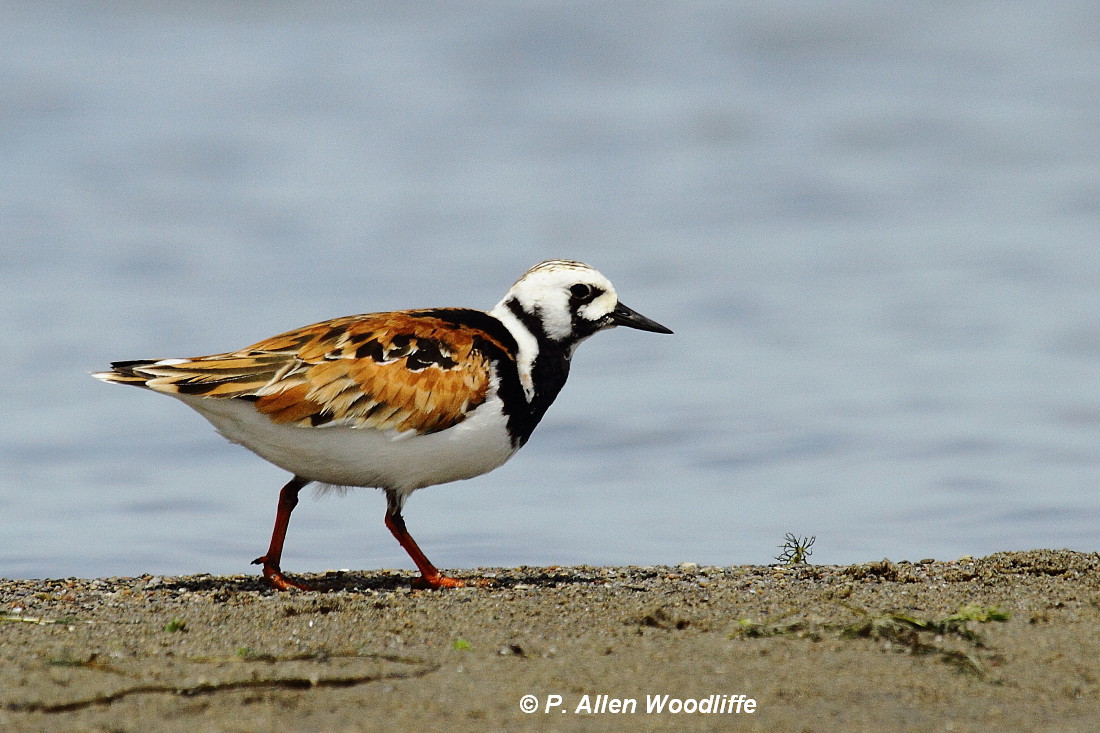
More common are Ruddy Turnstones, this one in vivid plumage.

 Of course the Spotted Sandpiper is a breeding species, and one or more can be found regularly.

In most cases, the shorebirds will be gathering right along the shoreline, but on occasion when some miniature inlets have been established due to the intensive wave action of recent months, such as the one shown next, they may be a little more attractive to shorebirds. They will warrant periodic inspection as the shorebird migration season builds, that is for certain.

Of the shorebirds shown above, I only saw the latter species during my recent times there. But the shorelines can also be a popular place for gulls, sometimes in abundance.

Bonaparte's Gulls are building in numbers, as their breeding season has come to an end. They nest in the relatively far north, such as where there are scattered coniferous trees at the edge of the Hudson Bay Lowlands. This next photo is one I took while doing some wildlife surveys in Polar Bear Provincial Park, back in 1989, as it was nesting in a Spruce Tree several metres above ground.


 Here in southern Ontario, they are non-breeders, but can be present in large numbers both spring and fall. This first one is in its non-breeding plumage......

...whereas this next one shows an adult in almost full breeding plumage. There were several dozen of this species along the shoreline on one or more of my recent visits, along with both Ring-billed and Herring Gulls.

 But my primary focus was the small insect critters that inhabit the sandy areas scattered amongst the grassy dunes. I was really hoping to catch up to a Bronzed Tiger Beetle, which I had captured in my photos of a couple of years ago, and one photo of which ended up being included in my Natural Treasures of Chatham-Kent book.

I didn't see any on my recent visits, but I will keep trying. Maybe it was a bit early in the season, or maybe they were smarter than I was and stayed under the sand to avoid the heat!

But there was a good variety of other little creatures which I was able to capture via my camera. They are all very small, with most of the following being about a centimetre in length, and some are quite cryptic, That combination makes it difficult to even see them let alone photograph them. This first one is an American Sand Wasp. It seldom rests on the sand, but is often hovering in flight, as the second image shows, or is busily burrowing its way into the sand, shown in the third photo.


Next is a Band-winged Bee Fly. They were fairly common.
Next is a type of Tarantula Hawk Wasp, known as Caliadurgus fasciatellus.
This next one is probably a not quite adult Carolina Grasshopper.
Probably an Eastern Dobsonfly, next.
This next one is a type of Flea Beetle. They were also fairly common, but not often seen unless they were in flight, and when they landed, they often tumbled over on their back before righting themselves.
This next one is a Seaside Grasshopper. One seldom saw them unless they were in flight, and as the second photo shows, they can blend in quite well to their sandy surroundings when the wings are folded. These photos, along with most of the other insect ones, were taken with my 500 mm lens which on the particular camera I was using, was the equivalent of about 16X and I could focus down to about a metre. Each one was then greatly cropped.


Thread-waisted Wasp
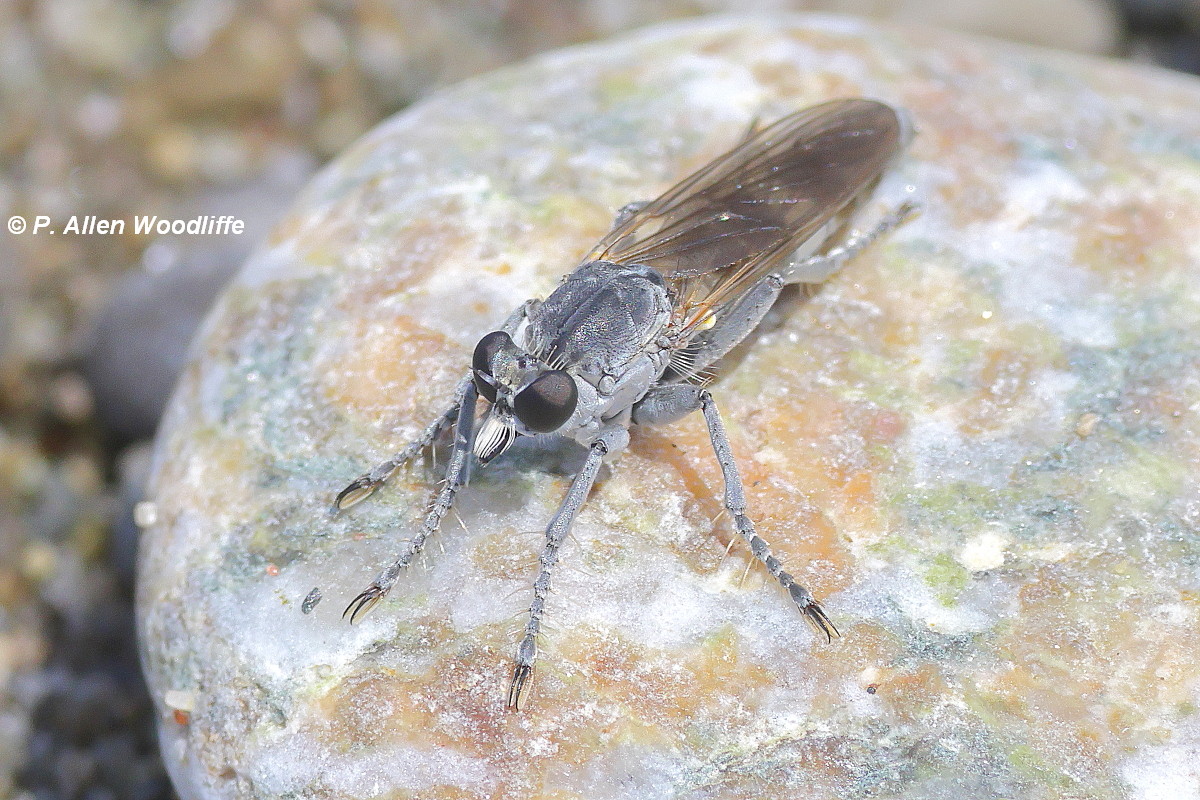
Next are a couple of images of a Three-banded Robber Fly.

A little larger and generally more obvious were a few damselflies, such as this one which seems to be a Tule Bluet.
In my searching for photographic objects above, I came across a couple of frogs hidden under a piece of wood. Due to them being mostly covered with sand, it was hard to see the details to be absolutely certain of their identity, but it seems they were Green Frogs. It was a little surprising to see them here, since normally that species is associated with quiet wetlands along with at least some forest cover. Out on these wide open sandy dunes, there was virtually no water other than the lake itself, and the arid conditions here seemed highly unlikely for them, but there they were.


Aside from concentrating on the small creatures of these habitats, one can easily get distracted by some of the larger and colourful elements, especially plants. A bit earlier in the season, one will find the yellow or Hairy Puccoon clusters scattered around the dunes.

At this time of year, there is a bit of a pinkish/purple haze through the beach grasses.

This is prime season for the colourful Cylindrical Blazing-star, which is officially a Species At Risk, but here it is quite abundant.


There can sometimes be a white colour form of this rarity, which brings a pleasant change to the pink/purple dominance.

 Then as with most natural areas, there is the occasional non-native species which gets established. Here is a Common Yucca, past flowering but distinctive nonetheless. They are scattered throughout the grassy beach dunes, and are undoubtedly present due to having been introduced on cottage lots at some point in the past.

I will be out again, maybe in not such hot weather, and see other little creatures. In the meantime, I will enjoy such outings, and think fondly of Marie being out there with me, at any time of the year.


Monday, 22 July 2024

Two books done, one to go......

 Most readers will be aware of the first two books I have produced. The first one came out in early 2023, and was entitled Life on a Sandspit. It features lots of photos and some habitat description of Rondeau.

Earlier this year, the second book was completed, and is entitled Natural Treasures of Chatham-Kent. It features a broader array of natural habitats that formerly occurred in C-K and where some remain, as well as listing where such habitats are publicly accessible.

Both books are available at the following places:

Friends of Rondeau bookstore, Rondeau Park

Bayview Market, just outside of Rondeau Park

Book Brothers, King St E, Chatham

Lavender and Honey, King St. E, Chatham

Mindful Market & Eco Hub, Blenheim

Mitton's Jeweler's, Ridgetown

The Gift Cabin, Erieau (update: The Gift Cabin is closing, so the books are not available here)

The Five-Eau, Erieau

I do envision making them more available across Chatham-Kent, but marketing is not my strong point, and I have been, of course, more involved with other priorities in the last few months.

The third book which has been initiated and is in a first draft, will focus on the Prothonotary Warbler. It is probably the most iconic and popular bird species in the Carolinian Life Zone and most certainly at Rondeau, where it was first discovered nesting in Canada back in 1929. It has been discovered nesting elsewhere in Canada, mainly along the north shore of Lake Erie, but Rondeau has generally been considered the primary stronghold for this species ever since.

I have been following this species at Rondeau at various intensities, for 51 years, and have been able to get some wonderful photos. This current year, I spent far less time due to Marie's ill health and eventual passing, which of course changed my priorities considerably. On the rare occasion that I was out this spring, I only managed to photograph the female, shown next.

I do hope to get back to completing this book over the next few months as time and my energy dictates. It will be a much smaller and shorter book compared to the first two, but there is lots to show and tell about the Prothonotary and its relevance to Rondeau.

I did manage to see a few other birds during my occasional outings, along with a few photos, including the following, such as this female American Redstart building a nest.....

....this female Black-and-white Warbler searching for insects to gain the energy it needs to make it to its more northerly breeding territory...
and this Great Crested Flycatcher, perched high above the slough where I was watching and waiting for a Prothonotary to show.

My previous post mentioned that I had been to places other than Rondeau during the month or so after Marie passed away, where I could get some quiet time, focus on nature and refresh my soul. Some of these places included St. Clair NWA as well as the lakeshore nature trails both north and south of Mitchell's Bay. All of these places are along Lake St. Clair, and with their spacious and wide open nature, gave lots of photo opportunities and the usually gentle breezes helped to keep mosquitoes and deer flies in reduced numbers.

American Goldfinches were plentiful, picking away at the mature seed/fluff of Canada Thistle for some nest building material.

Barn Swallows were mostly concentrated near the observation tower at the NWA, as they had built a nest in the upper corner of the tower.
Black Terns used to be quite abundant near large wetland areas, not only feeding but also nesting. In recent years, however, they have been on the decline. They are always nice to see, but due to their rather erratic flight, can be a challenge to photograph!
The Common Snapping Turtle is not all that common, and is on the Species At Risk list. This large female was on the trail looking for a spot to lay her eggs.
Common Yellowthroats are fairly common, and this male was carrying some food item to the nestlings at its well-hidden nest.
Great Egrets nest at some of the offshore islands, but are frequently seen nearby foraging at the coastal wetlands for food. They seem to be more tolerant of hikers once they depart from the shallow marsh and perch up in a tree.
This next one was actually well away from the coastal wetlands, since with all the recent rain there were many flooded fields.
A much smaller heron type, is a Green Heron. As with the egret, it seems to be more tolerant of hikers once it can get safely up in a tree....
...but even then, they have their limit of tolerance.
Northern Leopard Frogs are abundant....
...as are Red-winged Blackbirds. There are many hundreds of them along the coastal wetlands, as well as elsewhere.
Sandhill Cranes are becoming more and more regular and in greater numbers. Before the crops get too far along, they can be seen foraging in fields adjacent to the NWA.....
....or in flight between the fields and the wetlands. A small number of them may be nesting in some secluded area of the marshes.
Tree Swallows are frequently seen foraging for insects over the wetlands. Hopefully they are finding lots of mosquitoes!
In the earlier part of the season, Wild Turkeys will be more often encountered, as the young of the year are prowling around becoming familiar with their local landscape. In the case of this one, it was with a couple of others at the edge of the field along a wide shrubby creek adjacent to the NWA. As the season progresses, there will be fewer and fewer, most likely due to the predatory habits of Eastern Coyotes. Only the strong and wary turkeys will survive.

If you would like to subscribe, or unsubscribe, to Nature Nuggets, send an email to: prairietramer@gmail.com